
 Held in Brisbane for the first time in its short history, Proclaim Conference 2018 gathered more than 600 participants from 12-14 July to discuss parish evangelisation with its theme drawn from John’s Gospel, “Make your home in me”. Keynote speakers over the three days included Archbishop Mark Coleridge, Cardinal John Dew from Wellington, Ron Huntley of the Divine Renovation network, Karolina Gunsser from Citipointe Church in Redcliffe, and Lana Turvey-Collins from the national facilitation team for the Plenary Council.
With a renewed process for workshops that encouraged shorter inputs and extended dialogue, and discussion panels on each day, the conversations were broad and, for the most part, unguarded. From the urgency of God’s mission, to the inseparability of evangelisation from the person of Jesus, and of the parish from the unchurched, to the health or otherwise toxicity of our parish cultures, and the ongoing experience of the sexual abuse crisis, participants were given nourishment and challenge for their pastoral practice.
I was privileged to facilitate four workshops and participate in a panel on ‘culture change, parish renewal and evangelisation’ together with Sally Hood of ACU Campus Ministry, Ron Huntley, and Andrea Dean of the Office for the Participation of Women. Below is a summary of my brief workshop input which looked at the connection of parish life to the unchurched.
Horizons of Parish Renewal
 As a former ‘outsider’ to the Church it has taken some twenty years to learn to live as a baptised person and still the learning continues. Through my own faith experience I have come to believe that the parish is essential to Christian growth and discipleship. Indeed, if we did not have parishes we would have to invent them – local communities of faith gathered around the Word and Eucharist where faith is given shape and social support, fostered into discipleship and then enters the world through our living witness.
Together with the family and school, the parish is where the majority of people encounter the Church and it is where the vast majority of clergy will live out their life’s vocation. So the health and vitality of the parish matters to all of us, not only in respect of our common life but also for our personal faith.
However, part of the challenge is that when our parishes have not grown in roughly six or seven decades in Australia (since at least the 1950s), it is inevitable that there will be a small amount of people who love how we do things and a whole community who don’t.
In the face of this reality, this workshop addresses parish evangelisation through four horizons toward which I think our parishes and parish ministries are called to move. Perhaps we may never fully arrive in our own local community, but these horizon lines can orient us toward our mission. A horizon places everything in its foreground into a context or perspective, shedding light and offering clarity for the journey we are on. We may need to shift our stance or be alert to rocks in our own harbour stifling our way but we are assured of making progress if we have the courage “to appreciate small things inside large horizons” (Pope Francis). I offer here four horizons that I hope shed light on your current parish practice and supply steps toward an evangelising culture within parish life.
Clarity on the Mission of our Parish
The first horizon to which we can move is clarity on the mission of our parishes. Even as a brute fact of survival, we can affirm that the future of our parishes depends on those who currently do not believe. There is no future without the lost or unchurched.
Evangelisation is a necessity to maintain even what we have as local communities of faith. This is obvious enough in the struggle to maintain our ministries, our giving and even, in some parishes, our hope. More positively, when we bring others to Jesus and the Church it plants energy and life in our communities. We know this from the small trickle of people who enjoin our community through the RCIA, who come to personal faith in the midst of the Church.
More importantly, however, a focus on those who are unchurched neatly aligns with Jesus who comes not for the righteous but for sinners, who places the needs of the outcast and ailing before his own flock.
In the Gospel of Luke, we witness Jesus walking through the town of Jericho and reach out to Zacchaeus, a tax collector for the Roman establishment. Jesus steps into Zacchaeus’ house as a guest of a sinner, scandalises the watching crowd, and rejoices in Zacchaeus’ conversion, declaring “Today salvation has come to this house… for the Son of Man has come to seek out and to save the lost” (Luke 19:9-10). We see this a pattern throughout his ministry – Jesus challenges the insiders and he comforts the outsiders.
The ecclesiology lesson we draw from Jesus’ ministry can be summarised in this way (from Sean Sears, pastor at Grace Church in Boston): the Church is not for Christians. The Church is Christians and it is for those who are not.
 The Church is not for ourselves. In Pope Francis’ language, our community is called to be a ‘field hospital’ serving those who most need help now, the wounded and the lost. This is the antithesis of the self-referential Church. We are called to leave the ninety-nine to find the one, or in our Australian reality, leave the one to find the ninety-nine.
The likely challenge we can feel is that as essential as this outward focus is to our survival, as faithful as it is to the mission of Jesus himself, as urgent as this mission is to our health and growth, when we start changing things in the parish to better reach out, accompany and actively welcome outsiders (whether that’s through our Mass times, our language, our carparks, or our own position in the pews), people start to become uneasy precisely because it is not about them.
Change always sound great until people start to experience it. We can call for reform but are not always open to our own conversion. The reality for our Church is that any change will tend to be a ‘big change’ because of the weight of our Church culture toward maintaining the status quo. In our ecclesial culture there tends to always be a reason not to change, and yet we experience so little fruit on the collective vine as parish participation rates in Australia decline to near 11%.
When we proclaim that our parish is not about us but about the unchurched, some of us in community can feel a little like the older brother in the parable of the Prodigal Son. The older brother has been utterly loyal and committed and served his Father’s house all this time. However, when he realises it is not about him but the one who has been lost, the older brother struggles to rejoice at the one who had not earned his welcome but whom the Father nevertheless embraces and lavishes upon with love.
We know in the mind of Jesus that the older brother is just as lost because everything the Father has is for the older brother too. What the Father seeks from his first son is a largeness of heart to rejoice when the lost are saved, a heart for his youngest son who was dead but is now alive.
In the culture of our parishes it is all too easy for the people inside the church to become a higher priority than reaching those outside the church. This is understandable to some extent as the ‘insiders’ keep things running, they lead our ministries and yes they pay the bills. However, for fear of making these insiders unhappy, our parishes tend to hold on to programs even if these seeds are bearing no fruit on account of the toxicity of the soil or culture in which they are hosted. This can keep our house small and our family brooding or even bitter rather than welcoming and marked by the charity that the Gospel demands.
In contrast, if we do as Jesus invites us to do and seek out and reach the lost and the unchurched, the life of the ‘older brother’ is also renewed. So, it is for our parishes: outward focused churches create the healthiest insiders.
 In fact, inward looking churches create consumers with preferences, while outward looking churches create missionaries with larger hearts and stories to tell, stories about how Jesus has changed their life. This is the heart of an evangelised parish culture – one beggar telling another beggar how he found bread.
What are the concrete signs that we have moved toward this first horizon, clarity on the mission of the parish? It is that we should expect to encounter more people who have made a mess of some aspect of their past. If we find ourselves working with these people in our parishes, it is a sign we are doing something right.
We sometimes think we need to go out and make people Christians and then bring them to Church. We often want to ‘clean’ the fish before we ‘catch’ them but that’s not how fishing works. What we want to do is to bring them into our community in the complexity of their situations, create environments which are compelling and faith filled, and offer accompaniment that treats their wounds with the balm of mercy, spiritual counsel and ecclesial belonging so they can begin to walk with Christ, experience in time his sacramental life and live out his apostolate as Christ’s disciples.
As the saying goes, we will be most like Jesus when we are spending increasing time with people farthest from him. In a word, if everyone in our parish is comfortable with who is showing up (if it is all ‘older brother’ and none of the lost) then our front doors are probably not wide enough.
Recognising God’s Mission is Greater than our Methods
The second grand horizon or vista to which we can move is recognition that God’s mission is always greater than our methods, no matter how we currently do things. If we focus anew on the unchurched for health, growth and to be faithful to Jesus’ mission, then we will need to change our practices (e.g. if we preach to the unchurched we are likely to speak to everyone).
 A classic example of the need to prioritise our mission over method can be found in the story of Kodak, the photography business established at the turn of the twentieth century, with the expressed purpose of preserving memories which is a seemingly indestructible mission.
However, by the 1990s Kodak were sideline players in a growing digital market and by 2012 they had filed for bankruptcy. And yet, in 1975 they had every opportunity and capacity to change and grow. In fact, Kodak created the first digital camera but dropped the project for fear that it would threaten its existing film business. Kodak was more wedded to its method than its mission.
In a similar vein, in the U.S. 90% of heart patients who are told to change their lifestyle habits or die, choose death over change! (Fast Company Report, 2005)
Parishes that choose their current methods over their mission will die, as what got us here as communities will not always take us where we need to go. If the landscape of faith has changed, and our parishes are still reading off the same maps, our parishes are going to get lost along the way.
What, then, are the methods, programs and practices that no longer serve our parish life and growth? For example, it is clear that we have been catechising and sacramentalising the unevangelised. This practice has borne little fruit over the past decades. As well, we often focus on welcome in our parishes which is certainly important. However, without a practical strategy for invitation there may be less and less people to welcome.
We need to stop setting the bar too low for ministries that matter and nurture strengths based ministry rather than engage in desperate recruitment of anyone who might be available (e.g. a bulletin notice from my own parish for musicians noted, almost as an afterthought, “It does help if you can read music and/or sing in tune and in time”!)
We might have to preach without assuming too much (e.g. that our congregations understand the gift of the Eucharist or the context of Gospel readings) and preach purposely into people’s lives (e.g. our Trinity Sunday homilies almost never touch on the Great Commission and tend to deliver flimsy abstractions that leave people disoriented or disengaged).
What no longer serves the mission of the parish and needs to be set aside so we can redirect the hard labour of maintenance to the real promise of mission? What pathway might we need to put in place to accompany people from no or little faith into an encounter with the living Christ (whether it is a five-step process of Divine Renovation or the three-step method of the parish of Rebuilt)?
It is a truth of our life of faith that prior to conversion to God’s mission, it is behaviour which determines belief (‘Things have always been done this way’) and so mere habit becomes the reason to maintain our well-worn methods. However, after conversion to God’s mission, it is belief which determines our behaviour, resulting in better responses to change (‘What can we do to now reach them?). It is our mission which will drive our methods and constitute the criteria by which we assess our groups and our programs.
Structures to Support our Mission
 A third horizon we can move toward in forming evangelising parishes is structures that support the mission. We want to grow but many parishes are not necessarily structured to grow. There can be literally “no room in the inn” for change.
Take for example the ministry of the priest. A priest can certainly maintain a parish largely by himself, conscripting lay leaders to fulfil the basic functions of community and to keep the wheels turning. However, if the parish wants to go out in mission and reach the unchurched the priest will have to learn to lead with and alongside others. This is because one priest can only have so many meaningful relationships, perhaps a hundred at most. If a parish wants to go out and reach the lost and unchurched, then this realistically demands a team of lay leadership with whom the mission and methods are proclaimed, structured and taken forwards.
So, structure affects mission by default or design. Like a trellis, it will encourage growth and provide room for change and adaption, or like a small pot it will restrict the size to which a sapling can grow.
As a practical parish example, in walking alongside a priest in another diocese, he had inherited a well-resourced parish but also a structure of staff that made mission and outreach difficult.
The parish team consisted of a parish priest, two assistant priests, a three day a week secretary, a two day staff member for accounts, two days for a sacramental coordinator, two days for a pastoral care coordinator, two days liturgical preparation, and two days youth ministry (the equivalent of almost four full time staff).
You can guess how many of these staff reported directly to the parish priest – all eight. The structure of parish staff was keeping him somewhat boxed in, tied to the order of maintenance.
However, if we consider a structure with three teams – an operations team (with a secretary and a report of finance), a newly created evangelisation team (with a four day a week parish evangelisation coordinator working on Alpha, engagement and formation of ministers in the parish, with direct reports of a sacramental coordinator and the youth minister, and accompanied by an assistant priest) and a communications focus (actually integrated into the youth role, so not requiring a paid employee but remaining an area of focus) we could reduce his direct reports from eight to a more manageable five. The previous paid liturgical role was made voluntary and the pastoral care coordination role was integrated into the new evangelisation coordinator role.
This structure empowers lay leadership, and gives back time to the priest for the core work of setting parish vision through his weekly homilies, and to drive and support the evangelisation of adults from which all else flows.
We cannot address the renewal of parishes without looking under the hood or checking the fuel gauge, whether that is our staffing arrangements, our budgets or ministry structures. It is one of the hardest things to do but it is the right horizon or direction in which to move.
Mission in Action
 The fourth horizon we can move towards is putting mission into action, perhaps the hardest pilgrimage of all. As a friend once shared, conferences can sometimes be a bit like this: “Glory be to the Father, and to the Son, and to the Holy Spirit” and when we get home, it is more “… as it was in the beginning, is now and ever shall be, world without end”.
I want to acknowledge that in suggesting a comprehensive focus on the unchurched, methods and strategies to support this kind of evangelisation, and renewed structures to enable growth, we can be tempted to feel overwhelmed.
However, I believe we can make change at every level of the Church, even in our own individual parish ministry groups. Parishes need ‘lighthouse’ ministries that show the way, to show that evangelisation is urgent, possible and can bring about personal and spiritual change.
Whether it is a music ministry or a form of service like a St Vincent de Paul conference, it is possible to shift toward a dedicated outward focus, a culture welcoming of outsiders and challenging of insiders, with a commitment to elevating mission over old methods and to revisit current structures to support the goals we want to achieve. Ultimately, our plan is our people, not programs, and leadership is essential to our cultural transformation. What we do every day matters more than what we do once in a while.
Conclusion
As Christians, people of the Incarnation in which the Word was made flesh, we know that the medium is the message. Jesus not only proclaims the Kingdom of God but embodies it in his person.
In that light, we can ask, ‘What image of God and God’s mission does your parish convey’? How does your parish vision, your parish method, your parish structure, and the action of your parish express the mission of Jesus who came to ‘seek out and save the lost?’ (Luke 19:10).
I believe every parish can grow in its outreach and move towards an evangelising culture but it demands our intent and conviction to bring it about. We are being called to reclaim our primary mission, to bring the nations to a living faith in Jesus who is, as the Church describes, “the light that knows no setting”.

 In October 2017 members of the
 Then in 2013 came the surprise election of Pope Francis. By his papal exhortations and by his convening of the 2014 and 2015 synods on the family, the Pope placed a clear emphasis on the Church’s need to journey in discernment together with closeness to the people unified in baptismal faith and informed by the Holy Spirit.
 Pope Francis himself has encouraged the need to prayerfully discern together what the Spirit is saying to our Catholic community at this time, remarking “A synodal Church is a Church which listens, which realises that listening ‘is more than simply hearing’. It is a mutual listening in which everyone has something to learn. The faithful people, the college of bishops, the Bishop of Rome: all listening to each other, and all listening to the Holy Spirit, the ‘Spirit of truth’ (Jn 14:17), in order to know what he ‘says to the Churches’ (Rev 2:7).”

 It is obviously a difficult time to be of Catholic faith and the Church has been rightly dislocated and unsettled on account of its own shameful past and yearnings of its present culture. With disappointment an experience for many Catholic people, for a variety of personal and ecclesial circumstances, cynicism toward a national ecclesial event such as a Plenary Council is understandable. Reactions point to what lies within. However, pessimism need not be our final post.
 While we have in hand a rich theological heritage and can, for instance, affirm the sensus fidelium as an active capacity by which all the faithful are able to receive and understand what God has revealed, or similarly uphold ‘co-responsibility’ of the laity as a gift to the Church’s life, our experience tells us that these theological principles are not so easily translated into pastoral practice, even at the level of the local parish. Our ability to listen to one another, to stretch our imaginations beyond our own enclave, to propose with charity and not aggravation, to resist colonisation by secular political models and to be genuinely open to what the Spirit ‘says to the churches’ (even if this is not to our own preference!) – these are the real world challenges which our communities will experience through the Plenary process.
 In the previous session, we acknowledged those factors impacting upon parish life today – a new and unchartered context for faith, the presumptions of our pastoral practices and questions of fruitfulness that invite change, as well as the biblical and magisterial foundations for reclaiming discipleship as our central commission.
 It is enough to trace the various emphases that have shaped the theology and practice of the ordained ministry through this history to appreciate that, in speaking of the ordained vocation, ‘God-given’ is not the same thing as ‘set in stone’. There are a variety of ways in which the priestly life can and has been lived. To borrow from the thought of Fr Aidan Nichols, the ‘pattern’ of the presbyterate has in fact a variety of key elements that open themselves to the evangelisation and disciple-making we have discussed.
 I would like to focus in particular on how the priest’s teaching office and his responsibility for pastoral government can best be lived today in order to serve the growth of discipleship in our parishes and evangelisation beyond the pews (sets one and three of that tripartite pattern of priestly life).
 Of course, even in the case of sound and effective preaching, the priest cannot be expected to carry the responsibility for the missionary conversion of our parishes alone. As we have acknowledged, it is not obvious in our day that the hearts of laity are burning with the fire of Jesus’ mission in the Church and the world, as evidenced by our gentle decline and the culture of maintenance or immobility we can sometimes encounter in our parishes.
 In turning to the pastoral governance of the priest as whole – including building up the communion of the Church and overseeing the parish’s attempts to meet the needs of its members – there are practical steps that can be taken to lead parish renewal in a focused and also a sustainable way. To bring these practices and principles to real life, I will engage the parish of Saint Benedict in Halifax, Canada, as an example of best practice.
 Having established a parish vision, a parish can then identify the priority areas where it intends to live that vision most immediately within a given time frame, say three to five years. Returning to the ‘Game Plan’ of Saint Benedict Parish, there were five priorities discerned by the community as areas for focus. The parish proceeded to identify those core systems of a church, which like the systems of a body, are essential to the growth of the ecclesial body.
 Once parish priorities are identified, the parish can then conduct a simple SWOT analysis – identifying its strengths, weaknesses, opportunities and threats in each area of priority. This assists a parish identify its areas of strategic action. We can narrow these strengths and limitations that call for a response to a limited and workable number, by asking questions such as:
 As the mainstay of ecclesial life, the parish is, however, undergoing a process of undeniable change and has become an increasingly complex reality on account of a number of factors. Parishes are becoming geographically larger and yet numerically smaller with the practice of amalgamation and diminishing attendance. We experience growing multicultural diversity and new immigration in our pews and on the altar in our active clergy; we are impacted by a shortage and ageing of priests as we inevitably baptise more than we ordain; and we see the beginnings of more regional planning in the light of our resources and a desire for more creative ways of organising ourselves as Church.
 Looking forwards and taking into account the complexity and variety of this new situation, I would suggest three principles or areas for consideration in the effort to renew and strengthen the evangelising mission of the local parish.
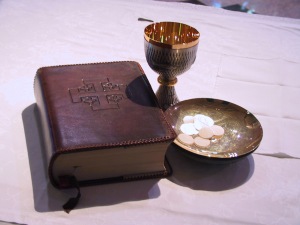 We must acknowledge that if we were to measure how many of those hundreds who receive the sacraments in our local parish each year, pass through our sacramental life in initiation or from week to week, and emerge on the other side as ‘missionary disciples’, we would have to admit that there is much less fruit than we might hope to see. Our pastoral experience tells us that we have in our communities no lack of those who have been ‘sacramentalised’ but not yet evangelised, those who are merely ‘done’ but not yet discipled.
 At the level of the parish, this gap between our presumptions (our unspoken ‘sacramentalism’ that assumes the sacraments will simply ‘take care of it’) and the active faith and discipleship to which all the baptised are called is palpable. Time and again how often have we heard parents, good and faithful parents, lament that their grown children are now disconnected from the Church, that they are no longer going to Mass, and even now hold no faith at all. Yet they did all they were supposed to do, received all their sacraments, and their children served as altar servers and so on. There can also be a latent notion, and I think a false hope, that the grace of the sacraments might ‘kick in’ many years later, like a time release capsule, but there is very little evidence that this is true. Again, hear the laments of old generations of Catholics who did all they thought they had to do, received all the sacraments, were never encouraged to ask questions and carried out the practice of the Catholic religion but lament never experiencing a life-giving or transforming faith. Where is the fruit?
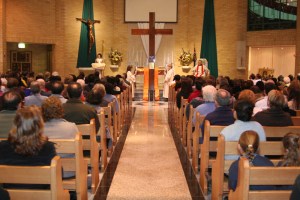 As an attempt to set discipleship at the heart of my home parish of St Bernadette’s Parish, Castle Hill, we introduced four weeks of parental preparation for entry into the sacramental program (the parish celebrated the sacraments of Reconciliation, Confirmation and Eucharist all in the one nine month period). This formation was focused not on children but on parents who were asked to attend four 2 hour sessions – on God and us, God and his Church, God and the sacraments, and living God’s way. Each session was offered three times a week to accommodate parents’ commitments, and completion of all four sessions was a requirement of entry into the sacramental program and preparation for the year.
 We turn now to consider how we might move our communities from a casual acceptance of sacramental minimalism to the apostolic zeal of an evangelising parish. A third key opportunity to move from maintenance to mission is the development of an articulate vision that goads, challenges and stimulates the parish toward change. Our parishes are often caught between a call and desire for renewal and the weight of our own church culture towards maintaining the status quo. In this moment which cries out for new energies, priests and people alike can feel bound by layers of expectation that demand the continuation of the old even while new forms of life and mission long for expression.
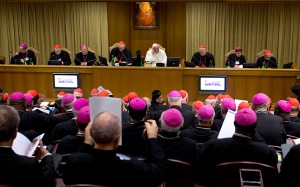 It is a great honour to join other Catholics from a diverse range of backgrounds, experience and perspectives on the Executive Committee for the Plenary Council of the Church in Australia marked for 2020. The role of the Executive Committee will be to provide advice to the Bishops Commission for the Plenary, with details of membership
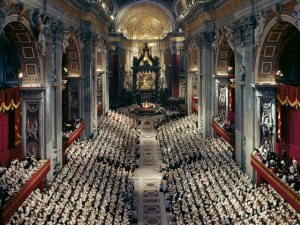 In deliberations over reform, Vatican II will and must be a touchstone for the Plenary Council in style and substance. The trials and tribulations of the post-conciliar era are in part a consequence of the absence of operating paradigms of reform at the time of the Council. In contrast, the Plenary will be able to benefit from and indeed extend the example, insights and challenges of Vatican II as an instance of reform in recent memory. The varying loci receptionis, or various contexts of reception, is but just one lesson we have learned from Vatican II, the recognition that we are as a community of communities extraordinarily diverse and that this will impact upon the translation of deliberations into real life.
 On the point of process, which I anticipate to be the foundational consideration of the Executive Committee, there is much to imbibe from Pope Francis’ well-worn expression, ‘time is greater than space’ (EG 222-223; LS 178; AL 3, 261). While seemingly obscure, the point Pope Francis seeks to make, with direct relevance to the Plenary, is that it is more important to initiate processes than to occupy positions or possess spaces. Pope Francis notes that we can often be dominated by short-term goals which result in ‘madly attempting to keep everything together in the present, trying to possess all the spaces of power and of self-assertion’ (EG 223) without due attention to longer term processes for the development of the Church’s life. This ‘life’, to draw from the Pope’s theology, is found not in ideas but in the faith that really dwells in the hearts and hands of God’s people, a faith that grace wishes to bring forth and keep alive as a sign and reality in the world.
 Paradoxically, however, I would suggest that these misgivings about process sit alongside another experience, which is that process is essential to our identity and life together. In various spheres of human activity – including but not limited to education, politics, economics and religion – we recognise, even implicitly, that the way things are done matters at least as much as what is achieved, if not more. Indeed, for the Church a synodal and collegial mode is not simply a means or technique for a particular outcome but a deepening of the Church’s own nature as a communion. Hence Pope Francis’ citation of Saint John Chrysostom who avers, “Church and Synod are synonymous”.
 We find a few scant references to accompaniment in Pope Francis’ exhortation on marriage and family Amoris Laetitia, especially in relation to those in the early years of marriage and those who have experienced relationship breakdown or divorce (AL 223, 241-244). The concept is most fully elaborated, however, in Pope Francis’ first Apostolic Exhortation Evangelii Gaudium (‘The Joy of the Gospel’) where we find four articles dedicated to what he describes as the “art of accompaniment” (EG 169-173). These references are in the third chapter of the Exhortation, under the fourth section entitled “Evangelization and the deeper understanding of the kerygma”.
 Pope Francis has commented that we in the twenty-first century live not simply in an ‘age of change’ but in a ‘change of age’. He sees, as we do, the shifting ground of global politics, the movements of people around the world, including a disastrous refugee crisis, and the changing nature of how people communicate and relate to one another (to make the point, each day the equivalent of 110 years of live content is watched online while development such as OTT apps have essentially turned messaging services into a new form of communications infrastructure).
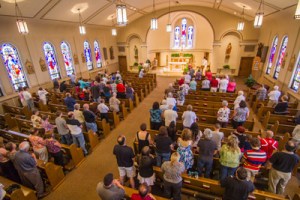 Moving from those who no longer engage with us to those who are still present in our churches, there is no longer a ‘cookie cutter Catholic profile’ if there ever was one. Many of the only-affiliated Catholics can be found in our sacramental programs. Many self-identifying Catholics do not believe in God at all but send their children to our Catholic schools in any case, and many more would pick and mix among various traditions – Eastern meditation over here, the occasional Easter Vigil over there.
 What is the upshot of this complexity for our outreach and accompaniment? Prior to any proclamation of the Church being heard, today’s missionary outlook will begin with building trust and authentic personal relationships (from which consequent invitations and participation might then come about).
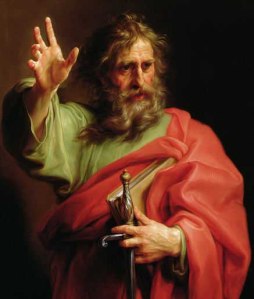 To make this opportunity concrete and practical, the outreach of St Paul, perhaps the greatest evangeliser in the history of the Church after Jesus himself, can be a resource for our thinking on this ‘art of accompaniment’.
 When we consider how many people receive the sacraments in our Church, whether the sacraments of initiation or each weekend, and how many come out the other side as disciples on mission sharing faith with others, we can see the need for accompaniment to support that journey. We have learnt that the sacraments simply won’t ‘take care of it’, that discipleship needs the support of relationships via a process such as Alpha that builds trust and encourages sharing in faith.
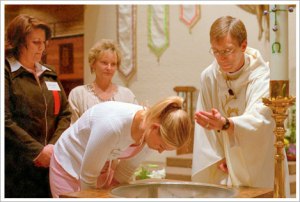
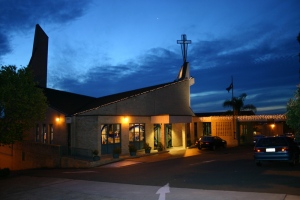 On the 24 November, 1999, on a drizzly Wednesday evening, I was baptised in a parish in the north-western suburbs of Sydney. Heralding from a family of Buddhist and Taoist heritage, I entered the Church at the age of twenty, gathered with a priest, sponsor, fellow catechumens and a mixed group of close friends, mostly of no religious background. A small but powerful group had accompanied me through the process of initiation and I was fully conscious and grateful for the fact that in God and this community I had been granted something which I would spend the rest of my life learning to be faithful to, learning to enter into, learning to trust.
 Reflecting on the Australian Church, I would concur that the central challenge for parish life is this: we are caught between a call and desire for renewal and the weight of our own church culture towards maintaining the status quo. In this moment which cries out for new apostolic zeal, we can feel bound by layers of expectation that demand the continuation of the old even while new forms of parish life and mission long for expression.
 Fundamentally we are called to be a Church of the Great Commission. This is our vision, the ‘northern star’ guiding our resolve. “Go therefore and make disciples of all nations, baptising them in the name of the Father and of the Son and of the Holy Spirit, and teaching them to obey everything that I have commanded you” (Matt. 28:19). As it has been pointed out, in our Catholic Church we have certainly learnt to “go” and can claim a presence at all corners of the earth. We “baptise” and confirm relentlessly. We “teach” and catechise great numbers in our schools and sacramental programs. However, our ability as Church to “make disciples” remains in question, as raised by the pastoral realities for the Australian Church we have explored.
 When we communicate a vision of the parish, how we seek to respond to God in this context, in this time, in this local community, when we can articulate a vision of the kinds of spiritual growth we are seeking to raise up in our people, this passionate purpose becomes the heartbeat or pulse of a parish. Conveniently, and not incidentally, a renewed vision provides the case for change.
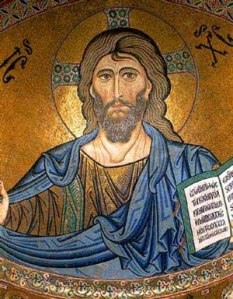 First of all, at the heart of evangelising communities is the proclamation of the Good News, specifically the kergyma which is the basic truths of our Christian faith. This word kerygma, or keryssein in Greek, may not be very familiar to us but it in fact appears in the New Testament some nine times, and refers to the very heart of the Gospel, the core message of the Christian faith that all believers are called to believe and proclaim.
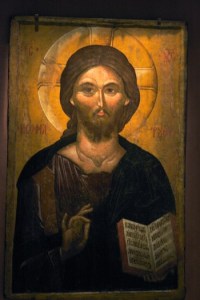 The heart of evangelisation is to announce who Jesus is, the Son of God, the Word made flesh, the man who is God, who died for our sins and was raised on the third day. It is to announce the Good News of the Risen Christ who is with us even now and opens up for us the way to life without end. Evangelising parishes proclaim Jesus’ ascension, his seating at the right hand of the Father as King, and his sending forth of the Holy Spirit. It is this Spirit which reveals Christ and even enables us to say ‘Jesus is Lord’ and it is this Spirit who empowers the Church, who empowers us, to be faithful to Christ’s mission in our own lives and in this moment of the world’s history. Finally, this Good News of Christ calls us to conversion, to repent and believe in this Gospel, calling for a change of life in the light of what God has done and is doing in Jesus Christ whose life we share by baptism, the anointing of the Holy Spirit, in communion with his mystical body, the Eucharist, and by our communion with His ecclesial body, the Church. In prioritising this proclamation, we seek to build up a culture in which Jesus is not swept into our parish story intermittently but our parishes and lives are swept into his.
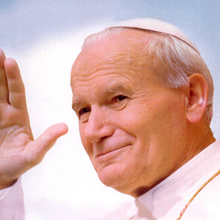 Bringing together these first principles of evangelising communities, we hear St John Paul II affirm, “Faith is born of preaching and every ecclesial community draws its origin and life from the personal response from every believer to that preaching”.
 Personal discipleship also calls for the nourishment of an ecclesial community of faith. Evangelising parishes create disciples in the midst of the Church.
 While our vision needs to be as large as the Kingdom, our implementation of that vision needs to begin small. With encouragement for us, it is worth noting that when large evangelical and Pentecostal communities are asked what they seek for their future it is to establish smaller, stable communities in the midst of a local neighbourhood, offering a consistency and intimacy of worship and local service in personal connection with the wider community. In other words, what many megachurches are seeking is a parish.
 Finally, we recognise that the proclamation of the Gospel, the call to personal discipleship and the life of the Christian community are not for their own sake but for the sake of the world. All that has gone before must bear fruit in our connection with others beyond our communities of faith, beyond the boundaries of the parish.
 We cannot change that of which we are not aware. We must name and face head on the present challenges for our culture as Australian parishes, parishes that I believe desire to be missionary and in their heart of hearts wish to receive the grace of God who still desires much for our parish life.
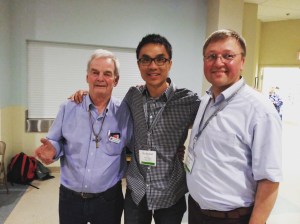
 I recently returned from the Divine Renovation 2016 Conference which provided an opportunity to learn from and be immersed in the experience behind the book of the same name. For those who may not be familiar with this work,
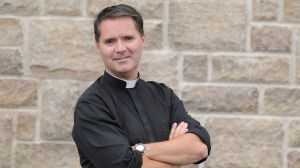 So where to start with Divine Renovation? First and foremost St Benedict’s has been driven by the desire for a model of a renewed parish. While many have looked to the ecclesial movements for discipleship, authentic community and evangelisation, Fr James is adamant and passionate about the fact that our Catholic parishes do not have to be centres of mediocrity or minimalism in which people come forward for the sacraments but little else. Parishes can yet be evangelising communities in which dynamic Christian life, conversion and discipleship can be born and raised.
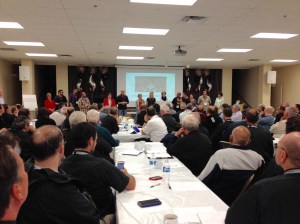 In terms of team roles, it is worth noting that the parish pastoral council at St Benedict’s is dedicated solely to five year strategic planning, while the parish team dedicates itself to implementing those rolling plans through the laity they engage. Importantly, the parish team works on the organisation, not in it, are not “doers” of ministry but rather leaders who call forth and equip others who “do”.
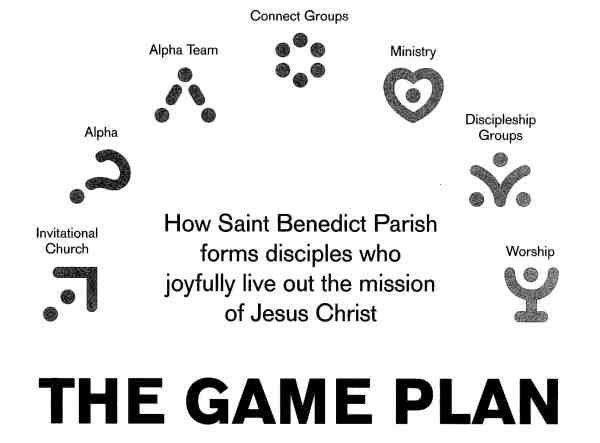
 In discussion with facilitators of Alpha in Australia, it has been recommended that Alpha be first piloted by your parish with a mix of parish staff, parish pastoral council members, committed parishioners who may not already be involved in a ministry, and new Catholics. It is notable that St Benedict’s engages Alpha not only to initiate the journey of discipleship but to develop lay leaders, as a part of their RCIA process, and as an element of marriage preparation for couples.
 While the processes of evangelisation and discipleship above are indeed impressive and can be overwhelming to consider for the parishes we know and love, it was assuring to learn that the parish of St Benedict’s has not achieved this clarity of vision and process overnight. The parish at the heart of Divine Renovation has arrived at this point after at least six years (if not more in the ministry of the pastor) of considerable trial and error, experimentation and ongoing refinement and reflection.
 The past months have seen numerous developments in the life of the universal Church and the national scene. Without doubt the most significant development has been the release of Pope Francis’ post-synodal Apostolic Exhortation on the joy of love in the family,
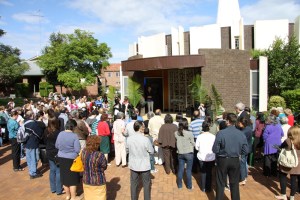 With a dose of the same reality it is worth noting that it takes time and resources for this form of evangelical outreach and familiarity with our flesh-and-blood brothers and sisters. It has always struck me that while Pope Francis’ constant refrain to ‘go forth’ is both attractive and true to the spirit of the Gospel, it does in fact take organisation and resources to set out on mission. Any parish that has more than one community within it knows that it is difficult to be outreaching when, in the words of Sherry Weddell, you are ‘literally besieged at HQ’.
 Amoris Laetitia exhorts us to encourage the young to aspire to marriage and family life all the while fostering realistic expectations that prepare them for mature relationships that inevitably experience change through time. It speaks of the need for married couples to be open to the prospect of new life, to educate children in virtue and to foster their natural inclination towards goodness (AL 264). It speaks of inclusion and affirms the Gospel as a word spoken to all people in every circumstance as a source of hope. Pope Francis also offers practical ideas to encourage husbands and wives in their journey of constant growth, and urges parishes and faith communities to be bearers of comfort and consolation for those who await mercy, who seek oil for their wounds (AL 309-310).
 Workshops are also offered across the three days of the conference and will canvass a range of topics that speak to the lived situation and evangelical mission of parishes today. For convenience I’ve listed the full range of workshops below. They encompass everything from the liturgical and sacramental life of the parish, personal discipleship and the discernment of gifts, social media and communicating the Gospel to youth and young adults, to the response of parishes to the sexual abuse crisis, the need of supervision and self-care in ministry, strategies for forming evangelisation teams, responding to Amoris Laetitia through parish based marriage preparation, engaging the multicultural face of the Church and incarnating Pope Francis’ vision of poverty in the local community of faith.

 The conversion of the Church is essential to the mission of evangelisation. This fact is plain enough. Whether speaking of the universal Church, a diocese, local parish or of the individual Christian there is an obvious and intrinsic relationship between self-reform and the power and depth with which the Gospel is proclaimed and received.
 The first place to start in considering governance within the Church is with the notion of ‘authority’. From the perspective of faith, all authority originates in God’s own life and power, for He alone is the author (auctor) of life as well as the source of its flourishing. Thus, to hold authority is to properly share in something that is not our own.
 This might surprise some and it is for this reason. The experience of the post-conciliar Church has been of lay persons engaging the powers of governance to such an extent that the distinction between the ‘possession’ of such powers by the ordained and mere ‘cooperation’ in them by the laity can appear rather abstract. As canonists have noted, lay persons can be effectively exercising the power of governance as judges, auditors, finance officers of dioceses and parishes, school principals, and directors of social services and health care facilities, with such persons exercising a role which is not simply consultative but, in fact, deliberative.
 In this context, ordained ministry is understood in terms of identity rather than mere functionality and so any form of ‘congregationalism’ that relativises the ministry of clergy to functionaries within the worshipping community should be resisted. It is within a Catholic emphasis on ministerial identity, and not managerialism or functionalism, that the power of governance is seen as intrinsic to ordination for the priest is ‘so configured to Christ, the priest, that they can act in the person of Christ, the head’ (Presbyterorum Ordinis 2).
 Thank you for reading my blog throughout the year and sharing your own thoughts and questions on pastoral ministry and evangelisation. I wish you, your families and communities a merry Christmas and a blessed New Year. May the peace of the Christ-child reign in your hearts and fill you and your endeavours with the joy and mercy of God, and I look forward to sharing news of developments, conferences and activities in 2016. Daniel

