
A family comes to arrange their child’s baptism, though faith and Sunday Mass may have little place in their lives. A young adult, baptised as a child but long absent from the Church, comes to speak with a priest, carrying questions and social anxiety. They arrive at different points in the journey, yet each encounter poses the same question: how can the Church receive them in a way that opens a path to a living relationship with Christ?
These questions sit close to the heart of Venite ad me (“Come to me”), a document on the transmission of the Christian faith produced by the Dicastery for the Doctrine of the Faith and released in October 2026. Developed at Pope Francis’ request and issued under Pope Leo XIV, the document brings a question from one pontificate into the next: how can the Church hand on the faith in a time of profound cultural change?
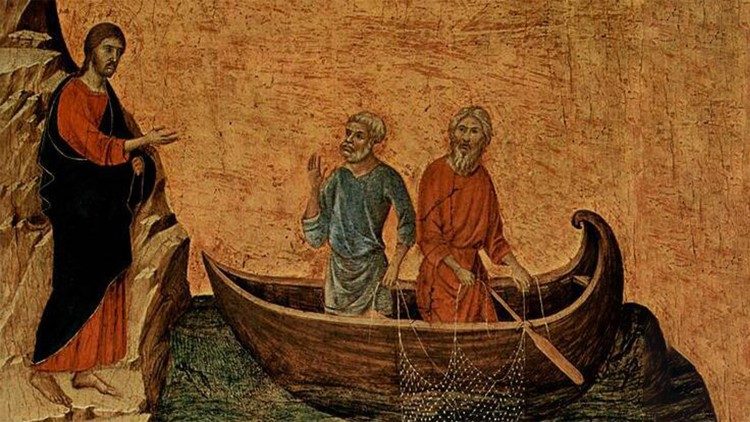
The document concerns itself not simply with helping Catholics know more about their faith, important as that is, but with leading them into a renewed encounter with the saving mystery of Jesus Christ. Its starting point is not anxiety about declining religious practice or the Church’s future but Christ’s fundamental invitation: “Come to me” (Matt. 11:28). That invitation gives the document an Augustinian note: passing on the faith means helping people discover that the human heart finds its rest in Christ, where it encounters the peace and fullness of life for which it longs (VAM 1). Evangelisation, then, is more than instruction or the preservation of Catholic identity – it is an invitation to encounter Christ and learn to live anew.
In an address to the Italian bishops, quoted in the document’s introduction, Pope Leo calls the Church to place Jesus at the centre of its proclamation and life, helping people “to live out a personal relationship with him” and discover the joy of the Gospel. For some Catholics, this language can feel uncomfortable, perhaps because it is associated with forms of Christianity that seem to set personal experience against the sacramental, communal and doctrinal character of the Catholic faith.
Yet, as theologian Dr Carole Brown has observed, this language of “a personal relationship with Jesus” is hardly foreign to our Catholic tradition. Indeed, the emphasis on a personal encounter with Christ has been central to the teaching of preceding popes, not least Pope John Paul II. Personal faith is not opposed to the faith of the Church, nor is Christianity merely a set of ideas to be accepted from a distance. Nor is it merely a cultural inheritance. At the heart of what the Church hands on is the new life of a person, Jesus Christ himself, who calls us into communion with him and, through him, with one another. Sharing the faith means, at its deepest, inviting others to encounter the living Christ.
Hence, Venite ad me stresses the kerygma as essential to the task of evangelisation: the proclamation of what God has done for us in Jesus Christ. We are loved; Christ has died and risen for us; sin and death do not have the final word; and we are invited into new life. This kerygma is not simply one element of Christian teaching among many, nor a preliminary message that can be left behind once someone enters the Church. The kerygma remains the enduring heart of Christian identity, life and mission. We hear it in the Gospels’ witness to Jesus’ life, death and resurrection, and throughout St Paul’s letters, where he repeatedly proclaims Christ crucified and risen, especially in his missives to the Corinthians, Romans and Thessalonians.
It is striking how readily this foundational proclamation can be taken for granted in Catholic preaching and pastoral ministry. We can give careful attention to the organisation of parish life, sacramental preparation, preach on current issues and the many needs that rightly call for pastoral care. Amid these responsibilities, we can presume the core of the Gospel message is already understood and leave its proclamation largely implicit, even though it needs to be heard anew and in every generation.
These matters have their proper place. Yet when the kerygma is assumed rather than proclaimed, the relationship among the truths of the faith can become less clear. The Church’s “hierarchy of truths”, as it is called, does not mean that some teachings may be set aside. Instead, this hierarchy recognises that these truths are interconnected and understood in relation to the heart of the faith: God’s saving love revealed in Jesus Christ. When this principal proclamation recedes from view, the unity it gives to Catholic teaching and practice can be obscured.
People may then encounter the practices, teachings and obligations of Catholic life without seeing how they belong to the story of salvation and the call to communion with Christ. The Church must continually return to the kerygma, where every truth of faith finds its unity and proper order in the Gospel.

This return to the Gospel’s centre also helps clarify the relationship between proclamation and the work of catechesis. We often speak of the need for more catechesis but give less attention to the prior work of evangelisation: proclaiming Christ in a way that awakens faith and gives catechesis its foundation. The document explains that the kerygma can “reawaken faith” in those who have drifted from practice and foster an experience of faith in those who do not yet know Christ. From this beginning, catechesis and formation can then offer an “orderly and gradual introduction” to the Church’s teaching (VAM 5).
This dynamic is often expressed in the theological terms fides qua and fides quae: the faith by which we believe, and the faith that we believe. It is the kerygma which awakens the personal act of trust by which we entrust ourselves to God (fides qua) while catechesis helps us understand and live the content of Christian revelation handed on by the Church (fides quae). The Church must proclaim the faith in a way that draws people into trust in the living Christ and faithfully hands on the content of Christian revelation.
The document’s emphasis on the fides qua should not be read as setting personal experience against doctrine or suggesting that catechesis can be set aside. Rather, it draws attention to a pastoral movement in which the proclamation of Christ awakens trust and opens a person to the Church’s teaching, which can be received as more than religious information and begin to shape how one lives. Catechesis is most fruitful when it remains centred on the kerygma and leads people more deeply into communion with Christ.
Venite ad me demonstrates how the proclamation of the kerygma takes its cue from Jesus himself: he meets people in the realities of their lives, opens the Scriptures to them and speaks in ways that touch and transform the heart. What emerges is a picture of a teacher who communicates the Gospel not through abstract formulations detached from human experience, but through an attentive engagement with the world in which people actually live.
As the dicastery observes, Jesus “demonstrates a remarkable familiarity with the use of numbers and frequently draws on the construction of buildings or on the weather; he knows the coinage of his day and is deeply conversant with the various religious groups then present and connected in different ways with Judaism. He is truly a man who ‘looks’ attentively and constantly invites everyone to ‘look’ with the same gaze at the fabric of creation and human history” (VAM 15). It affirms for us that the parables of Jesus are not simply illustrations added to make a theological point easier to understand – they disclose God’s presence within the realities people already know.
For proclamation in our own time, this ‘attentive gaze’ is instructive if not essential. We must speak to the actual circumstances of people’s lives, attending to their rhythms, anxieties, relationships and assumptions, and drawing upon the familiar to disclose something of the extraordinary which faith reveals in our midst. In proclaiming the Father’s love, Jesus draws people out of human fear and exclusion and calls them into divine communion. His message challenges any authority – religious or political – that seeks to dominate, divide or control who may approach God. As the document puts it, “By proclaiming the loving face of God, Jesus removes any basis for that despotic exercise of religious and political power that has forgotten its own nature as a means of service and unity. God does not bless division, much less discrimination” (VAM 18).
This is not only a warning about the misuse of authority; it shows what Christian proclamation must affirm. The Gospel announces that every person is loved by God and invited into a life of communion. The Church’s authority and witness must serve that announcement, protecting human dignity and helping people flourish. When religious identity becomes bound up with political loyalty, cultural defensiveness or the preservation of influence, the Christian proclamation risks being obscured. The Gospel does not secure dominance over others but reveals, in Christ, a different way of being human.
It is such a conviction that must animate our every effort to transmit the faith. The Church does not proclaim a message of conditional acceptance, nor does it invite people into a relationship with a Christ who is available only to those who have already put their lives in order. It proclaims the one who continues to seek and accompany every person, calling them to conversion and new life. This is not a sentimental form of love that leaves us as we are: revealed in the Crucified Christ, it forgives sin, restores us to communion with God and summons us to a transformed life. Evangelisation and the transmission of faith begins with the announcement of this crucified and risen love.
What is more, that proclamation is carried by more than words. Venite ad me stresses that the Gospel cannot be detached from the lives of those who proclaim it. The document compares the handing on of faith to the lighting of “one candle from another” (VAM 28). Faith passes from person to person through the witness of lives touched by Christ and within communities that create the relationships and occasions for others to encounter him. The Church therefore grows by the “power of attraction” (VAM 30), as communities make the beauty and truth of the Gospel visible in their life together.
Of course, it is the family that remains the first and most essential setting for this transmission, since children encounter faith before they can understand the formal language of catechesis, through the ordinary language of love, forgiveness, prayer, generosity and belonging (VAM 31). The crisis of transmission is therefore not simply a question of religious education or the adequacy of parish initiative. It is also a crisis in the relationships and daily practices through which Christian life becomes intelligible and desirable, especially within the family. Where these practices have weakened, the Church must accompany families and provide a community in which the faith they have received, however imperfectly, can be nourished and brought to maturity in each and all of its members (VAM 40).
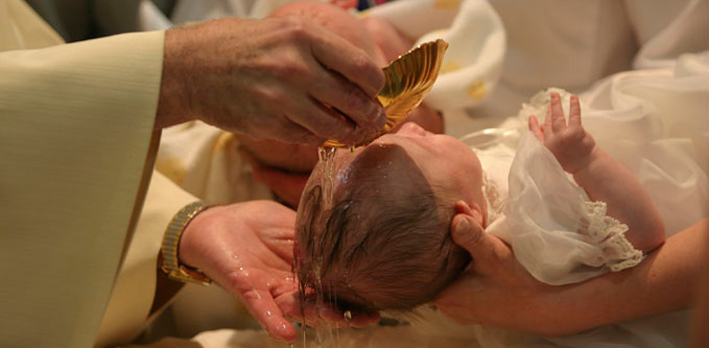
This is especially pressing in Australia, which the document identifies among societies experiencing advanced secularisation and a weakening of the transmission of faith within the home (VAM 48). For many people, the challenge is not a considered rejection of the Church or the Catholic faith so much as the absence of any sustained encounter with its story and claims. Yet the circumstances differ across the world: the legacy of state atheism in parts of Eastern Europe, for instance, presents a different pastoral reality from that of Australia, while other regions face different pressures again. The Church cannot respond to crisis in intergenerational transmission of the faith with a single formula and proclamation must attend to the actual questions, hopes and cultural settings of those to whom the Gospel is addressed (VAM 53).
The account of faith in Venite ad me is not, however, one of decline alone. It also points to growing numbers of people returning to the Church or seeking baptism, a trend we have seen in Sydney and elsewhere in Australia, particularly among young people. It is sober, too, about the challenge many new Catholics face in persevering, and stresses the importance of communities that welcome and accompany them (VAM 63–64).
Maintaining a Catholic identity matters. The Church’s traditions, sacramental life and communal practices give the faith a language and a home. Yet their presence alone does not mean that people have made the faith their own or discovered how it speaks to the whole of their lives. Venite ad me calls the Church to move beyond “a commitment to Christianity based merely on the inertia of social affiliation” and help people embrace the faith as a “personal and conscious choice” that shapes their lives and draws them into genuine communion with the Church (VAM 66).
As for parents who seek baptism for their children or bring them to catechesis, the document sees in these situations a “fragile but genuine witness” to faith, to be received with generosity rather than dismissed because the family’s understanding remains incomplete (VAM 78). Since some children today may not yet have heard an explicit proclamation of the Gospel, catechesis itself must be ready to announce it anew – hence the document’s call for a profound kerygmatic renewal of catechesis (VAM 78). In this respect, Venite ad me continues the direction set by the 2020 Directory for Catechesis, which was revised to situate catechesis within the Church’s wider work of evangelisation with a kerygmatic approach at its centre.
This renewal of faith across the generations cannot be sustained by catechesis alone but depends on the witness of the whole community. Transmission of faith takes place where “language becomes testimony” (VAM 82). Recalling St Alberto Hurtado, Venite ad me reminds us that the apostle does not simply carry Christ’s light. In Christ, the apostle becomes light for others. The Gospel is more than a lesson to be learned but a way of life that must take flesh in us.
It is affirmed that this witness is especially visible in the liturgy, where the Church’s words, gestures, silences and symbols draw the faithful into the Paschal Mystery. Describing liturgy as “an experience of faith” before it is a teaching (VAM 90), the document invites us to enter not as spectators or, in Benedict XVI’s memorable phrase, “cultic technicians”, but as a people formed through worship. The document recalls the young Augustine’s memory of being moved to tears by the Church’s hymns, showing how deeply liturgy can reach the heart and shape a life of faith (VAM 92).
Recognising that the Church proclaims the Gospel within many cultures, the dicastery also calls for dialogue that makes it intelligible in each setting while remaining faithful to the truth it proclaims (VAM 102–104). It recognises too popular piety as “an important means” of handing on the faith (VAM 111), as prayer, gesture and shared practice give faith a local expression and carry it across generations. For the Church in Australia, preparing as it is for the International Eucharistic Congress in 2028, this is a timely reminder that people are formed not only through formal teaching but through the worship, relationships and communal life in which they learn to recognise Christ’s presence.
Taken together, these reflections return us to the family seeking baptism and the young adult who draws close to the Church with questions. Both need a community that proclaims the crucified and risen Christ, accompanies their response and gives visible form to the life it announces. The invitation of Venite ad me is to renew our imagination of how the faith is passed on – in the welcome offered at baptism, the way catechesis speaks of Christ, the beauty and intelligibility of our worship, and the relationships that continue after a sacrament has been celebrated. It is these practices together that will help people move from first contact with the Church towards a freely embraced and enduring life with Christ.

