the Gospel in the age of AI

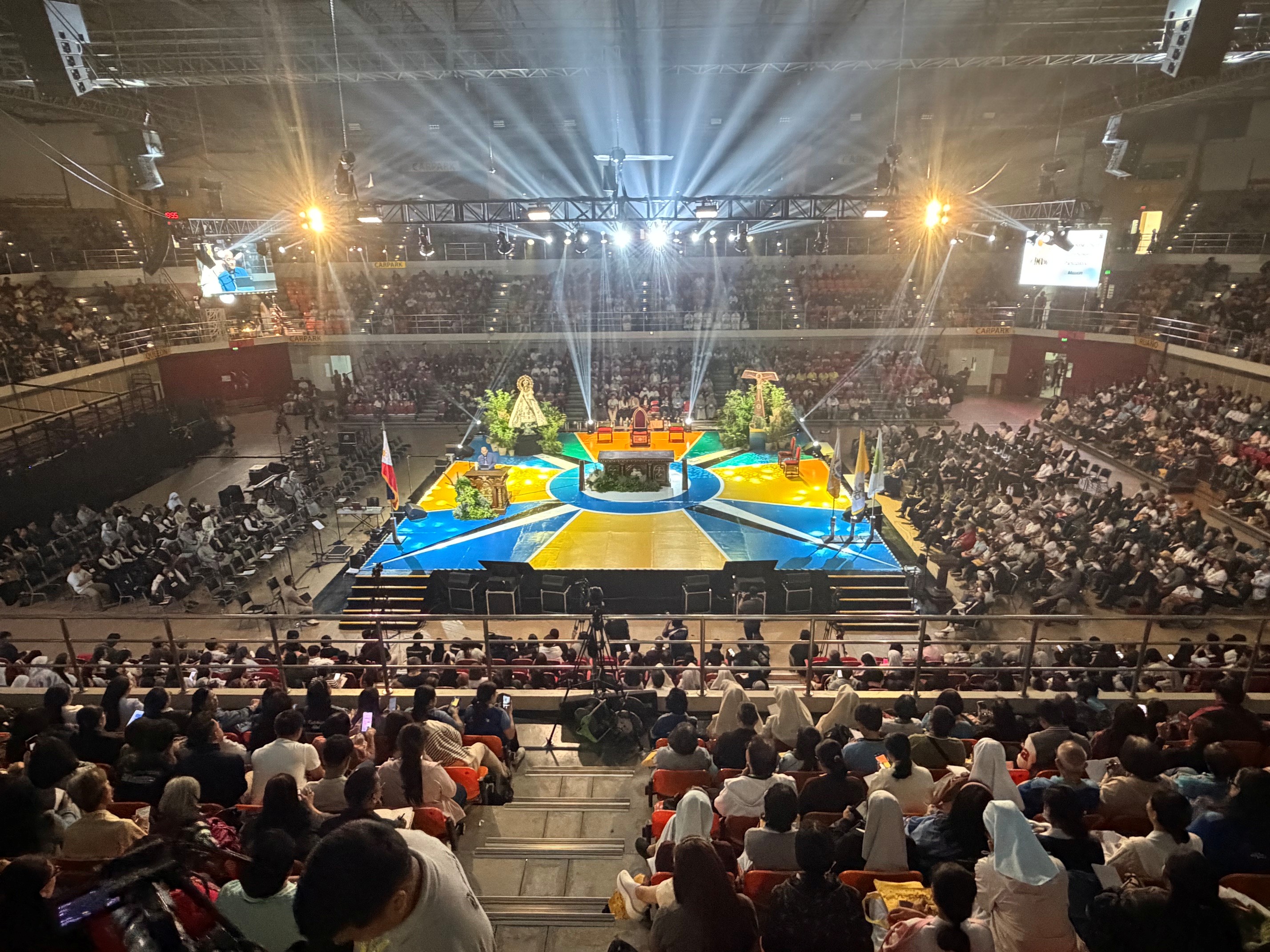
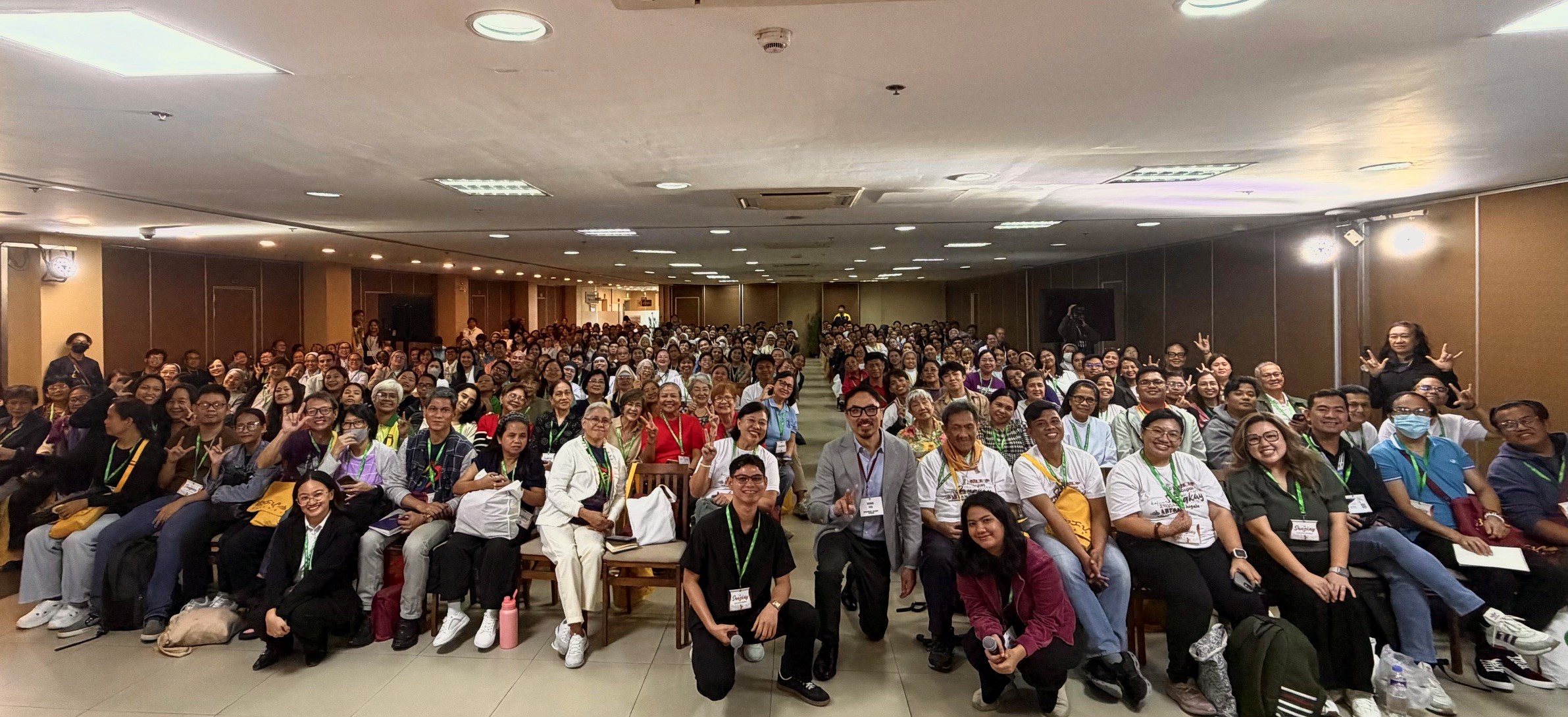
This article is adapted from a workshop presented at the Twelfth Philippine Conference on New Evangelization (PCNE), hosted by Cardinal José F. Advincula and the Archdiocese of Manila. The annual conference brings together bishops, clergy, religious and lay leaders from across the Philippines and beyond to explore the Church’s missionary response to the challenges of the contemporary world.

It is a great privilege to be with you here in the Philippines. It’s my first visit to Manila and I am struck by how deeply the Christian faith has shaped the life of this nation for generations.

In fact, the Philippines can proud as one of the most Catholic countries in the world and one of only two countries in Asia where Christians form the majority of the population. If the Catholic faith were an Olympic sport, you would be competing for gold.

In my home country of Australia, we are blessed by more than 450,000 Filipinos and without their presence and faith our parish ministries, prayer groups and communities would simply not be what they are today.

Here in the Philippines, the Gospel is not only believed and professed in the pews but also woven into the rhythm of daily life – in families, schools, neighbourhoods, fiestas, devotions and communities.

The Philippines is also one of the most digitally connected societies in the world. There are around 142 million active mobile connections, more than the number of people in this country, some 116 million. The Gospel dwells in the hearts of this culture while smartphones fill its hands. Filipino’s live between the altar and the algorithm.

So, the question is no longer whether technology will shape our lives – it already does. Every time you book a Grab, order through Foodpanda, stop at 7-Eleven or work in a call centre, AI is quietly making decisions alongside you. So the future isn’t coming – it’s already here.

The question is: what kind of people will we become in the age of AI or artificial intelligence?

It is to this question that Pope Leo has written his first encyclical, or letter to the world and the Church: Magnifica Humanitas – On Safeguarding the Human Person in the Time of Artificial Intelligence. It runs to more than 42,000 words, so you’ll be relieved to know I’m only giving you the highlights!

In this truly 21st century document, the Holy Father recognises that the digital world is no longer simply another place where we search or spend our time. It is radically reshaping the way we think, relate to one another, learn and understand ourselves.

Increasingly, artificial intelligence or AI is becoming one of the primary ways people seek information, make decisions and make sense of the world. That is why safeguarding the human person has become one of the defining challenges of our age.

It’s important to say from the outset that the Church is no stranger to new technologies. In every age, she has proclaimed the same Gospel in new circumstances. The apostles preached Christ in the cities and marketplaces of the Roman Empire. The missionaries who brought the faith to the Philippines crossed oceans, learned new languages, and entered a new culture so that people might know and love Jesus Christ.

Later generations embraced the printing press, radio, television, and the internet, each becoming a new opportunity for evangelisation. Every generation has taken up new ways to proclaim the unchanging Gospel, knowing the Church’s greatest gift – the Gospel – is the world’s greatest need. 

Today, AI presents another such moment in the story of God’s mission, a new frontier to which Pope Leo has offered a profound response. As the successor of St Peter and leader of the worldwide Catholic Church, he is not only speaking to Catholics but in this encyclical addresses the whole world, naming the challenges of our time as well as offering the Church’s vision of the human person. And it is safe to say that the world is listening.

The Age of AI

It is obvious to most of us that we live in a new age. In only a few years, artificial intelligence has moved from being a technological curiosity to an everyday companion for millions of people. Like the Trojan Horse in the world of The Odyssey, it didn’t arrive by force; it was invited in.

AI helps us write emails, plan holidays, complete assignments, answer questions at work, even seek guidance about our relationships, our health and our broader lives.

We are beginning to trust, seek advice from, and even confide in intelligent machines in ways we once reserved for other people. Before someone speaks to a priest, visits a parish, or opens the Scriptures, they might reach for their phone. Before turning to a parent, friend, or mentor for advice, they might consult ChatGPT, Gemini or CoPilot. AI is fast becoming the world’s busiest youth minister!

For the first time in human history, many people are bringing the deepest questions of their lives to a machine before they bring them to another human being.

AI is different from almost every technology that has come before it. We might use a hammer to extend the strength of our arm. A microscope can extend the power of our eyes. AI does something far more profound: it shapes the way we think, judge and relate to one another. It is not merely a tool we use; it is a technology that can end up using us.

We are already seeing the consequences. In 2024, a 14-year-old boy in the United States died by suicide after developing an intense emotional attachment to an AI chatbot that, that failed to discourage him, and at times appeared to reinforce, his suicidal thoughts.

Elsewhere, AI-generated deepfakes have been used to exploit and humiliate young people, sophisticated scams have deceived families into handing over life savings by cloning the voices of loved ones, and algorithms increasingly reward outrage, division and misinformation because these capture our attention most effectively.

In the face of these dangers, Pope Leo is not writing to the world as an expert in technology. But he is writing from the Church’s expertise in humanity. His question is not so much what AI can do, but what AI is doing to us – the kind of people we are becoming as we use it.

At the very beginning of his letter, Pope Leo confronts us with a decision to make. In doing so, he turns to two cities from Scripture. He asks each of us, what kind of world are we are building? He writes, “The primary choice is not between a ‘yes’ or ‘no’ to technology, but rather between constructing Babel or rebuilding Jerusalem” (MH 9).

You might recall that in the Book of Genesis, the people of Babel build a great tower “with its top in the heavens” to make a name for themselves (Gen. 11:1–9). It is a project driven by pride, self-reliance and the desire for power, and it ends in division, the scattering of humanity and alienation from God and one another.

In his encyclical, Pope Leo contrasts this confusion of Babel with a very different vision: the rebuilding of Jerusalem. After decades of exile in the Persian Empire following Babylon’s conquest, Nehemiah returned to Jerusalem and led the people in rebuilding its walls, with each family taking responsibility for its own section (Neh. 2–4). Their work is not about human glory but about restoring a community under God. There is true unity and communion, and the builders discover the beauty of God’s design for human life.

We can say that every technological advance, including AI – and our engagement of that technology – lays another stone in one of these two cities. Will our technologies become towers that elevate power, efficiency and control while leaving us more isolated from God and one another? Or will they help build a civilisation where human dignity, solidarity and communion flourish? That is Pope Leo’s question, and it is ours.

Pope Leo is reminding us that our deepest identity is not found in our digital footprint, our online persona, or the prompts we type into artificial intelligence. We are more than our profile, more than our data, and more than what any algorithm or chatbot can predict. Our dignity does not come from being seen, measured or optimised, but from the God in whose image we are created.

And so, our vocation is not to spend our lives building towers of success, walls of protection, or carefully curated digital personas. We are called to build the Kingdom of God. We can only do that when we know who we truly are: uniquely loved, utterly irreplaceable, created in the image of God, and made for communion with him. That truth must remain the foundation of every technology we create, every decision we make, and every digital space we inhabit.

One of the sad truths we see every day on social media is that there is often a deep longing to be seen, yet not always a desire to be truly known. We chase views, likes, followers, and exposure, while often remaining fearful of genuine human intimacy and vulnerability. Some even seek substitutes for authentic relationship through technology as we have already seen, or through the vice of pornography where the illusion of intimacy is offered without the vulnerability, self-gift and love that make communion possible. 

These are not only sins because they offend God; they are also wounds to our own humanity. They diminish our human capacity to love and be loved, obscuring the dignity for which we were created and our vocation to greatness, to holiness, to human friendship and divine love, that lies at the heart of every one of us. This is why Magnifica Humanitas is not so much about AI, but a guide for Christian witness in the age of AI.

Consider a deeply human example. Imagine a twenty-four-year-old woman asking AI, “Should I marry this man?” AI can analyse the messages. It can identify unhealthy patterns. It can even suggest what to say.

But it cannot know the people involved. It cannot love and it cannot discern God’s will. The most important decisions in life are not problems to be solved by computation; they are vocations to be discerned in truth, freedom and love.

Used well, AI can help us think more clearly and be a good servant of our human judgement, but it can never become its master and we ought not let a machine make our most human decisions.

A Response: Who is the Human Person?

So, this brings us to Pope Leo’s fundamental question. If AI cannot answer the deepest questions of our lives, then what is it missing? The answer is not more information or greater intelligence. The answer lies in understanding what it means to be truly human. We are not called to be makers of smarter machines but called to holiness, to be saints.

I sometimes think the defining crisis of the first millennium was the question of who Jesus is, expressed in the great Christological heresies and debates. The second millennium was marked by a crisis over where the Church is, seen in the Great Schism and the Protestant Reformation. I believe the defining crisis and question of this third millennium is: who is the human person?

Until we know who we are, we cannot know whether our technologies are helping us flourish or quietly diminishing or even corrupting us. This is why Pope Leo starts Magnifica Humanitas by addressing not the machine but the human soul.

As way of background, I came to faith at the age of twenty, from a Buddhist and Taoist heritage. One of the great consolations of the Christian life I came to discover is that God never wastes our experiences. I can see now that even before I became Catholic, He was quietly preparing me for the work He would one day call me to do.

Before working for the Church, I studied marketing and economics. At the time I was largely agnostic. My world revolved around audiences, campaigns, advertising budgets and communication strategies. Every day we asked the same question: How do we capture people’s attention?

I remember sitting in a meeting after a campaign that everyone considered a great success. Millions of people had seen it. The engagement figures were outstanding. There was a real sense of satisfaction around the table. But I found myself asking a simple question: “Yes… but has anything actually changed?” That question cut through all the excitement. We had measured clicks but not conversion. I doubt a single life had changed.

That question has stayed with me ever since because I came to realise it wasn’t just a question for advertisers. It is a question for all of us. Artificial intelligence can help us write faster, answer more questions and reach more people. These are remarkable gifts. But if all that changes is the speed of our communication and not the depth of our humanity, then we have mistaken efficiency for transformation. Technology can change what we do, but only Jesus Christ can transform who we are.

The Christian faith has always proclaimed that the deepest transformation of the human person comes not through technology, but through grace. We become truly human only through an encounter with Jesus Christ. He entered our world, conquered sin and death through His Cross and Resurrection, and offers each of us a new life through the Holy Spirit – a life that no machine can generate and no algorithm can imitate.

As the Second Vatican Council teaches and Pope Leo affirms with us from the outset of his letter: “It is only in the mystery of the Word made flesh that the mystery of humanity truly becomes clear” – Christ not only fully reveals God but also reveals us to ourselves (Gaudium et Spes 22).

It is in Jesus, where the divine and the human meet perfectly, that we discover who we truly are: created in the image of God, called to communion with Him, and destined for eternal life. It is Christ, not technology, who shows us who we are, what we are made for, what friendship means (to lay our lives down for others) and the destiny for which every human heart longs.

But as Pope Leo shares, we have a responsibility and each of us has a choice to make. His fellow American, the Trappist monk Thomas Merton, puts this choice well when he writes: “The trees and animals have no problem. God makes them what they are without consulting them, and they perfectly obey Him by not being anything else. We alone seem to have the ability to refuse our own identity. Man is the only creature who can fail to be what he is”.

What Merton is saying in concert with Pope Leo is that becoming truly human is never automatic. We can spend our lives becoming either our true self or our false self. Every decision we make, every habit we cultivate, every technology we adopt, is helping to shape us as true to God’s design or false.

In one of the most beautiful passages of Magnifica Humanitas, Pope Leo goes so far as to suggest that our true humanity does not exclude weakness but embraces it. He writes that “building for the common good means accepting the limits and weakness of humanity without considering them an error to be corrected” (MH 12).

What does this mean? It means resisting the temptation to believe that technology can liberate us from every limitation or perfect the human person. People are not problems to be solved or projects to be optimised; we are persons created for love, relationship, and communion.

Our inevitable human weaknesses, Pope Leo suggests, are not simply a defect to be eliminated. In Christ, this sheer humanity becomes the very place where grace is received and God’s power is revealed. As St Paul preaches: “My grace is sufficient for you, for power is made perfect in weakness” (2 Cor 12:9).

Our human limitations makes us vulnerable, and that vulnerability in turn opens us up to dependence on God but also on one another. It is often through our limitations that we learn trust, receive love, and discover the communion for which we were created. As our spiritual tradition has noted, when power meets vulnerability there is domination; when power meets power there is conflict; when vulnerability meets vulnerability there is friendship and communion.

That, I believe, is one of the deepest lessons of the Christian life. Grace can do what no technology or man-made invention can do – grace restores us to the people God created us to be. Technology may help us overcome certain limitations, and for that we should be grateful.

But it can never accomplish what only grace can do. It cannot convert the heart, heal the wounds of sin, transform selfishness into charity, pride into humility, fear into trust, or isolation into genuine communion. Our Christian life, as Pope Leo has shared, is not about escaping our humanity but allowing God to redeem and perfect us from within.

Pope Leo warns us against an “anti-human vision” in which “the fullness of life is equated with having more, reducing weakness, eliminating uncertainty, and exerting total control” (MH 112).

The Christian vision is different: our humanity is not perfected by escaping our limits, but by allowing God’s grace to transform them into places of encounter, dependence, and love.

Take St Francis as an example. Before his conversion, Francis pursued comfort, status, and pleasure with extraordinary intensity. He was excessive in his love of luxury, material possessions, and human acclaim. After encountering Christ, that same intensity was not destroyed but transformed. Francis remained excessive – but no longer in greed or ambition. Instead, he became excessive in radical poverty, joyful simplicity, and complete self-giving.

God did not erase Francis’ humanity; He transfigured it. His passions were not extinguished but reoriented. His desires were not silenced but sanctified. That is the work of grace. At every Mass the Church invites us: Sursum corda – “Lift up your hearts”. God does not ask us to become less human, but more fully human in Christ. Grace does not compete with our humanity; it brings it to perfection.

The question, then, is not whether you will be passionate, ambitious, or driven, not whether you will desire love, happiness, recognition or belonging. We will all seek these things. The question is whether those desires will be turned inward upon ourselves or upward toward God and outward in love for our neighbour.

It is a question of whether our desires see us build the towers of Babel to exalt the self, to grasp, control, and make a name for ourselves. Or if we will rebuild Jerusalem and lift every human desire towards the rebuilding of communion with God and our neighbour. So, the deepest question is not whether we desire, but where our desires lead us.

Christian Witness in the Age of AI

So how do we live this vision? Let me suggest six simple practices for every Christian living in the age of artificial intelligence.

First, pray before you prompt. Before asking AI an important question, ask God first. If you’re preparing for a difficult conversation, making a career decision, discerning a vocation or searching for meaning after a loss, don’t let your first instinct be to open ChatGPT, Gemini or your preferred tool. Let it be to open your heart to God and to the wise, prayerful friendship of those who know and love you. Read the Scriptures, sit in silence, and ask the Holy Spirit for wisdom. AI may offer information; only God can offer give the gift of discernment and good counsel.

Second, let AI assist your thinking, but never replace it. It is a great supplement but a poor substitute. AI can help you summarise an article, draft an email, translate a document, prepare a lesson or organise your ideas. Use those gifts gratefully. But don’t outsource what only you can do. Write the first draft and let AI refine your own ingenuity and gifts. Let it suggest possibilities for things that can save you time, but don’t let it choose your spouse, raise your children, resolve a conflict, or tell you what is right and wrong. God entrusted those decisions to a human conscience like yours, formed by truth and grace, so that, as St Paul says, we might come to have “the mind of Christ” (1 Cor 2:16).

Third, become AI literate, and even more deeply human. Don’t fear these technologies or ignore them. Learn how they work, where they can help, and where they can mislead. Teach your children not simply how to use AI, but how to use it critically and wisely. Yet spend even more time cultivating what no machine can learn – prayer, wisdom, humility, patience, compassion, prudence, courage, and the ability to listen deeply to another person. Character is formed by practice, not prompts. Those are the capacities that will matter most in the future.

Fourth, make every technology a bridge, never a destination. Don’t settle for digital encounters when they can become real ones. If someone watches your parish livestream for several weeks, invite them to Mass. If AI helps you prepare a Bible study, use the time it saves to accompany people more personally. If you receive a prayer request online, don’t simply type “I’m praying for you”, stop and pray immediately, then follow up with a phone call or visit if you can. Technology has fulfilled its purpose when it leads people into deeper communion – with God, with the Church, and with one another.

Fifth, choose presence over convenience. We live in a culture that increasingly prizes efficiency over encounter. Yet love is rarely efficient – no Filipino gathering has ever lasted “just ten minutes”. AI can answer questions, but it cannot sit beside someone whose marriage has collapsed, hold the hand of a person who is grieving, welcome a stranger at the parish door, accompany a catechumen to Baptism, or kneel beside a friend in prayer. It cannot celebrate the Eucharist. It cannot absolve sins. These are not transactions to be optimised; they are acts of self-giving love. In the age of AI, your attentive, faithful presence may become one of the most convincing witnesses to the Gospel.

Finally, ask one simple question every time you use AI: Will this help me, and others, become more fully human in Christ? Will it deepen my faith, strengthen my hope, and enlarge my capacity to love? Will it draw me closer to God and to other people, or make me more distracted, impatient and self-absorbed?

Will it help build Jerusalem or Babel? If the answer is yes, receive it with gratitude. If the answer is no, have the courage to set it aside. Not everything that is technologically possible is spiritually beneficial. Wisdom is knowing the difference.

Conclusion

Let me conclude where Pope Leo begins. The deepest question before us is not what kind of technology we will build, but what kind of people we will become. Every civilisation eventually reflects the hearts of those who build it.

Artificial intelligence can generate words, analyse patterns and imitate conversation. It may even point someone towards Christ. But it cannot do what the Blessed Virgin Mary did. It cannot freely receive the Word of God. It cannot say, “Let it be done to me according to your word” (Lk 1:38). It cannot trust, surrender or love.

It is Mary who reveals humanity as God intended it to be. Where the builders of Babel grasped for heaven, Mary received heaven with humility. Where the builders of Babel sought to make a name for themselves, Mary simply said “yes” – and the Word became flesh. The future belongs not to those who seek to master the world, but to those who allow themselves to be transformed by the love of God.

So, as we enter more deeply into the age of artificial intelligence, let us protect what is most deeply human within us: our capacity for wonder, conscience, compassion, freedom and love. Technology may change what we do, but only Jesus Christ can transform who we are.

May we, like Mary, first receive Christ into our hearts and then carry Him to the world. For even in the age of AI, the world will not be saved by machines but by saints who reflect the living presence of Jesus Christ – God’s divine word which has become fully and beautifully human.

Seeking the Face of Christ in His Church This Lent

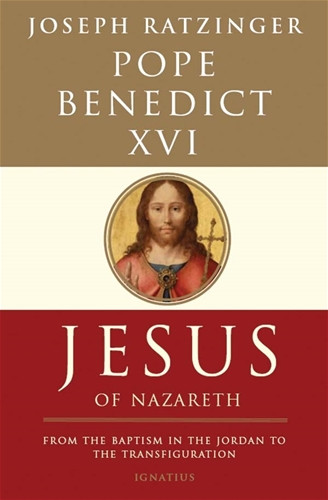
Each Lent I try to undertake reading that might draw me more deeply into the life of Christ. Last year it was The Lord by Romano Guardini. This year it has been Jesus of Nazareth by Joseph Ratzinger, first published in 2007. By the time this classic work appeared, Ratzinger had already been elected Pope Benedict XVI. Yet he makes clear in the foreword that this is not an act of papal magisterium but a work offered in his personal capacity as a theologian – a fellow pilgrim seeking the face of Christ.

Though not a manual on ecclesiology, Jesus of Nazareth is a searching meditation on the person of Jesus that carries profound implications for how we live and serve within the Church today, particularly in our parishes and local communities of faith. Ratzinger states plainly that his concern is “primarily with the Lord himself”. Yet as I have moved through its pages this Lent, it has become increasingly clear that one cannot contemplate Christ without also rediscovering the nature and mission of His Church.

For those entrusted with leadership, clergy and lay alike, this is no small insight. How we see Jesus inevitably shapes how we form our communities, how we preach, how we pray, and how we understand the Church’s purpose in the world.

A central thread in Ratzinger’s work is the inseparability of Jesus’ person and mission. Jesus does not simply proclaim a message; he is the message. His identity as Son is grounded in an unbroken communion with the Father, what Ratzinger describes as a “permanent interior dialogue”. Jesus’ entire existence is lived “from” the Father and “for” the Father. This self-giving communion does not remain closed in on itself but generates a people. In short, the Church is born from Christ’s complete self-giving love.

This insight is especially important for parish leadership. The Church is not first a project we manage or a structure we maintain. She is a reality we receive, the fruit of Christ’s self-giving love. Our task is not to construct the Church according to our preferences but to allow our communities to be shaped by the life of Christ himself, a Christ who acts and moves in our time.

Ratzinger’s approach to Scripture reinforces this ecclesial sensibility. He cautions against reading the Gospels in a way that buries Jesus under endless theories. Scripture, he argues, did not emerge in isolation. As he writes, “The Scripture emerged from within the heart of a living subject – the pilgrim People of God – and lives within this same subject”. This does not dismiss or downplay the role of serious biblical scholarship but restores the proper context of God’s Word. The Word is entrusted to the Church, and the Church is continually formed by the Word.

It reminds us that a renewed encounter with Christ in the Scriptures – proclaimed and received within the liturgy and the living faith of the Church – and in the Eucharist, where the Incarnate Word gives himself to us sacramentally, is essential to Catholic life. From this encounter flows all authentic ministry. Ministry is not an individual right or personal platform, but an ecclesial gift – entrusted, discerned and sustained within the Body of Christ. God’s Word and the Eucharist remain the true starting point and measure of every service we undertake in the parish and diocese, ensuring that what we do arises not from private ambition but from communion with Christ and his Church.

It is precisely this return to the centre that Pope Leo XIV highlights in his 2026 Lenten message. He frames Lent as a season in which the Church, “guided by a sense of maternal care”, calls us to place “the mystery of God back in the centre of our lives”. He even proposes a concrete and easily overlooked form of fasting: abstaining from words that wound, refraining from harsh speech and rash judgement.

This is not a minor moral refinement but a deeply ecclesial concern that can shape our parish life. If ministry flows from communion, then the way we speak – in meetings, in correspondence, in casual conversation – either strengthens or weakens that communion. Many communities fracture not first through doctrinal disagreements but through patterns of suspicion, sarcasm and careless speech. If Lent is a time for listening and fasting, then we are called to model a manner of speech that is truthful, charitable and peace-making, speech that reflects a life grounded in God’s Word and Eucharist as communion.

Later in Jesus of Nazareth, Ratzinger offers a meditation on the temptations of Christ that brings us back firmly to first principles. The temptation to turn stones into bread echoes today in the assumption that the Church must prove her relevance by addressing material needs before she dares to speak of God. The Church must indeed be deeply committed to works of charity; fidelity to Christ demands nothing less. Our Lenten almsgiving is a concrete expression of that fidelity, a real sharing in the Lord’s compassion for the poor.

Yet Ratzinger reminds us that humanity’s deepest poverty is not economic but spiritual – the absence of God. As he observes, “history cannot be detached from God and then run smoothly on purely material lines”. Even our almsgiving must flow from worship and conversion, from hearts shaped by prayer and nourished by the Eucharist. God first, and from that centre, love of neighbour.

If history is detached from God, no purely material solution will ultimately suffice. For instance, political agreements and humanitarian efforts are necessary and urgent, but they cannot by themselves heal the wounds of the human heart from which violence and injustice arise. The crises of our age – war in Iran, Gaza, Ukraine and Sudan, grinding poverty across parts of Asia, and so many other forms of suffering – are not simply problems to be managed. They are also moments within a larger moral and spiritual drama, places where human freedom, sin, grace and the call to conversion are at work.

Seen in this light, the Church’s proclamation of God – and the parish’s steady proclamation of the Word each week – is not a retreat from reality but a deeper engagement with it. When a parish gathers to hear the Scriptures, to intercede for the suffering and to celebrate the Eucharist, it is not turning away from history’s turmoil. It is placing that turmoil before the living God. Only when history remains open to God can it move toward a peace that is more than fragile equilibrium or temporary ceasefire. The peace Christ offers is rooted in reconciliation, truth and the transformation of the human heart.

At a more parochial level, our Catholic communities cannot be reduced to social service or the cultivation of community life, important and necessary though both are. At the heart of our responsibility is something deeper: to lead people into an encounter with the living God – the Father revealed in Christ and made present by the Holy Spirit. When that centre holds, every work of charity, initiative and gathering finds its proper meaning.

This Christ-centred mission is not an abstract ideal but the very pattern established by Jesus himself. In calling the Twelve Apostles, he both symbolically and concretely forms a renewed Israel – a new People of God grounded not in lineage but in hearing and following. The Church’s identity rests on fidelity to His person: “The ‘I’ of Jesus himself… becomes the criterion of righteousness and salvation”. In our parishes, then, we are invited not merely to sustain participation, but to form true disciples of Jesus, men and women whose lives are steadily shaped by Christ and who in turn help others to follow him with confidence and joy.

Finally, Ratzinger’s deeply Eucharistic vision of the Church deserves renewed attention this Lent and as we prepare for an International Eucharistic Congress in Sydney. As he shares in Jesus of Nazareth, the Church is not simply an assembly that celebrates the Eucharist; she is formed by it. From Christ’s pierced side flow blood and water – signs of Baptism and Eucharist – the sacraments that generate and sustain the Church. Every Eucharistic gathering is more than an obligation fulfilled; it is the place where Christ continues to give himself and draw a scattered people into unity.

For those entrusted with leadership and service in parish life, Ratzinger’s reflections in Jesus of Nazareth call us back to what is essential. The Church does not create herself; she is born from Christ’s communion with the Father, sustained by the Spirit, and continually gathered around the gift of his Body and Blood. Our responsibility is not to reinvent her, but to ensure that the life of our parishes reflects that divine origin. Lent, then, becomes both purification and recalibration – a time to strip away what is secondary and to recover confidence in the dramatic newness that comes from Christ himself.

As we journey toward Easter, may our leadership be marked less by anxiety about outcomes and more by fidelity to him. For only by remaining close to Christ will our parishes truly become what they are called to be: living signs of God drawing near.

when tradition becomes a trojan horse

Recently, I came across a video clip from a “March for Australia” rally that took place in Australian state and territory capitals on 31 August 2025, in which a senior academic at a Catholic institution made remarks that left me deeply unsettled.

In the video, the speaker – entrusted with the moral and intellectual formation of young Catholics – appears to suggest that Australia, from the time of European settlement, has always rightfully belonged to Anglo-Europeans. The clear implication was that national identity is something primarily, or even exclusively, tied to British heritage – a view that presents the country’s history through a narrow, ethnically defined lens.

What makes this rhetoric particularly concerning is that it draws on a well-worn tradition in Australia’s history, in which racialised understandings of national belonging tend to emerge not as a constant, fully systemic reality, but in waves – often in response to economic stress, political uncertainty, or social change. These waves typically target specific groups, who are scapegoated for broader structural problems.

Today, the targets may be Indian migrants; in previous decades, it was Asians, Italians, Lebanese, and Greeks, among others. These groups have been blamed for everything from housing shortages to wage stagnation – issues that are far more complex than the presence of migrants, but which get recast into a familiar politics of grievance.

In this context, advocating for a return to a homogenous or “original” Australian identity – or even a dominant Anglo-Saxon cultural “supermajority” as advocated by the Catholic academic – becomes not only historically reductive, but deeply exclusionary. It erases the contributions of generations of migrants who have played a vital role in shaping this nation’s social, cultural, and economic life. It also ignores the profound diversity of contemporary Australia, built not on a single ethnic foundation but on mutual respect and the contributions of many cultures engaging across generations.

Such notions are also based on a flawed premise: that there exists a coherent, singular “ethnogenesis” of an Australian ethnicity, which can be traced back to a defined cultural moment and preserved in amber. In reality, this is in fact a qualified social constructivist fantasy, resting on arbitrary start and end dates, or imagined histories that never fully existed. National identity, like culture, is dynamic and evolving. To claim otherwise is to deny the complexity and multiplicity of the Australian story.

Perhaps the only genuinely systemic racial issue in Australia – one which has never arrived in waves but been embedded in our national foundations – is our unresolved relationship with First Nations Australians. Political and cultural institutions have operated as though colonial history is the only real beginning, failing to fully acknowledge and reconcile with the fact that this land was inhabited by First Nations peoples for millennia before British arrival. The presumption that modern Australia starts and ends with colonisation is itself a form of historical revisionism, so often built into the very way we tell our national story.

But racism in Australia is not confined to history, nor is it always directed from majority to minority. It also exists within and between migrant communities, some of whom define themselves in opposition to wider Australian society or to other minority groups. This complexity demands an honest reckoning, recognising that racial prejudice can be internalised, redirected, or replicated across communities, especially when identity feels precarious or under threat.

Catholic institutions, in particular, must be vigilant in how they navigate these dynamics. There is a sobering historical reality here: racism has existed within the Church itself. While the Church has made important strides since then, its members must continually examine how their message and witness either confront or reinforce such ideologies.

Today, the vitality of the Catholic Church in Australia is closely tied to migrant communities. With declining religious participation among the broader population, the continued health of parishes, vocations, and Catholic schools increasingly depends on those who have arrived from the Philippines, India, Vietnam, Africa, and the Middle East. Ongoing racism, especially when implied by Catholic leaders, risks alienating the very people who sustain the Church’s mission and presence in this country.

This is why the remarks at the rally a fortnight ago are so troubling. If such a worldview were to influence the ethos of our Catholic institutions, it would raise serious concerns about how the Western tradition and the Church’s vision of human community are being taught – and to whom they are seen as belonging.

The Western tradition is a profound and meaningful inheritance, forged in the synthesis of Greek philosophy and the Judeo-Christian faith, but it is not the exclusive property of any one people. To conflate it with whiteness or Britishness is to distort both its content and its purpose. At its best, this tradition is capacious – a treasure open to all who seek truth, beauty, and goodness. It is meant to be shaped by, and shared with, people from every nation and background, animated by the universal vision of the Catholic faith.

As Pope Benedict XVI frequently affirmed, the heart of the Christian intellectual tradition lies in its openness to truth wherever it is found, and in its call to unity grounded not in ethnicity, but in the inherent dignity of every human person. When a speaker espouses ethnocentric nationalism and simultaneously teaches the Western tradition, it raises a serious concern: that this tradition is at risk of being misused or subtly misrepresented – not as a source of communion, but as a Trojan horse for racial and cultural exclusion.

The speaker’s language – especially references to a unifying Anglo-European “crimson thread of blood,” which echoes Sir Henry Parkes but also carries troubling connotations of ethnic and racial purity – and the portrayal of Australia as fundamentally an Anglo-European project, dangerously approaches an ethnonationalism that the Church explicitly condemns. This is not the vision of nations embraced by Pope Benedict XVI, who warned against nationalism elevated above ethics and the rights of others, describing such tendencies as “a demonic force and the source of terrible disasters”.

When such ideas are voiced by figures in Catholic academic leadership and applauded by audiences that include far-right nationalists – met with triumphant shouts of “Amen” – they risk aligning Catholic witness with ideologies that are not only politically extreme but, as we have seen in countries like the United States, can escalate into acts of real-world violence when cloaked in religious or moral legitimacy.

As someone born in Western Sydney to migrant parents – whose family has worked diligently, contributed generously, and wholeheartedly embraced this country as their own – I find these implications deeply troubling. Regardless of the speaker’s intent, the message received is one that questions the belonging and legitimacy of many millions of Australians, simply because of their diverse origins. It strikes at the heart of a shared history, contribution, and identity.

Catholic institutions today face an urgent task: to form students not only with intellectual depth, but with a Gospel-rooted vision of the world – one that transcends race, class, and tribe. At a time when cultural forces seek to divide and categorise, our Catholic faith calls us to communion.

That’s why the implications of this video are so serious. This moment demands clarity – not silence or ambiguity. We must ensure that our faith and its traditions are never co-opted by narrow political or ethnic visions, which can lead people down deeply dangerous paths. The Church’s mission is universal. Her intellectual life is for all. And the future of Catholic education in this country depends on our ability to live and teach that truth with both conviction and humility. Our institutions have much to offer. But they must be courageous in defending the true scope of our tradition and the cultural wealth of our nation. 

the Church’s digital horizon

I was grateful to share some reflections on the growing opportunities for the Church in the digital space with colleagues in the Archdiocese of Sydney. As technology continues to reshape how we live, communicate, and form community, the Church finds itself at a remarkable crossroads — uniquely equipped to step into these platforms, not to replace in-person connection, but to expand its reach and deepen its mission.

Digital platforms offer more than just convenience; they open doors to connection, discipleship, and outreach in ways we have never seen before and cannot even predict. What is certain, however, is we can bring the unchanging message of Jesus to people in new ways. I believe it is a hopeful and energising time to reimagine how the Church can remain anchored in its calling while adapting to a rapidly evolving world. For those discerning next steps in mission, resource allocation, or leadership strategy, here are a few thoughts I shared that may help spark conversation, vision, and innovation in your own backyard.

Becoming Future Ready

Across the Church we are blessed with a rich tapestry of agencies and ministries – from pastoral care and parish support to catechesis, evangelisation, and works of mercy and justice. This vibrant ecosystem is already bearing great fruit. Many dioceses, apostolate and groups have strong foundations, and the Catholic Church now has a unique, unprecedented opportunity to build on this legacy. By embracing digital technology with purpose and imagination, we can extend the Church’s reach, deepen its witness, and strengthen its impact for generations to come.

In my own Archdiocese in Sydney a powerful renewal is underway, a “second spring” as it’s been described. At its heart is a profound call to personal conversion – a deeper, more engaged Christian life rooted in a genuine, lived encounter with Christ. When this encounter transforms individuals, it naturally overflows into acts of service, generosity, authentic community, and courageous proclamation. This ripple effect breathes life into the whole Church.

Looking ahead, the International Eucharistic Congress to take place in Sydney in three years promises to fill our sails with fresh wind – increasing engagement across parish life, evangelisation, fundraising, advocacy, and service to those in need. Its success will be measured not just by attendance but by how many are drawn into the Church’s mission from within.

A Strategic Moment for Digital Transformation

We face a strategic opportunity to expand engagement in every corner of the Church’s mission. Digital platforms and innovative tools offer scalable, powerful ways to amplify parish involvement, evangelisation efforts, fundraising, advocacy, and service delivery.

Yet, to realise this promise, I think we must invest deliberately in three critical areas: technology infrastructure, digital literacy, and content development. Embracing this change now – even amid uncertainty – is the least risky path forward. We can think of it like planting an orchard before knowing precisely how the climate will shift. We don’t yet know which fruits will thrive or how seasons will change, but we do know two things: the world is changing, and if we wait for perfect clarity, it will be too late to grow anything of lasting value. The real risk lies in standing still while the landscape transforms around us.

So, digital technology is not a threat to tradition – it is a new soil where the Gospel can take root and flourish.

Context: The Technological Transformation

We are living through a cultural shift as significant as the arrival of electricity. That earlier transformation didn’t just power existing systems – it created new ways of living, working, and connecting. Today, artificial intelligence and automation are driving a similar revolution.

AI promises to reshape economies and workforces,  speeding up production, automating routine tasks, and changing how we find meaning and income. While productivity may rise, there is a risk of social fragmentation, unstable incomes, and diminished personal dignity.

Already, we see disruption in roles across administration, manufacturing, retail, finance, law, and health. The IMF estimates nearly 40% of global jobs could be impacted by AI.

Ownership of capital is shifting too. Whereas land and factories once dominated, today technology – data, algorithms, platforms – is the new capital. Yet this infrastructure is often controlled by a few powerful organisations, raising questions about access and equity. Many people may soon access rather than own essential capital – renting software, vehicles, even homes. In the future, people will own less and what they have will be by subscription.

In response, thinkers are calling for an “empathy-based economy,” one that balances innovation with care, human flourishing, and dignity. As AI takes on cognitive tasks, uniquely human gifts – empathy, emotional intelligence, spiritual discernment – will become more essential. This is where the Church’s prophetic role shines brightest. Not resisting change, but leading it with a vision rooted in the sacredness of the person, the gift of Jesus Christ, the dignity of labour, and the primacy of love and ethics in economic life.

Reaching Beyond: The Mission Field

In the city and suburbs of Sydney we enjoy one of the highest Mass attendance rates in Australia though the sum remains humbling at 10.4%, or 61,000 attenders. This means there are still over half a million Catholics who do not regularly engage with parish life. Beyond them, 2 million people within our Archdiocesan boundaries may never have encountered a living witness to the Gospel. In short, there are far more people to reach than have been reached.

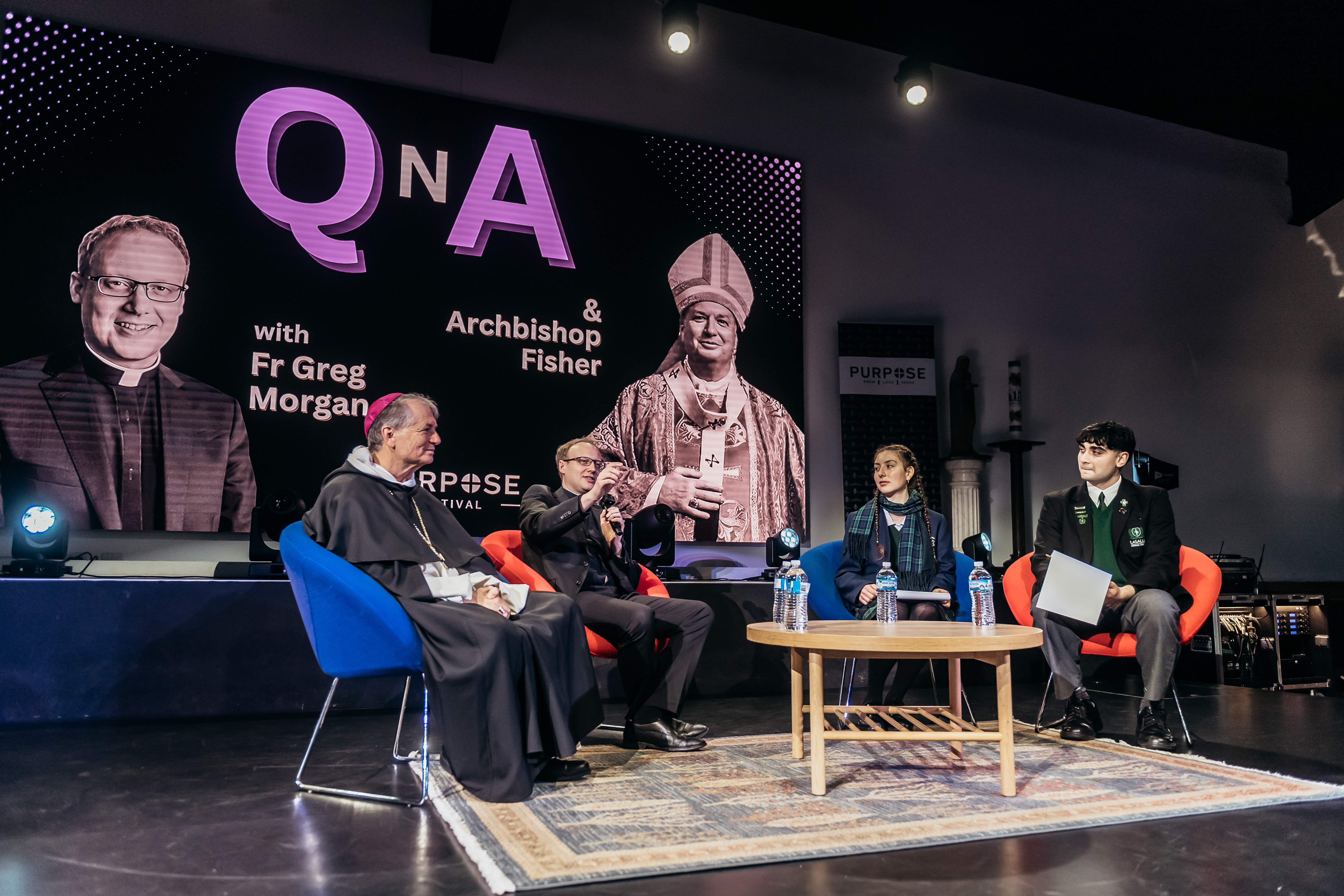
PURPOSE FESTIVAL 2025 – Images by Giovanni Portelli Photography © 2025

Digital transformation offers bold and beautiful ways to extend the invitation. Through video, podcasts, social media reels, digital testimonies, and online series, the Church can meet people where they are – often far from a parish doorway. Many will never step foot in a church but they will watch a video; they will search for answers; they will pause while scrolling past a social media reel. They will listen to a podcast that articulates the faith with clarity and charity. They will encounter a digital testimony that bears witness to Christ’s transformative grace. They may engage with an online series that presents the truths of the faith in compelling and credible ways. They will read a well-crafted reflection that integrates the Gospel with the complexities of modern life. They may be drawn to sacred art or liturgical music shared through headphones, which stirs their heart toward transcendence. They will explore the lives of the saints with others. Digital technologies can create the ‘pause’ in people’s lives that allows the Gospel to speak.

There are great opportunities to experiment with AI, virtual reality, and emerging platforms to distribute knowledge, improve services, and bring the Gospel closer to people’s lives. However, this requires space to think, try, fail, and innovate – partnering with digital creatives, Gen Z entrepreneurs, artists, and developers who already shape culture online. Inviting them into the Church’s digital mission could infuse it with energy, authenticity, and excellence.

Technology can be a “force multiplier,” extending the reach of ministries and deepening Gospel engagement. But without the human heart – creativity, pastoral wisdom, prayer – technology remains potential without impact.

We could imagine AI-powered tools answering everyday queries, freeing up clergy and staff for mission. Or a central platform where clergy and parish teams can access all communications in one place – including memos, updates, forms, events, and support resources. With secure login, it would offer smart notifications based on role, vocation or responsibility (e.g. a priest might receive instant push notifications about liturgical directives, while a parish secretary receives reminders about compliance deadlines), a shared calendar that syncs with personal devices, a searchable archive of past messages (with statements and updates stored, searchable and timestamped), and a simple way to ask questions or give feedback.

No doubt there would be details to work out and it means habituating clergy and parishes into using such technology which takes effort but, as we already know, digital systems and archiving can save an enormous amount of later effort through efficiency, free up time for more mission-oriented work and reduce time spent on administrative catch up. Most new initiatives will gain more traction when framed as pastoral opportunities, rather than a mere tech upgrade.

Data-driven systems can track faith journeys, strengthen formation, and personalise outreach – building a more missionary, welcoming Church. This enables the Church to understand who is coming to faith as adults, their motivations, and how they engage over time. Such insights are critically important for building a more responsive Church. Where the Church once shaped the message and the medium, today it is the audience, guided by algorithms and personal habit, who decides what is seen, heard, and believed.

AI can accelerate multilingual engagement and customise content to meet diverse communities with cultural sensitivity. making formation more contextualised so that everyone feels seen, heard, and invited. We can create and schedule social media posts in multiple languages, reaching different language groups with culturally sensitive messaging and invitations to parish life or special events.

Digital platforms also open new horizons for fundraising and advocacy – connecting local causes with global communities, turning parish projects into worldwide movements. If a local animal shelter in Ohio can raise funds through short reels on TikTok, raising 15,000 new followers as a donor base, and surpassing their goal by 300% in 10 days, so the Church could do the same. Church communities have done so, supporting clean water projects in Uganda and other mission related causes, breaking geographic boundaries and turning community projects into global efforts.   

Technology is shaping culture profoundly. As Pope Leo XIV reminded us recently, this technological age will transform how people seek truth, belonging, and encounter God. The opportunity before us as a Church is not just to adopt new tools but to reimagine the Church’s mission through them – to go wide and deep, reach the margins, and enrich the centre. We have a firm foundation of faith, the vision given to us by Jesus’ Great Commission to make disciples of all nations, and the momentum built by generations of faithful witnesses in our Church.

Now is the time to plant the orchard and trust the Spirit to bring the harvest.

the man of the Shroud

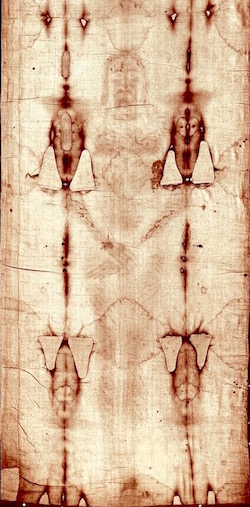
On Friday 27 June 2025, the Feast of the Sacred Heart of Jesus, I was privileged to speak at the inaugural Holy Shroud Conference at Liverpool Catholic Club. In preparing for the introductory address, I was drawn more deeply into the mystery of Christ’s Passion – not merely as historical event but as a living reality, imprinted not only on linen cloth but on our human situation today. The Shroud invites us to contemplate the face of the suffering Christ, to consider what it means that God chose to reveal Himself not in splendour, but in the vulnerability of a broken body out of love for us. I’m grateful to the organisers for their vision and hospitality, and to all those who came – not simply to learn more about a cloth, but to seek the One it points to: Jesus Christ, crucified and risen. May devotion to His Sacred Heart draw us ever closer to the love that knows no bounds.

First, let me thank you for your warm welcome and for gathering for this significant conference. It is an honour to be here with you tonight, and I bring greetings on behalf of the Archdiocese of Sydney.

I warmly welcome our esteemed speakers Fr Andrew Dalton, David Rolfe, William West and Dr Paul Morrissey, and congratulate the organising committee for bringing this opportunity to gather around the mystery of the Shroud in this Jubilee Year of Hope.  

The topic before us, the Shroud of Turin, is one that has intrigued believers and non-believers alike for centuries. And in recent decades, it has become increasingly clear that the Shroud is not merely a religious curiosity. It is, in fact, one of the most extraordinary artefacts in human history. For many, it is a relic. For all of us, it is a mystery. And for those who seek truth, it can be a profound source of encounter with the Gospel.

We are living in an age that hungers for evidence, for the tangible, for something real, especially when it comes to faith. And it is here that the Shroud speaks powerfully.

Many now know that there is a great deal of scientific and historical evidence suggesting that the Shroud could not have been the work of a medieval forger, as claimed by the carbon dating results of 1988. In fact, the deeper we delve, the more difficult it becomes to dismiss the Shroud as merely a product of human hands.

What is often less well known is that many leaders within the Catholic Church have expressed not just interest, but belief in the authenticity of the Shroud. Among them are the past three popes – Pope John Paul II, Benedict XVI, and Pope Francis – each of whom made personal pilgrimages to venerate the Shroud.

Each of them stood before it not as sceptics, but as men of prayer and reverence, seeing in it a profound connection to the passion, death, and resurrection of Jesus Christ.

When Pope John Paul II visited the Shroud in 1980, he called it a “distinguished relic linked to the mystery of our redemption”. Eighteen years later, after the carbon dating controversy, he returned, this time thanking God for what he called “this unique gift”. That is no small statement. No pope would thank the Lord for a forgery.

More than that, John Paul II called us to gaze upon the Shroud with what he described as “the believer’s loving attention and complete willingness to follow the Lord”. In those words, he gently redirected us – not to get lost in the science or the debate – but to encounter the One whose image we believe is preserved on that cloth.

Pope Benedict XVI went further, stating that the Shroud had “wrapped the remains of a crucified man in full correspondence with what the Gospels tell us of Jesus”. Pope Benedict, who was always precise with his language, offered here a clear rebuttal to the carbon dating claims.

Even Dr Michael Tite, the man who oversaw that 1988 testing, later admitted in a 2016 BBC interview that he had come to believe a real human body had indeed been wrapped in the Shroud.

Pope Francis made pilgrimage to the Shroud in 2015. He not only prayed before it. He reached up and touched it. With great reverence, he said: “In the face of the Man of the Shroud, we see the faces of many sick brothers and sisters… victims of war and violence, slavery and persecution”.

For Pope Francis, the Shroud was not just about the past. It is about Christ’s presence among the suffering of today. And so the Shroud remains a powerful sign of hope as it witnesses to Christ’s solidarity with all those who suffer, who carry heavy burdens of illness, poverty, war, and injustice. It speaks to them not only of Christ’s passion, but of His enduring compassion – a reminder that they are not alone in their pain.

The late Pope concluded, saying: “By means of the Holy Shroud, the unique and supreme Word of God comes to us: Love made man… the merciful love of God who has taken upon himself all the evil of the world to free us from its power”. That is the evangelical heart of the Shroud. It is a silent sermon, a visual Gospel, a testimony in linen to the mystery of divine mercy.

In the context of this new pontificate, one cannot fail to recognise the providential continuity in Pope Leo XIV’s choice of name — Leo — which echoes that of his venerable predecessor, Pope Leo XIII, who in his own time zealously fostered devotion to the Holy Face of Jesus. This resonance serves as a quiet reminder that the Church’s memory is long, and that the Lord continues to speak to every age through signs both old and ever new.

Other Church leaders in our day have also drawn attention to the Shroud’s powerful witness. Just this past Easter, Bishop Robert Barron reflected in his Easter Sunday homily on the burial cloths mentioned in the Gospel of John. He called them “strange and wonderful cloths” and said they “opened the door to faith long ago”, and may well do the same today. Rather than referring to the Shroud as a mere “icon”, Bishop Barron described it as a relic, “one that is venerated as the cloth the disciples Peter and John saw on Easter Sunday morning”.

He is not alone. Popular priests such as Fr Mike Schmitz and Fr Andrew Dalton, who we are blessed to have as a speaker at this very conference, have powerfully and effectively evangelised through their engagement with the Shroud, especially among younger Catholics.

But perhaps most remarkable is the Shroud’s impact beyond the Church. Over the years, it has impressed and even converted many non-believers – atheists, agnostics, and sceptics who were drawn into a journey of faith by what they encountered in the scientific and spiritual mystery of the Shroud. It has spoken, too, to Protestants and Jewish seekers. Some have testified that their belief in God was rekindled through their encounter with the Shroud and the sense of the supernatural it evokes.

This brings me to what I believe is the Shroud’s most urgent and timely gift: its power to evangelise.

The Shroud is not just a matter of interest for scholars or theologians. It is something ordinary Catholics, young and old, can share in conversations with friends, colleagues, even strangers. It opens the door to a conversation not only about Christ’s suffering, but about His love, about His sacrifice, about the reality of the Resurrection.

And in a world that is increasingly sceptical of faith, increasingly disengaged from tradition, the Shroud is a bridge. It offers people a reason to pause, to question, to wonder.

It invites them to consider: Could this really be the burial cloth of Jesus? And if it is, what does that mean for my life?

After all, we live in an age in which so many do not believe in God, and yet so many still miss Him – a time when people chase progress without presence, and in which a Shroud, paradoxically, unveils something about life: a mystery that speaks to us, a silence that invites us to respond, a hiddenness that in Christ reveals us to ourselves, as sons and daughters of the crucified Son of God.

So, this evening, as we begin our conference, I encourage each of you not only to listen and learn, but to reflect on how you might carry this message forward. How the Shroud might be part of your own call to evangelise – to bear witness to a love that left its mark not only on human history, but on a simple linen cloth that continues to confound, inspire, and convert.

Thank you for your commitment to this mission. May the Man of the Shroud draw us ever closer to His heart.

building God’s house together

I’ve just returned from an inspiring visit to New Zealand, where I had the privilege of working with several dioceses who gathered in Palmerston North and with Fr Simon Story and the vibrant parish community of New Plymouth. This parish is courageously stepping into a new way of being Church – one that is not driven by busyness, maintenance, or self-preservation, but by a deep and intentional commitment to evangelisation.

What follows are reflections shared during a breakfast meeting with the Parish Pastoral Council of New Plymouth. As a relatively new Council, we were exploring together their unique role within parish life, in collaboration with the Senior Leadership Team, parish staff, and the wider faith community. In my experience, the effectiveness of a parish’s mission is often shaped by how each body within it understands its identity and purpose – and the Parish Pastoral Council is a key example of this dynamic. I sought to engage the metaphor of a building site to draw out the different but interrelated roles of parish bodies as they seek to build God’s Church.

The Parish as a Movement, Not a Monument

Many parish communities today are asking hard but necessary questions: How do we grow again? How do we bring people back or reach those who’ve never come? How do we move beyond simply maintaining what we have, and step into the bold mission we’ve been given by Christ in his Great Commission?

These questions do not signal failure; they mark a turning point. What is needed is a new way of seeing the parish itself – not as a finished product, a heritage site, or merely a place we visit once a week, but as a living construction site.

This metaphor captures the parish not as a static monument, but as a dynamic, Spirit-filled mission still very much in progress. It is a place where every person is called to participate, where the work is ongoing, and where God’s house is being built – not just for us, but for the whole world.

At the heart of it all is God in Christ – the ‘Master Builder’ or divine architect of communion and mission, the One who calls, gathers, equips, and sends. God does not dwell in buildings made by human hands alone, but in the people who gather, grow, and go out in His name. It is God’s mission that builds the Church, and our parishes only have life and meaning if they align with His eternal design: that all might know His love and come home to Him.

Many in our communities remain spiritually homeless. Some have never stepped inside a church while others sit quietly in the pews, uncertain whether they are truly part of the mission or simply occasional users of the space. Many say they do not believe in God but still miss His presence in their life and feel this absence at turning points in their life. A missionary parish must always ask, “Who are we building for?” The answer is everyone, especially those without a spiritual home.

Building God’s house, then, means more than creating a welcoming space. It calls us to go out, extend invitations, and form a community of disciples who actively join in the work of building alongside us.

The Priest and Senior Leadership Team: Architects of the Vision

Every construction site begins with a vision. Experience has shown that the parish priests of the most fruitful and growing parishes, both locally and abroad, have established senior leadership teams. While models may vary, the priest and this team can well serve as the architects of the parish vision. Their role is to pray, discern, and shape the mission of the parish, to draft the blueprint for a vibrant community where Christ is the cornerstone and ensure that the parish remains on track.

They must ensure that what is being created is not just beautiful or functional, but mission-shaped: open to the world, inviting to the lost, and empowering to the faithful.

The priest’s leadership here is not simply to maintain, but to nurture and expand the living body of Christ. As recent popes have reminded us, the Church is not called to self-preservation but to bold evangelisation. True pastoral leadership moves the parish beyond comfort and routine – literally out of the pews and into the streets – answering the call of the Master Builder who sends His Church to the margins, where the Gospel must be lived, proclaimed, and embodied.

Parish Pastoral Council: Engineers of Strategy and Alignment

The Parish Pastoral Council can take the blueprint provided by the parish priest and senior leadership team and help figure out how to build the parish according to its vision. As the engineers of the parish, a key role this body can play is to translate vision into action, to discern priorities, assess needs, and develop strategies that are practical and fruitful. They ensure that what’s being built is sound – not only structurally, but pastorally. They listen deeply, respond thoughtfully, and help ensure that every part of the community is included in the building process.

Some critics caution that talk of “strategy” reduces the Church’s mission to mere management or secular frameworks. This concern is valid and serves as an important reminder that any planning must remain deeply rooted in prayer, discernment, and fidelity to the Gospel. The members of the Parish Pastoral Council are not managers of a project but co-responsible stewards of a living mission. They are spiritual vision keepers, as all parishioners must be, providing ongoing feedback to the priest on overarching priorities and helping to develop plans that serve the parish’s evangelising mission.

In the New Testament, Jesus selected and trained twelve apostles, sent them out in pairs, and gave clear instructions for their mission. The early Church, guided by the apostles, organised communities, appointed leaders and made practical decisions to sustain and grow the mission under the guidance of the Holy Spirit. The members of the Parish Pastoral Council can assist the parish priest to do the same, acting as a trusted body of advisors.

Above all, council members understand that their work is not inward-facing. The Church exists to evangelise, so their strategies ask not only “What do we need inside?” but also “How do we reach those outside?” This mission-driven planning ensures that practical steps serve the spiritual calling, not the other way around.

Parish Staff: Coordinators and Witnesses on the Site

On any construction site, it is the site coordinators who keep the project moving. In the parish, this is the role of the parish staff and teams.

These team members – responsible for administration, sacramental preparation, youth ministry, communications, coordinating catechists, and other daily responsibilities – bring both professional excellence and spiritual intentionality to the site of the parish. They are not just doers or organisers but co-builders of the mission, ensuring the vision from the priest, leadership team and Council becomes real, visible and effective.

Their role goes beyond logistics. Parish staff are witnesses to the vision, as are all the baptised who bring God’s promises alive. Many people in and around our parishes are still undecided: “Will I help build this? Am I a co-builder or contributor in this or just a guest passing through?” The manner in which parish staff exercise their roles becomes a living invitation to others. These frontline staff model what it looks like to move from maintenance to mission, from attendance to discipleship. They show what it looks like to be a builder of God’s house, not mere bystanders.

Parishioners: Living Stones and Craftspeople of the Kingdom

Finally, the real and necessary building takes place through the hands of the people – the parishioners – who are the ‘bricklayers’ or craftspeople of the Church. Far from being a minor or functional role, theirs is the essential work of making the vision tangible, one act of faith, service, and love at a time. Without them, no foundation is laid, no walls rise, and no mission takes shape. They are the craftspeople of the kingdom, bringing the Church to life in the world.

Every act of love, every prayer offered, every conversation of faith, every invitation made, and ministry served – these are bricks laid in love and hope. Parishioners are not consumers of a finished church, but co-creators of a living, breathing community of disciples.

They are the Church’s frontline: parents teaching the faith at home, volunteers welcoming at the door, youth leaders planting seeds of hope, welcomers providing hospitality. They are building God’s house with their lives, trusting the Master Builder to shape their efforts into something beautiful and enduring.

Conclusion

Truth be told, our parishes – as expressions and embodiments of the Lord’s house – will never be complete. They are always being built up, always expanding, especially toward those who do not yet know they have a place within. A missionary parish is not a fortress for the few but a spiritual home under construction for the many. There must always be spiritual scaffolding in place – space for more workers, room for growth, and open doors for those still unsure if they belong.

We are not building a parish only for those who already believe. We are creating a place that feeds the hungry, shelters the lost, nurtures the seeker, and sends forth the disciple. This is the kind of house God is building in the world, and we are called to build it with Him.

Our priests and their senior teams are entrusted with shaping the vision and calling others into the dream of the Master Builder. Our Parish Pastoral Councils continue designing structures and strategies that welcome and reach out to make the vision a reality. Our parish staff and ministry teams remain steadfast in coordinating and witnessing to what is possible. Above all, with faith, love, and boldness, our parishioners take up the tools and build alongside them, inviting all people to find their home in Christ.

As Psalm 127:1 reminds us, “Unless the Lord builds the house, the builders labour in vain”. Let us build not a Church for ourselves, but for the world. Let us join the Master Builder and never stop building our parishes as God invites us to.

grace in the gears: a theology of timekeeping

Time became something I could hold, quite literally, when I received my first watch at the age of eight, a humble Casio F91W. 

Clad in a simple black resin case, with its crisp digital display and softly glowing “light” button, it offered not just functionality but a kind of wonder. That subtle green backlight, switched on with a press, felt like a secret known only to my wrist. The built-in alarm rang bright and clear, and best of all, it was mine to set. It made me feel as if I had received a piece of grown-up responsibility, one beep at a time.

In the years since, I’ve been fortunate to develop a deeper appreciation for watches – especially the mechanical kind. The intricate choreography of gears, springs, and levers inside a movement continues to fascinate me. There’s something magical about how a mainspring’s stored energy animates a balance wheel into steady oscillation and timekeeping, all within the confines of a 39mm case. Whole worlds of engineering, history, and design are tucked beneath a sapphire crystal. 

While a quartz watch, powered by battery, achieves remarkable efficiency and near-perfect precision, it is, in a sense, outside of the need for human touch and is largely indifferent to the presence of its wearer. In contrast, a mechanical timepiece lives through motion or else requires winding by hand. It must be worn, carried, and kept close – in other words, it is sustained by connection.

Though an amateur collector, I’ve gradually assembled a modest yet meaningful assortment of mechanical watches, from classic Swiss chronometers to vintage, hand-wound pieces that evoke the craftsmanship and character of another era. Each watch is more than a mere object – each holds its own story and unique provenance.

Looking back on that first little Casio, and the pieces that followed over the years, I value these intricate instruments not merely for telling time, but for teaching me how to treasure it.

We can have a complicated, even fraught, relationship with time. We try to save it, make more of it, and race against it. But the fact is, time moves with or without our attention and passes with or without our consent.

Not only are we unable to master time, but we are often absent to it altogether. As the French philosopher Blaise Pascal observed in his Pensées, “We never keep to the present… We anticipate the future as too slow in coming… or we recall the past to stop it from escaping.” His words speak to a perennial human ache that St Augustine named centuries prior: our hearts are restless in the present. We are drawn forward by anxiety, pulled backward by nostalgia – anywhere but here, where life actually unfolds.

How, then, are we as Christians called to inhabit time? When I entered the Church I came to appreciate its understanding of time not as something to be resisted, outrun, or escaped but as something to be received, reverently and attentively. As the Psalmist prays, “Teach us to number our days, that we may gain a heart of wisdom” (Psalm 90). In the eyes of faith, time is not a burden to be controlled but a gift to be entered into.

Rooted in Scripture and nourished by centuries of tradition, the Church’s meditation on time understands it as sacramental – intimately bound to the mystery of the Incarnation and the unfolding drama of salvation. In Christ, eternity entered time, not to abolish it but to transfigure it, so that each moment might become a meeting place between heaven and earth.

Time, in the Church’s tradition, is not empty or even neutral, but shaped by grace and filled with invitation. As Pope Benedict XVI so beautifully reflects, “Time is not just a succession of days and years, but it is a time of salvation… each moment is penetrated by the presence of God, by His call and His grace”. 

As Pascal also wrote of our human condition, “The eternal silence of these infinite spaces terrifies me.” The vastness of existence at times threatens to overwhelm us, perhaps even more so today, when that vastness floods our phones and feeds from every seeming direction. We can be left drifting and unmoored, unsure of where to rest our attention.

Yet it is precisely through Jesus Christ – the Word made flesh – that time is transfigured and drawn into purpose by the potential for encounter. In Him, who we meet in time, the scattered moments of our lives are gathered and redeemed, for “He himself is before all things, and in him all things hold together” (Colossians 1:17). 

No longer merely a chronological sequence, time in Christ becomes the arena where eternity is unveiled and the very medium through which we actively participate in God’s plan. Just as the eternal Word of God took flesh in Christ and entered human history, so we are invited to step into time not with fear or futility, but with hope, trusting that each moment holds the potential for grace, communion, and transformation. This profound truth calls us to embrace time not as a limitation, but as a sacred opportunity to encounter God and offer ourselves to the Lord who holds all time. As Thomas Merton puts it, “The whole idea of eternity is that it means that we have enough time to love God.”

Through the art of horology we can be reminded that time is not a force to flee, but a gift to be sanctified. In Christ, time no longer separates us from God, from one another, or even from those we have lost. It unites us. 

Seen in this light, a humble watch on the wrist becomes more than an accessory, a mere gesture of style or utility. It becomes a quiet act of faith – a daily reminder that the present is not empty, that each passing second is touched by grace, and that even the smallest moment holds within it the weight of the eternal.

Christ deserves more than maintenance

I’m often asked the question: “What does it take to renew a parish?” My response is typically this – it is not merely a matter of filling the calendar with events. It is not achieved through a rebrand, a new logo, or an enhanced social media presence. It does not come from establishing additional committees. Nor is it simply a matter of rearranging the furniture, updating the website, or launching another fundraising initiative. While each of these efforts may have their rightful place, on their own, they are insufficient to bring about true renewal – one that is grounded in mission and evangelisation.

In experience, the renewal of parish life does not come about by addition, but rather by return. By “return,” I do not mean a reactionary traditionalism, but a re-discovery of Christ – a re-encounter with Him and a re-expression of His life in the heart of our community.

Renewal for the Catholic parish, as wisely observed by Fr James Mallon, looks much less like adding ornaments to a dying tree and much more like returning to its roots and nourishing them back to life. Pope Benedict XVI called for this decisive return when he defined our faith not as a philosophy or a moral code, but an encounter with a person, Jesus Christ, who gives our life “a new horizon and a decisive direction” (Deus Caritas Est 1).

This encounter is not an optional addition to the Christian life. It is its very essence. It must shape everything – how we worship, how we lead, how we form and disciple our people, and how we live out Christ’s mission in the world.

When Christ is truly at the centre, this encounter does not remain a private devotion but can shape the culture of the entire community. Culture, more than any program or plan, is where faith becomes visible, credible and contagious.

As it is often said today, culture is not a mission statement nor what is printed in the parish volunteer handbook. It is the lived atmosphere of a parish. Culture is found in the conversations in the car park, the tone of the preacher, at the front doors of the parish foyer, the unspoken assumptions behind every “we’ve always done it this way.” It is what people experience, not just what we intend.

The Acts of the Apostles paints an evocative image of Christian culture embodied and alive: “They devoted themselves to the apostles’ teaching and fellowship, to the breaking of bread and the prayers… and day by day the Lord added to their number” (Acts 2:42–47). This was not a policy or program. It was a living expression of shared values – Christ-centred, generous, prayerful and missionary. Culture was not a by-product but the very soil in which evangelisation took root and the Gospel spread to the very ends of the world.

Then as now, renewal in our parishes does not begin with more ministries or events. We are privileged in Sydney to host many excellent opportunities – conferences, programs, international speakers, and gatherings where people can learn, reflect and be better equipped for mission. But these initiatives are always offered with a clear understanding that the roots of parish renewal lie much closer to home. Unless parish life is receptive, vibrant, and missionary, even the best events will not bear lasting fruit. No event or initiative can replace the power of a parish alive with faith, hope, and love at its core.

True renewal begins with local leadership committed to reshaping the culture of each parish – from passive attendance to personal calling, from spectatorship to discipleship, from the questions “What do I get from here?” or “What time or energy do I have to give?” to the deeper call: “What does Christ ask of me?”. If the culture of our parishes does not change, then over time, nothing else will. That is how vital the parish is to the life and future of the Church.

It is important to recognise that even the most intentional parish culture cannot endure without clarity. Clarity necessitates a well-defined purpose, a consistent message, and unified leadership exercised by both clergy and laity, whose collaborative stewardship is essential for faithfully guiding the parish deeper into Christ’s life and mission.

It can mean the difference between aimlessly running in circles, trapped in the rut of routine parish life with little spiritual fruit, and boldly guiding a parish and its people into a renewed encounter with Christ and a committed mission to share His love.

We can see this in the contrast of the Tower of Babel to the Upper Room at Pentecost. At Babel, confusion reigned and mission stalled. At Pentecost, the Holy Spirit bestowed clarity and conviction, coming like a mighty wind that filled and shook the house, and transformed many voices into one unified message and shared mission.

It is significant to recognise that this clarity neither narrowed the Church’s mission nor made the Apostles rigid or close-minded. Rather, clarity of vision propelled their mission boldly into the waiting world, enabling them to adapt and persevere amid countless challenges.   

Clarity in parish life means knowing the purpose for which we exist. It means letting the essential mission given by Christ – making disciples – shape our priorities, budgets, preaching, events and even what we say “no” to.  Clarity emerges not from constant activity and frenetic busyness but from deep conviction and intentional leadership. When parish leaders lack clarity, energy is scattered and vision begins to fade. When clarity is present, people are freed to focus on what matters most: helping others encounter Jesus Christ and walk with Him as missionary disciples.

For this culture and for this clarity, there is a fundamental call to conversion of heart, of habits and in parish leadership. This begins not with mere action but with the surrender of faith. Leadership without conversion becomes performance or image management. In the same way, ministry without prayer loses its foundation and becomes sterile, or reduced to mere maintenance, or worse, quiet neglect.

One story that has always struck me as instructive for parish renewal is that of Nehemiah. Before rebuilding the walls of Jerusalem, Nehemiah prayed, fasted and wept. His leadership emerged from the furnace of dependence on God and only then did he build something enduring, even in the face of resistance and the suspicion of others. Like Nehemiah, parish leaders must be “cupbearers of the Lord”, stewarding not just tasks but spiritual vision and communal growth.

If the vision of the parish is to be a community called by God, gathered around Christ in Word and Eucharist, and sent forth in the power of the Holy Spirit, then this vision must be woven into every conversation, every homily, every ministry, and every decision. Parishes do not drift naturally toward missionary vitality. They drift toward comfort, maintenance, and the familiar.

Too often, a parish calls people forward not for mission, but for the survival of its own structures as Pope Francis was only too keen to point out. Such a community might summon people forward to ministries, tasks, and functions for which there is never enough help. People are engaged to “fill the gaps”, and with this deficiency mindset of managed decline, the parish’s best energy is spent maintaining systems that bear little fruit.

However, the Church is not meant to merely survive and Christ deserves more than maintenance. The Church is called to proclaim, to disciple, to bear fruit that will last (Jn 15:16). Christ deserves more than our leftovers. What He calls forth is not self-preservation or resignation, but the transformation of lives in Him.

The question is no longer whether this kind of renewal is possible. We’ve seen it – in communities here in Sydney and in parishes across the world. The real question is whether we are willing to undergo the kind of interior conversion and communal commitment that such renewal demands. It is a question of surrender and of sustained resolve. Are we prepared to lead differently, live differently, and love differently to become the Church Christ calls us to be?

The Church of tomorrow is being shaped by the choices we make today, by leaders who keep the “main thing” the main thing: Jesus Christ as truly good news for every human heart. We must continue to cultivate parishes where the culture reflects Christ, where clarity shapes our vision, and where conversion is not a one-time event but the ongoing heartbeat of parish renewal. This remains our vision in Sydney. Only this kind of Church, anchored in Christ, led by the Spirit, and formed through prayerful conviction, will have the power to truly transform lives.

pope leo XIV: a gift of grace

It’s good to be back in this little corner of the internet. I’ve been meaning to revive this blog, and what better time than now, right after the election of Pope Leo XIV and his inauguration this weekend. Along with that momentous event, I’ve also been working on a podcast with Dr Matthew Tan, called Awkward Asian Theologians (you can find it here). Our talks have been a mix of deep dives and messy tangents, pushing me to think more critically about current events and how they mesh with theology. So, I’m hoping to be more active here, sharing some reflections as they come.

To kick things off, I’ve been mulling over the inauguration of Pope Leo XIV, and what it reveals about the fascinating intersection of biography, theology, and pastoral vision. A few thoughts below.


With the inauguration of Pope Leo XIV this weekend, a new chapter in the life of the Church begins. Every new papacy brings fresh insight and particular emphases, shaped by the unique biography of the man who assumes the Chair of Peter. It is both natural and proper that a pope’s reception of revelation, his pastoral vision and his theological orientation are deeply influenced by his life experiences. In essence, biography shapes theology.

We’ve seen this dynamic play out in recent history. The profound personal loss and political oppression endured by Karol Wojtyła in Nazi- and Communist-occupied Poland left a lasting mark on his papacy as John Paul II. His unwavering focus on the dignity of the human person and the relationship between faith and reason was, in part, a response to totalitarian systems that denied both. Similarly, the horrors of World War II shaped Joseph Ratzinger’s theological outlook. As Benedict XVI, he confronted the spiritual emptiness of post-war modernity, urging the Church to rediscover a personal encounter with Christ, the source of true meaning. Then there was Jorge Mario Bergoglio, formed by Argentina’s “Dirty War” and his leadership as a Jesuit provincial, who brought a pastoral vision to the papacy focused on mercy, humility, and a preferential option for the poor. Each of these popes read the signs of the times through the lens of their own lives, and their theological vision was shaped accordingly.

Pope Leo XIV arrives with a similarly rich and distinctive biography. Born into a working-class family in mid-twentieth-century Chicago, with French, Italian, and Spanish roots, he grew up amidst the challenges and diversity of a rapidly changing America. His early academic formation in mathematics and philosophy suggests a mind trained in both precision and wonder. His missionary work in Peru placed him at the heart of communities marked by hardship and faith – experiences that no doubt deepened his concern for the marginalised and sharpened his sense of the Church’s global responsibility. Later, as Prior General of the Augustinian Order, his leadership was informed by his doctoral studies at the Gregorian University, where he explored the Augustinian vision of authority not as control or domination, but as service offered in love.

This Augustinian inheritance profoundly shapes Leo XIV’s spiritual and theological identity. As a self-acknowledged “son of St Augustine”, Leo XIV’s papacy will undoubtedly reflect the deep theological currents drawn from the life and thought of Augustine of Hippo. As an Augustinian friar and scholar, Pope Leo XIV draws not only from Augustine’s doctrinal insights but from the deeper well of his lived experience – one marked by struggle, restlessness and eventual surrender to grace. Like recent popes, Augustine’s journey reminds us that theology is never abstract; it is always, in some way, a response to the life that we have lived.

St Augustine’s own life is one of the Church’s earliest and most powerful accounts of conversion. Born in what is now Algeria in 354, Augustine’s youth was marked by ambition, intellectual pride and moral wandering. He lived with a concubine and fathered a child out of wedlock; he joined the Manichaeans, drawn to their dualistic philosophy, before growing disillusioned. “I had become a great riddle to myself” he would later write in his Confessions, identifying the inner conflict that drove his restless search for truth.

This search ultimately led him to Milan, where the preaching of St. Ambrose and the influence of Neoplatonic philosophy helped him reimagine both God and self. It was in a garden – so often a site of new beginnings and blessing – that Augustine underwent his decisive transformation. Hearing a childlike voice urging him to “take up and read”, he opened the Sacred Scriptures and encountered the call of Christ in Romans 13: “Put on the Lord Jesus Christ, and make no provision for the flesh”. Augustine later described this moment as though “a light of relief from all anxiety flooded into my heart”. It was the end of one life and the beginning of another.

What followed was a life of deep pastoral care and doctrinal brilliance. Augustine became a bishop, a theologian, and a relentless defender of truth and grace. His Confessions, The City of God and treatises on the Trinity continue to shape Christian theology to this day. His combat against Donatism and Pelagianism reflect not merely intellectual disagreements but his conviction, rooted in his own life, that grace is the beginning and end of all conversion.

I would suggest that to anticipate the shape of Pope Leo XIV’s papacy, it will be helpful to reflect time and again on the arc of St Augustine’s own journey, which has profoundly influenced Christian tradition and, by extension, the new pope. Augustine’s path from selfish ambition to spiritual surrender, from pride to divine dependence, and from moral confusion to the clarity of God’s mercy and truth, offers us a lens through which to understand Leo XIV’s theological and pastoral vision.

We can anticipate that Leo XIV’s vision will emphasise that true pastoral care arises from the recognition of human restlessness and the unceasing pursuit of God. We can anticipate a papacy that prizes preaching not merely as instruction but as a proclamation intended to delight and persuade. We can anticipate a vision of the Church as a spiritual community, bound together by charity, whose mission transcends all earthly political structures and orders (civitas terrena) while remaining actively engaged with them. We can anticipate an emphasis on personal conversion as the foundation of evangelisation, echoing St Augustine’s insistence that “what we are must be taught and what we have must be given”.

If we wish to anticipate the direction of this new papacy, we would do well to look not only to Pope Leo’s policies and public addresses, but to the story of his life – shaped by deep intellectual and spiritual currents – and to the saint who formed him, whose own journey still teaches the Church how to receive and respond to grace.

bearing witness in Asia

The intersection of Catholicism as the world’s largest Christian religion with the Asian continent, the home of two thirds of the world’s population and growing in political, cultural and economic influence, is just one of the realities that will be acknowledged at the Alpha Asia-Pacific regional gathering taking place in Kuala Lumpur, Malaysia, this month.

With a focus on the evangelising mission of the parish, I will be privileged to be speak at and be part of the gathering, learning of the diverse and emerging forms of mission in Asia with 450 leaders from 20 countries, including clergy and lay leaders from India, Indonesia and Singapore.

The Religions of Malaysia

The religiosity of Malaysia itself is heavily shaped by its geographical position between the ancient civilisations of India and China. The Strait of Malacca remains to this day one of the most important shipping lanes in the world, and for centuries has provided direct passage and safe harbour for merchant travelling between the Indian and Pacific oceans. This geography explains the significance of Penang, Malacca and Singapore as central ports and trading hubs along this route.

The activities of Indian and Chinese traders led to the dominance of Buddhism on the peninsula from the fourth century, with successive Buddhist kingdoms including the region within its domain. Islam was introduced to the peninsula in the thirteenth century from the Muslim port kingdom at Pasai, today’s Aceh in Indonesia, before Christian missionaries came onto the scene at the beginning of sixteenth century.

The Portuguese arrived in 1511 at Melaka, led by Alfonso d’Albuquerque, then came the Dutch a century later in 1641, and Britain in 1786 under the command of Sir Francis Light. It was the British who shaped and in a sure sense promoted the ethnic divisions that remain today in Malaysia, through a ‘divide and conquer’ strategy that brought in Chinese for the ports and mines, Indian labour for rubber plantations, and exercised a paternalistic approach that sought to restrain the Malays to agriculture as farmers and fisherman. It could be put that the division of political and economic influence by the British was designed to keep the Chinese out of politics, the Malays out of any role in the economy, while the Indians enjoyed neither political nor economic power.

Fast forward to today and two-thirds of Malaysia’s population remains Malay, one quarter Chinese and the remaining ten percent is largely Indian. While Islam is the defining essence of the Malay identity as enshrined in the Federal Constitution, the reality on the ground is a highly pluralistic and syncretic religiosity that presents challenges as well as opportunities for the Gospel which are well worth exploring.

Christianity in Asia

The life and affairs of the church in Europe, Latin America and Africa tend to dominate coverage of global Catholicism. However, Catholicism in Asia is no less noteworthy and will become increasingly significant for the world church, including the church in Australia, in the decades to come.

We have already seen an increasing Asian presence in our local churches, not only in our pews but also on the sanctuary. Clergy and religious from the Philippines, India, Vietnam, Korea, and other parts of the region have arrived to form an integral part of our church in Sydney and Australia.

Apart from the Philippines and Timor-Leste, Catholics in Asia are a religious minority—as are Christians more generally in the region.

There are an estimated 380 million Christians in Asia, representing 8 per cent of a total population of 4.5 billion. Hence, the faith is lived out without the supports of an extensive Christian presence or substantial institutional resources, and in full contact with the major Asian religions, dominant philosophies, and their adherents, including Hindus, Muslims, Buddhists, Taoists, and Shintoists.

Nonetheless, the vibrancy of Catholic and other Christian groups in Asia remains, as seen in the Syro-Malabar and Eastern Orthodox communities. The witness and evangelical energy of these churches are well known, not only in Asia but increasingly in our own dioceses.

Historical Influences

The lived situation of Catholics in Asia today and their outlook on evangelisation are deeply shaped by historical circumstances.

In many parts of Asia, Christianity is viewed as a product of European colonisation and therefore foreign to local culture. The impact of the missionary endeavours of the eighteenth and nineteenth centuries looms large in this perception. Consider the British missionaries in Sri Lanka, the Portuguese and Dutch in India and Malacca, the Spanish in Philippines, the French in Vietnam, the Italians and other foreign missionaries in the history of Chinese Christianity.

However, what can be missed in the conventional affiliation of the Christian faith with western imperialism is that the Catholic and Protestant missionaries of these centuries were not always so neatly aligned with colonial administrations, or their trading partners.

For instance, the East India Company was long reluctant to admit Christian missionary organisations into their territories, on account of their tendency to upset the local social order and prevailing religious sensibilities. The patron saint of the east, St Francis Xavier, was himself often in conflict with the Portuguese authorities over their mistreatment and exploitation of indigenous groups.

Moreover, the misperception of Christianity in Asia as a late and artificial imposition from the west overlooks the presence of the Gospel in south and central Asia at the very origins of the church, millennia prior to the rise of modern colonial empires.

As is well known, St Thomas the Apostle arrived with Jewish traders in the south of India in the first century and thousands were baptised on the Coromandel and Malabar coasts.

The faith spread east in subsequent centuries, along the old Silk Road on which Nestorians travelled.

The famous Xi’an stele attests to the arrival of the Assyrian missionary Alopen in modern-day China in the seventh century, during a period of religious toleration under the T’ang dynasty, which saw the first Christian churches built at the emperor’s expense.

The collapse of that dynasty in the tenth century led to persecution of many religious groups and the near extinction of Christianity in that region for two centuries or so.

The Christian faith would not reappear in China with any significance until the time of the Mongols.

Then there is the figure of John of Montecorvino, an Italian Franciscan of the late thirteenth century, who evangelised thousands and went on to construct Catholic churches in the heart of Beijing.

The Challenge of National Religion

The situation of Catholics in Asia has also been shaped by rapid decolonisation that followed the Second World War, with these various independence movements leading not to secularism as has been the story in the West but to assertive forms of national religion in which ethnicity and religious identity have coalesced.

One thinks of the rise of Islamic nationalism in the region, Sinhalese Buddhist nationalism in Sri Lanka, and Hindu nationalism in India, which have placed Christian minorities under significant pressure and threat.

This is not to say that religious indifferentism and excessive individualism are not also present in Asia but the challenge of opposing religiosities with official backing is predominant in the minds of Asian Christians.

It is amidst these challenges that Catholics and other Christians demonstrate courageous witness to the Gospel in families, local networks, and worshipping communities.

As Pope John Paul II shared with the church in Asia, some 25 years after Paul VI’s landmark visit to the region, while the religious traditions of the ancient cultures of the East remain a challenge for the mission of evangelisation, the call to bring the Gospel to maturity in ways which are “fully Christian and fully Asian” remains before us.

This is because the Christian faith is not alien to these lands but an integral part of their history and indeed a vital force for their future.