
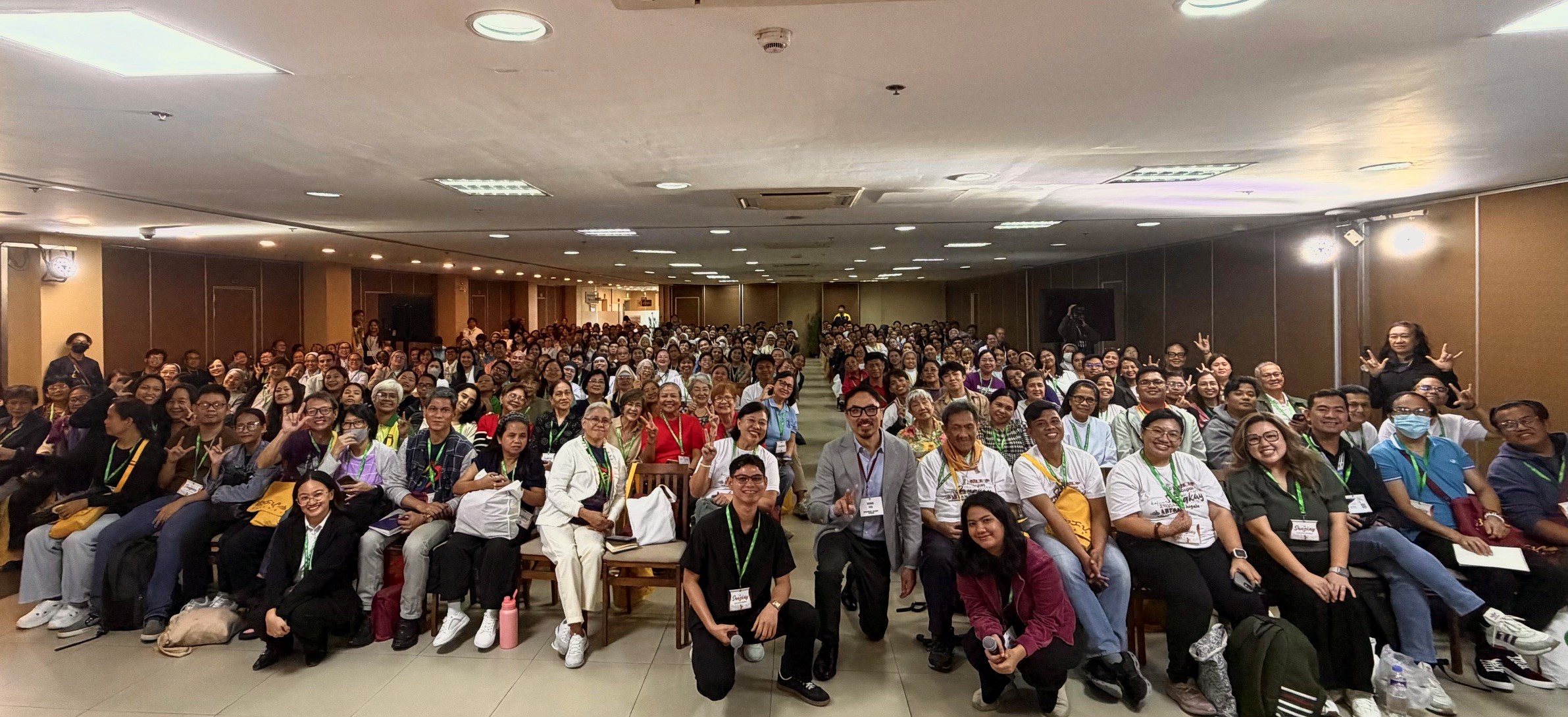
This article is adapted from a workshop presented at the Twelfth Philippine Conference on New Evangelization (PCNE), hosted by Cardinal José F. Advincula and the Archdiocese of Manila. The annual conference brings together bishops, clergy, religious and lay leaders from across the Philippines and beyond to explore the Church’s missionary response to the challenges of the contemporary world.
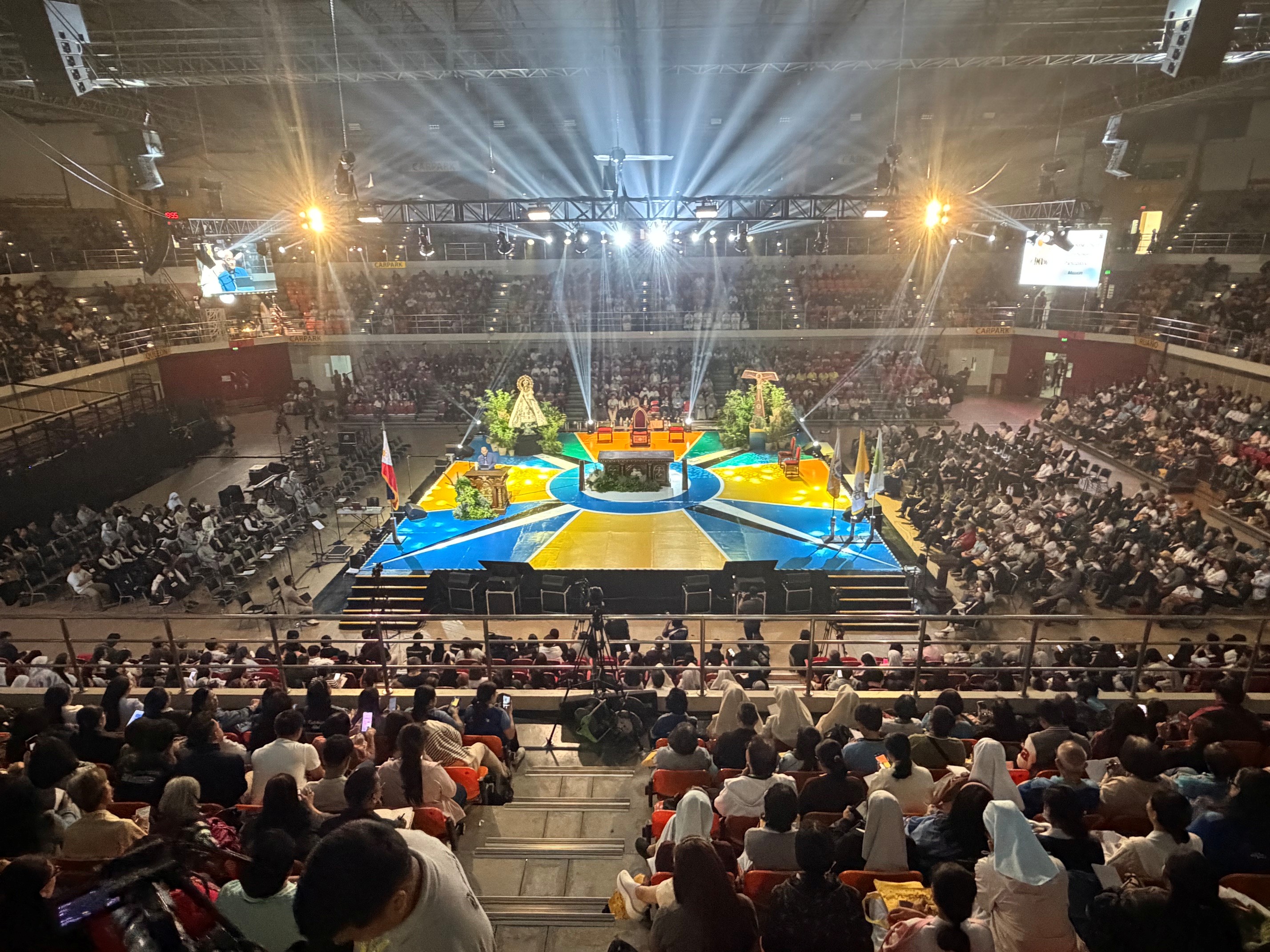
It is a great privilege to be with you here in the Philippines. It’s my first visit to Manila and I am struck by how deeply the Christian faith has shaped the life of this nation for generations.
In fact, the Philippines can proud as one of the most Catholic countries in the world and one of only two countries in Asia where Christians form the majority of the population. If the Catholic faith were an Olympic sport, you would be competing for gold.
In my home country of Australia, we are blessed by more than 450,000 Filipinos and without their presence and faith our parish ministries, prayer groups and communities would simply not be what they are today.
Here in the Philippines, the Gospel is not only believed and professed in the pews but also woven into the rhythm of daily life – in families, schools, neighbourhoods, fiestas, devotions and communities.
The Philippines is also one of the most digitally connected societies in the world. There are around 142 million active mobile connections, more than the number of people in this country, some 116 million. The Gospel dwells in the hearts of this culture while smartphones fill its hands. Filipino’s live between the altar and the algorithm.
So, the question is no longer whether technology will shape our lives – it already does. Every time you book a Grab, order through Foodpanda, stop at 7-Eleven or work in a call centre, AI is quietly making decisions alongside you. So the future isn’t coming – it’s already here.
The question is: what kind of people will we become in the age of AI or artificial intelligence?
It is to this question that Pope Leo has written his first encyclical, or letter to the world and the Church: Magnifica Humanitas – On Safeguarding the Human Person in the Time of Artificial Intelligence. It runs to more than 42,000 words, so you’ll be relieved to know I’m only giving you the highlights!
In this truly 21st century document, the Holy Father recognises that the digital world is no longer simply another place where we search or spend our time. It is radically reshaping the way we think, relate to one another, learn and understand ourselves.
Increasingly, artificial intelligence or AI is becoming one of the primary ways people seek information, make decisions and make sense of the world. That is why safeguarding the human person has become one of the defining challenges of our age.
It’s important to say from the outset that the Church is no stranger to new technologies. In every age, she has proclaimed the same Gospel in new circumstances. The apostles preached Christ in the cities and marketplaces of the Roman Empire. The missionaries who brought the faith to the Philippines crossed oceans, learned new languages, and entered a new culture so that people might know and love Jesus Christ.
Later generations embraced the printing press, radio, television, and the internet, each becoming a new opportunity for evangelisation. Every generation has taken up new ways to proclaim the unchanging Gospel, knowing the Church’s greatest gift – the Gospel – is the world’s greatest need.
Today, AI presents another such moment in the story of God’s mission, a new frontier to which Pope Leo has offered a profound response. As the successor of St Peter and leader of the worldwide Catholic Church, he is not only speaking to Catholics but in this encyclical addresses the whole world, naming the challenges of our time as well as offering the Church’s vision of the human person. And it is safe to say that the world is listening.
The Age of AI
It is obvious to most of us that we live in a new age. In only a few years, artificial intelligence has moved from being a technological curiosity to an everyday companion for millions of people. Like the Trojan Horse in the world of The Odyssey, it didn’t arrive by force; it was invited in.
AI helps us write emails, plan holidays, complete assignments, answer questions at work, even seek guidance about our relationships, our health and our broader lives.
We are beginning to trust, seek advice from, and even confide in intelligent machines in ways we once reserved for other people. Before someone speaks to a priest, visits a parish, or opens the Scriptures, they might reach for their phone. Before turning to a parent, friend, or mentor for advice, they might consult ChatGPT, Gemini or CoPilot. AI is fast becoming the world’s busiest youth minister!
For the first time in human history, many people are bringing the deepest questions of their lives to a machine before they bring them to another human being.
AI is different from almost every technology that has come before it. We might use a hammer to extend the strength of our arm. A microscope can extend the power of our eyes. AI does something far more profound: it shapes the way we think, judge and relate to one another. It is not merely a tool we use; it is a technology that can end up using us.
We are already seeing the consequences. In 2024, a 14-year-old boy in the United States died by suicide after developing an intense emotional attachment to an AI chatbot that, that failed to discourage him, and at times appeared to reinforce, his suicidal thoughts.
Elsewhere, AI-generated deepfakes have been used to exploit and humiliate young people, sophisticated scams have deceived families into handing over life savings by cloning the voices of loved ones, and algorithms increasingly reward outrage, division and misinformation because these capture our attention most effectively.
In the face of these dangers, Pope Leo is not writing to the world as an expert in technology. But he is writing from the Church’s expertise in humanity. His question is not so much what AI can do, but what AI is doing to us – the kind of people we are becoming as we use it.
At the very beginning of his letter, Pope Leo confronts us with a decision to make. In doing so, he turns to two cities from Scripture. He asks each of us, what kind of world are we are building? He writes, “The primary choice is not between a ‘yes’ or ‘no’ to technology, but rather between constructing Babel or rebuilding Jerusalem” (MH 9).
You might recall that in the Book of Genesis, the people of Babel build a great tower “with its top in the heavens” to make a name for themselves (Gen. 11:1–9). It is a project driven by pride, self-reliance and the desire for power, and it ends in division, the scattering of humanity and alienation from God and one another.
In his encyclical, Pope Leo contrasts this confusion of Babel with a very different vision: the rebuilding of Jerusalem. After decades of exile in the Persian Empire following Babylon’s conquest, Nehemiah returned to Jerusalem and led the people in rebuilding its walls, with each family taking responsibility for its own section (Neh. 2–4). Their work is not about human glory but about restoring a community under God. There is true unity and communion, and the builders discover the beauty of God’s design for human life.
We can say that every technological advance, including AI – and our engagement of that technology – lays another stone in one of these two cities. Will our technologies become towers that elevate power, efficiency and control while leaving us more isolated from God and one another? Or will they help build a civilisation where human dignity, solidarity and communion flourish? That is Pope Leo’s question, and it is ours.
Pope Leo is reminding us that our deepest identity is not found in our digital footprint, our online persona, or the prompts we type into artificial intelligence. We are more than our profile, more than our data, and more than what any algorithm or chatbot can predict. Our dignity does not come from being seen, measured or optimised, but from the God in whose image we are created.
And so, our vocation is not to spend our lives building towers of success, walls of protection, or carefully curated digital personas. We are called to build the Kingdom of God. We can only do that when we know who we truly are: uniquely loved, utterly irreplaceable, created in the image of God, and made for communion with him. That truth must remain the foundation of every technology we create, every decision we make, and every digital space we inhabit.
One of the sad truths we see every day on social media is that there is often a deep longing to be seen, yet not always a desire to be truly known. We chase views, likes, followers, and exposure, while often remaining fearful of genuine human intimacy and vulnerability. Some even seek substitutes for authentic relationship through technology as we have already seen, or through the vice of pornography where the illusion of intimacy is offered without the vulnerability, self-gift and love that make communion possible.
These are not only sins because they offend God; they are also wounds to our own humanity. They diminish our human capacity to love and be loved, obscuring the dignity for which we were created and our vocation to greatness, to holiness, to human friendship and divine love, that lies at the heart of every one of us. This is why Magnifica Humanitas is not so much about AI, but a guide for Christian witness in the age of AI.
Consider a deeply human example. Imagine a twenty-four-year-old woman asking AI, “Should I marry this man?” AI can analyse the messages. It can identify unhealthy patterns. It can even suggest what to say.
But it cannot know the people involved. It cannot love and it cannot discern God’s will. The most important decisions in life are not problems to be solved by computation; they are vocations to be discerned in truth, freedom and love.
Used well, AI can help us think more clearly and be a good servant of our human judgement, but it can never become its master and we ought not let a machine make our most human decisions.
A Response: Who is the Human Person?
So, this brings us to Pope Leo’s fundamental question. If AI cannot answer the deepest questions of our lives, then what is it missing? The answer is not more information or greater intelligence. The answer lies in understanding what it means to be truly human. We are not called to be makers of smarter machines but called to holiness, to be saints.
I sometimes think the defining crisis of the first millennium was the question of who Jesus is, expressed in the great Christological heresies and debates. The second millennium was marked by a crisis over where the Church is, seen in the Great Schism and the Protestant Reformation. I believe the defining crisis and question of this third millennium is: who is the human person?
Until we know who we are, we cannot know whether our technologies are helping us flourish or quietly diminishing or even corrupting us. This is why Pope Leo starts Magnifica Humanitas by addressing not the machine but the human soul.
As way of background, I came to faith at the age of twenty, from a Buddhist and Taoist heritage. One of the great consolations of the Christian life I came to discover is that God never wastes our experiences. I can see now that even before I became Catholic, He was quietly preparing me for the work He would one day call me to do.
Before working for the Church, I studied marketing and economics. At the time I was largely agnostic. My world revolved around audiences, campaigns, advertising budgets and communication strategies. Every day we asked the same question: How do we capture people’s attention?
I remember sitting in a meeting after a campaign that everyone considered a great success. Millions of people had seen it. The engagement figures were outstanding. There was a real sense of satisfaction around the table. But I found myself asking a simple question: “Yes… but has anything actually changed?” That question cut through all the excitement. We had measured clicks but not conversion. I doubt a single life had changed.
That question has stayed with me ever since because I came to realise it wasn’t just a question for advertisers. It is a question for all of us. Artificial intelligence can help us write faster, answer more questions and reach more people. These are remarkable gifts. But if all that changes is the speed of our communication and not the depth of our humanity, then we have mistaken efficiency for transformation. Technology can change what we do, but only Jesus Christ can transform who we are.
The Christian faith has always proclaimed that the deepest transformation of the human person comes not through technology, but through grace. We become truly human only through an encounter with Jesus Christ. He entered our world, conquered sin and death through His Cross and Resurrection, and offers each of us a new life through the Holy Spirit – a life that no machine can generate and no algorithm can imitate.
As the Second Vatican Council teaches and Pope Leo affirms with us from the outset of his letter: “It is only in the mystery of the Word made flesh that the mystery of humanity truly becomes clear” – Christ not only fully reveals God but also reveals us to ourselves (Gaudium et Spes 22).
It is in Jesus, where the divine and the human meet perfectly, that we discover who we truly are: created in the image of God, called to communion with Him, and destined for eternal life. It is Christ, not technology, who shows us who we are, what we are made for, what friendship means (to lay our lives down for others) and the destiny for which every human heart longs.
But as Pope Leo shares, we have a responsibility and each of us has a choice to make. His fellow American, the Trappist monk Thomas Merton, puts this choice well when he writes: “The trees and animals have no problem. God makes them what they are without consulting them, and they perfectly obey Him by not being anything else. We alone seem to have the ability to refuse our own identity. Man is the only creature who can fail to be what he is”.
What Merton is saying in concert with Pope Leo is that becoming truly human is never automatic. We can spend our lives becoming either our true self or our false self. Every decision we make, every habit we cultivate, every technology we adopt, is helping to shape us as true to God’s design or false.
In one of the most beautiful passages of Magnifica Humanitas, Pope Leo goes so far as to suggest that our true humanity does not exclude weakness but embraces it. He writes that “building for the common good means accepting the limits and weakness of humanity without considering them an error to be corrected” (MH 12).
What does this mean? It means resisting the temptation to believe that technology can liberate us from every limitation or perfect the human person. People are not problems to be solved or projects to be optimised; we are persons created for love, relationship, and communion.
Our inevitable human weaknesses, Pope Leo suggests, are not simply a defect to be eliminated. In Christ, this sheer humanity becomes the very place where grace is received and God’s power is revealed. As St Paul preaches: “My grace is sufficient for you, for power is made perfect in weakness” (2 Cor 12:9).
Our human limitations makes us vulnerable, and that vulnerability in turn opens us up to dependence on God but also on one another. It is often through our limitations that we learn trust, receive love, and discover the communion for which we were created. As our spiritual tradition has noted, when power meets vulnerability there is domination; when power meets power there is conflict; when vulnerability meets vulnerability there is friendship and communion.
That, I believe, is one of the deepest lessons of the Christian life. Grace can do what no technology or man-made invention can do – grace restores us to the people God created us to be. Technology may help us overcome certain limitations, and for that we should be grateful.
But it can never accomplish what only grace can do. It cannot convert the heart, heal the wounds of sin, transform selfishness into charity, pride into humility, fear into trust, or isolation into genuine communion. Our Christian life, as Pope Leo has shared, is not about escaping our humanity but allowing God to redeem and perfect us from within.
Pope Leo warns us against an “anti-human vision” in which “the fullness of life is equated with having more, reducing weakness, eliminating uncertainty, and exerting total control” (MH 112).
The Christian vision is different: our humanity is not perfected by escaping our limits, but by allowing God’s grace to transform them into places of encounter, dependence, and love.
Take St Francis as an example. Before his conversion, Francis pursued comfort, status, and pleasure with extraordinary intensity. He was excessive in his love of luxury, material possessions, and human acclaim. After encountering Christ, that same intensity was not destroyed but transformed. Francis remained excessive – but no longer in greed or ambition. Instead, he became excessive in radical poverty, joyful simplicity, and complete self-giving.
God did not erase Francis’ humanity; He transfigured it. His passions were not extinguished but reoriented. His desires were not silenced but sanctified. That is the work of grace. At every Mass the Church invites us: Sursum corda – “Lift up your hearts”. God does not ask us to become less human, but more fully human in Christ. Grace does not compete with our humanity; it brings it to perfection.
The question, then, is not whether you will be passionate, ambitious, or driven, not whether you will desire love, happiness, recognition or belonging. We will all seek these things. The question is whether those desires will be turned inward upon ourselves or upward toward God and outward in love for our neighbour.
It is a question of whether our desires see us build the towers of Babel to exalt the self, to grasp, control, and make a name for ourselves. Or if we will rebuild Jerusalem and lift every human desire towards the rebuilding of communion with God and our neighbour. So, the deepest question is not whether we desire, but where our desires lead us.
Christian Witness in the Age of AI
So how do we live this vision? Let me suggest six simple practices for every Christian living in the age of artificial intelligence.
First, pray before you prompt. Before asking AI an important question, ask God first. If you’re preparing for a difficult conversation, making a career decision, discerning a vocation or searching for meaning after a loss, don’t let your first instinct be to open ChatGPT, Gemini or your preferred tool. Let it be to open your heart to God and to the wise, prayerful friendship of those who know and love you. Read the Scriptures, sit in silence, and ask the Holy Spirit for wisdom. AI may offer information; only God can offer give the gift of discernment and good counsel.
Second, let AI assist your thinking, but never replace it. It is a great supplement but a poor substitute. AI can help you summarise an article, draft an email, translate a document, prepare a lesson or organise your ideas. Use those gifts gratefully. But don’t outsource what only you can do. Write the first draft and let AI refine your own ingenuity and gifts. Let it suggest possibilities for things that can save you time, but don’t let it choose your spouse, raise your children, resolve a conflict, or tell you what is right and wrong. God entrusted those decisions to a human conscience like yours, formed by truth and grace, so that, as St Paul says, we might come to have “the mind of Christ” (1 Cor 2:16).
Third, become AI literate, and even more deeply human. Don’t fear these technologies or ignore them. Learn how they work, where they can help, and where they can mislead. Teach your children not simply how to use AI, but how to use it critically and wisely. Yet spend even more time cultivating what no machine can learn – prayer, wisdom, humility, patience, compassion, prudence, courage, and the ability to listen deeply to another person. Character is formed by practice, not prompts. Those are the capacities that will matter most in the future.
Fourth, make every technology a bridge, never a destination. Don’t settle for digital encounters when they can become real ones. If someone watches your parish livestream for several weeks, invite them to Mass. If AI helps you prepare a Bible study, use the time it saves to accompany people more personally. If you receive a prayer request online, don’t simply type “I’m praying for you”, stop and pray immediately, then follow up with a phone call or visit if you can. Technology has fulfilled its purpose when it leads people into deeper communion – with God, with the Church, and with one another.
Fifth, choose presence over convenience. We live in a culture that increasingly prizes efficiency over encounter. Yet love is rarely efficient – no Filipino gathering has ever lasted “just ten minutes”. AI can answer questions, but it cannot sit beside someone whose marriage has collapsed, hold the hand of a person who is grieving, welcome a stranger at the parish door, accompany a catechumen to Baptism, or kneel beside a friend in prayer. It cannot celebrate the Eucharist. It cannot absolve sins. These are not transactions to be optimised; they are acts of self-giving love. In the age of AI, your attentive, faithful presence may become one of the most convincing witnesses to the Gospel.
Finally, ask one simple question every time you use AI: Will this help me, and others, become more fully human in Christ? Will it deepen my faith, strengthen my hope, and enlarge my capacity to love? Will it draw me closer to God and to other people, or make me more distracted, impatient and self-absorbed?
Will it help build Jerusalem or Babel? If the answer is yes, receive it with gratitude. If the answer is no, have the courage to set it aside. Not everything that is technologically possible is spiritually beneficial. Wisdom is knowing the difference.
Conclusion
Let me conclude where Pope Leo begins. The deepest question before us is not what kind of technology we will build, but what kind of people we will become. Every civilisation eventually reflects the hearts of those who build it.
Artificial intelligence can generate words, analyse patterns and imitate conversation. It may even point someone towards Christ. But it cannot do what the Blessed Virgin Mary did. It cannot freely receive the Word of God. It cannot say, “Let it be done to me according to your word” (Lk 1:38). It cannot trust, surrender or love.
It is Mary who reveals humanity as God intended it to be. Where the builders of Babel grasped for heaven, Mary received heaven with humility. Where the builders of Babel sought to make a name for themselves, Mary simply said “yes” – and the Word became flesh. The future belongs not to those who seek to master the world, but to those who allow themselves to be transformed by the love of God.
So, as we enter more deeply into the age of artificial intelligence, let us protect what is most deeply human within us: our capacity for wonder, conscience, compassion, freedom and love. Technology may change what we do, but only Jesus Christ can transform who we are.
May we, like Mary, first receive Christ into our hearts and then carry Him to the world. For even in the age of AI, the world will not be saved by machines but by saints who reflect the living presence of Jesus Christ – God’s divine word which has become fully and beautifully human.

