rebuilding our parishes for growth

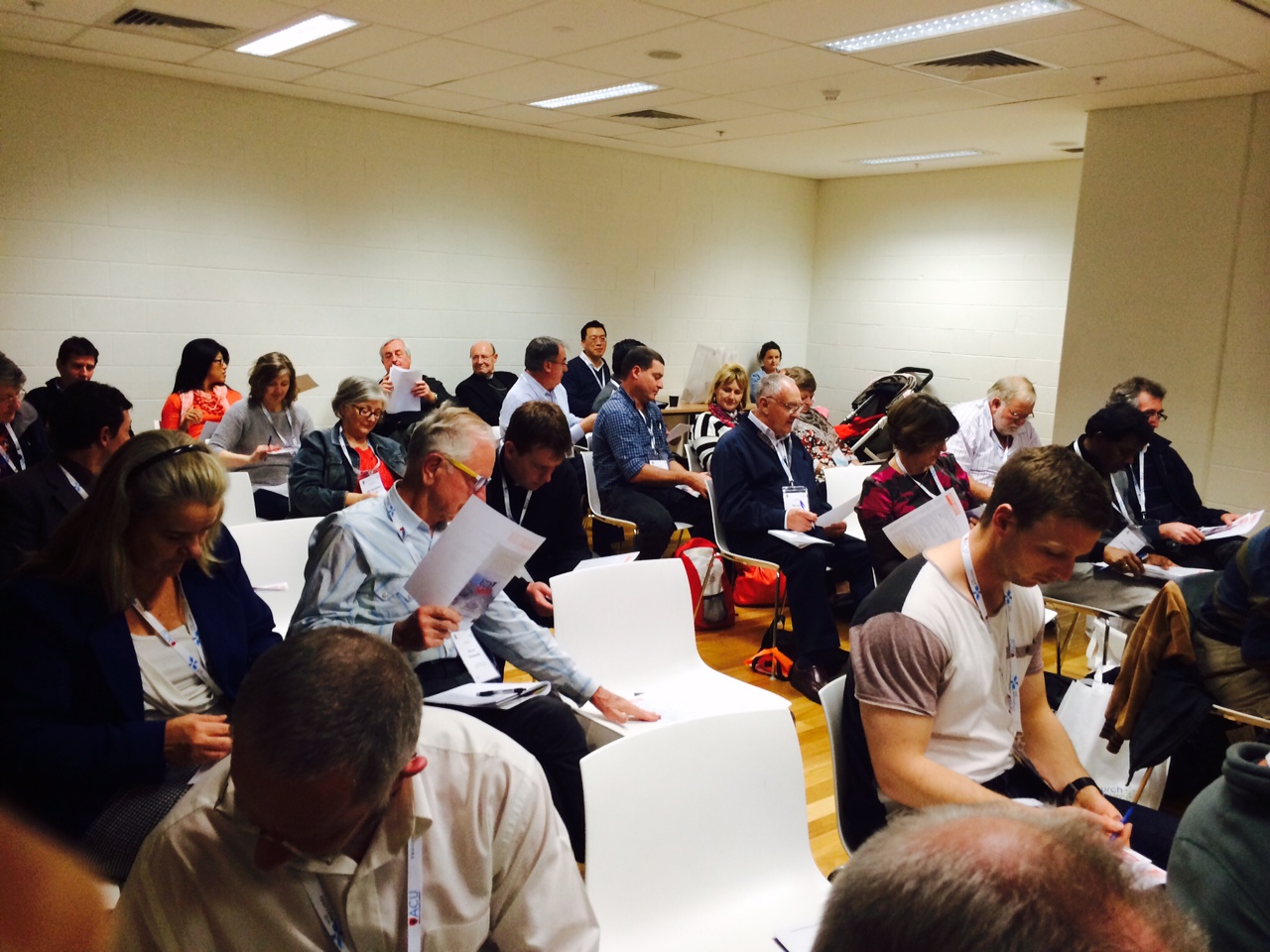
logo2014Some 550 delegates from Australia, New Zealand and Papua New Guinea gathered at the Proclaim Conference 2014 this past week in Sydney to listen to leaders in parish ministry and evangelisation.

These practitioners included the authors of Rebuilt, Fr Michael White and Tom Corcoran, representatives of other Christian denominations, and Catholic lay men and women committed to transforming their local communities.

It was a whirlwind of three days, with almost forty workshops made available and addressing RCIA, faith support for families, the quality of parish leadership, ordained and lay, issues of disability and inclusion in our parishes, liturgical practice, and the use of new media in parishes, among others.

The best aspect of the conference for me was to connect with old and new friends, to experience the solidarity of so many others seeking to live the same mission, and to hear and weigh up the many complex issues that are involving in living what is, at least in principle, if not in practice, a simple and holy mission: to allow the life of the Gospel, the life of Jesus, to radiate within and flow out of the heart of our parish communities into the world that hungers and awaits a Word of life and hope.

I was also privileged to present a workshop at the conference which I share below in the hope it might trigger your own reflections on how you might best lead your parish community into a better future (for more regular readers of this blog, it contains many of the views expressed previously but not yet shared with a wider audience). A PDF of this presentation as well as a resource I handed out – the ideal parish pastoral plan (at least as I imagine it!) – is also available at the end of this blog if it is of help and interest to you.

The Pastoral Reality
Proclaim 3It is fair to say that the parish remains the primary experience of Church for many Catholics. There is much to celebrate – the commitment of our leaders, ordained and lay, various forms of pastoral activity and outreach, the living faith that makes these communities a true spiritual home.

However, we are also conscious of the many challenges that face our parishes. Among these is the decline in the number of those attending these communities on a weekly basis. Indeed, researchers have described the parish as having reached a ‘critical moment’ in the life of the Australian Church.[1]

We know that of our 5.4 million Catholics in Australia only 662,000 or 12.2 per cent join us for Eucharist on any given weekend.[2] Almost a third of these Mass attenders (some 220,000) are aged between 60 and 74 while of all Catholics aged between 20-34 in Australia, only 5-6% attend.[3] So we are witnessing an ageing congregation with fewer among younger generations to replace them as we move into the future.

Migrants, of course, account for over 40% of our Mass attenders.[4] We are indebted to and sustained by the participation of these diverse ethnic communities. However, we also know that second generation Australians, that is, the children of Catholic migrants, are far less likely to practice than their parents.

Furthermore, some 13,000 Catholics stop attending Mass each year, and across all age groups more than 20,000 Australians every year are ceasing to identify themselves as Catholic (a dis-identification of some 100,000 Catholics over the last five years).[5]

SB048As Dr Bob Dixon, among others, has recognised, the prospect that this situation raises in our lifetime is that of ongoing Catholic institutions, including schools, colleges, universities, hospitals, nursing homes and aged care facilities but fewer parishes where the worship of God enjoins a community of believers.[6] The related concern is that the Church in Australia will be reduced to a form of non-government organisation, a provider of services – including healthcare and education – but whose religious dimension is associated more strongly with their historical origins rather than their existing or ongoing spirit.

It becomes clear that we need our Catholic parishes to grow because they are integral and indispensable to our spiritual identity as a Church. Together with the family, the local parish remains the primary venue where faith is given shape and social support, fostered into discipleship and then enters the world, impelled by the Word and Eucharist. In all these ways, the future of the Australian Church relies on the vitality of the local Catholic parish.

The Call to Grow

It is challenging, then, to concede that many of our parishes have few or no plans to grow, have no explicit vision for making disciples, and can assume people are growing and disciples are being made despite evidence to the contrary.

baby_plant.28104733Indeed, it could be said that we do not often talk about ‘Church growth’ or ‘growing the Church’, apart from the occasional appeal for priestly vocations or in the context of planned giving campaigns. Some would regard talk of ‘Church growth’ as rather bureaucratic or managerial in tone, a language more at home in the Business Review Weekly than the Gospel of Jesus.

And yet . . . God calls our Church and our parishes to grow. From the commission given to us by Jesus himself, ‘Go . . . and make disciples of all nations, baptising them in the name of the Father, and of the Son and of the Holy Spirit, and teaching them to obey everything that I have commanded you’ (Matt. 28:19-20) to Vatican II which exhorts the Church in Christ, to ‘pray and labour that the entire world may become the People of God’, the call to grow is an essential element of our identity and calling as a Catholic Church and as Catholic parishes.[7]

We have been given a mission of grace (baptising into the life of Christ) and a teaching mission (as 2 Peter 3:12 affirms, to assist our people ‘grow in the knowledge of the Lord’). In other words, we are being asked to go deep and wide.

While this may seem obvious, I propose that many parishes have not made growth in faith and the gaining of new members the explicit goal of their life and ministries, and dangerously only assumed them to be so. Without this clarity of purpose and a deliberate intent to expand, parishes can be resigned to a ‘decent minimum of religious conformity’ awash with verbal formula, exterior practices and too many undigested experiences of Mass and the Church among their members.[8] However, a ‘no growth’ mentality or complacency has its consequences.

When asked, 60% of Australian Mass attenders reported only some or no spiritual growth through their experience of parish life.[9] The very real danger is that when people don’t grow, they begin to question their commitment and some are even tempted to leave. Meanwhile, 72% of Australian Mass attenders reported that they would not or did not know if they would invite someone to their parish.[10] It tells us that not everything we do as parishes makes disciples and, furthermore, when people are not growing they are not able to be witnesses for Christ in the wider community.

So, as a first step towards renewing parish culture we need to reclaim the basic commission of the Gospel to create better disciples and more disciples, both at the same time, ‘adding to our number’ as the Acts of the Apostles would express it (Acts 2:47) and becoming ‘mature in Christ’ (Col. 1:28). If spiritual and numerical growth, growing in and as Church, does not shape the way we do what we do, our communities can become caught in directionless routine with much movement but very little progress. Moreover, without the goal and the expectancy of growth, our parish workers can be caught dangerously between dedication and despair.

candlesWithout the desire to grow and actual plans to bring it about, we end up drawing on the same, small pool of laypersons for parish ministry and service, we struggle with succession in ministries leading to burn out and fatigue of our existing members, we become trapped in a self-affirming culture that neglects our God-given purpose to evangelise, and even risk becoming communities that are content or resigned to grow old rather than move forwards.

Hence, growth matters. The point made by the ressourcement theologian Henri de Lubac of the life of the Church in general applies to the life of the parish and its members in particular – interiorisation (the process by which the Gospel penetrates ever more deeply in the Spirit) goes hand in hand with universalisation and evangelisation (an awareness, commitment and outreach to others in that same Spirit).[11] The deepening of our personal life in Christ leads to an expanding capacity to serve others. We are called to grow in both person and community.

Obstacles to Parish Growth

It is a great tradition of our life and liturgy that in seeking to grow we must first name those obstacles that prevent us from growing in discipleship and that limit our outreach to those beyond the pews. There are a number of contradictions that could be named.

Firstly, while our parishes are called to be ‘schools of prayer’ we often assume our people know how to pray when Romans 8:26 reminds us that ‘we do not know how to pray as we ought’.[12] The Gospel reminds us that prayer is taught and learned, just as Jesus teaches his disciples how to pray to the Father, and yet there can be few opportunities to learn the practices and traditions of prayer in everyday life for the people in our pews. There are few prayers for miscarriage, neonatal loss, parent-teen relationships, chronic sickness, life aspirations and personal crises. Parishes can support their people to express their faith and experience in words by teaching and guiding prayer, both personal and communal, support that is not always extended.

We can also assume our parishes are welcoming. However, we can measure this by the relationships between existing members of our communities rather than the experience of the newcomer. When a sense of welcome and belonging to parish is thin, people can fail to graduate from being ‘mere attenders’ to becoming active participants in the mission of God which this community seeks to serve in the world.

SB012Above all, we can assume that those coming for the sacraments are already, ipso facto, disciples. However, as Sherry Weddell estimates, as little as 5% of our Mass attenders could be described as ‘intentional disciples’, as having made the conscious and personal decision to live as a disciple of Christ as their saviour and Lord.[13] Not all of our Mass attenders have allowed the Gospel to become the overriding, internal authority of their lives.

It is a curiosity of Catholic culture, as Weddell goes on to note, that those who do openly talk about Jesus and live enthusiastically in relationship to him can be viewed with suspicion, as ‘Protestant’ in spirit or else pretenders to sanctity (as Weddell concludes ‘we don’t know what normal is’).[14]

In terms of fostering intentional discipleship, an obstacle that can stymie the personal growth of people in our pews is an almost exclusive emphasis on the sacraments which, ironically, can obscure the full life to discipleship for which the sacraments exist. Pope Francis notes in Evangelii Gaudium that in many of our parishes ‘an administrative approach prevails over a pastoral approach, as does a concentration on administering the sacraments apart from other forms of evangelisation’.[15]

This aligns well with the insight of Michael White and Tom Corcoran in Rebuilt when they point out:

. . . baptisms, confessions, weddings, funerals, daily devotions, anointing, and adoration. It’s all good stuff, it’s how some Catholics grow spiritually. For others, it’s what they do instead of grow . . . For certain, the sacraments give us grace to put us in right relationship to God and his life in our soul, nourishing and strengthening us for our discipleship walk. But they’re not mean to replace it.[16]

The point being made by Pope Francis and Rebuilt is that people in our parishes can be ‘sacramentalised’ without being evangelised. Sacraments only make sense in the context of a life of discipleship; they can never replace it. The problematic is that if the whole concept of ‘discipleship’ is reduced to liturgy or Mass attendance alone, then even the practice of attending Mass is likely to weaken over the long term as the very point of a sacramental life is lost on those participating.

Sacraments nourish a life of discipleship that already exists, they cannot substitute for it. The grace that the sacraments make present needs to be received by a life of faith, by a ‘positive disposition’ as the Church describes it, within the context of a personal relationship to Jesus that opens the heart and will to conversion in love (indeed, some have questioned whether the Catholic Mass while evangelising in principle is often so in practice on account of the uneven religious literacy of our people and the uneven quality of much liturgical music and preaching).

Proclaim 2On the level of formation, the teaching mission we have received from the Gospel, it is worth noting that the emphasis in parish communities has traditionally fallen on the catechesis of children and youth. Understandable we want young people in our parishes for their vibrancy and energy as well as the tangible hope that they bring. However, we need to acknowledge that young people will not be attracted to parishes or communities that show no energy or dynamism in themselves.

We need a parish focus on adult formation as adult Catholics witness to younger Catholics what a mature faith looks like and the formation of adults creates a context which supports the life of faith of everyone in the community (as they say ‘a rising tide floats all boats’).[17] If we want to raise the standard of discipleship in the Church then adults who are prayerful, steeped in Scripture, theologically literate, articulate and committed to justice must be the new norm. Only then, in fact, will the faith of young Catholics naturally aspire to more than intergenerational conformism.

When we consider our parishes, the sources of formation for the majority of those who attend can be limited to essentially the parish bulletin, a homily preached well or otherwise, and perhaps the sign value of the sacraments. We are, if we are honest with ourselves, often relying on the fact that new and established members of our Church are simply ‘putting it all together’ by themselves, an optimism that that is not supported by the reality of parish decline. From observation, people are grasping only fragments and from the outside.

Finally, there can be a predominance of insider thinking, ‘Church world’ as the authors of Rebuilt name it.[18] This rather skewed perspective can be signified by the simple practice of advertising Christmas Mass times in local newspapers. While this is a good and proactive endeavour, it is worth remembering that, in terms of evangelisation, people are not staying away from our Masses because they do not know what time they are on. People are not coming to Mass because they do not see any point in doing so, because they don’t see any connection between what the parish might be offering and their life that they are living or aspired to bring about. If we get caught in insider-thinking as parishes, we can fail to see that people are not going to come to our parishes if they have no idea why they should.

Practices of Growth

This leads us neatly from our challenges to our potential. In light of the trends impacting on our parishes with growing intensity, and the present dynamics of some parish cultures, it is evident that if we want to reach people we have never reached before, we have to be prepared to do things we have never done before, and have a new heart for the Great Commissioning to grow the community of God.

One certainty is that parishes do not grow if leaders and parish teams do not want them to. We cannot assume parish and ministry group leaders want to grow their community when there are no specific plans or intentions to do so. It is interesting to note that emotions in a parish can pour out over changes to buildings, Mass times or parish structure but rarely do they pour out over the absence of newcomers from our pews. Perhaps our hearts can be set on stability rather than growth.

Prayer 1_2

(c) Diocese of Parramatta 2014

I was once asked by a parish pastoral council to name the biggest obstacle to evangelisation. In my view it would be a lack of faith that the Gospel is worth sharing. Parish leaders and ministry groups must have the desire to grow, have a renewed belief in Jesus and his Church so that our parish programs and processes may bear fruit. After all, programs do not make disciples; disciples make disciples. As Paul VI intimated, only an evangelised Church evangelises.[19] Our parishes will grow when their leaders grow in faith, in the hope of possibilities unseen, and in a love that grows through the practice of love. A sign of a leader committed to parish growth will be one committed to their own growth in the spiritual life.

As intimated, few parishes have a clear direction for their life, a clear vision for making disciples. We need to work towards parishes, each with its own clarity of purpose. Without an overarching vision or purpose that is shared and owned by the whole community, it is difficult for groups, ministries and members to be united or collaborate, quite simply because no one has ever asked and no one has asked together ‘Where are we going?’

To make this concrete, we might ask ‘what is the vision of your parish for its life over the next three years?’ Catholic parishes do not often articulate such a vision and yet are surprised that the commitment level is so low. Commitment will always be low when there is no direction, no sense of purpose and aspiration for the community. Note also that a vision cannot simply be put on a noticeboard; a vision has to be explained, shared and talked about time and again, explaining ‘where we are going’ on the basis of where we are.

A vision also enables a community to evaluate itself on its performance. If a parish community clearly understands that ‘evangelisation of unchurched Catholics’ is its priority for the next three years, the parish can then ask questions when that doesn’t happen, and try and be more effective in that area. Without a parish vision or purpose, no questions are ever raised and there is no motivation to change and to grow.

In speaking of the need for inspired leadership and a compelling vision, it will come as no surprise that parish planning is a particular focus of mine and a recommendation in bringing about renewal.

While ‘pastoral planning’ sounds less glamorous than many other aspects of Church life, it is indispensable for communities to cultivate the type of discipleship which we seek as a Church in response to God.

All communities need to make plans because wanting to grow is not enough. We need to plan to grow and be explicitly organised to grow the faith of our members as well as to evangelise. Indeed, church research reveals that making no plans for growth results in little or no growth every time.[20] Without a commitment to planning, church communities and ministries do not grow and, in fact, risk decline. The alternative to a vision for growth, as we have said, is directionless and unresponsive routine.

plannerWhen a community has a clear plan, including a vision for where it wants to be in three years’ time, and actions, time frames, and owners of those actions to bring them about, it also becomes possible for parishes to let go of activities and groups that do not make disciples or help them to achieve their goals. Planning reminds a parish that its mission is not to preserve ashes but to keep a fire alive.

In terms of parish evangelisation out of the pews, to the 90% of self-identified Catholics on the margins of our parish life, a first step is to recognise that these ‘unchurched’ Catholics we seek to reach for Christ are not strangers ‘out there’ nor are they statistics without names or faces. The unchurched are in our homes, sitting at the dinner tables of practicing Catholics! They are our relatives, friends, and neighbours who identify as ‘Catholic’ in some way but do not participate in regular worship or intentional acts of Christian service.

It follows that reaching the unchurched is a matter of skilling and empowering practicing Catholics to start the conversation about faith with relatives, friends and neighbours. Unfortunately, as we have noted, resources and practical assistance to prepare our people for this task is rarely found in our parishes.

It is worth noting that some Baptist communities offer workshops to support wives in faith-filled conversations and relationships with their husbands who are often less likely to attend a weekend service. It recognises that evangelisation takes place via the relationships and via the bridges of credibility in our lives. Again, disciples make disciples. We need to form practicing members of our Church to have the confidence in faith, skills and relational sensitivity to reach out to those they know and love with the Good News of the Gospel.

SB054Another key strategy for growth is small groups and Rebuilt affirms this as a direction for all parishes to consider. It is interesting to note that the National Church Life Survey revealed that Australian Catholics, when asked, valued ‘community life’ as one of the most valued aspects of parish life.

However, at the very bottom of this scale was ‘small groups’ and ‘reaching out to others’.[21] And yet, it is precisely by small groups and the invitation of others that most Catholics find their way into the heart of the Church as a community of faith.

Our Catholic masses are often just too large for people to feel instantly at home. Most of us have come into the heart of the Church through a small group of some description, whether that was a youth group, prayer group or other association. Small groups are one way in which people can explore and grow in their faith in the context of a personal and supportive network of disciples.

To make the point a different way, no one knew they needed an iPhone until Steve Jobs invented one. As a Church we are similarly challenged to offer our people the small group they never knew they needed, whether that be a group of prayer and reflection, Scripture study or missionary outreach which develops their personal relationship with Jesus in the midst of others.

Finally, another indispensable measure by which we can focus on the unchurched is to pray that the outreach of the parish will be effective. Prayer brings us to what is most important to us in our life of faith. Praying for the parish mission to be effective, praying that members will reach out to others with joy, praying that relationships will be transformative, places our efforts to evangelise in the heart and hands of God and in the heart and hands of the worshipping community. A parish that is not praying for new members, that does not explicitly name those who the parish is trying to reach for Christ, can be reasonably questioned on the seriousness of its intent.

We can be tempted to feel at times in ministry as if there was not enough time for prayer, but in fact the spiritual tradition tells us that a lack of prayer leads to a lack of time for the things that matter. We need to pray so our hearts desire growth. Once our hearts desire that goal, we will find the time and take the action needed to see our parishes grow in life and measure.

Conclusion

Liturgy 1We have surveyed the pastoral reality and underlined the need of our parishes to grow as the foundation of the Australian Church.

We have retrieved the need for parishes to set themselves the goal of actual growth in faith as well as numerical growth in response to Jesus’ commission to the Church. We have seen the consequences of a ‘no growth’ mentality and of assuming our people are becoming disciples by the sacraments alone.

We have affirmed the need for leaders with a heart and vision for growth, parish communities with an explicit and articulated purpose, formation that focuses on and talks about discipleship and conversion, small groups to create the bonds of faith that grow discipleship, and communities that pray for and implore the graces of God in this mission.

As Pope Francis remarks, ‘[God] always invites us to take a step forward, but does not demand a full response if we are not yet ready. He simply asks that we sincerely look at our life and present ourselves honestly before him, and that we be willing to continue to grow, asking from him what we ourselves cannot as yet achieve’.[22]

As parishes we need to look sincerely at our life and be willing to continue to grow, all the while imploring the graces of God. In the light of our reality and in the light of faith, we must desire to make disciples and proclaim boldly that in the face of human needs God has provided a response in the person of Jesus. May we live this mission well in the service of the Gospel and in the service of humankind.

* You can download a PDF of this workshop presentation here. As mentioned, I also offered some thoughts on the content of the ideal parish pastoral plan. You can download the sample parish plan here. With best wishes in your ministry and mission, Daniel


References

[1] Robert Dixon, Stephen Reid and Marilyn Chee, Mass Attendance in Australia: A Critical Moment. A Report Based on the National Count of Attendance, the National Church Life Survey and the Australian Census (Melbourne: ACBC Pastoral Research Office, 2013), 8.

[2] Ibid., 1.

[3] Ibid., 2-3.

[4] Pastoral Research Office E-News Bulletin, ‘Issue 18: Who goes to Mass? – First results from the 2011 NCLS – 2 December 2012’. Available online at http://www.pro.catholic.org.au/pdf/ACBC%20PRO%20E-News%20Bulletin%2018.pdf. Accessed 4 August, 2014.

[5] Dixon, Reid and Chee, Mass Attendance in Australia: A Critical Moment, 4; Robert Dixon and Stephen Reid, ‘The Contemporary Catholic Community: A View from the 2011 Census’, Australasian Catholic Record 90/2 (2013): 144-146.

[6] Dr Robert Dixon, ‘The Catholic Community in  Australia: Context and Challenges’, Presentation at the Pastoral Research Office Conference: ‘Beliefs and Practices of Australian Catholics’, 20 February, 2014.

[7] Lumen Gentium 17.

[8] Thomas Merton, Inner Experience: Notes on Contemplation (London: SPCK, 2003), 2.

[9] NCLS Research, Denominational Church Life Profile: The Catholic Church in Australia. A Report from the 2011 National Church Life Survey (Strathfield: NCLS Research, 2013), 10.

[10] Ibid., 17.

[11] Henri de Lubac, ‘Christian Explanation of our Times’ in Theology in History, translated by Anne Englund Nash (San Francisco: Ignatius Press, 1996), 452.

[12] John Paul II, Novo Millennio Ineunte 33.

[13] Sherry A. Weddell, Forming Intentional Disciples: The Path to Knowing and Following Jesus (Huntington, Indiana: Our Sunday Visitor, 2012), 62.

[14] Ibid., 49.

[15] Pope Francis, Evangelii Gaudium 63.

[16] Michael White and Tom Corcoran, Rebuilt: The Story of a Catholic Parish (Notre Dame, Indiana: Ave Maria Press, 2013), 77.

[17] Cf. Jane Regan, Toward an Adult Church: A Vision of Faith Formation (Chicago: Loyola Press, 2002).

[18] White and Corcoran, Rebuilt, 43.

[19] Paul VI, Evangelii Nuntiandi 15.

[20] See Ed Stetzer and Mike Dobson, Comeback Churches: How 300 Churches Turned Around and Yours Can Too (Nashville: B&H, 2007), 71–2.

[21] Dr Claudia Mollidor, ‘Parish Life – Who’s Involved and Why?’, Presentation at the Pastoral Research Office Conference: ‘Beliefs and Practices of Australian Catholics’, 20 February, 2014.

[22] Pope Francis, Evangelii Gaudium 153.

the church in a digital world

CDMC-webThis week brings two conferences of significance for the Australian Church and at which I am grateful to be sharing some thoughts. The first conference is CDMC, the Catholic Digital Media Conference (19-20 August, 2014) while the second event is Proclaim 2014 (21-23 August, 2014).

The potential to learn new skills, hear the collective wisdom of those practicing leadership in various Catholic fora, and gather with old and new online and real world friends makes these days a great source of personal and collective renewal.

The particular focus of CDMC is to offer insight from new media practitioners on how the Catholic Church and its agencies can use new media and social media to share the Gospel. While not prolific online or an expert in any sense, I shared the reflections below near the conclusion of this conference before joining a panel discussion to break open some of the contributions of the two days with fellow speakers. I hope these thoughts will be value to those wrestling with the nature and extent of the Church’s engagement with new technologies.

Digital technology represents a rich and challenging way of participating in God’s mission, and a frontier which can give new life to the Church. As a potential vehicle for evangelisation, digital media calls not simply on technical ability or ‘know how’ but invites our theological vision as Catholics of the possibilities that God offers us in this moment of ‘radiant ripeness’, when what is ancient and simple ‘[mingles] with what is new and strange’.[1]

Setting the Scene

As people of the Incarnation and the Cross we are bound to recognise that there is overwhelming promise in emerging technologies as well as a shadow side to these developments. The Church and its communicators enter this space aware of the ways in which digital media can reveal and share the joy of the Gospel, calling humanity to its deepest destiny, and the ways in which this same technology can erode a sense of self, human vocation and community.

The Canadian philosopher Charles Taylor points out that in our cities in particular, where large numbers of people rub shoulders, are unknown to each other, do not have direct dealings but yet affect and influence one another in thought, behaviour and expression, people can be caught between loneliness and communication.[2]

checkingphoneThe use of social media perfectly manifests this swing between individualism and association with others for we can be alone with our digital devices and yet watch world events unfold, aware that hundreds or even millions of others are doing so at the same time. We can hover between a sense of isolation and a loose form of togetherness, vacillate between privacy and the spectacle of mutual display.

The danger of this situation is that personal identity can be reduced to a matter of ‘being seen’ rather than being known, to the desire for publicity rather than authenticity.[3] The notion of human community can also be emptied of its intimacy and personalism, reduced to the blips and squeaks of ‘a lonely crowd’. Even in matters religious, digital media can lead to superficiality, the ‘fortune cookie wisdom’ that fits neatly within 140 characters, as well as spiritual exhibitionism among even the committed, the virtual equivalent of wanting to watch oneself at prayer.[4]

But none of this is inevitable. While isolation and superficiality are risks of any human endeavour, we as the believing Church can bring real and lasting treasure to the myriad of human desires, experiences and quest for meaning that takes place online, playing our part in the humanisation and sanctification of digital culture and the wider world.

As Pope Benedict has shared in his reflection on Christian engagement of new media, we as ‘believers encourage everyone to keep alive the eternal human questions which testify to our desire for transcendence and our longing for authentic forms of life, truly worthy of being lived.’[5] By keeping alive these eternal questions and engaging the concerns and events of the world in the light of faith, Catholic bloggers, commentators, and leaders can bring real depth and consequence to the digital continent.

Catholic communicators can place before these vast audiences the sacred origin and sacred destiny of all humanity, the intrinsic dignity of each person that is at the same time a calling or vocation to encounter the person of Jesus, the ‘Perfect Communicator’, the living Word who speaks not only by a message but through the totality of his life and Spirit.[6]

In the light of faith and in His example, Catholic media can advocate for the forgotten victims of history (many of them voiceless in a technological age) and be for the world even if at times it must be for it by standing against its deficiencies. In the light of faith, the lonely crowds and fragile networks can be opened to the witness of a real and embodied community of Christ whose worship and values are seen to shape the practices and commitments of its members. In the light of faith, the Church can reach out to those in isolation and stand for the poor in spirit and circumstance, bringing the rich tradition of Catholic Social Teaching to bear on the needs of the present. In all of these ways, the Church can firmly take its place on the digital realm as a genuine locus of personal fulfilment and interpersonal communion.

Pope Benedict would conclude that while our Church does not ultimately bring technical solutions to the problems afflicting the world, what it does bring is a faith-filled realisation of the deepest needs of humanity which are not merely social but spiritual in nature.[7] It is by reading and responding to the world at these spiritual heights, or rather at these depths, that Catholic media can shape contemporary culture and its online participants in an active and ongoing way.

Communicating in the Gospel

digitalcrossOn a practical level, I would suggest that despite the potential for such Christian influence, new technologies can run ahead of our ability to communicate as Church. While social media supplies us with opportunities that could not have been envisaged even a short decade ago, there is nothing automatic about our ability as Church to use this media effectively and to proclaim the Gospel with influence and real effect. Like all other gifts of God, including the Eucharist, we have to learn and reflect over time on how best to put these gifts into practice, on how to make these gifts come to life in relationship to others. In this respect, there are no ‘experts’, only better or lesser learners.

One of the ongoing challenges for our Church in engaging social media is to recognise that it is indeed social media and not designed to be encyclopaedic, concerned with the delivery of a multitude of facts. Belonging to an articulate tradition as we do, a tradition which includes a body of sacred teaching, we can still be tempted to employ new media as a blunt instrument for the dissemination of information. This is no doubt where we started, when the documents of the Church and the catechism were first placed online, when Catholic encyclopaedias and patristic texts were uploaded and parish websites published their Mass times.

Certainly, this supply of online information is valuable and has enabled greater and unrivalled access to the Christian tradition – Scripture, the writings of the Church Fathers, the manifold prayers of the Church – resources not instantly or as readily available to previous generations. We can affirm without hesitation that Catholic faith has content, a creed and beliefs, ‘that which it believes’, which calls to be shared and made present in the digital arena.

However, what social media reminds our Church with some importance is that this creed, this faith, these beliefs, also need to be received, to be heard in a way that others can understand and enter into. Social media reminds the Church that evangelisation is more than the transmission of data, that it involves not only proclamation but dialogue, a dialogue with which proclamation has an ‘essential bond’.[8] Digital technologies must certainly be engaged by the Church from a standpoint of conviction, made use of in the unwavering, true light of the Gospel who is Christ, but that unfailing light, identity and conviction can only be brought to bear on actual human lives through discourse and exchange, persuasion and empathy, listening as well as speaking, receiving as well as offering, all those dimensions of human relationship and interpersonal dynamics that contribute to personal conversion.

churchpewsIn surveying the capacity of our social media to foster this sort of evangelising contact with others, it could be said that Catholic Twitter accounts, blogs and media can sometimes assume the religious literacy of their audiences, be prone to religious ‘shorthand’ or else address questions that are more germane to ‘insiders’ than ‘outsiders’. The danger of social media when it becomes self-referential, insular or rarefied in this way is that we can be essentially left talking to ourselves, conversation partners within a self-affirming Catholic subculture, while the wider culture moves on largely untouched and unmoved by the claims of Christian faith.

To highlight this risk of misaligning our communication to audience, note that our parish teams and ministries are now meeting second-generation unchurched families for whom the word ‘sacrament’ is foreign and strange, for whom the word ‘mission’ evokes only faraway places, for whom the meaning and implications of Eucharist would be barely known. As Pope Francis reminds us in Evangelii Gaudium,

We need to be realistic and not assume that our audience understands the full background to what we are saying, or is capable of relating what we say to the very heart of the Gospel which gives it meaning, beauty and attractiveness.[9]

If we confuse effective Church communication for ‘the disjointed transmission of a multitude of doctrines’ our people will, as they already do in our pews, hear only fragments and, what is more, hear them from the outside rather than as participants in a conversation of eternal significance.[10]

A Church in the (Digital) World

So how might the Church best be present within this digital world which remains only in its infancy?

Liturgy 2It strikes me that when the Church has encountered new cultural terrain, enters new territory or encounters unexpected social conditions, one temptation to which it can fall victim is the instant desire to construct parallel infrastructure to secure Catholic identity in the public square. This form of Catholic replication of existing cultural forms has been a well tried strategy of the Church in times past but one that has its limitation in terms of evangelisation.

For example, the Catholic Church when founded in Australia quickly sought to develop a parallel school system to the State, established Catholic youth groups, Catholic debating societies, even Catholic tennis and bushwalking clubs aimed at the social and cultural reproduction of the Church. As the theologian Neil Ormerod points out, the aim was, in part, to ensure Catholics were held within the church from birth to death.[11] One could travel through life with limited contact with ‘others’, whoever these ‘others’ might be, usually Protestants. Today in the realm of media, it is already possible to watch an exclusively Catholic television channel if one chose to do so.

A similar strategy of mimicry could be attempted online, in which the Church seeks to replicate technologies and media channels to create Catholic-branded platforms which serve much the same purpose as existing secular media. However, I think this approach is misguided, not only because it is inevitably expensive to create a parallel Catholic world online but because it misunderstands the theological basis of evangelisation which is to interact with the world, not present a self-enclosed alternative to it.

To make the point, we can learn from the Jesuit theologian Walter Ong who recalls for us the essential role of the Church in society as a leaven,

Yeast acts on dough, but it does not convert all the dough into yeast, nor is it able to do so or meant to do so. Its primary effect is to interact, and this interaction results in ferment and growth for both yeast and dough.[12]

Like yeast, we do not have to sacrifice our own identity to interact and dialogue with others but it is a part of our identity to interact, not to remain isolated or take over the space of the world (the catholicity of dialogue and exchange is well captured in the ‘retweet’, in our ability as Catholics to share that which carries insight but that did not originate from us).

In a similar vein to Ong, the ecclesiologist Joseph Komonchak writes of the need for the Church to take its place within rather than above or in parallel to the drama of the world,

To enter the Church is not to leave the world, but to be in the world differently, so that the world itself is different because there are individuals and communities living their lives because of, in, and for the sake of Jesus Christ.[13]

Catholic media should not, then, aim at the creation of Catholic enclaves in the digital world but must develop the ability to express, represent and dialogue in the name of the Gospel in the midst of the various media in which the world already expresses itself and reflects upon its circumstances, meaning and destiny. Again, this calls on the ability of the Catholic communicators to dialogue in the faith as well as to proclaim it with conviction.

Conclusion

tmUltimately, our ability to evangelise online will reflect our ability to evangelise in the world. There is nothing magic or enchanted about technology; it will reflect what is in us. The Cistercian spiritual master Thomas Merton reminds us that a condition for meaningful relationships and genuine communion with others is a spiritual identity and life of our own. Without an inner life grounded in our own dialogue with God, mass communications can only be a dull and disorientating roar:

How tragic it is that they who have nothing to express are continually expressing themselves, like nervous gunners, firing burst after burst of ammunition into the dark where there is no enemy . . . They chatter themselves to death, fearing life as if it were death.[14]

There is only one thing that Catholic communicators are called to express – the life and spirit of Jesus who in revealing God reveals humanity to itself.[15] It is his message and life that bears upon every dimension of culture and progress, that is capable of making our world truly human and of our diverse and demanding lives and work a meaningful mission.

The task of communicators in the Church today is as wide as it is deep. They must make the case for digital technologies within the Church, by explaining and even, at times, defending their potential in a community that can grow slow. They must also educate or school themselves in the sources and insights of Catholic tradition while also standing at the window of the world, attending to the best practices in contemporary media and discerning how they might best serve the Gospel in a new time. Catholic media must even play a prophetic role for our Church, bringing the future into the present with the riches and insight of the past.

While all of this is demanding, our Catholic leaders in media can do all of this with the confidence and faith that to the ever evolving landscapes of the world, digital and otherwise, God has already addressed a living Word and that Word provides the light and promise to our path.

I hope to post my workshop from Proclaim 2014 in coming days which will focus on vision and practices for parish growth. Thank you for reading this blog and best wishes in your ministry and mission in the Church, Daniel.   


References:

[1] G.K. Chesterton, Chaucer (New York: Farrar & Rinehart, 1932), 185.

[2] Charles Taylor, A Secular Age (Cambridge, Mass.: Belknap Press of Harvard University Press, 2007), 482.

[3] Cf. David Ranson, ‘To be Seen or to be Known’, The Faith Project, 27 August 2012. Available online at http://www.churchresources.info/missionspirit/0909/RANSON.pdf. Accessed 19 August, 2014.

[4] The Cistercian spiritual master Thomas Merton warns, with relevance to the digital realm, that for the sake of publicity we can forfeit our authenticity, ‘The logic of worldly success rests on a fallacy: the strange error that our perfection depends on the thoughts and opinions and applause of other men. A weird life it is, indeed, to be living always in somebody else’s imagination, as if that were the only place in which one could at last become real’. Thomas Merton, Seven Storey Mountain, 362.

[5] Benedict XVI, Message for the 45th World Communications Day. Available online at http://www.vatican.va/holy_father/benedict_xvi/messages/communications/documents/hf_ben-xvi_mes_20110124_45th-world-communications-day_en.html. Accessed 19 August 2014.

[6] Pontifical Council for the Social Communication, Communio et Progressio 11. Available online at http://www.vatican.va/roman_curia/pontifical_councils/pccs/documents/rc_pc_pccs_doc_23051971_communio_en.html. Accessed 19 August, 2014.

[7] Benedict XVI, Address on 12 July, 2009. Available online at http://www.zenit.org/en/articles/church-is-an-expert-in-humanity-says-pope. Accessed 19 August, 2014.

[8] Pope Francis, Evangelii Gaudium 251.

[9] Pope Francis, Evangelii Gaudium 34.

[10] Pope Francis, Evangelii Gaudium 35.

[11] Neil Ormerod, ‘The Laity in the Australian Church’ in Neil Ormerod, et al., Vatican II: Reception and Implementation in the Australian Church (Mulgrave, VIC: Garratt Publishing, 2012), 68.

[12] Walter Ong, ‘Yeast as a Parable for Catholic Higher Education’, America (7 April 1990) as cited in Stephen J. McKinney and John Sullivan, Education in a Catholic Perspective (Surrey, England: Ashgate, 2013), 168. My emphasis.

[13] Joseph Komonchak, ‘Identity and Mission in Catholic Universities’, 12; available online at https://jakomonchak.files.wordpress.com/2013/08/hubbard-lecture.pdf. Accessed 19 August 2014.

[14] Thomas Merton, No Man is an Island (London: Hollis & Carter, 1955), 162.

[15] Gaudium et Spes 22. See also the thought of Henri de Lubac who writes, ‘In revealing to us the God who is the end of man, Jesus Christ, the Man-God, reveals us to ourselves, and without him the ultimate foundation of our being would remain an enigma to us’; in Henri de Lubac, ‘The total meaning of man and the world’, Communio 35 (2008: 4), 626-7.

the rural and regional church

BathurstEarlier this week I was privileged to join Bishop Michael McKenna, the clergy and lay leaders of the Diocese of Bathurst for a day focused on pastoral planning. More and more dioceses are recognising the opportunity that pastoral plans represent, not merely to address immediate challenges but also, and more fundamentally, to translate the life of our parishes and dioceses into a new missionary key. While offering no kitbag of ‘silver bullets’ it was good to share what we have learned through achievement and mistakes in developing a pastoral plan in our own urban context in Parramatta.

In examining the foundations of Church planning I sought to emphasise that planning processes that begin from a bureaucratic or purely administrative perspective may well produce a document but they will not generate life, they will not foster a greater sense of God’s mission, discipleship or belonging among its people.

Authentic planning in the Church cannot be primarily a question of the right structures for a diocese, the right mix of policies or administrative concerns because if flesh-and-blood people and parishes are not growing spiritually in their discipleship, then any structural change a diocese might make is merely a postponement of ongoing decline rather than representing a pro-active and new footing for a 21st century mission.

Pastoral plans must focus on generating life and discipleship for mission. Planning processes, through consultation and a sober and public assessment of the facts, are a way of fostering participation, conversation and ownership of a common vision and practical wisdom that will bring about change. A planning process is a way by which Church leadership can ignite a conversation about the things that matter, challenge views of the Church that are too narrow or complacent, and awaken all people, ordained and lay, to the responsibility to live the change and faith that they would like to see. This primary focus on discipleship and mission is vital because dioceses and parishes do not grow if people don’t.

bathurstAs an outsider I spent some time reflecting on the Diocese of Bathurst as known through research and observation. The diocese was formally established in 1865 and today comprises 19 parishes with other, smaller Eucharistic communities dotted across a vast terrain. There are some 67,877 Catholics in the Diocese (30.7% of the general population) and the average size of parishes is 3,572 Catholics with the sizes ranging from 339 (Eugowra) to 13,709 (Orange).

The average percentage Mass attendance rate across the Bathurst Diocese is about 10.5% which is on par with many other dioceses across the country. With those other dioceses, the Mass attendance rate in Bathurst is likely to fall under 10% by 2016 which only increases the need for good planning in the years ahead. Distance, of course, is a distinguishing feature of the Bathurst Diocese with its faith communities spread across some 103,600 square kilometres. This is 24 times the size of the Parramatta Diocese which takes in a mere 4,289 square kilometres!

Hence, one of the issues that I explored was the response of rural and regional dioceses in Australia and the U.S. to smaller numbers of clergy and parishes, vast distances and limited resources. While not exhaustive, the list below provides some sense of how rural and regional dioceses have led the way in reforming pastoral life and ministries for mission. As Pope Francis has underscored so many times in his pontificate, the prophetic will emerge from the peripheries not the centres which can, in comparison, be rather more complacent and comfortable in the status quo of ecclesial life.

  • Diocesan reconfiguration is the obvious response for rural and regional dioceses to assume in the face of challenging conditions. Amalgamations, twinning and clustering of parishes is a response known to all Australian dioceses (excluding the eparchies and extra-territorial dioceses) though the pastoral fallout of such structural change tends to be less affiliation with the Church among some members as people are simply not willing or even able to travel to identify with a faith community outside their immediate locality.
  • Sunday Worship in the Absence of a Priest is an increasing practice and a legitimate response for many regional and rural dioceses across the world. It is often exercised on alternative weekends when the local priest cannot be present. The Australian norms for this form of worship, promulgated in 2004, are available here in PDF.
  • Accompanying this worship in the absence of a priest is the phenomenon of lay preaching which has developed with vigour in the U.S. Take for instance the rural diocese of Great Falls-Billings in Montana, in the Western United States. Coincidentally, this diocese is about three times the geographic size of Bathurst and contains three times the number of parishes as Bathurst (54 in total) but with the same number of Catholics as Bathurst (around 60,000). Hence Great Falls-Billings has fewer Catholics per parish. I did not endeavour to explore the complexities of Canon 766 which permits lay preaching in certain circumstances other than to say that the U.S. Bishops’ Conference has authorised each diocesan bishop to decide if a lay person may preach in his or her own words when the Sunday Celebration in the Absence of a Priest is used. The uneven history of instructions and decrees from Rome on this subject leaves lay preaching as an exception in the Church, as an instruction or testimony at Eucharistic liturgies that is not to be confused with the homily, and altogether more appropriate at non-Eucharistic liturgies. As far as I am aware, no provision exists for such preaching under the mandate of the Australian Catholic Bishops’ Conference and none is envisaged at this time.
  • Reliance on clergy from the developing world is increasingly common and well known in rural and urban contexts, though this brings with it theological, ethical and pastoral issues, including issues pertaining to the inculturation of international priests and justice for the dioceses from which these clergy originate.
  • Deployment of women religious as parish leaders is also a common response both here and the U.S. In Canberra-Goulburn a group of parishes known as the ‘Western Mission’ has seen a parish priest reside in one faith community but with canonical appointment in another four small communities. The priest then delegates that jurisdiction to four ‘community leaders’ which have included among them women religious.
  • Lay leadership within parishes has been explored in a number of ways here and in the U.S., expressed in multi-parish team structures, coordinating teams of three people (as has been practiced in the dioceses of Ballarat and Sandhurst), deanery communities and the formal appointment of non-ordained pastoral leaders. However, lay leadership of parishes on a day-to-day basis, with the overarching governance and sacramental ministry of clergy, has not yet been systematically or strategically explored by dioceses in Australia.
  • Finally but significantly, in some instances, given that many rural parishes would not be viable without the presence of the school, the absence of a resident priest has seen school leadership exercise a role of spiritual leadership in the local community, with more pastoral significance and recognition of this role than a relatively distant parish priest.

In concluding my time with the clergy and lay leaders of Bathurst, I conveyed that while many hours could be spent exploring the pros and cons of these models employed in other dioceses, it would be to a certain extent in vain for what is of greater importance than the actual solution or response that might be decided upon is the process by which such decisions might be arrived at in this local church at this time in its history.

consultationGood and effective pastoral plans come into being by a collective exploration of realities and potential, not by a process of map-reading. That is, a pastoral plan will never be truly owned, accepted or generate life among the people of a diocese if it is picked out of the handbook of another diocese or parish altogether different from our own. There is no map or pre-ordained model for the future of our dioceses, including Bathurst. A map can only be drawn or outlined after the local community of faith has wrestled with and chewed over the pastoral realities, personnel and unique features of its context.

Regional dioceses in Australia may well arrive at solutions similar to the ones outlined above but if there is a well-designed, consultative process at work, they will have arrived at those same solutions with the support, practical advice and commitment of all rather than the best conjectures of the few.

I concluded this privileged time with the Diocese of Bathurst with the encouragement that once people are fully engaged in a local sense of mission, once they have had a wide and unvarnished conversation about the changing needs of clergy and parishes, once there is inspired animation of practicing Catholics through a specific and targeted consultation process on core issues, and once a diocesan vision is agreed upon, then in fact the right or most fitting solutions will begin to suggest themselves.

I have no doubt that it is rural and regional dioceses such as Bathurst that will lead the rest of us into new ways of living the perennial Gospel. We will learn much from them and be evangelised by their missionary spirit.


parishes that make a difference

blktwn_p_059The last month has been tremendously rewarding with the launch of the Parramatta pastoral plan, Faith in Our Future, and meetings with parish pastoral councils, welcome teams, parish ministry groups and other faith groups across the Diocese and beyond who have begun using the plan as the basis of their pastoral life. The Spirit and Bride are truly at work.

It has been a deep joy to see two years’ worth of work come to life in local communities of faith though it has demanded some quick learning and flexibility as each parish is unique in its potential and needs. What our parishes share, however, is a common recognition that planning for evangelisation and renewal is a part of the ‘new norm’ for our Church. It is a delight to support parishes in that effort.

Several insights have surfaced these past weeks which I hope will be of interest to anyone involved in ministry, planning or leadership within the Church. I’ll be elaborating on many of these in the Dioceses of Townsville and Bathurst in coming weeks, dioceses which, like Parramatta, are exploring not only the ingredients of evangelising parishes but Catholic schools as partners in this common mission.

Parish leaders matter

If a parish is to grow and not simply subsist, the leadership of the parish must be capable of leading others towards a goal. This not only assumes that parish leadership has a vision of growth for the community (not always a given I’m afraid) but that others are willing to follow that leader towards a preferred future. As they say, if no one is prepared to follow you, you are not leading – you are just a taking a walk! Parish leaders have to be people of vision and credibility, people who bring the future of a community into the present in such a way that others want to be part of it, passionately and prayerfully.

bibleIn facilitating the process of change within parishes, it has also become clear that while leaders must set a vision for the community, go out in front to provide direction and hope, they must always and constantly ‘double back’ and collect the rest of the group, taking others with them on the journey. If this does not happen, the risk is that leaders can be so far ahead from the rest of the community that the majority simply do not feel engaged or a part of the new direction at all!

To make this concrete, in meeting with parish pastoral councils and encouraging them to articulate a vision for their communities, I have underlined that the conversation must certainly start with them but then go beyond this select group to include collect others and invite their engagement. A parish council might set three goals for the next year, but then these three goals have to be taken to ministry group leaders for their feedback, and then ultimately shared with the whole community to invite their thoughts about the communal vision in development. It is only by this ever-expanding circle of discernment and conversation that the whole community will take ownership of the parish plan and its priorities. So leading change demands both determination and patience. There is little point in writing even the best parish plan overnight if no one is with you the next day to put it into practice.

Ministries exist for growth

God calls the Church and our parishes to grow. However, today many of our parishes assume that their current members are growing and new disciples are being made, despite much evidence to the contrary (e.g. diminishing Mass attendance, complacency among parishioners, a lack of missionary outreach, falling contributions). In other words, our parishes can be more hopeful than honest.

In seeking renewal, parishes can ask of their ministry groups, ‘Are you making disciples and what evidence is there that people are actually growing in their faith?’

baby_plant.28104733To highlight the importance of growth, consider the education sector which exists to grow student performance. We know that a lack of academic opportunity is transmitted from generation to generation and, as such, students from lower socio-economic backgrounds often do not perform as well as they could. However, some education systems (e.g. those in Shanghai and Korea but sadly not Australia) are able to lift these students well beyond their statistical likelihood of poor academic performance, enabling these young people to perform and excel at their full potential. Quite simply, good schools and teachers make a difference.

In a similar way, we know that ignorance of the faith is transmitted from generation to generation, and that many of our people start their journey in the Church ‘disadvantaged’ by low religious literacy and low or no commitment to practice, including little enthusiasm for proclamation or evangelisation. The aim of good parishes and ministries is to lift people out of this religious rut, and support them to grow in faith and discipleship above and beyond what their religious background might have equipped them for. Parishes must make a difference and be recognised for this potential – as schools of holiness and understanding in which disciples can flourish beyond all expectation.

How well are our parishes and ministry groups equipped to be a ‘circuit breaker’ in the story of low religious literacy, practice and understanding of faith that marks our Church and world? How do they imprint the living Gospel and urgent mission of God in the hearts of those whom they serve?

Good parishes stop giving people what they want

While the above headline might defy the logic of market economics – which suggests we should keep the customer happy for the right price – the economy of the Church is rather different for the Church and its parishes have always been about more than comfort or self-satisfaction.

sbTo provide a concrete example of this need to challenge rather than merely comfort our people, take these results from the National Church Life Survey, one of the best qualitative surveys on Catholic life not only in Australia but in the world. The NCLS revealed that Australian Catholics valued “community life” as one of the most valued aspects of parish life. However, at the very bottom of this scale was “small groups” and “reaching out to others”. And yet, it is precisely by small groups and the invitation of others that most Catholics find their way into the heart of the Church as a community of faith. In short, the results of the NCLS survey suggest to me the importance of changing perceptions of our people rather than simply feeding them what they want.

Our parishes need small groups whether they think they do or not because the weekly Mass rarely provides sufficient intimacy or a sense of belonging nor has it proved convincing or supportive enough for people to stay (and then there is just the plain size of our Catholic congregations which are behemoths compared to Protestant communities such as the Baptists). I do think it is true for us that whereas once small groups (study groups, meditation groups or even pilgrimage groups) were ‘optional extras’ for those already entrenched in Catholic life, now it is frequently the reverse: people are now first drawn to a small group, perhaps a pilgrimage, a meditation group or prayer circle and then later, if they move along the appropriate course, find themselves embedded in ordinary practice. Small groups provide a way of people enjoining the community life that we all value with the practical support of others.

To make the point a different way, no one knew they needed an iPhone until Steve Jobs invented one. Parishes are similarly challenged to give and offer a hungry people what they never knew they needed, whether that be a small group of prayer and reflection, Scripture study or missionary outreach which develops their personal relationship with Jesus in the midst of others. We are not artisans of our own holiness – we come imprinted with the marks of all those who have nurtured and sustained our faith in a variety of ways. We need the support of fellow disciples to grow in faith and yet small groups remain strangely anathema in the mind of the average Catholic parish.

Conclusion

There is nothing harder than institutionalising vision, whether that is across a diocese or in the local parish. To make a vision come to life there is a need for effective leadership and bold witnesses to hope, ministries that seek to grow and not simply sustain their people, and small groups and other entryways into the heart of the Church. Our parishes can still make a difference but they can only do so if they refuse to remain the same.

Faith in Our Future to launch!

FIOFForVideoCoverWelcome to the first blog of the New Year! 

I write this blog from the ACBC Pastoral Research Office Conference in Melbourne where we are hearing analysis and discussing the pastoral implications of the 2011 Census data and National Church Life Survey and Mass counts of the same year. I hope to blog some thoughts on the conference and summarise the latest statistics for the Australian Catholic Church in a week’s time or so.

The past months have been extremely busy finalising the content, graphic design and launch materials for the Pastoral Plan for the Diocese of Parramatta. Launched this weekend online, in parishes and among migrant communities, it brings to completion some two years and four months’ work and represents the fruit of a year of consultation in parishes, renewed goals and directions for twelve diocesan agencies and other ministries of the Diocese, and an ecclesiology which strives to place real growth in faith and deliver practical resources for evangelisation. Included are almost 100 actions that parishes can take up to renew their life, step-by-step guides for parish pastoral councils, ministry groups and others to make the most of these ideas, and announcements of change and renewal that will be of interest to other dioceses and everyday readers as well.

(As a reader of this blog, you can head direct to the new website which is online as of this morning and be a few hours ahead of the game! Head to www.faithinourfuture.org.au to read and download two versions of the Parramatta Pastoral Plan – a summary 8-page version as well as the complete 72-page document for pastoral leaders in the Diocese and anyone looking to dig deeper into our diocesan plans over the next five years. Over 60,000 copies of this material are being distributed through the Diocese this weekend and the next in addition to prayer cards, posters and DVDs of the Bishop’s pastoral message to offer people good information and opportunities to get involved in the many aspects of its vision).

yobrek_021

(c) Diocese of Parramatta

The project has been a great teacher for me and provided an opportunity to work at the crossroads of ecclesiology, missiology, pastoral theology and canon law, and with the Bishop, chancery staff and lay men and women of a Diocese in forging a vision and practical resources to realise that vision within a local church. It has been a labour of love. Please pray that it bears fruit as it is now time to hand it over to the Spirit and the Bride with gratitude and expectation.

I continue on in the Diocese in a new role as Director of Pastoral Planning with staff and resources to bring many of the announcements and diocesan initiatives to life as well as offer grassroots practical support to clergy and communities who are seeking to use the Pastoral Plan as the basis of renewal and a more focused mission in their region.

While it is difficult to summarise the major gleanings from such an initiative here are a few that will be of interest to those working at the intersection of theology and pastoral leadership of communities:

  • Pastoral planning, rather than reflecting an emergency or panicked response to conditions that are less than ideal, is in fact a proactive response of faith to the call of God to grow the Church and its mission by critical thought, prayer and effort, all the while imploring the graces of God
  • The experience of Christian communities, Catholic and otherwise, confirms that making no plans for growth results in little or no growth every time and such complacency even places communities at risk of decline as the surrounding culture changes and becomes less open to the offer of faith
  • Far from expressing a bureaucratic or else Pelagian approach of the Church’s life – a suspicion that can be engendered by the language of ‘community engagement’, ‘stakeholders’ and ‘best practice’ – the activity of pastoral planning recognises the Church’s existence in history as sacrament. As a spiritual communion and an historical people, baptised and baptising, given as the bearer and mother of faith as well as a forward endeavour, in the words of de Lubac, ‘a life that is passed on’, the Church is both gift and task, exalted and labouring. In sociological terms, communities need plans and organisation to do things together (we see this in the NT communities in Acts 2:42-45; 4:32-35; 6:1-7; 11:1-18)
  • Consultation of communities in the development of pastoral plans affords the diocese or parish leader an opportunity to witness to a listening and receptive Church and to foster a spirit of communion through dialogue with lay men and women at the grassroots of parish life, ministry and mission. In addition to serving as a form of catechesis on the Church within a theological framework of renewal, consultation invites and challenges participants to concretise their suggestions and hopes within the realities of the contemporary Church
  • (c) Catholic Diocese of Parramatta

    (c) Catholic Diocese of Parramatta

    It is the responsibility of leaders to articulate the rationale for community change, whether that is easily received or otherwise. In the case of our particular Diocese, the handful of structural changes announced are reconfigurations designed to respond to population growth, demographic change and emerging needs. The underlying principles include that all parishioners continue to have access to Mass, other sacraments of the Church and pastoral support to live their baptismal mission, that our diocesan priests are able to serve in areas of greatest need, particularly in the growth areas of northwest and southwest of the Diocese, and obviously to ensure the viability of parishes into the future

  • While pastoral planning has a reputation for being focused almost exclusively on structural change and policy, at its best it is from experience and reflection a deeply theological and ecclesial act. In its integrity, it is a part of the Church’s stewardship of the gifts, resources, and people that God gives for the sake of his mission

There is much more that could be said but, for now, Faith in Our Future represents a best attempt to offer a local church practical ideas for their future life, a vision to guide its communities towards a preferred and faithful future, and stands as a statement of personal and ecclesial hope in the Spirit of Christ who calls the Church onward to engage with the work yet to be done. I hope it is of interest in your own ministry and leadership in the Church.

evangelii gaudium

1385914493-evangelii_gaudiumThe first apostolic exhortation from Pope Francis, Evangelii Gaudium, “The Joy of the Gospel”, was published late last month. It received an overwhelmingly positive reception in the Church and beyond (with the notable exception of some U.S. Republicans and Fox News commentators for its commentary on market economics). In my view, Evangelii Gaudium could emerge as a document more ‘programmatic’ for Church renewal than Novo Millennio Ineunte (2001) which has been a foundational document for those involved in Church planning and adult education. Summaries and analysis of Francis’ exhortation are available through various websites and blogs, including America, the National Catholic Reporter, and the ABC (Austin Ivereigh).

Rather than rehearse the content of Evangelii Gaudium, which others have done superbly, I will simply make a few comments on the document through the lens of pastoral planning for Catholic dioceses and parishes.

In providing a compelling vision for the contemporary Church Francis’ document is not intended to serve as a simple instruction manual or a blunt recipe for success but remains a work of theology proper, mediating the tradition in the present with a view to the future of the Church’s mission. Nevertheless, the implications for planning are striking.

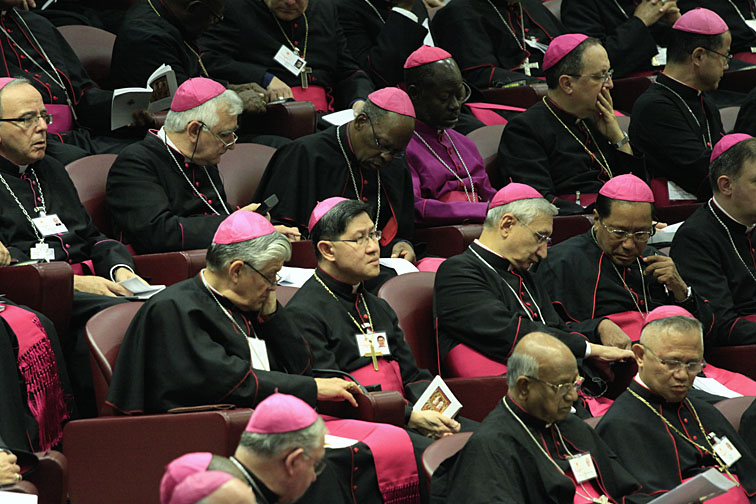
Cardinals 5As background, the document represents Francis’ distillation and extension of themes surfaced at the October 2012 Synod of Bishops on the New Evangelisation for the Transmission of Christian Faith. It remains of note how much currency the word ‘evangelisation’ now holds in the Catholic Church in light of a historical reluctance to engage the term at all. While finding its origins in Scripture itself, Archbishop Rino Fisichella notes:

In all probability, it was Erasmus (a Catholic Dutch theologian) who first inserted into our language the derived term ‘to evangelise,’ to designate what he considered to be a form of Lutheran fanaticism (Fisichella, The New Evangelisation: Responding to the Challenge of Indifference, 17).

In other words, ‘evangelise’ was understood by Catholic minds in the wake of the Reformation in a largely pejorative sense, attracting disapproval for its Protestant overtones that included Luther’s exhortation to ‘preach the Gospel alone’. In contrast to ‘evangelise’ Catholics preferred to speak of ‘mission.’ It is only from the middle of the twentieth century, say the 1950s and onwards, that we see the word ‘evangelisation’ reemerge in Catholic idiom with any vigour.

If the ‘new evangelisation’ was a child of the pontificate of John Paul II, and gathered strength and stature as a concept or idea under Pope Benedict XVI, it has reached perhaps not yet maturity but certainly a living presence and tangible dynamism under the leadership of Pope Francis.

jp11 version 2On his part, John Paul II identified a ‘spirituality of communion’ as the basis of ecclesial renewal in Novo Millennio Ineunte as he shared his vision of the Church on the cusp of the third millennium. This letter was and remains exceptional for grounding reform in both the eternal life and relations of the Trinity as well as the temporal conditions in which the Church lives its mission:

. . . it is not a matter of inventing a ‘new programme’. The programme already exists: it is the plan found in the Gospel and in the living Tradition, it is the same as ever. Ultimately, it has its centre in Christ himself, who is to be known, loved and imitated, so that in him we may live the life of the Trinity, and with him transform history until its fulfilment in the heavenly Jerusalem . . . But it must be translated into pastoral initiatives adapted to the circumstances of each community (Novo Millennio Ineunte 29)

The Church is called to manifest its permanent identity and mission as a sacrament of communion in the concrete and changeable conditions of human history. Novo Millennio Ineunte then went on to identify holiness as the abiding measure and goal of all of the Church’s planning and activity, asserting plainly but evocatively,

. . . to place pastoral planning under the heading of holiness is a choice filled with consequences. It implies the conviction that, since Baptism is a true entry into the holiness of God through incorporation into Christ and the indwelling of his Spirit, it would be a contradiction to settle for a life of mediocrity, marked by a minimalist ethic and a shallow religiosity (Novo Millennio Ineunte 31)

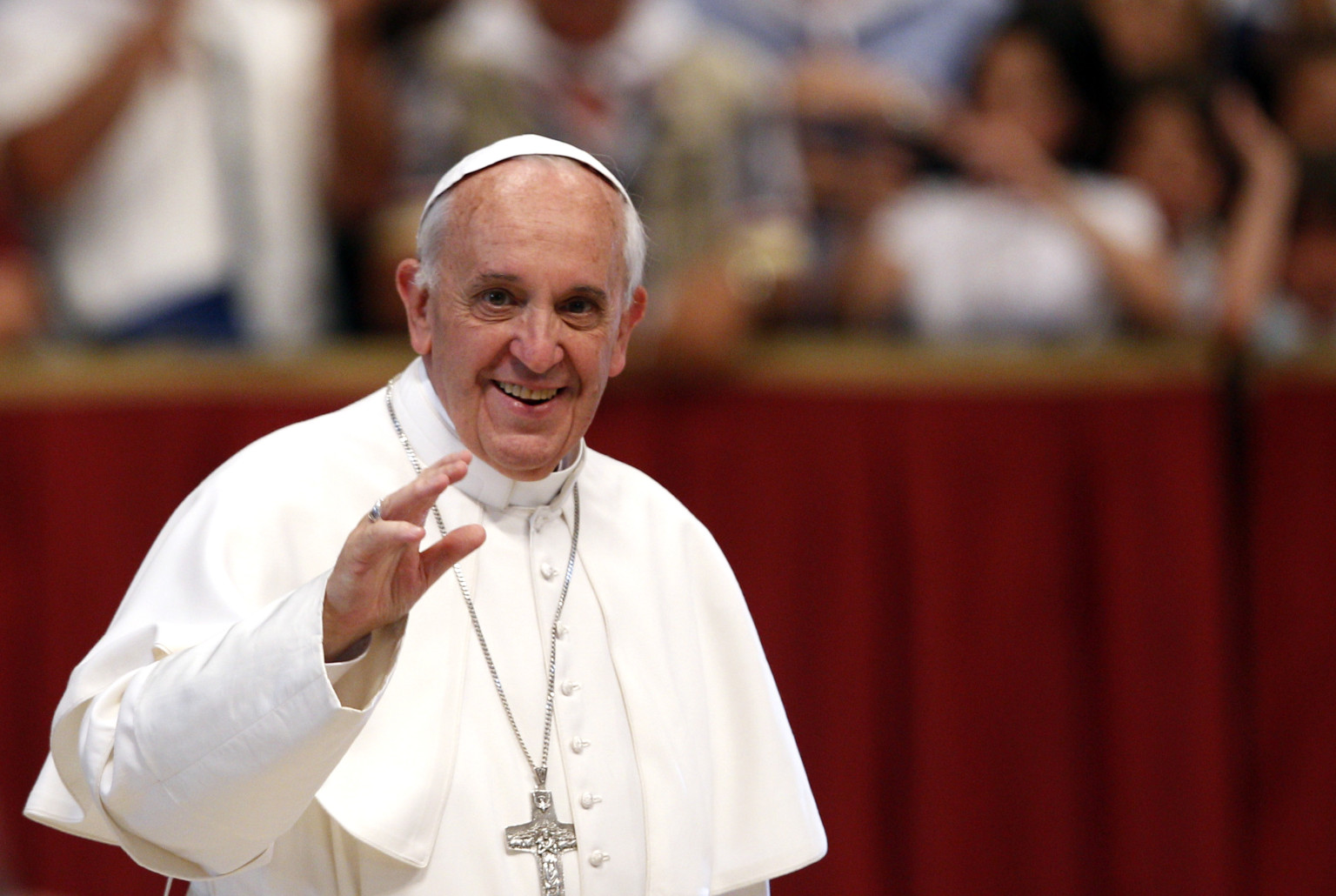
Pope FrancisTwelve years on, Evangelii Gaudium contains no such reference to pastoral planning per se though it does, in fact, express much of Pope Francis’ thought on the subject. This becomes clear when we take note of the pontiff’s address to CELAM (the Latin American Episcopal Council) earlier this year in Rio de Janeiro, at the tail end of World Youth Day. In that address he observed:

In Latin America and the Caribbean there are pastoral plans which are ‘distant’, disciplinary pastoral plans which give priority to principles, forms of conduct, organisational procedures… and clearly lack nearness, tenderness, a warm touch. They do not take into account the ‘revolution of tenderness’ brought by the incarnation of the Word. There are pastoral plans designed with such a dose of distance that they are incapable of sparking an encounter: an encounter with Jesus Christ, an encounter with our brothers and sisters.

Such pastoral plans can at best provide a dimension of proselytism, but they can never inspire people to feel part of or belong to the Church. Nearness creates communion and belonging; it makes room for encounter. Nearness takes the form of dialogue and creates a culture of encounter. One touchstone for measuring whether a pastoral plan embodies nearness and a capacity for encounter is the homily. What are our homilies like? Do we imitate the example of our Lord, who spoke ‘as one with authority’, or are they simply moralising, detached, abstract?        (You can read the full text here)

It is apparent that the same ‘revolution of tenderness’ commended to the Latin American bishops in planning for the Church is recapitulated with vigour in the style and letter of Francis’ first exhortation.

StonesApart from the continuing focus on the homily as a key vehicle of pastoral renewal, Evangelii Gaudium includes the same warning of a ‘distant’ and bureaucratic approach to Church reform and planning, ‘a spiritual worldliness’ which can ‘lead to a business mentality, caught up with management, statistics, plans and evaluations whose principal beneficiary is not God’s people but the Church as an institution’ (EG 95). As I read it, Francis intimates that an introverted, managerial and administrative approach to the Church’s life can bring about a neglect for the people of God as church processes end up replacing or even compromising the larger goal of holiness and mission. To draw from the language of Thomas Merton, without due care the ‘cause’ – even a ‘religious’ one – comes to replace concrete persons in their dignity and need of healing, interpersonal bonds and helps to holiness.

Further on in the exhortation, Francis guides the Church and pastoral workers between the Scylla of good intent without action and the Charybdis of practical proposals devoid of genuine spirituality. He writes,

Mystical notions without a solid social and missionary outreach are of no help to evangelisation, nor are dissertations or social or pastoral practices which lack a spirituality which can change hearts. These unilateral and incomplete proposals only reach a few groups and prove incapable of radiating beyond them because they curtail the Gospel
(EG 262).

Those planning for evangelisation and church renewal must, therefore, avoid a sociological reduction of the Church to the status of a commercial enterprise – one in which spiritual fruitfulness is replaced by a concern for ‘efficiency’ and missionary discipleship is reduced to the mere matter of the right ‘technique’. Also to be eschewed is that false elevation of the Church out of history, an abstract ecclesiology that is expressed in the fideistic hope that all will simply fall together and that the Church’s mission will be compelling without our best efforts.

candlesFrancis makes clear that the Gospel calls forth our human engagement and creativity in the work of God. It is a call to a renewed intent, zeal and commitment to mission that resists all self-satisfaction and smugness among dioceses and parishes. He can say, therefore, ‘pastoral ministry in a missionary key seeks to abandon the complacent attitude that says: “We have always done it this way”. I invite everyone to be bold and creative in this task of rethinking the goals, structures, style and methods of evangelisation in their respective communities’ (EG 33).

Finally, in Evangelii Gaudium there is a call for prudence among pastoral workers who are prone to what Francis describes as ‘pastoral acedia’, a dimming of expectation and resolve on account of a variety of factors. These include the pursuit of ‘unrealistic projects’ where pride or ambition overtakes reason, a lack of patience for processes to mature in time, and the aforementioned depersonalisation of the work of the Church in a narrow focus on ‘the road map’ without a consciousness of the journey – those evolving landscapes and human situations to which we are being called to respond in faith.

While never speaking of pastoral planning as such, Francis’ exhortation, clearly informed by his experience of the local Church and the ecclesiology of the Aparecida Document (PDF), seeks to guide the Church toward a more intentional, explicitly missionary mode of existence. Evangelii Gaudium represents a significant addition to the developing tradition of planning within the Church, supporting as it does a ‘new chapter of evangelisation marked by joy’ (EG 1).

As the calendar year comes to a close, thank you to all those who have read my blog over the past first year of its life. I’ve deeply appreciated your comments, critiques and responses and wish you, your families and communities a peaceful and holy Advent and Christmas. Until the New Year, best wishes and every blessing, Daniel A.

from diplomacy to discipleship

CathedralLismoreThis week I am in the Lismore Diocese speaking at a clergy conference focused on parish renewal. This morning I will present on specific practices of parish renewal, followed by Francis Sullivan, CEO of the Truth, Justice and Healing Council, formed in response to the Royal Commission into Institutional Responses to Child Sexual Abuse. Here are excerpts from my opening address, delivered last night:

It can be relatively easy to speak of ‘the Church’ in general terms and the last fifty years have certainly seen a great deal of such talk. The range of debate and literature concerning the Church is almost inexhaustible, including such subjects as the Second Vatican Council, the relative merits of post-conciliar reform, the proper form/s of the liturgy, the relationship of the Church and world, the exercise of governance and authority in the Church, the coresponsibilities of the ordained and lay, and more recently the meaning and implications of a ‘new evangelisation’.

It was conciliar peritus and ressourcement theologian Henri de Lubac SJ who pointed out that such talk of ‘the Church’ was relatively rare in the age of the Fathers. For the ancients, the Church was less a discrete body that existed outside of ourselves than it was a common atmosphere which formed our faith, our very life, from within. The Church was the ‘womb’ in which Christian life was born, the ambience in which the human spirit were raised to God and indeed, in a certain sense, it was our destiny as a communion, a people reconciled to God and one another.

The danger, as de Lubac saw it, was that constant talk, ever greater refinements, and systematic analysis of the Church would create a ‘gap’ as it were between ourselves and that of which we talked. He writes,

 . . . some people find themselves tempted to say there is altogether too much talk [about the Church] . . . Would it not be better perhaps to try, quite simply, to live the Church, as so many have done before us? It seems that by considering her from outside in order to discuss her, we run the risk of growing apart from her, in our heart of hearts . . . And in addition to this . . . the Church is a mystery of faith and ‘surpasses the capacities and powers of our intellect no less than any other.’ (De Lubac, Splendour of the Church, 18-19).

886335_lowHowever, even de Lubac, a lodestar of the ressourcement movement, would admit that circumstances arise in which the Church must proclaim a word about itself in order that its vocation and mission in Christ do not fall into disregard or forgetfulness. Here in Australia, in the midst of a Royal Commission, we know that this process of self-reflection, self-understanding and scrutiny is essential to our faithfulness into the future. Words need to be spoken and truths be told.

This need of self-reflection and scrutiny extends also to our parishes which, as local communities, are called to bring the Gospel into contact with the unvarnished reality of a particular people in a particular place. It is in the parish where ecclesiologies are tested and it is in the parish where our mission as Church begins, born of the Word and Eucharist. It is in the parish where the meaning of faith is mediated to contemporary culture, and it is the parish that remains the most important locus in which the mystery and contradictions of human life meet the healing company of God. For many, the parish simply is Church and they know no other.

However, with less than 10% of Catholics attending a parish Mass on any given Sunday in many Australian dioceses, Lismore included, it is clear that there is a significant disconnect between what is understood to be ‘going on’ in our parishes and people’s larger lives, struggles and aspirations.

Reading the Scene

In addressing areas of renewal for parish life, it is vital to retain some perspective about statistics concerning the Church. First of all, as least as far as I am aware, the Catholic Church has never experienced a Mass attendance rate of 100%. We know even at the Last Supper that at least one disciple was not convinced of what was offered. In speaking of the relative vitality or diminishment of our parishes, we should not measure our pastoral effectiveness or ‘success’ against a mythic Golden Age that has never existed. There have better times, yes, but not all churchgoers are disciples. We are where we have always been as Church – in the midst of the work yet to be done, gathering the harvest when the workers are few.

It is also worth noting as perspective that statistics are not the only measure of a Church’s vitality. Indeed, our Church was never more ‘catholic’ than in the Upper Room at Pentecost when all of its members could fit inside a tiny room. So ‘good church’ doesn’t not necessarily mean ‘big church’, and faithfulness is not measured in the size of a crowd, though we do want our parishes to grow, to make mature and more disciples in every generation.

Continuing on the level of diagnosis for the moment, a further point worth making is that the decline in commitment and participation in some of our Catholic parishes is not only or merely a product of what is ‘going on’ in our parishes but also deeply influenced as well by what is happening in the wider community and culture. In short, there are bigger factors at play and these need to be acknowledged when talking about the state of play in our parishes. (In the same way the legacy of Vatican II was shaped not merely by the Council itself but changes in the wider culture).   

For our parishes, it is becoming clear to a number of commentators that a ‘consumerist’ mentality is shaping how many Catholics understand, relate and interact with the parish, and the parish priest, today to the detriment of their genuine discipleship.

Baptism 4The American priest Michael White makes this point well in a recently published work, Rebuilt. In telling the story of his own parish upon his arrival as parish priest, White notes that the people he met struck him not as disciples at all but quite simply consumers. It had become common for the parish to be treated as if it were ‘there for me’. It had become a mere provider of services, filled with programs and services to cater to ever increasing demands, but it was not a community of mature, convinced or missionary discipleship.

White’s experience and reflection on the parish he inherited are worth citing at length:

Little did we appreciate how detached the second and third generations of demanding consumers had grown. We now know they are perfectly comfortable maintaining a loose association with an institution whose organisation they do not like and whose teachings they do not accept or respect. They take what they want and ignore everything else. To their credit, our consumers are specific and consistent in their consumer demands. They want church for their kids – mainly Baptism, First Communion, and a part in the Christmas pageant; they want church as an adornment to their family calendar – Christmas Eve, Easter Sunday . . . they want Communion when they feel like showing up for Mass. They want the church building as a backdrop for funerals and perhaps for weddings – but only if the church is pretty (because weddings are destination driven). Beyond that, we’re mostly an annoying distraction.

But we were inconsistent in our ‘supplier demands’. Our system implicitly understood the ‘hook’ we had into their lives and essentially coerced them to do all the things they didn’t want to do; attend regularly, give us money, and keep their kids in religious education. We kept dreaming up new rules to try to make the system work for us while they kept figuring out new ways to circumvent our rules to make the system work for them. The result was the mutual cynicism to which a consumer mentality can easily lend itself. (White, Rebuilt, 17).

It is a challenge to consider that many of the people we are seeking to re-engage with the Church bring not the question “What can I do to serve?” or, even less likely, “Whom I called to be here?” but rather “What can the Church or parish do for me?” This rather pragmatic, utilitarian outlook can not only shape a lack of ongoing commitment among some of our people but it can distort our own pastoral responses to such ‘Catholics of convenience’, however good or hopeful our intentions may be.

SB004We can see this at times in the urge to renovate parishes, to upgrade halls and carparks, for example, a facility focus which, I acknowledge, is often necessary but that can nevertheless only support a community of disciples and not attract, create or sustain one. We know that even the most pristine, beautiful, well-organised and comfortable parishes can be spiritually dead if they do nothing but cater for the comfort and convenience of a consumer mindset. Consider also Europe which houses some of the most majestic, beautiful churches in the world, churches that remain, nevertheless, idle and empty. It has always been much easier to renovate a building than grow a community of disciples.

From an internal perspective, the absurdity of the situation that White describes is that we, too, can play the game as we are wise enough to know what these ‘consumers’ want. We understand the ‘hook’ we have in their lives (whether its admission to our schools or a priest for a family wedding) and we can leverage on these desires to attempt to make them do what we want them to do which is to ‘attend more regularly’ or even ‘give us money’. The problem is that this entire scene remains fundamentally misguided, played out on the level of pharisaical diplomacy and has little if anything to do with making disciples which is the true goal and mission of our parish life.

The process of bargaining over the practice of faith in our parishes and in our schools only increases negative perceptions and resentment of the Church by ‘outsiders’, deflates a sense of hope and generates cynicism within ourselves as ‘insiders’, and ultimately does little to bring people to a living and open encounter with the person, message and mission of Jesus.

Discipleship

credoSo what of the way forwards? In recent years, even decades, there has been a slow but steady call to reclaim the language and meaning of discipleship and for good reason. Not only is the concept of ‘discipleship’ biblically-grounded, rooted in tradition and accessible to the majority of people but it aptly names the purpose of the parish community: to foster and raise up disciples in the midst of the Church for the sake of the world.

Many of you may know the work of Sherry Weddell on this subject of discipleship and the primary insight of her work has been to acknowledge quite candidly how our parish cultures can work against discipleship by their almost complete silence on the subject.  She writes,

Catholics have come to regard it as normal and deeply Catholic to not talk about the first journey – their relationship with God – except in confession or spiritual direction. This attitude is so pervasive in Catholic communities that we have started to call it the culture of ‘Don’t Ask, Don’t Tell.’ Unfortunately, most of us aren’t spiritual geniuses. If nobody around us ever talks about a given idea, we are no more likely to think of it spontaneously than we are to suddenly invent a new primary colour. To the extent that we don’t talk explicitly with one another about discipleship, we make it very, very difficult for most Catholics to think about discipleship. (Weddell, Forming Intentional Disciples, 56).

What Weddell seeks to recover is the fact that a personal, interior journey and encounter with Christ is at the heart of discipleship and at the heart of the Church’s mission as the sacrament of Christ. More strikingly, she will go on to claim that a majority of churched Catholics, even those who show up at Mass, may not yet be disciples in a fully conscious way. She notes that those Catholics who do talk openly about Jesus and their relationship to God, and with any enthusiasm, can be viewed with suspicion, as either ‘Protestant’ in spirit or as pretenders to sanctity.

While we are certainly not called to be spiritual exhibitionists, there is, I think, a challenge here – to revive the conversation and expectations of discipleship in our parish culture and to recognise the overt expression of discipleship as the ‘new norm’ for our parishes, or more accurately, the altogether traditional and abiding norm of Catholic life.

It is interesting to note that in some parish cultures the Mass, the sacraments in general and Catholic devotional practices in particular, given to us precisely for a life of discipleship, have come, for some, to substitute for that journey. Returning to White, he shares this experience:

[The Church of the Nativity] was a sacramental machine: Mass every day, twice a day in Advent and Lent, and eight times each weekend, baptisms, confessions, weddings, funerals, daily devotions, anointing, and adoration. It’s all good stuff, it’s how some Catholics grow spiritually. For others, it’s what they do instead of grow . . .

For certain, the sacraments give us grace to put us in right relationship to God and his life in our soul, nourishing and strengthening us for our discipleship walk. But they’re not mean to replace it. (White, Rebuilt, 77).

SB011It has been said, often of our families progressing through the rites of initiation, that people can be ‘sacramentalised’ without ever having been evangelised.

Of course, we want to underscore attendance at Mass as a core dimension of a life of faith, to receive Christ in the Eucharist and to hear his Word, and yet, in another sense, an almost exclusive emphasis on attendance can place into the shade a broader focus on discipleship within which the sacraments hold a central and inimitable place. The problematic as I view it is that if discipleship is reduced to liturgy alone then even the practice of attending Mass is likely to weaken over the long term as the very point of a sacramental life is lost on those participating. ‘Sacraments without discipleship’ only feeds the form of ‘consumer Catholicism’ or participation of convenience of which we spoke earlier.

Our contemporary context calls on priests, parishes and centres of adult formation alike to again place discipleship at the front and centre of our identity and mission as a Church. We must also seek to make explicit the link between the Eucharist and mission, for instance, so that it becomes clear that the point of the Eucharist is not simply the conversion of bread and wine into the body and blood of Christ but our conversion by our reception of Him.

By reaffirming this role of the sacraments within a life of discipleship we not only recover the fullness of the call to holiness but renew an awareness of the sacraments as not merely a comfort but also a challenge, not as objects for consumption but a relationship in which we are invited to grow and develop over time. This recovery of the full view of Catholic discipleship stands at the heart of our mission as parishes and dioceses.

reforming our parishes

SB048It is relatively easy to speak and write about ‘the Church’ in general terms. Drawing on our tradition as well as reflecting on the contemporary context and its challenges, it becomes possible to articulate visions of the Catholic Church for the future. It is perhaps ever easier to hold varied opinions about the Church and suggest reforms if you never have to put those opinions or ideas into practice.

The task of translating Catholic identity into mission, theology into practice, is a particular responsibility of local bishops, ministers, planners and lay leaders in the Church, including pastoral workers at a parish level and even those in your local parish ministry group. Again, a serene vision or theology of the Church is one thing, the experience and practical realities of Church life and reform are a little more complex (the move towards reform of the Roman Curia will no doubt prove the rule).

The challenge of implementing church reform has come to the fore in recent days through a number of conversations and forthcoming commitments. There is the task of writing an implementation guide for parishes as part of the Pastoral Plan I’ve been working on for the Diocese of Parramatta (how do you write an implementation guide for parishes that are unique in their gifts and needs, while holding them together as members of one local church?), there are preparations for Proclaim 2014, a conference led by the National Office for Evangelisation, which will continue its focus on transforming parish life, the experience of lay ministers I teach, many of whom experience keenly the gap between their best hopes and experience of community life, and then an upcoming address at a clergy conference for the Diocese of Lismore next month on the very subject of parish culture and practices of evangelisation.

SB058All this has brought home the challenge of reforming our parishes in particular as the primary experience of the Church’s communion for most Catholics and the most immediate opportunity for a new evangelisation. The parish community is where visions of the Church and visions of reform are tested, either brought to concrete life or else struggle in their realisation. Unlike Europe where the new ecclesial movements have filled the void left by parish decline, when we talk about ‘the Church’ in Australia we are most often talking about our parishes (and sometimes, though less commonly, our schools).

In preparing for some of the work above, here are a few points that struck me about our parishes as relevant to our future mission as a Church. I hope these will be helpful as points of ongoing reflection for those at the coalface, serving in our parishes from week to week with inspiring dedication to the Gospel:

  • Sadly, many of our parish cultures can actually work against the call to discipleship by their silence on this very matter. This point is made forcefully by Sherry Weddell of the Siena Institute, “Catholics have come to regard it as normal and deeply Catholic to not talk about the first journey – their relationship with God – except in confession or spiritual direction . . . Unfortunately, most of us aren’t spiritual geniuses . . . To the extent that we don’t talk explicitly with one another about discipleship, we make it very, very difficult for most Catholics to think about discipleship.” (Forming Intentional Disciples, 56). Weddell goes on to note that those who do talk about Jesus and their relationship to God can be viewed with suspicion, as either ‘Protestant’ in spirit or as pretenders to sanctity. I agree. While we are certainly not called to be spiritual exhibitionists, there is, I think, a challenge here – to revive the language of discipleship in our parish culture and to encourage explicit conversations about its meaning at all levels of Church. There is nothing more biblical or traditional than the concept of discipleship as the expression of faith received.
  • SB007Related to this pervasive silence about discipleship, and so a lack of focus on this relationship at a parish level, is the phenomenon in which the Mass and the sacraments in general, given to us precisely for a life of discipleship, have come, for many, to replace that journey. As it has been said, people may be ‘sacramentalised’ without ever having been ‘evangelised’. Flowing from this confusion of one for the other is a surface level emphasis on attending Mass in our parishes rather than an accent on a whole life of discipleship within which the sacraments hold a central, inimitable place. If discipleship is reduced to liturgy alone then even the practice of attending Mass is likely to weaken over the long term as the point of a sacramental life is lost on those participating. This whole phenomenon calls on preachers, parishes and diocesan centres of adult formation to again put discipleship at the front and centre of a parish’s identity but also to make explicit the link between the Eucharist and mission for example so that, as Henri de Lubac notes, it becomes clear that the point of this Eucharist is not simply the conversion of bread and wine into the body and blood of Christ but our conversion by our reception of him. We learn as much from the account of the Last Supper in Luke’s Gospel (Lk. 22:14f) in which Jesus links the remembrance of him at table to the act of service, as well as the description of Eucharistic gathering provided by Justin Martyr.
  • Moving from the internal life of parishes to their external organisation, it has only recently dawned on me that parishes in Australia are likely to becoming, over the long term, geographically larger while often numerically smaller with the practice of parish amalgamations and the continuing erosion in those identifying as Catholic. A fairly simple and obvious point I know. However, this reality of parish structural change only bolsters the argument for reforming our parishes in terms of discipleship and mission for these concepts provide a larger framework in which to understand and respond positively to such change. If laypersons and clergy alike are focused on the mission for which the Church and each of us personally exists, then structural reform may at least be better understood or contextualised even if not always accepted. To put it simply, sometimes dioceses need to close or change parishes in the interests of the mission of the wider Church and structural change does not need to impede or dampen the missionary initiatives and hopes of the people involved. While this broader missionary identity and purpose of the Church has been a constant refrain of our tradition, reawakened in the minds of both committed and nominal Catholics by Pope Francis in particular, the institutional or even territorial view of our parishes and the Church still dominates to the detriment of a sense of mission.
  • Laity 3One final point that could be made about our parishes is that even ‘successful’ or vibrant parishes, and there quite a few around the country, can become victims of their own success if not constantly vigilant. As has been pointed out, even flourishing parishes can become comfortable in a self-affirming culture while the larger culture continues to move in other directions, leaving a disconnect between the parish and the wider community. All structures, and not merely ecclesial ones, can become introverted and Pope Francis has laid emphasis on this danger throughout his pontificate to date. At a parish level, most of us will know of youth groups that have grown quickly only to experience decline as it finds it difficult to integrate new and other members into the existing group. In the Church and its groups there is always a delicate balance between an internal identity and purpose and an outward mission for which the group exists. Similarly to youth groups, parishes can have a ‘family feel’ that is nice and a comforting experience for those within the group but their relationships can be so intimate that it can be difficult for outsiders to join the community or shape its spirit or direction.

The very complexity of parishes expresses the fact that what lies at the heart of each and every parochial community is not simply a geographical jurisdiction but a fundamental network of relationships. In this sense, though properly a constituent of a diocese, each parish must be sustained from below, not merely by what Karl Rahner SJ described as “folkloristic attachment” to the Church but a real and intentional communion based on a lived discipleship for the sake of the world. A Church grows and is reformed by parishes and communities that focus anew on discipleship and the mission that flows from that relationship. Parishes grow and are reformed by having groups and individuals that are focused on the same.

solitude with thomas merton

Thomas-Merton2In Christian tradition, classic texts are those which occupy a privileged place in the community’s memory, response to and reception of the Gospel. They are committed texts with a specific ‘take’ on revelation and invite the reader to engage with this same commitment in the context of their own personal understanding and experience of faith. Thomas Merton’s New Seeds of Contemplation is such a text and I’ve been revisiting it over these past few days here in Japan. It was among the first Christian texts that I ever read and remains a touchstone in the tradition.

For those new to his work and person, Merton was one of the great spiritual masters of the twentieth century, an American who came to Catholic faith in his twenties. Not long after, Merton entered a Cistercian monastery, Gethsemane Abbey in Kentucky, and then, almost by accident, penned a best-selling autobiography Seven Storey Mountain which brought him into a limelight he could not have anticipated and did not seek out (Merton would reflect, “The logic of worldly success rests on a fallacy: the strange error that our perfection depends on the thoughts and opinions and applause of other men! A weird life it is, indeed, to be living always in somebody else’s imagination, as if that were the only place in which one could at last become real”).

Merton would go on to assume the role of novice master for his Order, publish widely on prayer, contemplation, monasticism and social issues, and became a prolific correspondent with intellectual and spiritual luminaries within the Church and beyond it. He died in Bangkok on the 10th December, 1968, at the age of 53, electrocuted by a faulty fan while attending a monastic conference. His body was flown home with those of dead U.S. servicemen.

Published in 1962, New Seeds of Contemplation is the coalescence of Merton’s ever-maturing reflection on the contemplative experience of God as the realisation and ground of identity. Commenting on previous drafts of the work, Merton would remark,

When the book was first written, the author had no experience in confronting the needs and problems of other men (sic). The book was written in a kind of isolation… the author’s solitude has been modified by contact with other solitudes; with the loneliness, the simplicity, the perplexity of novices and scholastics of his monastic community; with the loneliness of people outside any monastery; with the loneliness of people outside the Church. (New Seeds, ix-x)

New-Seeds-of-Contemplation-9780811217248In New Seeds of Contemplation, Merton gives voice to themes that he elaborated and refined throughout his life’s work, particularly the identity of the ‘true self’ hidden in God and the profundity and need of solitude.

According to Merton’s spiritual itinerary, the discovery of authenticity in Christ begins not with an awareness of what lies at the end of the road but with a recognition of the obstacles that block its very beginnings. He describes the fundamental obstacle to maturity as the dominance of the ‘false self’, also described in New Seeds as the “the smoke self”, “the empirical ego” or the “routine self” which takes itself seriously but does not even exist (New Seeds, 38, 281, 16).

This illusory self is the product of our own pride and self-determination, for unlike animals and trees which give glory to God in being themselves, we are at liberty to be real or to be unreal, “We may wear now one mask and now another, and never, if we so desire, appear with our own true face” (New Seeds, 32). Layered with selfish desire and defensive mechanisms, we can be imprisoned within fictions of our own making:

I wind experiences around myself and cover myself with pleasures and glory like bandages in order to make myself perceptible to myself and to the world, as if I were an invisible body that could only become visible when something visible covered its surface. (New Seeds, 34-35).

This propensity to construct and find assurance in superficialities includes the caricature of the ‘good Catholic’ and a heroic sense of spiritual achievement. In this critique, Merton was ever conscious of the ability of the false self to appropriate even religion or ‘spirituality’ as a secret means of control and separateness.

mertonMoving to the discovery of the true self, Merton identifies solitude as the pathway to true identity. As theologian David Ranson underlines, Merton would maintain that within each one of us is a solitary dimension, a dimension not to be afraid of or done away with but entered into for this is the monastic ‘cell’ in which God is most deeply encountered. There is a need for this solitude in our lives, not as a rejection of others or the world, but as a school in which we learn to be ourselves before God. Only then can we embrace and relate to others clear of the selfishness, need for possession and validation which characterises our insecure times. It is solitude that is the doorway to the contemplative experience in which God discovers Himself alone in us, not crowded out by idols on which our hearts have become set.

What is more, the experience of authentic solitude is for Merton fundamentally Trinitarian, for God “infinitely transcends every shadow of selfishness… He is at once infinite solitude (one nature) and perfect society (Three Persons). One Infinite Love in three subsistent relations” (New Seeds, 68). By this Trinitarian focus, Merton implies that the true solitary is not an individual, imprisoned in a dream of separateness, but a person deeply related to others.

Contemplative solitude, then, is not our own, and leads the pilgrim beyond all limitation and division: “He has advanced beyond all horizons. There are no directions in which he can travel. This is a country whose centre is everywhere and whose circumference is nowhere.” (New Seeds, 81). Even the monk or hermit does not enter into solitude for his own purposes but in relationship to and for the good of others, for the Church and the world in which he remains embedded, inseparable and even necessary.

In the depths of solitude, often experienced in prayer, the movement toward authenticity comes by way of a self-emptying or kenosis: “a man cannot enter into the deepest centre of himself and pass through that centre into God, unless he is able to pass entirely out of himself and empty himself and give himself to other people in the purity of a selfless love” (New Seeds, 64). This selflessness, however, is only possible to the extent to which we are enjoined to Christ as it is he who first gave himself for humanity and makes that kind of self-giving love possible, “I become a ‘new man’ and this new man, spiritually and mystically one identity, is at once Christ and myself… This spiritual union of my being with Christ in one ‘new man’ is the work of the Holy Spirit, the Spirit of Love, the Spirit of Christ” (New Seeds, 158).

candleMerton concludes that as long as there is an “I” aware of itself and its contemplation, an “I” that can possess a certain “degree of spirituality” then we have not yet passed into the fullness of contemplation, the fullness of Christian life itself (New Seeds, 292). Ultimately, the mature Christian has no psychological individuality or even self-conscious biography; all the shadows of self-assertion end at an interior death which, paradoxically, and in the light of the paschal mystery, emerges as the very beginning of a real, authentic life.

We can see that there is little sentimentalism in Merton’s writing and much challenge. In texts such as New Seeds of Contemplation we hear a robust call to purify our desires and to meet head on the ‘spiritual deaths’ that lower the ego and allow the emergence of the true self to take place. In this respect, the Christian life unfolds as ‘revolutionary’ though not in the sense of accelerated progress or an aggressive, suprahuman evolution. As Merton affirms,

… the burden of Christ’s Cross, that is Christ’s humility and poverty and obedience and renunciation… this is the most complete revolution that has ever been preached; in fact it is the only true revolution, because all the others demand the extermination of somebody else, but this one means the death of the [person] who, for all practical purposes, you have come to think of as your own self. (New Seeds, 144).

Merton reminds the Christian that the gift of faith is not an escape or an evasion but a project of deepening integration in our identity in Christ, one which carries with it a greater responsibility for the world and not less.

shibuyaOur life in Christ is not any more abstract or comfortable than life as we now know it, nor is it found in the sublime stories, private or collective, we tell about ourselves. The inheritance we receive from the writings of Merton is the decisive possibility of freedom and authenticity in faith, being who we have been made to be. It is an existential summons to unlock ourselves from the inside, from the imprisonment of our own private illusions and the masks that operate, as it were, ‘behind the Gospel’s back’. The path back to ourselves begins with an interior solitude that can be found even among the exterior noise and din that fills the world. Writing from Tokyo, a city of fourteen million, among the machines, lights, and appeals of the salesman, this pilgrimage seems more important than ever.

social media in the Church

social-mediaIn the light of two conferences of significance for the Australian Church this week – the inaugural Catholic New Media Conference and that of the Australasian Catholic Press Association – I thought I would offer a few remarks about the role of social media within the Church’s mission.

Many Catholics, including older generations, would readily agree that the Church’s embrace of social media is important, even necessary. Consulting 2,000 Catholics last year, there was a palpable enthusiasm and agreement that the Church as a whole commit itself to this technology. However, I suspect there is not always a great degree of clarity on why this is so other than reference to motives that are ambiguous to say the least (e.g. ‘relevance’).

It is important to articulate the reasons for social media as a normal part of the Church’s mission because diocesan bishops, parish priests, parish councils, heads of religious institutes, boards of management and other forms of Church leadership need to be convinced of its value if they are going to make an investment in that direction (our own Diocese of Parramatta has employed a Social Media Coordinator, @socialmediaparra, and I am aware that other dioceses are on the way to doing the same or similar).

And it is an investment. Consider your typical dioceses with its various church agencies – adult education centres, liturgical office, youth ministries and the like. While a Facebook page or a Twitter account is not difficult to establish with appropriate disclaimers, considerable thought needs to be given to message, audience and integration of that media within the ordinary work of that agency and the diocese or parish as a whole. This often requires the training of staff in the effective use of this media and time dedicated to the maintenance and driving of its message in public space. Unfortunately in the province of the profane, ‘time is money’ and so churches and agencies need to budget for that time and work if it is to be an ongoing concern. Helpfully, budgeting for the use of such media sends a signal to stewards of church finance that ‘this things matters’.

As well, my learning from a past life as a media buyer for Mitchell & Partners is that content is expensive to generate and it is important for the Church to recognise time and resources are needed to deliver this proclamation and foster dialogue in the digital realm.

542379_lowWhile the ‘content’ of Catholic media is perennial and freely given – the revelation of Jesus Christ made known by Scripture and Tradition and declared by Church teaching, liturgy, and the Church Fathers – it is not sufficient for Church media to tweet from Proverbs or even the Gospel alone. Social media in the Church, indeed communications more generally, consists not only in the confession of faith – that basic affirmation of St Peter at Caesarea Philippi, “You are the Christ” (Mk 8:29) – it also calls for testimony that communicates the witness of Christian lives.

The reason to consider the role of social media in the Church in the context of testimony is this. Most of people’s beliefs about the world depend on the testimony of others. For instance, I have never been to South America but trust that it exists on the basis of the testimony of others who have. In fact, most of our beliefs of the world are formed on the basis of testimony because our experience of the world is inevitably limited. However, it is testimony that may draw us to travel to Rio de Janeiro if we believe in the credibility of the pilgrim that has returned from that destination.

pewsThe testimony of discipleship is what social media offers the Church’s mission. As Sherry Weddell recognises in her fine work Forming Intentional Disciples, it is not merely a curiosity but truly frightening to acknowledge that Catholics have come to regard it as normal (even deeply Catholic!) not to talk about discipleship. Indeed, for too long the cultural pressure within our parishes and communities works against the overt expression of discipleship, including an account of a personal relationship with Jesus, which can be viewed, absurdly, as Protestant rather than the foundation stone of Catholic identity (see pages 56-70). For existing and new generations of Catholic believers, social media is one vehicle that provides for Christian testimony with credibility, an opportunity to give witness to a journey travelled.

While we have come some way in past decades – moved past the prayer card, sent by email and complete with kittens, butterflies and trivial uplifting thoughts – there is some way to go to embed social media within the ordinary life of the Church’s mission and outreach. The very fact of separate conferences in Melbourne this week – one for new media and one for press – speaks to the integration that still awaits to take place in the Church’s communications effort and its self-understanding and organisation as bearer of the Word.

Of course, there is a risk that individuals and organisations, in their embrace of new media, develop an obsession with novelty which distracts rather than deepens. In a populist and throwaway culture, and given the Church’s insecurity amid current challenges and a devastating loss of public credibility, we can risk becoming eccentric faddists who are in love with anything just because it is new.

gospel of markHowever, it is the work of those leaders in social media who are emerging in the Church to school themselves not only in algorithms of rank and filter but the theology of revelation, missiology, and ecclesiology that will underpin, extend and even challenge their work. Documents such as Dei Verbum (1965), Inter Mirifica (1963), Redemptoris Missio (1990), and Pope Benedict XVI’s messages for World Communications Day in 2010, 2011 and 2013 are good starting points in this direction, underscoring that the authentic development of humanity and human culture is not a technological achievement but one that stands in relation to what has been revealed, the one who, in revealing God, has revealed us to ourselves.