the Church’s digital horizon

I was grateful to share some reflections on the growing opportunities for the Church in the digital space with colleagues in the Archdiocese of Sydney. As technology continues to reshape how we live, communicate, and form community, the Church finds itself at a remarkable crossroads — uniquely equipped to step into these platforms, not to replace in-person connection, but to expand its reach and deepen its mission.

Digital platforms offer more than just convenience; they open doors to connection, discipleship, and outreach in ways we have never seen before and cannot even predict. What is certain, however, is we can bring the unchanging message of Jesus to people in new ways. I believe it is a hopeful and energising time to reimagine how the Church can remain anchored in its calling while adapting to a rapidly evolving world. For those discerning next steps in mission, resource allocation, or leadership strategy, here are a few thoughts I shared that may help spark conversation, vision, and innovation in your own backyard.

Becoming Future Ready

Across the Church we are blessed with a rich tapestry of agencies and ministries – from pastoral care and parish support to catechesis, evangelisation, and works of mercy and justice. This vibrant ecosystem is already bearing great fruit. Many dioceses, apostolate and groups have strong foundations, and the Catholic Church now has a unique, unprecedented opportunity to build on this legacy. By embracing digital technology with purpose and imagination, we can extend the Church’s reach, deepen its witness, and strengthen its impact for generations to come.

In my own Archdiocese in Sydney a powerful renewal is underway, a “second spring” as it’s been described. At its heart is a profound call to personal conversion – a deeper, more engaged Christian life rooted in a genuine, lived encounter with Christ. When this encounter transforms individuals, it naturally overflows into acts of service, generosity, authentic community, and courageous proclamation. This ripple effect breathes life into the whole Church.

Looking ahead, the International Eucharistic Congress to take place in Sydney in three years promises to fill our sails with fresh wind – increasing engagement across parish life, evangelisation, fundraising, advocacy, and service to those in need. Its success will be measured not just by attendance but by how many are drawn into the Church’s mission from within.

A Strategic Moment for Digital Transformation

We face a strategic opportunity to expand engagement in every corner of the Church’s mission. Digital platforms and innovative tools offer scalable, powerful ways to amplify parish involvement, evangelisation efforts, fundraising, advocacy, and service delivery.

Yet, to realise this promise, I think we must invest deliberately in three critical areas: technology infrastructure, digital literacy, and content development. Embracing this change now – even amid uncertainty – is the least risky path forward. We can think of it like planting an orchard before knowing precisely how the climate will shift. We don’t yet know which fruits will thrive or how seasons will change, but we do know two things: the world is changing, and if we wait for perfect clarity, it will be too late to grow anything of lasting value. The real risk lies in standing still while the landscape transforms around us.

So, digital technology is not a threat to tradition – it is a new soil where the Gospel can take root and flourish.

Context: The Technological Transformation

We are living through a cultural shift as significant as the arrival of electricity. That earlier transformation didn’t just power existing systems – it created new ways of living, working, and connecting. Today, artificial intelligence and automation are driving a similar revolution.

AI promises to reshape economies and workforces,  speeding up production, automating routine tasks, and changing how we find meaning and income. While productivity may rise, there is a risk of social fragmentation, unstable incomes, and diminished personal dignity.

Already, we see disruption in roles across administration, manufacturing, retail, finance, law, and health. The IMF estimates nearly 40% of global jobs could be impacted by AI.

Ownership of capital is shifting too. Whereas land and factories once dominated, today technology – data, algorithms, platforms – is the new capital. Yet this infrastructure is often controlled by a few powerful organisations, raising questions about access and equity. Many people may soon access rather than own essential capital – renting software, vehicles, even homes. In the future, people will own less and what they have will be by subscription.

In response, thinkers are calling for an “empathy-based economy,” one that balances innovation with care, human flourishing, and dignity. As AI takes on cognitive tasks, uniquely human gifts – empathy, emotional intelligence, spiritual discernment – will become more essential. This is where the Church’s prophetic role shines brightest. Not resisting change, but leading it with a vision rooted in the sacredness of the person, the gift of Jesus Christ, the dignity of labour, and the primacy of love and ethics in economic life.

Reaching Beyond: The Mission Field

In the city and suburbs of Sydney we enjoy one of the highest Mass attendance rates in Australia though the sum remains humbling at 10.4%, or 61,000 attenders. This means there are still over half a million Catholics who do not regularly engage with parish life. Beyond them, 2 million people within our Archdiocesan boundaries may never have encountered a living witness to the Gospel. In short, there are far more people to reach than have been reached.

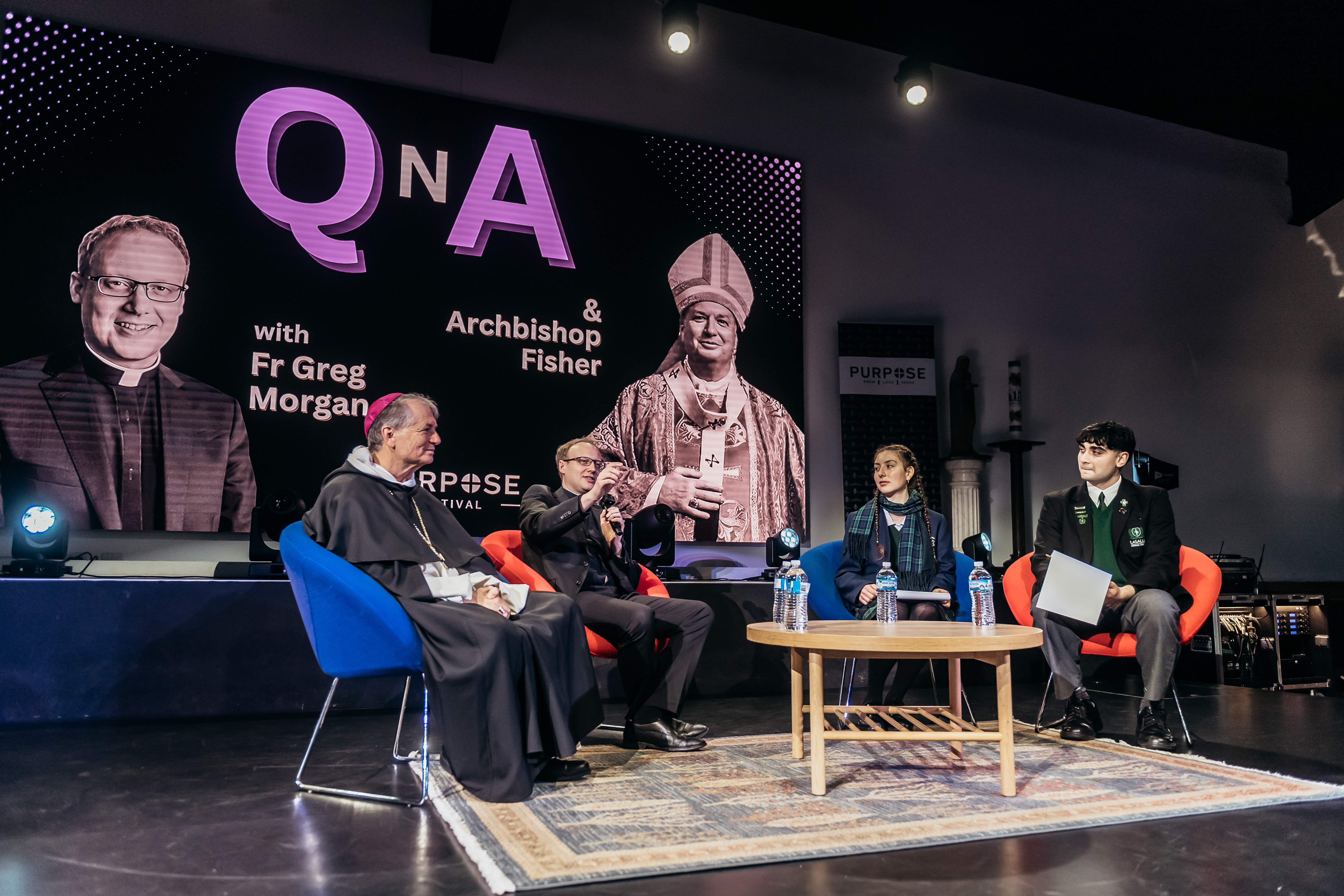
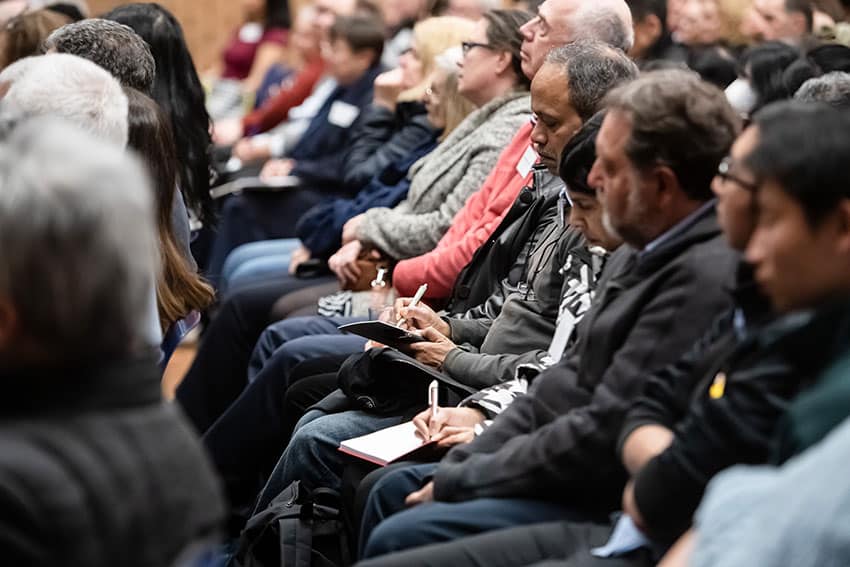
PURPOSE FESTIVAL 2025 – Images by Giovanni Portelli Photography © 2025

Digital transformation offers bold and beautiful ways to extend the invitation. Through video, podcasts, social media reels, digital testimonies, and online series, the Church can meet people where they are – often far from a parish doorway. Many will never step foot in a church but they will watch a video; they will search for answers; they will pause while scrolling past a social media reel. They will listen to a podcast that articulates the faith with clarity and charity. They will encounter a digital testimony that bears witness to Christ’s transformative grace. They may engage with an online series that presents the truths of the faith in compelling and credible ways. They will read a well-crafted reflection that integrates the Gospel with the complexities of modern life. They may be drawn to sacred art or liturgical music shared through headphones, which stirs their heart toward transcendence. They will explore the lives of the saints with others. Digital technologies can create the ‘pause’ in people’s lives that allows the Gospel to speak.

There are great opportunities to experiment with AI, virtual reality, and emerging platforms to distribute knowledge, improve services, and bring the Gospel closer to people’s lives. However, this requires space to think, try, fail, and innovate – partnering with digital creatives, Gen Z entrepreneurs, artists, and developers who already shape culture online. Inviting them into the Church’s digital mission could infuse it with energy, authenticity, and excellence.

Technology can be a “force multiplier,” extending the reach of ministries and deepening Gospel engagement. But without the human heart – creativity, pastoral wisdom, prayer – technology remains potential without impact.

We could imagine AI-powered tools answering everyday queries, freeing up clergy and staff for mission. Or a central platform where clergy and parish teams can access all communications in one place – including memos, updates, forms, events, and support resources. With secure login, it would offer smart notifications based on role, vocation or responsibility (e.g. a priest might receive instant push notifications about liturgical directives, while a parish secretary receives reminders about compliance deadlines), a shared calendar that syncs with personal devices, a searchable archive of past messages (with statements and updates stored, searchable and timestamped), and a simple way to ask questions or give feedback.

No doubt there would be details to work out and it means habituating clergy and parishes into using such technology which takes effort but, as we already know, digital systems and archiving can save an enormous amount of later effort through efficiency, free up time for more mission-oriented work and reduce time spent on administrative catch up. Most new initiatives will gain more traction when framed as pastoral opportunities, rather than a mere tech upgrade.

Data-driven systems can track faith journeys, strengthen formation, and personalise outreach – building a more missionary, welcoming Church. This enables the Church to understand who is coming to faith as adults, their motivations, and how they engage over time. Such insights are critically important for building a more responsive Church. Where the Church once shaped the message and the medium, today it is the audience, guided by algorithms and personal habit, who decides what is seen, heard, and believed.

AI can accelerate multilingual engagement and customise content to meet diverse communities with cultural sensitivity. making formation more contextualised so that everyone feels seen, heard, and invited. We can create and schedule social media posts in multiple languages, reaching different language groups with culturally sensitive messaging and invitations to parish life or special events.

Digital platforms also open new horizons for fundraising and advocacy – connecting local causes with global communities, turning parish projects into worldwide movements. If a local animal shelter in Ohio can raise funds through short reels on TikTok, raising 15,000 new followers as a donor base, and surpassing their goal by 300% in 10 days, so the Church could do the same. Church communities have done so, supporting clean water projects in Uganda and other mission related causes, breaking geographic boundaries and turning community projects into global efforts.   

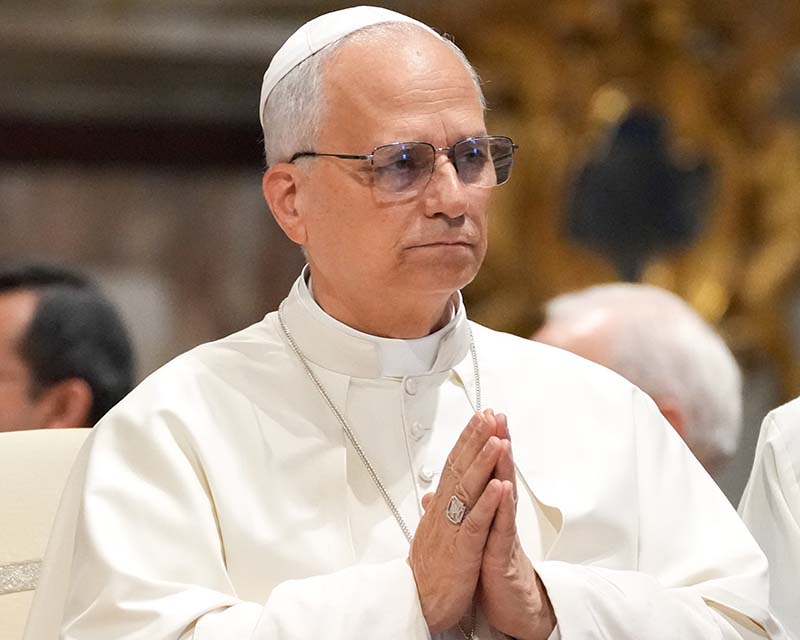
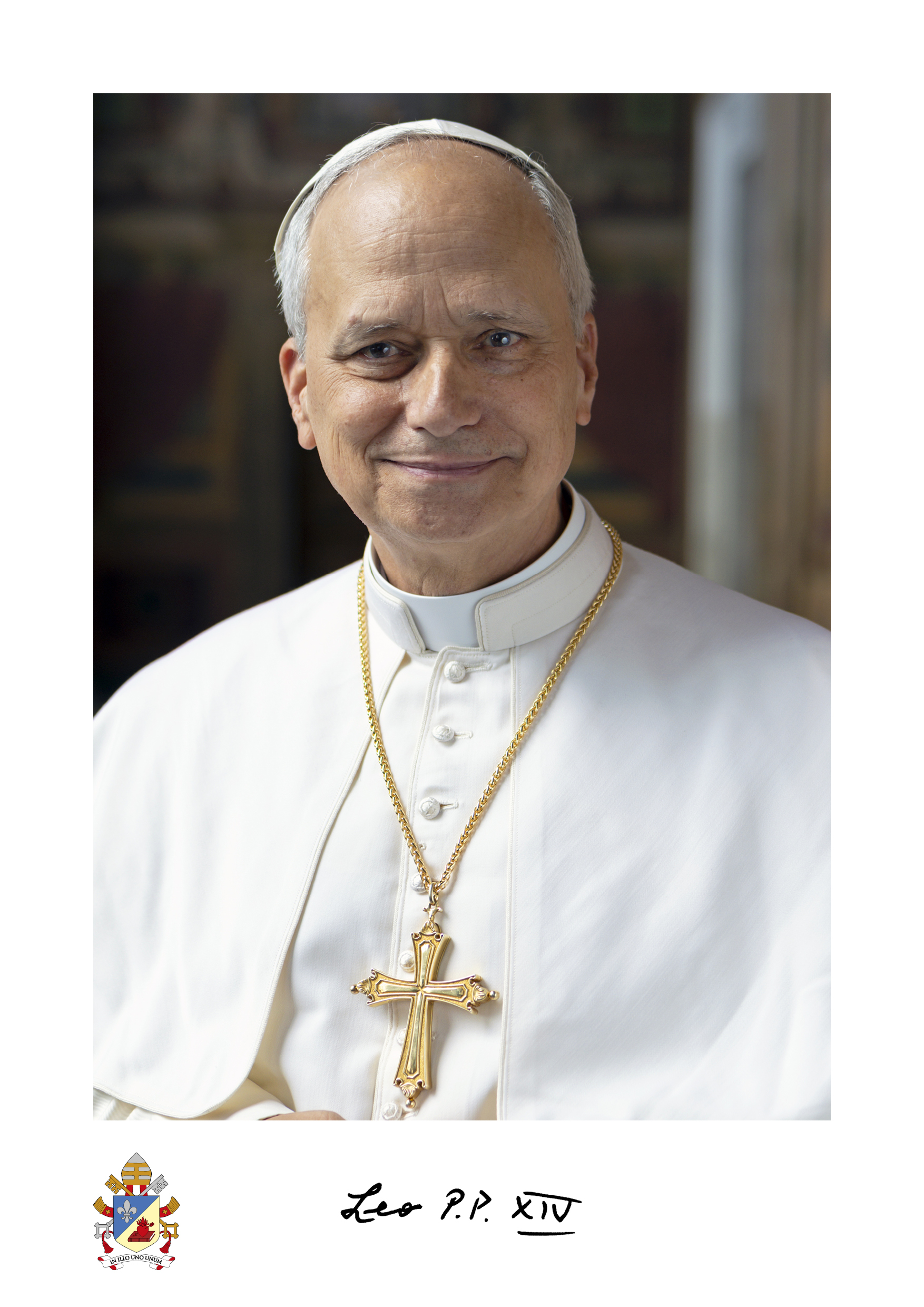
Technology is shaping culture profoundly. As Pope Leo XIV reminded us recently, this technological age will transform how people seek truth, belonging, and encounter God. The opportunity before us as a Church is not just to adopt new tools but to reimagine the Church’s mission through them – to go wide and deep, reach the margins, and enrich the centre. We have a firm foundation of faith, the vision given to us by Jesus’ Great Commission to make disciples of all nations, and the momentum built by generations of faithful witnesses in our Church.

Now is the time to plant the orchard and trust the Spirit to bring the harvest.

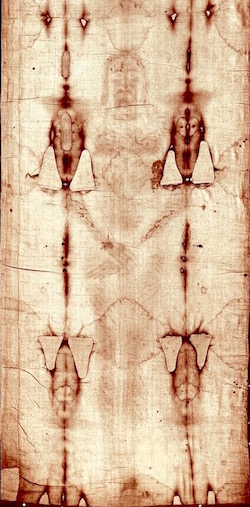
the man of the Shroud

On Friday 27 June 2025, the Feast of the Sacred Heart of Jesus, I was privileged to speak at the inaugural Holy Shroud Conference at Liverpool Catholic Club. In preparing for the introductory address, I was drawn more deeply into the mystery of Christ’s Passion – not merely as historical event but as a living reality, imprinted not only on linen cloth but on our human situation today. The Shroud invites us to contemplate the face of the suffering Christ, to consider what it means that God chose to reveal Himself not in splendour, but in the vulnerability of a broken body out of love for us. I’m grateful to the organisers for their vision and hospitality, and to all those who came – not simply to learn more about a cloth, but to seek the One it points to: Jesus Christ, crucified and risen. May devotion to His Sacred Heart draw us ever closer to the love that knows no bounds.

First, let me thank you for your warm welcome and for gathering for this significant conference. It is an honour to be here with you tonight, and I bring greetings on behalf of the Archdiocese of Sydney.

I warmly welcome our esteemed speakers Fr Andrew Dalton, David Rolfe, William West and Dr Paul Morrissey, and congratulate the organising committee for bringing this opportunity to gather around the mystery of the Shroud in this Jubilee Year of Hope.  

The topic before us, the Shroud of Turin, is one that has intrigued believers and non-believers alike for centuries. And in recent decades, it has become increasingly clear that the Shroud is not merely a religious curiosity. It is, in fact, one of the most extraordinary artefacts in human history. For many, it is a relic. For all of us, it is a mystery. And for those who seek truth, it can be a profound source of encounter with the Gospel.

We are living in an age that hungers for evidence, for the tangible, for something real, especially when it comes to faith. And it is here that the Shroud speaks powerfully.

Many now know that there is a great deal of scientific and historical evidence suggesting that the Shroud could not have been the work of a medieval forger, as claimed by the carbon dating results of 1988. In fact, the deeper we delve, the more difficult it becomes to dismiss the Shroud as merely a product of human hands.

What is often less well known is that many leaders within the Catholic Church have expressed not just interest, but belief in the authenticity of the Shroud. Among them are the past three popes – Pope John Paul II, Benedict XVI, and Pope Francis – each of whom made personal pilgrimages to venerate the Shroud.

Each of them stood before it not as sceptics, but as men of prayer and reverence, seeing in it a profound connection to the passion, death, and resurrection of Jesus Christ.

When Pope John Paul II visited the Shroud in 1980, he called it a “distinguished relic linked to the mystery of our redemption”. Eighteen years later, after the carbon dating controversy, he returned, this time thanking God for what he called “this unique gift”. That is no small statement. No pope would thank the Lord for a forgery.

More than that, John Paul II called us to gaze upon the Shroud with what he described as “the believer’s loving attention and complete willingness to follow the Lord”. In those words, he gently redirected us – not to get lost in the science or the debate – but to encounter the One whose image we believe is preserved on that cloth.

Pope Benedict XVI went further, stating that the Shroud had “wrapped the remains of a crucified man in full correspondence with what the Gospels tell us of Jesus”. Pope Benedict, who was always precise with his language, offered here a clear rebuttal to the carbon dating claims.

Even Dr Michael Tite, the man who oversaw that 1988 testing, later admitted in a 2016 BBC interview that he had come to believe a real human body had indeed been wrapped in the Shroud.

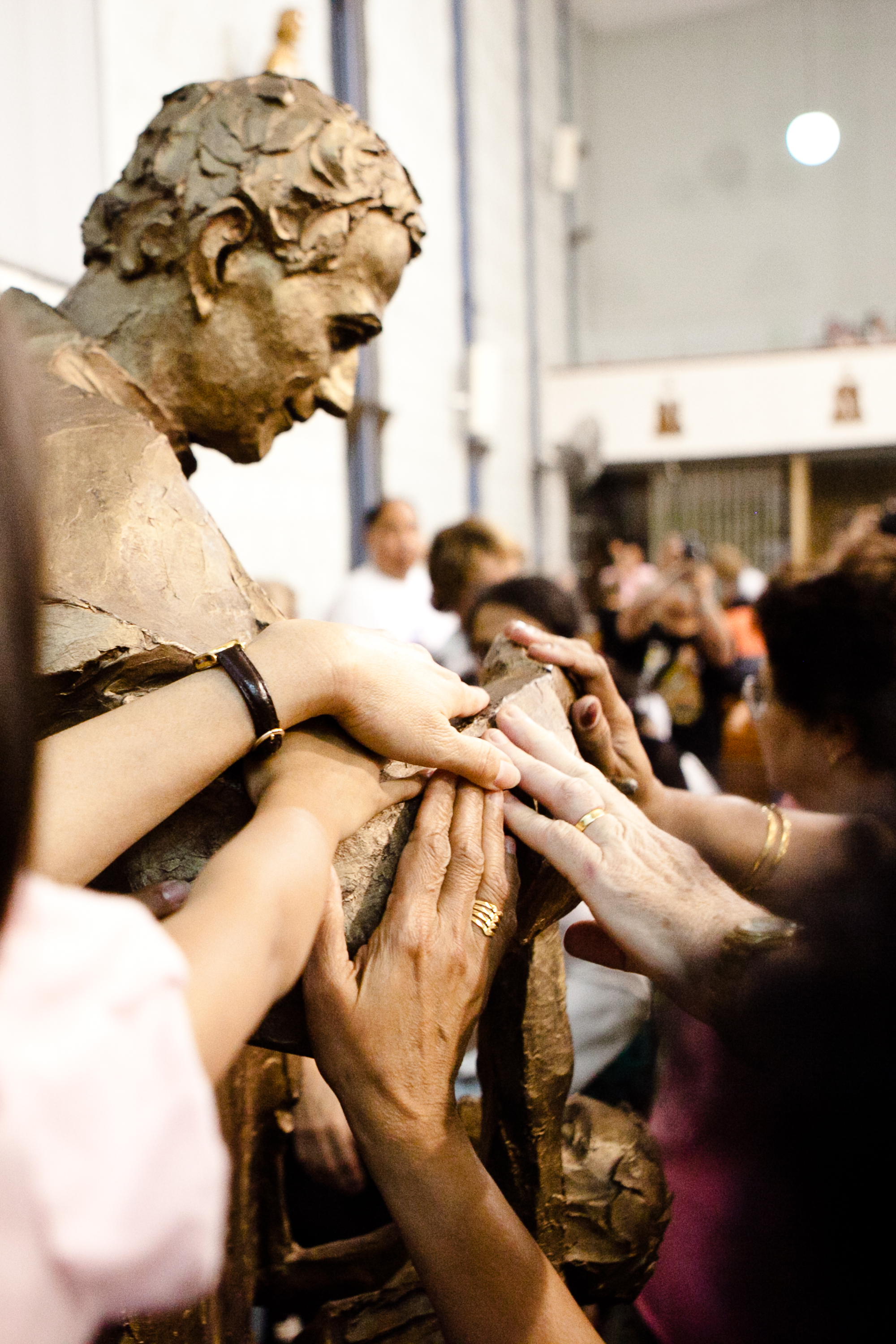
Pope Francis made pilgrimage to the Shroud in 2015. He not only prayed before it. He reached up and touched it. With great reverence, he said: “In the face of the Man of the Shroud, we see the faces of many sick brothers and sisters… victims of war and violence, slavery and persecution”.

For Pope Francis, the Shroud was not just about the past. It is about Christ’s presence among the suffering of today. And so the Shroud remains a powerful sign of hope as it witnesses to Christ’s solidarity with all those who suffer, who carry heavy burdens of illness, poverty, war, and injustice. It speaks to them not only of Christ’s passion, but of His enduring compassion – a reminder that they are not alone in their pain.

The late Pope concluded, saying: “By means of the Holy Shroud, the unique and supreme Word of God comes to us: Love made man… the merciful love of God who has taken upon himself all the evil of the world to free us from its power”. That is the evangelical heart of the Shroud. It is a silent sermon, a visual Gospel, a testimony in linen to the mystery of divine mercy.

In the context of this new pontificate, one cannot fail to recognise the providential continuity in Pope Leo XIV’s choice of name — Leo — which echoes that of his venerable predecessor, Pope Leo XIII, who in his own time zealously fostered devotion to the Holy Face of Jesus. This resonance serves as a quiet reminder that the Church’s memory is long, and that the Lord continues to speak to every age through signs both old and ever new.

Other Church leaders in our day have also drawn attention to the Shroud’s powerful witness. Just this past Easter, Bishop Robert Barron reflected in his Easter Sunday homily on the burial cloths mentioned in the Gospel of John. He called them “strange and wonderful cloths” and said they “opened the door to faith long ago”, and may well do the same today. Rather than referring to the Shroud as a mere “icon”, Bishop Barron described it as a relic, “one that is venerated as the cloth the disciples Peter and John saw on Easter Sunday morning”.

He is not alone. Popular priests such as Fr Mike Schmitz and Fr Andrew Dalton, who we are blessed to have as a speaker at this very conference, have powerfully and effectively evangelised through their engagement with the Shroud, especially among younger Catholics.

But perhaps most remarkable is the Shroud’s impact beyond the Church. Over the years, it has impressed and even converted many non-believers – atheists, agnostics, and sceptics who were drawn into a journey of faith by what they encountered in the scientific and spiritual mystery of the Shroud. It has spoken, too, to Protestants and Jewish seekers. Some have testified that their belief in God was rekindled through their encounter with the Shroud and the sense of the supernatural it evokes.

This brings me to what I believe is the Shroud’s most urgent and timely gift: its power to evangelise.

The Shroud is not just a matter of interest for scholars or theologians. It is something ordinary Catholics, young and old, can share in conversations with friends, colleagues, even strangers. It opens the door to a conversation not only about Christ’s suffering, but about His love, about His sacrifice, about the reality of the Resurrection.

And in a world that is increasingly sceptical of faith, increasingly disengaged from tradition, the Shroud is a bridge. It offers people a reason to pause, to question, to wonder.

It invites them to consider: Could this really be the burial cloth of Jesus? And if it is, what does that mean for my life?

After all, we live in an age in which so many do not believe in God, and yet so many still miss Him – a time when people chase progress without presence, and in which a Shroud, paradoxically, unveils something about life: a mystery that speaks to us, a silence that invites us to respond, a hiddenness that in Christ reveals us to ourselves, as sons and daughters of the crucified Son of God.

So, this evening, as we begin our conference, I encourage each of you not only to listen and learn, but to reflect on how you might carry this message forward. How the Shroud might be part of your own call to evangelise – to bear witness to a love that left its mark not only on human history, but on a simple linen cloth that continues to confound, inspire, and convert.

Thank you for your commitment to this mission. May the Man of the Shroud draw us ever closer to His heart.

grace in the gears: a theology of timekeeping

Time became something I could hold, quite literally, when I received my first watch at the age of eight, a humble Casio F91W. 

Clad in a simple black resin case, with its crisp digital display and softly glowing “light” button, it offered not just functionality but a kind of wonder. That subtle green backlight, switched on with a press, felt like a secret known only to my wrist. The built-in alarm rang bright and clear, and best of all, it was mine to set. It made me feel as if I had received a piece of grown-up responsibility, one beep at a time.

In the years since, I’ve been fortunate to develop a deeper appreciation for watches – especially the mechanical kind. The intricate choreography of gears, springs, and levers inside a movement continues to fascinate me. There’s something magical about how a mainspring’s stored energy animates a balance wheel into steady oscillation and timekeeping, all within the confines of a 39mm case. Whole worlds of engineering, history, and design are tucked beneath a sapphire crystal. 

While a quartz watch, powered by battery, achieves remarkable efficiency and near-perfect precision, it is, in a sense, outside of the need for human touch and is largely indifferent to the presence of its wearer. In contrast, a mechanical timepiece lives through motion or else requires winding by hand. It must be worn, carried, and kept close – in other words, it is sustained by connection.

Though an amateur collector, I’ve gradually assembled a modest yet meaningful assortment of mechanical watches, from classic Swiss chronometers to vintage, hand-wound pieces that evoke the craftsmanship and character of another era. Each watch is more than a mere object – each holds its own story and unique provenance.

Looking back on that first little Casio, and the pieces that followed over the years, I value these intricate instruments not merely for telling time, but for teaching me how to treasure it.

We can have a complicated, even fraught, relationship with time. We try to save it, make more of it, and race against it. But the fact is, time moves with or without our attention and passes with or without our consent.

Not only are we unable to master time, but we are often absent to it altogether. As the French philosopher Blaise Pascal observed in his Pensées, “We never keep to the present… We anticipate the future as too slow in coming… or we recall the past to stop it from escaping.” His words speak to a perennial human ache that St Augustine named centuries prior: our hearts are restless in the present. We are drawn forward by anxiety, pulled backward by nostalgia – anywhere but here, where life actually unfolds.

How, then, are we as Christians called to inhabit time? When I entered the Church I came to appreciate its understanding of time not as something to be resisted, outrun, or escaped but as something to be received, reverently and attentively. As the Psalmist prays, “Teach us to number our days, that we may gain a heart of wisdom” (Psalm 90). In the eyes of faith, time is not a burden to be controlled but a gift to be entered into.

Rooted in Scripture and nourished by centuries of tradition, the Church’s meditation on time understands it as sacramental – intimately bound to the mystery of the Incarnation and the unfolding drama of salvation. In Christ, eternity entered time, not to abolish it but to transfigure it, so that each moment might become a meeting place between heaven and earth.

Time, in the Church’s tradition, is not empty or even neutral, but shaped by grace and filled with invitation. As Pope Benedict XVI so beautifully reflects, “Time is not just a succession of days and years, but it is a time of salvation… each moment is penetrated by the presence of God, by His call and His grace”. 

As Pascal also wrote of our human condition, “The eternal silence of these infinite spaces terrifies me.” The vastness of existence at times threatens to overwhelm us, perhaps even more so today, when that vastness floods our phones and feeds from every seeming direction. We can be left drifting and unmoored, unsure of where to rest our attention.

Yet it is precisely through Jesus Christ – the Word made flesh – that time is transfigured and drawn into purpose by the potential for encounter. In Him, who we meet in time, the scattered moments of our lives are gathered and redeemed, for “He himself is before all things, and in him all things hold together” (Colossians 1:17). 

No longer merely a chronological sequence, time in Christ becomes the arena where eternity is unveiled and the very medium through which we actively participate in God’s plan. Just as the eternal Word of God took flesh in Christ and entered human history, so we are invited to step into time not with fear or futility, but with hope, trusting that each moment holds the potential for grace, communion, and transformation. This profound truth calls us to embrace time not as a limitation, but as a sacred opportunity to encounter God and offer ourselves to the Lord who holds all time. As Thomas Merton puts it, “The whole idea of eternity is that it means that we have enough time to love God.”

Through the art of horology we can be reminded that time is not a force to flee, but a gift to be sanctified. In Christ, time no longer separates us from God, from one another, or even from those we have lost. It unites us. 

Seen in this light, a humble watch on the wrist becomes more than an accessory, a mere gesture of style or utility. It becomes a quiet act of faith – a daily reminder that the present is not empty, that each passing second is touched by grace, and that even the smallest moment holds within it the weight of the eternal.

Christ deserves more than maintenance

I’m often asked the question: “What does it take to renew a parish?” My response is typically this – it is not merely a matter of filling the calendar with events. It is not achieved through a rebrand, a new logo, or an enhanced social media presence. It does not come from establishing additional committees. Nor is it simply a matter of rearranging the furniture, updating the website, or launching another fundraising initiative. While each of these efforts may have their rightful place, on their own, they are insufficient to bring about true renewal – one that is grounded in mission and evangelisation.

In experience, the renewal of parish life does not come about by addition, but rather by return. By “return,” I do not mean a reactionary traditionalism, but a re-discovery of Christ – a re-encounter with Him and a re-expression of His life in the heart of our community.

Renewal for the Catholic parish, as wisely observed by Fr James Mallon, looks much less like adding ornaments to a dying tree and much more like returning to its roots and nourishing them back to life. Pope Benedict XVI called for this decisive return when he defined our faith not as a philosophy or a moral code, but an encounter with a person, Jesus Christ, who gives our life “a new horizon and a decisive direction” (Deus Caritas Est 1).

This encounter is not an optional addition to the Christian life. It is its very essence. It must shape everything – how we worship, how we lead, how we form and disciple our people, and how we live out Christ’s mission in the world.

When Christ is truly at the centre, this encounter does not remain a private devotion but can shape the culture of the entire community. Culture, more than any program or plan, is where faith becomes visible, credible and contagious.

As it is often said today, culture is not a mission statement nor what is printed in the parish volunteer handbook. It is the lived atmosphere of a parish. Culture is found in the conversations in the car park, the tone of the preacher, at the front doors of the parish foyer, the unspoken assumptions behind every “we’ve always done it this way.” It is what people experience, not just what we intend.

The Acts of the Apostles paints an evocative image of Christian culture embodied and alive: “They devoted themselves to the apostles’ teaching and fellowship, to the breaking of bread and the prayers… and day by day the Lord added to their number” (Acts 2:42–47). This was not a policy or program. It was a living expression of shared values – Christ-centred, generous, prayerful and missionary. Culture was not a by-product but the very soil in which evangelisation took root and the Gospel spread to the very ends of the world.

Then as now, renewal in our parishes does not begin with more ministries or events. We are privileged in Sydney to host many excellent opportunities – conferences, programs, international speakers, and gatherings where people can learn, reflect and be better equipped for mission. But these initiatives are always offered with a clear understanding that the roots of parish renewal lie much closer to home. Unless parish life is receptive, vibrant, and missionary, even the best events will not bear lasting fruit. No event or initiative can replace the power of a parish alive with faith, hope, and love at its core.

True renewal begins with local leadership committed to reshaping the culture of each parish – from passive attendance to personal calling, from spectatorship to discipleship, from the questions “What do I get from here?” or “What time or energy do I have to give?” to the deeper call: “What does Christ ask of me?”. If the culture of our parishes does not change, then over time, nothing else will. That is how vital the parish is to the life and future of the Church.

It is important to recognise that even the most intentional parish culture cannot endure without clarity. Clarity necessitates a well-defined purpose, a consistent message, and unified leadership exercised by both clergy and laity, whose collaborative stewardship is essential for faithfully guiding the parish deeper into Christ’s life and mission.

It can mean the difference between aimlessly running in circles, trapped in the rut of routine parish life with little spiritual fruit, and boldly guiding a parish and its people into a renewed encounter with Christ and a committed mission to share His love.

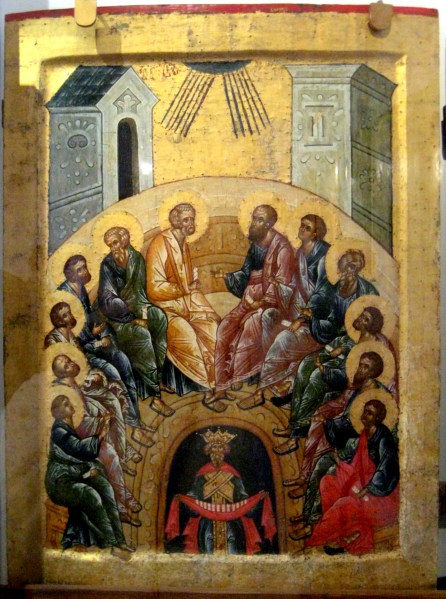
We can see this in the contrast of the Tower of Babel to the Upper Room at Pentecost. At Babel, confusion reigned and mission stalled. At Pentecost, the Holy Spirit bestowed clarity and conviction, coming like a mighty wind that filled and shook the house, and transformed many voices into one unified message and shared mission.

It is significant to recognise that this clarity neither narrowed the Church’s mission nor made the Apostles rigid or close-minded. Rather, clarity of vision propelled their mission boldly into the waiting world, enabling them to adapt and persevere amid countless challenges.   

Clarity in parish life means knowing the purpose for which we exist. It means letting the essential mission given by Christ – making disciples – shape our priorities, budgets, preaching, events and even what we say “no” to.  Clarity emerges not from constant activity and frenetic busyness but from deep conviction and intentional leadership. When parish leaders lack clarity, energy is scattered and vision begins to fade. When clarity is present, people are freed to focus on what matters most: helping others encounter Jesus Christ and walk with Him as missionary disciples.

For this culture and for this clarity, there is a fundamental call to conversion of heart, of habits and in parish leadership. This begins not with mere action but with the surrender of faith. Leadership without conversion becomes performance or image management. In the same way, ministry without prayer loses its foundation and becomes sterile, or reduced to mere maintenance, or worse, quiet neglect.

One story that has always struck me as instructive for parish renewal is that of Nehemiah. Before rebuilding the walls of Jerusalem, Nehemiah prayed, fasted and wept. His leadership emerged from the furnace of dependence on God and only then did he build something enduring, even in the face of resistance and the suspicion of others. Like Nehemiah, parish leaders must be “cupbearers of the Lord”, stewarding not just tasks but spiritual vision and communal growth.

If the vision of the parish is to be a community called by God, gathered around Christ in Word and Eucharist, and sent forth in the power of the Holy Spirit, then this vision must be woven into every conversation, every homily, every ministry, and every decision. Parishes do not drift naturally toward missionary vitality. They drift toward comfort, maintenance, and the familiar.

Too often, a parish calls people forward not for mission, but for the survival of its own structures as Pope Francis was only too keen to point out. Such a community might summon people forward to ministries, tasks, and functions for which there is never enough help. People are engaged to “fill the gaps”, and with this deficiency mindset of managed decline, the parish’s best energy is spent maintaining systems that bear little fruit.

However, the Church is not meant to merely survive and Christ deserves more than maintenance. The Church is called to proclaim, to disciple, to bear fruit that will last (Jn 15:16). Christ deserves more than our leftovers. What He calls forth is not self-preservation or resignation, but the transformation of lives in Him.

The question is no longer whether this kind of renewal is possible. We’ve seen it – in communities here in Sydney and in parishes across the world. The real question is whether we are willing to undergo the kind of interior conversion and communal commitment that such renewal demands. It is a question of surrender and of sustained resolve. Are we prepared to lead differently, live differently, and love differently to become the Church Christ calls us to be?

The Church of tomorrow is being shaped by the choices we make today, by leaders who keep the “main thing” the main thing: Jesus Christ as truly good news for every human heart. We must continue to cultivate parishes where the culture reflects Christ, where clarity shapes our vision, and where conversion is not a one-time event but the ongoing heartbeat of parish renewal. This remains our vision in Sydney. Only this kind of Church, anchored in Christ, led by the Spirit, and formed through prayerful conviction, will have the power to truly transform lives.

pope leo XIV: a gift of grace

It’s good to be back in this little corner of the internet. I’ve been meaning to revive this blog, and what better time than now, right after the election of Pope Leo XIV and his inauguration this weekend. Along with that momentous event, I’ve also been working on a podcast with Dr Matthew Tan, called Awkward Asian Theologians (you can find it here). Our talks have been a mix of deep dives and messy tangents, pushing me to think more critically about current events and how they mesh with theology. So, I’m hoping to be more active here, sharing some reflections as they come.

To kick things off, I’ve been mulling over the inauguration of Pope Leo XIV, and what it reveals about the fascinating intersection of biography, theology, and pastoral vision. A few thoughts below.


With the inauguration of Pope Leo XIV this weekend, a new chapter in the life of the Church begins. Every new papacy brings fresh insight and particular emphases, shaped by the unique biography of the man who assumes the Chair of Peter. It is both natural and proper that a pope’s reception of revelation, his pastoral vision and his theological orientation are deeply influenced by his life experiences. In essence, biography shapes theology.

We’ve seen this dynamic play out in recent history. The profound personal loss and political oppression endured by Karol Wojtyła in Nazi- and Communist-occupied Poland left a lasting mark on his papacy as John Paul II. His unwavering focus on the dignity of the human person and the relationship between faith and reason was, in part, a response to totalitarian systems that denied both. Similarly, the horrors of World War II shaped Joseph Ratzinger’s theological outlook. As Benedict XVI, he confronted the spiritual emptiness of post-war modernity, urging the Church to rediscover a personal encounter with Christ, the source of true meaning. Then there was Jorge Mario Bergoglio, formed by Argentina’s “Dirty War” and his leadership as a Jesuit provincial, who brought a pastoral vision to the papacy focused on mercy, humility, and a preferential option for the poor. Each of these popes read the signs of the times through the lens of their own lives, and their theological vision was shaped accordingly.

Pope Leo XIV arrives with a similarly rich and distinctive biography. Born into a working-class family in mid-twentieth-century Chicago, with French, Italian, and Spanish roots, he grew up amidst the challenges and diversity of a rapidly changing America. His early academic formation in mathematics and philosophy suggests a mind trained in both precision and wonder. His missionary work in Peru placed him at the heart of communities marked by hardship and faith – experiences that no doubt deepened his concern for the marginalised and sharpened his sense of the Church’s global responsibility. Later, as Prior General of the Augustinian Order, his leadership was informed by his doctoral studies at the Gregorian University, where he explored the Augustinian vision of authority not as control or domination, but as service offered in love.

This Augustinian inheritance profoundly shapes Leo XIV’s spiritual and theological identity. As a self-acknowledged “son of St Augustine”, Leo XIV’s papacy will undoubtedly reflect the deep theological currents drawn from the life and thought of Augustine of Hippo. As an Augustinian friar and scholar, Pope Leo XIV draws not only from Augustine’s doctrinal insights but from the deeper well of his lived experience – one marked by struggle, restlessness and eventual surrender to grace. Like recent popes, Augustine’s journey reminds us that theology is never abstract; it is always, in some way, a response to the life that we have lived.

St Augustine’s own life is one of the Church’s earliest and most powerful accounts of conversion. Born in what is now Algeria in 354, Augustine’s youth was marked by ambition, intellectual pride and moral wandering. He lived with a concubine and fathered a child out of wedlock; he joined the Manichaeans, drawn to their dualistic philosophy, before growing disillusioned. “I had become a great riddle to myself” he would later write in his Confessions, identifying the inner conflict that drove his restless search for truth.

This search ultimately led him to Milan, where the preaching of St. Ambrose and the influence of Neoplatonic philosophy helped him reimagine both God and self. It was in a garden – so often a site of new beginnings and blessing – that Augustine underwent his decisive transformation. Hearing a childlike voice urging him to “take up and read”, he opened the Sacred Scriptures and encountered the call of Christ in Romans 13: “Put on the Lord Jesus Christ, and make no provision for the flesh”. Augustine later described this moment as though “a light of relief from all anxiety flooded into my heart”. It was the end of one life and the beginning of another.

What followed was a life of deep pastoral care and doctrinal brilliance. Augustine became a bishop, a theologian, and a relentless defender of truth and grace. His Confessions, The City of God and treatises on the Trinity continue to shape Christian theology to this day. His combat against Donatism and Pelagianism reflect not merely intellectual disagreements but his conviction, rooted in his own life, that grace is the beginning and end of all conversion.

I would suggest that to anticipate the shape of Pope Leo XIV’s papacy, it will be helpful to reflect time and again on the arc of St Augustine’s own journey, which has profoundly influenced Christian tradition and, by extension, the new pope. Augustine’s path from selfish ambition to spiritual surrender, from pride to divine dependence, and from moral confusion to the clarity of God’s mercy and truth, offers us a lens through which to understand Leo XIV’s theological and pastoral vision.

We can anticipate that Leo XIV’s vision will emphasise that true pastoral care arises from the recognition of human restlessness and the unceasing pursuit of God. We can anticipate a papacy that prizes preaching not merely as instruction but as a proclamation intended to delight and persuade. We can anticipate a vision of the Church as a spiritual community, bound together by charity, whose mission transcends all earthly political structures and orders (civitas terrena) while remaining actively engaged with them. We can anticipate an emphasis on personal conversion as the foundation of evangelisation, echoing St Augustine’s insistence that “what we are must be taught and what we have must be given”.

If we wish to anticipate the direction of this new papacy, we would do well to look not only to Pope Leo’s policies and public addresses, but to the story of his life – shaped by deep intellectual and spiritual currents – and to the saint who formed him, whose own journey still teaches the Church how to receive and respond to grace.

the Spirit of the Risen Christ

Paschal CandleWe celebrate the Ascension of Christ and approach the Feast of Pentecost in the light of the Resurrection. Christ is risen. Truly, He is risen!

The readings in these past weeks of Eastertide have focused our attention on the appearance of the risen Jesus before the disciples, the first followers left distraught by the death of Jesus and struggling to come to terms with his rising.

The post-Resurrection narratives describe the disciples as “astounded” (Lk 24:22), “slow of heart” (Lk 24:25), “startled”, “terrified” (Lk 24:37), “disbelieving” (Lk 24:41) and “afraid” (Mk 16:8) as they grapple with this revelation – that Jesus is alive and walks among them in glory. In contrast to the authors of the Gospel who were writing decades after the Resurrection and knew how the story would end, the first disciples as contemporaries of Jesus did not yet have that same privilege nor did they possess that same confidence. Their experience of God’s revelation, of the new world signalled by an empty tomb, was far more hesitant if not uncertain. Salvation history was still unfolding before their very eyes.

PentecostAs we learn from the Acts of the Apostles, it is the coming of the Holy Spirit at Pentecost, promised to them by Jesus at his Ascension, that marks a new chapter in the disciples’ faith.

It is this Spirit that empowers the once frightened disciples to ‘go out’ into an unpredictable and even unknown world with courage and the conviction that life has conquered death in Jesus Christ. It is in the Risen Jesus that the promises of God had been fulfilled and it was his Spirit that made of the first disciples, and the apostolic generations to come, bold witnesses and bearers of this good news “to the ends of the earth” (Acts 1:8).

In short, it is the Holy Spirit at Pentecost that inserts the disciples more deeply into this mystery of Jesus, that leads his followers to receive, live by and share in word and witness the truth of Jesus’ life, death and resurrection.

Being Christian Today

As Christians of the twenty-first century we can find ourselves feeling at times a bit like the first disciples of the Gospel narratives. We can encounter Jesus and yet harbour doubts or feel our vulnerabilities in a world no more certain or secure than that of other ages.

We know from personal experience that our discipleship is a pilgrimage, that it is the work of a lifetime to grow in holiness and understanding. In the course of this time, we learn to hand over our lives ever more fully to what God has accomplished on the Cross and on the third day. The new covenant comes to us as a grace but also sets before us the life-long project of accepting this new beginning by our conversion to Christ, “in living his mysteries, in making our own his example, his thoughts, and behaviour” (Pope Benedict XVI). Today we can find ourselves “slow of heart”, “disbelieving” and “afraid” standing before this call to conversion, reluctant to make that surrender to the Holy Spirit and to take that decision for Christ that faith entails.

COVID-19It happens that in these past months the experience of surrender has come to us. A global pandemic has left us dependent upon and yet strangely cautious of others, all at once. Individuals and entire communities are now vulnerable to a terrible scourge, originating on a distant horizon, that has brought life as we know it – in our homes, schools, workplaces and churches – to a collective and sudden halt. This global disruption is a striking reminder for us as Christians, and others besides, that we are not masters of our own world.

Our fundamental vulnerability to life’s contingencies can be a particularly startling experience for a culture that feeds on and even profits from the illusion of control. In this day there are no lack of techniques, products or technologies that offer, for a price, a sense of self-sufficiency or that cast self-willed autonomy as the way to personal fulfilment.

As Christians we live by a very different story. This story is one in which our origin, life and destiny cannot be imagined apart from the mystery of Jesus Christ, crucified and risen – nor can our culture, the economy or the future of the world itself for that matter. Our identity and the very meaning of our life arise from and depend upon the presence of another. It is by the Spirit that we encounter this Christ, the light of the world, with us “always, to the end of the age” (Mt 28:20).

It is our surrender to this Holy Spirit, who has been “poured out” so we can “both see and hear” (Acts 2:33), that enables us to receive God’s presence and power in our joys and our sufferings, to proclaim Christ in the face of opposition, to serve the poor with the love of Christ, and that offers us the virtue of hope for our future. In the language of Luke in the Acts of the Apostles, it is new life in the Spirit that enables “the young to see visions” and “the old to dream dreams” (Acts 2:17).

As Christians we undertake a pilgrimage of discipleship that is not simply arduous but that is good and through which we are led to be ambassadors for Christ and of service to others. What the Gospels make clear is that we cannot walk or serve as witnesses in this world or aspire to the next without the power of the Holy Spirit, the Spirit of God who has been a part of the world’s story, and our story, from its very beginnings.

A Spirit-Filled Tradition

GenesisAs we pray and reflect on the role of the Holy Spirit in the world, we find this life-giving presence in the opening verses of the Hebrew Scriptures. Here we see the Spirit of God at the beginnings of creation as it “sweep[s] over the face of the waters” (Gen 1:2).

Through this Spirit, God brings the world into being – night and day, sea and land, every living creature, humankind in his image and according to his likeness.

Reflecting on God’s creation in the thirteenth century, Saint Bonaventure would posit that it is the love in God that is so great and fruitful that God makes a gift of this divine love beyond Himself. In other words, the love that God is spills over into creation. It is this breath of Yahweh that communicates life in the world.

However, the spirit of God does not stop at a single act of creation. Throughout the Hebrew Scriptures it is the Judaic sense of rûaḥ or ‘breath of wind’ which signifies God’s power, a spirit that continuously and constantly acts in and upon human history.

This spirit of God causes humanity to act so that God’s plan in history can be fulfilled. It is God’s Spirit that empowers God’s people – persons such as Joseph, the example of faith; David, shepherd and king; Moses and Joshua, leaders of the people; the prophets and elders – to accomplish His mighty works.

ChristThis spirit-filled history of salvation continues into the New Testament where the revelation of God comes to fulfilment in Jesus Christ. Jesus’ entire life unfolds under the sign of the Spirit.

It is by the Spirit that the young Mary conceives Jesus (Lk 1:35). It is the Holy Spirit that descends upon Jesus at his baptism in the Jordan, anointing him as the Beloved Son of the Father (Lk 3:22).

It is the Spirit that leads Jesus into the desert for fasting and prayer prior to his public ministry (Lk 4:1) and it is Jesus who will act through the Spirit, healing the sick (Lk 6:19), preaching and praying for his disciples and for the salvation of the world.

It is Jesus who sanctifies the ordinary things of this world – water, oil, bread and wine – by the power of the Holy Spirit. He renders all things holy, directs God’s gifts toward God’s glory, to the praise of his Father.

Finally it is the Risen Jesus, the glorified Lord, who gives the Spirit, the Advocate (Jn 16:7), to the disciples, to the Church, to continue and make present his truth, his Word, his teaching, his way, his life in the midst of the world.

The Holy Spirit and the Believer

If this is the ‘biography’ of the Holy Spirit, of God’s creative and redemptive power, what are the signs of the Holy Spirit in our time and in our world? What is more, what difference does the Spirit make to the world of our experience?

First and foremost the difference that the Spirit makes in our world is mediated in and through the lives of the Christian faithful and through the community of Christians, the Church.

The Holy Spirit is truly present in the world in each Christian baptised in the name of the Trinity, Father, Son and Holy Spirit. We are confirmed in faith by the Spirit’s action and anointing, and receive the Eucharist, Christ’s body, by the invocation of the Holy Spirit.

By this sacramental initiation into the Church, we are made anew in Christ by the Holy Spirit. As St Paul declares of our Christian life, “no one can say ‘Jesus is Lord’ except by the Holy Spirit” (1 Cor 12:3).

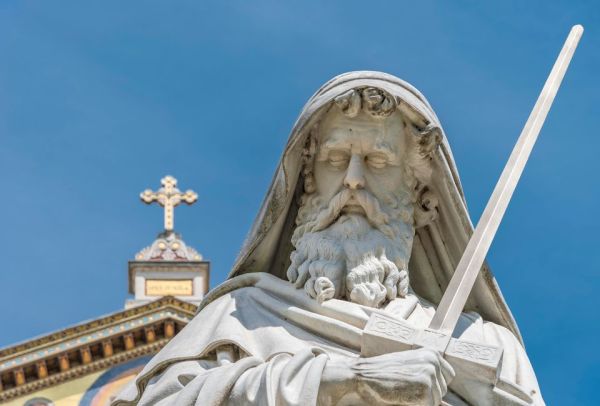
St PaulThis Spirit comes to each one of us as a gift but also as a challenge to the ongoing conversion of our heart and mind. As the source and giver of all holiness, we implore the Spirit to keep us in grace and remove those artificial obstacles, habits and ways of thinking that prevent us from living fully in and for Christ. As St Paul writes in the Letter to the Romans, our baptism in Christ calls us to live no longer by the flesh, by the material things or selfish desires of this world, but to live according to the Spirit (Rom 8:5). It is for this new life that the Spirit of God dwells in us, the very same Spirit that raised Jesus from the dead (Rom 8:11).

In our Christian living, we are no longer beholden to a spirit of slavery or have need to fall back into fear (Rom 8:15). We have received a spirit of adoption, become sons and daughters of God. It is the Holy Spirit that bestows upon us the eyes of faith, the capacity to see others not as we would see them but as Christ sees them, to see the world as God looks upon the world. We appreciate what is positive in others and in the whole of creation, to welcome it and prize it as a gift from God. The Spirit teaches us to ‘make room’ for the other and to bear one another’s burdens with gentleness (Gal 6:2).

The Spirit also enables us as Christians to have the mind of Christ (1 Cor 2:16). We are endowed with the ability to respond to Christ’s words and open our minds to the understanding of his death and resurrection. In this way the Spirit keeps us faithful to Jesus in the present, activating and guiding our discernment to speak and act as Christians in the world so that this world reflects more and more of God’s Kingdom, the “fullness of life” that God intends for us and all creation (Jn 10:10).

The Spirit is particularly manifest in the world in the gifts that have been endowed upon each of the baptised. In addition to the gifts and fruits of the Spirit outlined in the writings of St Paul, which are gifts given for us to keep, the Holy Spirit also bestows charisms, special abilities for others, that enable us to be powerful channels of God’s love and redeeming presence in the world. Whether extraordinary charisms, like healing, or ordinary charisms, like administration, these are to be used in charity or service to build up the Church for the sake of our world (Catechism of the Catholic Church, 798-801).

We see the Spirit at work in the lives of the faithful, in such charisms as hospitality, of intercessory prayer, leadership and knowledge, the discernment of spirits, charisms of teaching and wisdom, and service and poverty among others. Received through Baptism and Confirmation, these charisms empower the People of God to have an impact on the world that surpasses their natural, human abilities. These are graces freely given by God, that call to be discerned among the whole People of God to actively help spread the faith, the Good News as missionary, Spirit-filled disciples.

SaintsOf course, the fruits and gifts of the Holy Spirit are especially manifest in the saints. These ‘bright patterns of holiness’ remind us that Christian sanctity is not just an ideal or possibility but a reality in concrete persons and the concrete conditions of the world. This cloud of witnesses, these Christian exemplars, are models of holiness who have responded to the needs, challenges and opportunities of their time. These saints allowed themselves to be filled with the Spirit. In the pattern of Mary, “full of grace” the saints give birth or expression to Christ in the world.

The diversity of their holy lives attests to the creativity of the Holy Spirit, each saint demonstrating that Christian holiness can be lived even in ‘this’ way. No doubt the Holy Spirit, agent of evangelisation and soul of the Church, is making news saints in our time who will open up new and fruitful ways for responding to the Gospel in the future, who will be new manifestations of the Spirit of Christ alive, illuminating the world.

The Holy Spirit and the Church

As evident in the communion of saints and those first disciples gathered in the Upper Room, a primary way the Holy Spirit acts in the world is to bring the Church into being.

22.4.2010: south wall, Sant'Apollinare Nuovo, RavennaThe Church, as the third-century theologian St Hippolytus affirmed, is “the place where the Spirit flourishes”. The Church is the dwelling place of the Holy Spirit, the Spirit animating and bringing to life and holiness its members through the Word and sacraments, the ministry of the ordained (our bishops, priests and deacons), the various gifts and charisms of the faithful of every rank, the varieties of religious orders and ecclesial movements that express the Spirit’s power and anointing.

So integral is the connection between the Holy Spirit and the Church that St Irenaeus would proclaim as early as the second century, “for where the Church is, there also is God’s Spirit, and where the Spirit of God is, there are also the Church and all grace” (Book III, Against Heresies).

A particular aspect of the Spirit in the Church is its role as principle of unity, enabling all people to be one and the unity to be a multitude. The Spirit gathers what has been scattered, overcomes division and unites difference. It brings into communion the People of God, a people of every culture, nation, tongue and tribe, in the one body of Christ.

Like a soul is to the body, the Holy Spirit binds all the members of the body of Christ to its Head and to one another. This unity is one of the ways in which the Church gives witness to Jesus Christ, through whom “God was pleased to reconcile… all things” (Col 1:20). As we have learned from our history, a lack of unity within the Church or poor witness seriously impairs the ability of the world to see the Church as the dwelling place of the Holy Spirit, as a source and expression of God’s love.

Therefore, to be fruitful in its evangelising mission, the Church privileges unity which will be not the product of our efforts or structures alone but the fruit of our common docility to the Holy Spirit. Just as St Paul entreated the community at Ephesus centuries ago, so too are we to make “every effort to maintain the unity of the Spirit in the bond of peace” (Eph 4:4).

Not only does the Spirit make the Church one, it also leads the Church to be faithful, in ever deeper adherence to Christ. As identified by John’s Gospel, the Spirit guides the ecclesial community “into all the truth” of God’s revelation (Jn 16:12).

The Church Fathers of the third and fourth century were themselves conscious of a tradition or communication of the Holy Spirit that ensured the unity of the faith in the churches spread far and wide across the ancient Mediterranean. It was the Holy Spirit promised and given to the Church by Jesus that ensured the faithful transmission of the faith.

The Church remains today as it was then, ‘apostolic’ in its Spirit-inspired efforts to be faithful to the Gospel and to interpret it as Good News for the world. In this task, the bishops as successors of the apostles have a particular charism, to serve as the visible principle and foundation of unity in the particular churches and to exercise a special competence within the Church to ‘test all things and hold fast to that which is good’ (Lumen Gentium 12).

It is important to note here that the Spirit also enables the fidelity and adherence of the Church to Christ through the personal conversion of all the faithful, the reading of Scripture and immersion in the tradition, the initiative of local communities, parishes, families and groups, the teaching, sanctifying and pastoral government of our priests, the apostolate of our religious, whether obscure or well-known, and the birth of new movements and forms of evangelisation that are fresh signs of the Spirit active in the world. In the end, the Church is no less than the world as those who believe in Christ and who live by and engage this world by the influence and promptings of the Spirit.

‘Receive the Holy Spirit’ 

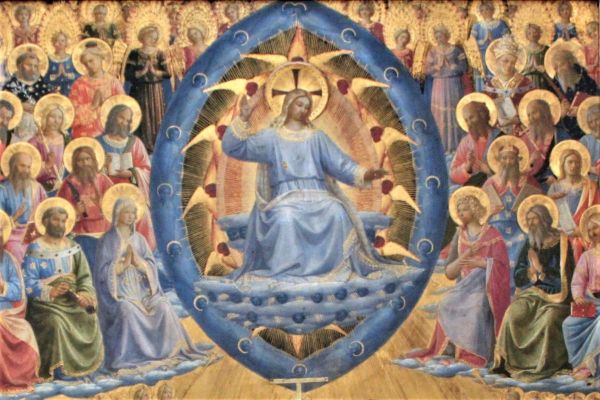
FraAngelicoAs the Feast of the Ascension brings us to reflect on our Christian pilgrimage in this world and to the next, we do not have a choice between God and the world. As Christians, we choose God by choosing the world as it really is in Him. We choose God by working toward the transformation of the world as disciples, empowered by the Holy Spirit who inspires true freedom and furthers God’s plan of salvation.

In human lives transformed, in the works of justice and mercy that express Christ’s love, the prayer and worship that reveal his glory, in outreach to and inclusion of the poor and vulnerable that reveal his heart, the Spirit moves the world toward its fulfilment.

By the Spirit each of us are sharers in Christ’s mission and we are inspired by a constant and healthy unease in the world to make all things new in Him. As Christ himself beseeches each one of us “receive the Holy Spirit” (John 20:22), the spirit of truth, love and holiness that leads us home to God.

proclaim 2016 keynote address

SB058On the 24 November, 1999, on a drizzly Wednesday evening, I was baptised in a parish in the north-western suburbs of Sydney. Heralding from a family of Buddhist and Taoist heritage, I entered the Church at the age of twenty, gathered with a priest, sponsor, fellow catechumens and a mixed group of close friends, mostly of no religious background. A small but powerful group had accompanied me through the process of initiation and I was fully conscious and grateful for the fact that in God and this community I had been granted something which I would spend the rest of my life learning to be faithful to, learning to enter into, learning to trust.

If a history of that parish were to be taken that date in November would not have stood out for any special recognition. I am sure it was for the most part an ordinary and customary year. However, beneath the everyday rhythm of this local parish it was for me a time of great consequence, of vital, spiritual breakthrough into the life of God to discover Christ as the total meaning of my life.

I share this to affirm that amidst the unfussy pews of the parishes we know and love the grace of Christ continues to move and mould hearts to his own. The local parish, even in its ordinariness, remains a privileged location of God’s transforming grace in the world.

However, as we take a wider view of the Australian parish we must admit that the possibility of personal spiritual breakthrough is not the same thing as the frequency of its happening.

This would be suggested by the challenges faced by our communities today, well known and rehearsed – declining weekly Mass attendance, now at a “critical moment” and leaning toward single digits across the nation; an ageing profile; the critical and chastening scrutiny of a Royal Commission; low morale in some quarters; low religious literacy among some of those we encounter; the pain of structural change and amalgamations directing energies inwards; and the by-product of diocesan decline, increasing managerialism within the culture of the Church that pulls towards the bureaucratisation of pastoral care.[1]

The Church in Australia can no longer rely on a ‘conveyer belt’ which was presumed to take Catholics from the cradle to the grave in faith, the assumption that a Catholic baptism and the mere fact of going to a Catholic school, for example, would secure a lifetime of committed discipleship. Historical circumstance and cultural momentum will no longer carry the Australian parish.

A new imagination is called forth and is demanded by the mission we have received, to make disciples and apostles of the baptised and the unbaptised, to be a leaven in the world as the sign and reality of the new freedom given in Jesus Christ. The flourishing of personal discipleship and apostolic outreach must become the motivating norm for our Church. For this to become a reality we are called to become more open and responsive to what God passionately desires to do through our parishes.

The Problematic


australia-allReflecting on the Australian Church, I would concur that the central challenge for parish life is this: we are caught between a call and desire for renewal and the weight of our own church culture towards maintaining the status quo. In this moment which cries out for new apostolic zeal, we can feel bound by layers of expectation that demand the continuation of the old even while new forms of parish life and mission long for expression.[2]

How do we address the culture of a local parish that may desire change but does not want to change, that desires to grow, be joyful and bear new fruit but contains within it organisational antibodies that tend to kill anything that is new? How do we move our communities towards radical, fervent outreach when a ‘convoy routine’ permits spiritual progress or cultural change only at the speed of the slowest ship? As intimated by Pope Francis, the insistence that “we have always done it this way” – less often said than expressed in passive resistance – reveals a complacency at odds with the urgency of disciple-making which has been tasked to this generation.[3]

What are the levers or the strategies of prophetic witness that can lead us into that future which God invites, that can embolden us to ‘step into’ this future that has not yet fully arrived? The future of the Australian parish and its redemptive mission in the world are tied up with the preparedness of our local communities to take a conscious step towards their own conversion.

The Need of Vision

Such a cultural shift within our parishes demands that we reclaim the ‘why’ of our existence as local communities of faith. While talk of parish evangelisation often leaps to the ‘what’ – to programs, tools and techniques, reflective perhaps of our hardy Australian pragmatism – the ‘why’ or rationale of our parishes cannot be taken for granted.

On the ground, we appreciate the significance of the ‘why’ for our people when they receive the sacraments, those of initiation and besides. We earnestly want their ‘why’ to be Jesus, not merely school enrolment or unthinking convention. We understand the difference this ‘why’ makes to their likely future participation in the life of faith and the Church. We know that this ‘why’ distinguishes the disciple from the ‘what’ of the consumer who arrives asking ‘what do I get here’ rather than ‘who am I called to be here’. If we seek to grow our parishes for mission, we need to clarify and communicate the ‘why’ of our total parish life and this is called vision.
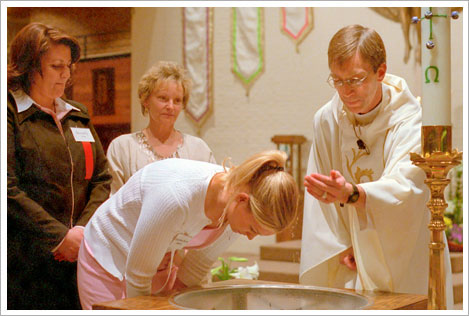
baptism-adultFundamentally we are called to be a Church of the Great Commission. This is our vision, the ‘northern star’ guiding our resolve. “Go therefore and make disciples of all nations, baptising them in the name of the Father and of the Son and of the Holy Spirit, and teaching them to obey everything that I have commanded you” (Matt. 28:19). As it has been pointed out, in our Catholic Church we have certainly learnt to “go” and can claim a presence at all corners of the earth. We “baptise” and confirm relentlessly. We “teach” and catechise great numbers in our schools and sacramental programs. However, our ability as Church to “make disciples” remains in question, as raised by the pastoral realities for the Australian Church we have explored.[4] A local parish vision that reclaims the Great Commission as our primary calling clarifies the purpose of our community and makes it possible for others to become a part of that purpose.

It is worth noting that a parish vision for the making of disciples and of ongoing apostolic support for the laity can arise from our hopes as well as our laments. Our restlessness and frustrations too can be helpful signs pointing us beyond what we have in hand, acting as a mirror image of our deepest desires for our community. When a bold vision of spiritual vitality is discerned it supplies the energy and constant challenge to the ethos and practices of a parish as it journeys toward that goal.

Within our Catholic culture, some voices express resistance to the need of an articulate vision and pastoral planning for our parishes and dioceses on the basis that this is a bureaucratic exercise, more at home in the Business Review Weekly than in our Church. Others oppose talk of setting a ‘vision’ for our communities on the basis that it second-guesses the providence of God whose Spirit indeed leads where it will.

As a community of faith we certainly do not have a road map or certainty for our future, a future that belongs to God. However, we do have a story of the kind of people, the kind of disciples, and the kind of communities we want to be as we make our journey towards that unknown future.

14546210When we communicate a vision of the parish, how we seek to respond to God in this context, in this time, in this local community, when we can articulate a vision of the kinds of spiritual growth we are seeking to raise up in our people, this passionate purpose becomes the heartbeat or pulse of a parish. Conveniently, and not incidentally, a renewed vision provides the case for change.

The alternative to a parish communicating vision is a community standing in the silence of an unquestioned routine. The lifeblood of the parish might occasionally receive a boost or uptick through the initiative of individuals or the occasional event but without a sustained vision to consistently stimulate a higher life, the pulse of the parish inevitably slows and returns to maintenance, to the pace of survival rather than growth.

While no substitute for the parish, it must be acknowledged that the ecclesial movements in their charisms and narratives of holiness have shown us the power of a story to tell, as do the saints, those ‘bright patterns of holiness’ who image or supply a vision for the divine touching human lives.

I would like to suggest that in establishing its vision and promoting cultural change, a parish can gain much from imagining or visualising itself ten times better rather than only ten per cent better. This is because a small goal will tend to lead us to incremental changes that are based upon the existing rhythm, resources, programs and assumptions of the parish, leading to only slow or grinding progress.[5] Aiming for the sky, however, forces us to question our community assumptions and the fruit of our present culture, sheds bold and even new light on the taken-for-granted details of the everyday. Jesus’ vision of the Kingdom was so grand that it cast fresh light on who could eat at table. It was so immense that it gave meaning to tiny seeds. It was so extravagant it could sustain meaning in a Gethsemane night, even on the Cross.

It is no accident that the missionary determination of Pope Francis in The Joy of the Gospel begins with a grand dream, by looking out, not looking down.[6] In any case, if we do not cast a vision for our parishes, the question will inevitably rise from the pews, ‘Are we going anywhere?’
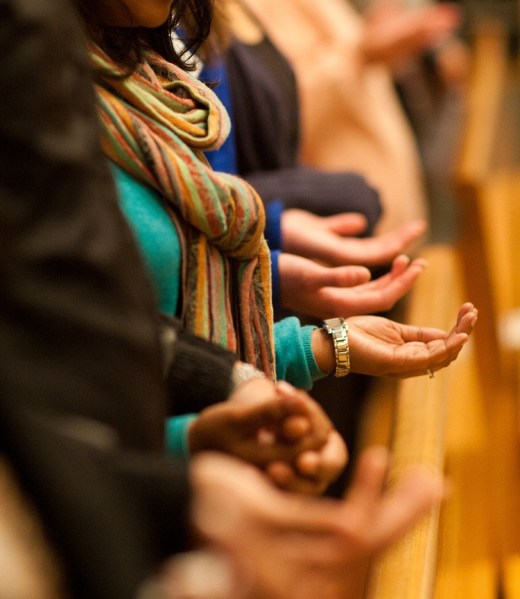
Prayer 1_2It is worth noting that when a parish makes a commitment to a clear vision of personal discipleship and spiritual community, presenting this before its people, other good things begin to flow. With a vision pointing the parish beyond its own concerns and circumstance, the parish can begin to move from a culture that engages people to build up the Church to become a Church that builds up people.

When we routinely engage people to build up the Church, the focus inevitably falls on maintenance and functionalism. A parish calls people forward to maintain its own life, its ministries, functions and tasks for which there is never enough human labour. We engage people, in other words, to ‘fill the gaps’ and out of a mindset of deficiency, with the best of our energy, dedication and resources flowing into the upkeep of our established groups, ministries and schedules. However, our parishes are not called to be factories, to keep the cogs turning over at any cost.

We cannot confuse our means with our end which is the abundant spiritual life of our people. As it has been said, ‘if you build the Church, you rarely get disciples. If you make disciples, you always get the Church.’ Parishes begin to change their culture towards mission when all forms of its preaching shift from a focus on what it wants from people to what it wants for them.

When a community understands itself as existing not for its own preservation but for the spiritual and personal change of its members and non-members, then all that the parish undertakes, its programs, groups, structures, and finance, will be seen and considered in the light of its mission to make disciples. We will begin to measure our life not by the standards of conservation – the managing of internal concerns, the parish patrimony, nest egg or tranquillity – but by the standards of our outwards mission. We will begin to gauge our life not only by our seating capacity but also by our sending capacity, and the extent of the spiritual fruit and personal change we nurture into life.

Increase over Addition

In reflecting on the Church’s living tradition and the experience and best practices of growing Catholic communities, I would like to suggest four elements as being integral to the renewal of parish culture toward deeper discipleship and wider evangelisation.

In sharing these suggestions, I am mindful that when a community or group has a vision but no strategy to achieve it, it will tend to simply add on new programs and activities to an already busy routine hoping this will affect a difference. Yet we know, even implicitly, that addition is not synonymous with increase, that ‘more’ is not always tantamount to ‘better’.

Indeed, we are learning on a national, diocesan and parish level that a “spaghetti” approach to Church life, over-programmed with a splattering of disconnected activity, tends to encourage silos rather than unity or strength of mission. This is because events, programs and groups compete for space on the common calendar, rivalling one another for the same pool of finite resources, increasingly busy people and limited attention. If we become content with the unrolling of copious activity, without heed of the fruit these initiatives bear or otherwise, we in fact succumb to the “spiritual worldliness”, or busyness for its own sake, of which Pope Francis warns.[7]

So, to four principles drawn from growing and evangelising communities that can take us beyond the comfort of routine and the opposite temptation of mere addition.

Foundations of an Evangelising Parish

1. Proclaiming Christ
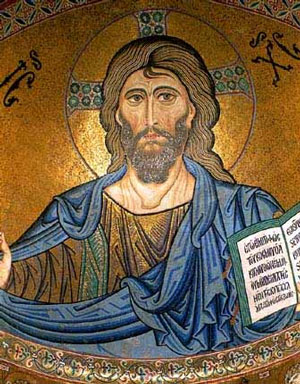
Christ Mosaic Cefalu Sicily 12th CenturyFirst of all, at the heart of evangelising communities is the proclamation of the Good News, specifically the kergyma which is the basic truths of our Christian faith. This word kerygma, or keryssein in Greek, may not be very familiar to us but it in fact appears in the New Testament some nine times, and refers to the very heart of the Gospel, the core message of the Christian faith that all believers are called to believe and proclaim.

The words of Pope Paul VI still challenge us today, “There is no true evangelisation if the name, the teaching, the life, the promises, the Kingdom and the mystery of Jesus of Nazareth, the Son of God are not proclaimed”.[8] This is the kerygma. It is explicit and focused entirely on the person and saving message of Jesus Christ.

We note that this kerygma stands apart from the catechesis or instruction in the fuller doctrinal and moral teaching (didache) that the Church notes is to take place after someone has accepted the initial kerygma and been baptised. We can in fact school people in our parishes, in the RCIA for instance, about the Church, various themes of theology, the intricacies and rubrics of liturgy and so on but with slight reflection on the life and person of Jesus whom our people are first called to encounter, though our preaching, priorities and witness. The heart of our Gospel is Jesus, what he has done, and continues to bring about for us and within us.

As Pope Francis makes clear,

. . . we have rediscovered the fundamental role of the first announcement or kerygma, which needs to be the centre of all evangelising activity and all efforts at Church renewal. This first proclamation is called “first” not because it exists at the beginning and can then be forgotten or replaced by other more important things. It is first in a qualitative sense because it is the principal proclamation, the one which we must hear again and again in different ways, the one which we must announce one way or another throughout the process of catechesis, at every level and moment.[9]

There is no sense that we ever graduate from hearing this Gospel of Jesus Christ. It is the proclamation for which our Church exists and that calls to be preached in our liturgies, parent and children’s formation, in our youth ministries and initiatives of social outreach, in the development of our parish teams and staff, our talk of parish finance, structural change and carparks. We are constantly challenged to re-centre our parishes, our total life, on this central proclamation for it is the sole source of discipleship and evangelisation. There is no other.
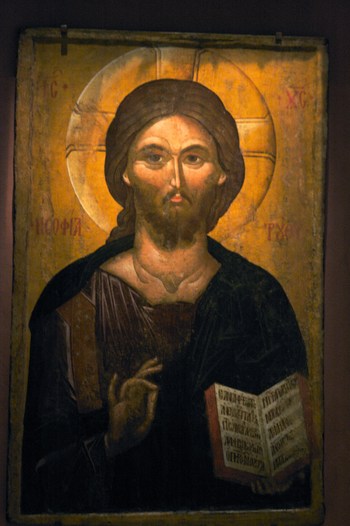
Jesus Christ 2The heart of evangelisation is to announce who Jesus is, the Son of God, the Word made flesh, the man who is God, who died for our sins and was raised on the third day. It is to announce the Good News of the Risen Christ who is with us even now and opens up for us the way to life without end. Evangelising parishes proclaim Jesus’ ascension, his seating at the right hand of the Father as King, and his sending forth of the Holy Spirit. It is this Spirit which reveals Christ and even enables us to say ‘Jesus is Lord’ and it is this Spirit who empowers the Church, who empowers us, to be faithful to Christ’s mission in our own lives and in this moment of the world’s history. Finally, this Good News of Christ calls us to conversion, to repent and believe in this Gospel, calling for a change of life in the light of what God has done and is doing in Jesus Christ whose life we share by baptism, the anointing of the Holy Spirit, in communion with his mystical body, the Eucharist, and by our communion with His ecclesial body, the Church. In prioritising this proclamation, we seek to build up a culture in which Jesus is not swept into our parish story intermittently but our parishes and lives are swept into his.

As a former media buyer, I am conscious that corporations spend millions after millions of dollars each year, even each week, to get people into their shop. It is humbling, then, to recognise that each year thousands upon thousands of people come into our ‘shop’, walk through the front doors of our parishes, without always knowing why they are there or their stance towards the saving Gospel or proclamation which is the lifeblood of our communities.

And yet, whether entering the parish via the door of our sacramental programs or school enrolment, walking through our doors on account of baptisms, marriages or funerals, or for the sake of their children, these persons fully expect to hear the Gospel of Jesus Christ proclaimed by our parishes whether they ultimately accept that saving message or otherwise.

It is essential to our future that our truth is proclaimed with courage and with faith, not as something but as someone to whom we owe our life and devotion, someone who calls not to be a part of our life but our very existence and the total shape of our living.

2. Growing Personal Discipleship

FootprintsHowever, the bold proclamation of Jesus’ name, life, promises, Kingdom and mystery, in itself is not sufficient for the growth of a missionary culture in our parishes. As a second foundation, evangelising parishes cultivate personal discipleship, create room and opportunity for a personal response to the Good News proclaimed. The call to be a disciple is a gift but it also involves a choice and personal decision that cannot be delegated to any other.

In its personal dimension, the heart of all evangelisation could be described as one person telling another person how the encounter with Jesus Christ has changed their life, one beggar telling another beggar how he found bread. This is indeed the living tradition of our Church, ‘hands clasping hands stretching back in time until they hold the hand of Jesus who holds the hand of God’.[10] Personal witness, testimony and exchange are at the heart of personal and spiritual change. It is our long and ancient experience as Church that programs do not make disciples; disciples make disciples.

In speaking of personal change, it is a sober reality that 60% of those who attend Mass in Australia reported only some or no spiritual growth through their experience of parish life.[11] It is clear that we cannot adopt a mindset that assumes the sacraments, or the school RE program for that matter, will simply ‘take care of it’. While this emphasis on personal faith may seem obvious, it underlines the fact that we cannot assume that disciples just happen because we have a parish and people show up.

An effective process of evangelisation in our communities will need to recognise the various stages of personal growth through which people journey on their way to the Gospel. A parish of personal, realised faith is something different than the motions of a crowd that produces ‘conventional sounds when stimulated by the appropriate noises’.[12] While the conversion of our people always remains the work of the Holy Spirit, we can help or hinder that process depending on how we walk with people.

The people in our pews and those besides are at varying levels of faith and commitment. When we can recognise with honesty where our people are in the story of discipleship, we can begin to engage them in ways that are fitting to their disposition – building bridges of trust with those that do not yet have a basic positive association with Christ, the Church or ourselves as Christians; for the curious, asking questions to encourage their initial desire to know more and sharing with them our own story of faith as it has become central to our life; for those exhibiting spiritual openness, expressing our willingness to pray for them and asking questions to validate their openness though they may not yet be actively seeking to know God.[13]

The essence of evangelisation is to engage with others on the road to Emmaus as they ask their questions, leading them to an encounter with Christ who is, in fact, already present to them, already active in their lives awaiting the ‘yes’ of a spiritual awakening, an assent of faith.
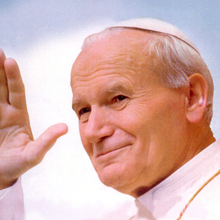
jp11 version 2Bringing together these first principles of evangelising communities, we hear St John Paul II affirm, “Faith is born of preaching and every ecclesial community draws its origin and life from the personal response from every believer to that preaching”.[14] It is both the preaching of the kerygma and personal conversion that sustains and grows a missionary culture.

Parishes do not grow when their people do not. The call to spiritual growth challenges ourselves for each of us shapes the Church and its mission by our personal participation in it. The extent to which we grow in faith and holiness will be the extent to which the Church grows in faithfulness and holiness. 

As leaders we must realise that everything we do or say teaches people something about the Church. Ecclesial operators or ‘professionals’ can never replace the holiness of saints, managerialism the spirit of charity. As we have learned from painful history, it is entirely possible for parish leaders to ostensibly live a life for Christ without living a life in Christ. Personal conversion calls for change within us as much as others in the community of faith.

3. Discipleship in the Midst of the Church
sbPersonal discipleship also calls for the nourishment of an ecclesial community of faith. Evangelising parishes create disciples in the midst of the Church.

We know that discipleship is vulnerable without the ongoing, living support from other Catholic disciples. Significantly, a parish sustains personal faith not only through a shared life, mutual witness and spiritual support but by opening individual lives to more possibilities for the life of faith, vocation and holiness than we might otherwise recognise, to a vision that discipleship is possible even in this way.

In the same way as a number of first European settlers arrived in Australia assuming they were, if you like, dragging land and civilisation behind them, we can be tempted to consider our increasing diversity as Australian parishes as something which is being added ‘from the outside’ rather than a theological fact and principle of our life from its earliest beginnings at Pentecost. The challenge and companionship of fellow Christians, diverse in cultural expression of faith and piety, liberates and enables a faith richer and deeper than what we could gain on our own.

How might our parishes better integrate and express difference? Research and experience tells us that at the heart of all evangelising and growing communities are small groups as a vital instrument of ecclesial support and differentiated unity. I am not aware of any growing Christian community that does not have an economy of small groups in place to deepen at the same time its members’ experience of Jesus and the Church as encountered in fellow Christians. The experience of liturgy alone can render it difficult for persons to feel instantly at home or connect with others intimately in the context of faith. Most of us have come to the heart of the Church through a small group of some description, whether this was a youth group, a prayer group, a parent or family group.

The introduction of small groups within our parishes and an accompanying culture of invitation, one that communicates in effect that ‘we are incomplete without you’, will enable people to be brought into and nurtured by a supportive network of disciples.

While speaking intimately with one another about our lived experience and friendship with Jesus can be counter-cultural for many Catholics, I am heartened by the fact that no one knew they needed an iPhone until Steve Jobs invented one. We are similarly challenged to offer our people the small group of discipleship and learning that they never knew they needed, an experience of personal relationship with Jesus and his Gospel in the midst of others.

baby_plant.28104733While our vision needs to be as large as the Kingdom, our implementation of that vision needs to begin small. With encouragement for us, it is worth noting that when large evangelical and Pentecostal communities are asked what they seek for their future it is to establish smaller, stable communities in the midst of a local neighbourhood, offering a consistency and intimacy of worship and local service in personal connection with the wider community. In other words, what many megachurches are seeking is a parish.

We have already in our Church the scale of community to foster powerful spiritual relationships with one another, by small groups and other means. It is not a matter of structure but our capacity for interrelationship and mutual trust in faith, our ability to grow together and also our capacity for collegiality.[15]

It may be news to some that a national ecclesial event, a Plenary Council, has been proposed by the bishops of Australia for 2020, a council to embrace not only the faith of the bishops but to take up the faith of the Australian Church, the collective vision, gifts and charisms for our common future. To be collegial is to be receptive of the faith with which Christ has already endowed the Church. As Australian Catholics we ought to place great hope in our collective ability to discern a future and are challenged not only to have faith in God but in our capacity to respond to God as his people.

To anchor this potential for collegiality, shared discernment and decision-making in our parishes, our capacity for co-responsibility for mission begins within the local parish team and the parish pastoral council as the most immediate opportunities for living the theology we profess.

The risk of not attending to the faith of the faithful as expressed in the local parish, as much as a national plenary council, is no less than turning away possibilities, the manifold charisms and vocations of lay men and women, which God continually offers to us. An Australian parish, and an Australian Church for that matter, that is not discerning God’s call cannot hope to grow because it cannot see what God has already given and deeply invites.

4. Missionary Orientation
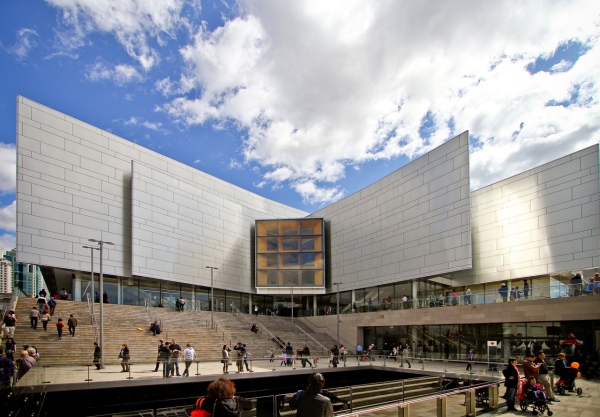
Picture193Finally, we recognise that the proclamation of the Gospel, the call to personal discipleship and the life of the Christian community are not for their own sake but for the sake of the world. All that has gone before must bear fruit in our connection with others beyond our communities of faith, beyond the boundaries of the parish.

In his own way I think Pope Francis has reminded us time and again, with a certain cheek, that the parish is not an organised way to avoid the issues of the world. The parish is not a spiritual refuge or a hotel for the spiritually comfortable. Rather it is a hospital or wellspring open to all who bear wounds or thirst, who await a personal answer for their hope on the road of humanity.

A premier ecclesiologist in the English-speaking world, Joseph Komonchak, reminds us:

To enter the Church is not to leave the world, but to be in the world differently, so that the world itself is different because there are individuals and communities living their lives because of, in, and for the sake of Jesus Christ.[16]

To be a community of disciples is not to stand apart from the world or hover above it but to be within the space of the world differently. To be a Catholic parish, to be a community of believers, is not to withdraw into a ghetto of like-minded individuals but to speak, witness and inhabit this world, a world which is very much in our hands, with a perspective and a commitment to a person whom we believe illuminates its depths and heights.

I believe parishes will move to a missionary footing when they believe in their heart of hearts that there is a harvest, that Christ is preparing people for us to reach, and that we have been anointed by our baptism to speak, live and act by God’s Word in our world.

A missionary parish will prepare people for this assignment, preaching and teaching that the Christian life it is not about choosing between Christ and the world, as if they were utterly opposed. Rather, as the twentieth century spiritual master Thomas Merton observes, Christian life is about choosing Christ by choosing the world as it really is in Him.[17] God’s mission calls us to a constant orientation beyond ourselves, so that the world can witness the spirit of Christ in action, can see and come to believe.

Summary

I suggest four lenses by which we might review and renew the evangelising mission of our parishes:

  • proclaim the name, teaching, promises, Kingdom, life, death and resurrection of Jesus of Nazareth, the Son of God (the ‘kerygma’)
  • call forth a personal response to this Good News
  • foster discipleship in the midst of the Church
  • and send these disciples into the world in constant missionary outreach

I believe a parish requires all four elements without exemption, so as not to:

  • proclaim the Gospel without personal conversion (we can preach the Gospel and be entirely orthodox, proclaim a sound understanding of the faith, but as Pope Benedict XVI be merely ‘proper’ but ultimately loveless, bearing little actual fruit in the lives of our people);
  • we can experience personal conversion but minimise or castoff the influence of the Church (an erroneous sense that it would feel more like real worship if it was ‘me’ praying alone, or a sense that the parish community is something I could rather live without; a ‘private’ Christianity withdrawn from the varieties of discipleship that God offers us in others);
  • we can develop an ecclesial life and participate in the Church’s public life but without personal conversion and a living relationship with Jesus (merely ‘attending Mass’ out of custom or working within the Church or school without an attachment to the Gospel, working only for Christ but not working with him);
  • or we can proclaim the Gospel, foster personal conversion and a commitment to the Church without any implication for the wider world, displaying a forgetfulness of the fact that we are ‘sent’ as missionary disciples by our baptism to share the life of Christ we ourselves have received.

When our communities grow in these foundations, a culture of discipleship and evangelisation begins to thrive.

candlesIndeed, it can be seen that these foundations encourage and direct our efforts in this Jubilee Year of Mercy, in which the tenderness and compassion of God calls for announcement. An evangelising community proclaims the mercy of God whose face is Jesus Christ, nurtures our people to know themselves as personally forgiven by God and brought into the freedom of a new life, offers the experience of forgiveness and compassion within the life of the Church, sacramentally and in the companionship of fellow Christians; and equips and emboldens the forgiven to ‘go out’ to share mercy with others who too await someone to pour oil on their wounds, who await the Good News given in Jesus Christ, who is the promise and presence of God’s mercy.

Conclusion
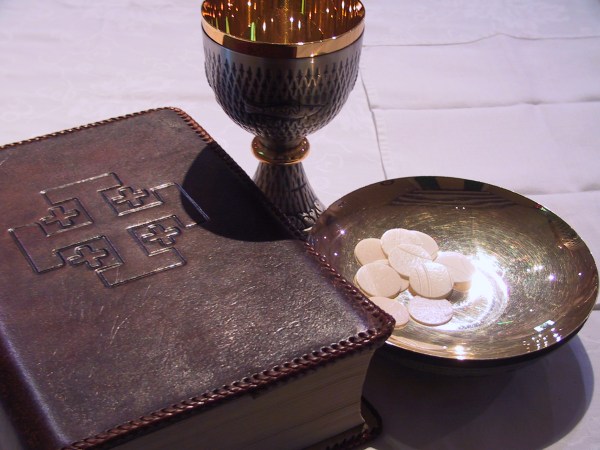
SB012We cannot change that of which we are not aware. We must name and face head on the present challenges for our culture as Australian parishes, parishes that I believe desire to be missionary and in their heart of hearts wish to receive the grace of God who still desires much for our parish life.

However, receiving this grace entails movement on our part, a shift from where we stand and a constant reaching out beyond the complacency of routine or a simplistic ‘silver bullet’ mentality that holds only one way, one program or technique as the exclusive key to growth. We are called to cultural change, to change together and personally which is the perennial challenge of mission.

To build a preaching, discipling, gathering and missioning Church calls for a multidimensional approach filled with bold vision, personal faith, mutual support, and the resolve to be our deepest selves in Christ for the sake of the world.

Ultimately, it means responding with hope and trust in what God can do for us, with us and through us, even on a drizzly Wednesday night in the well-worn pews of the parishes we know and love.


References:

[1] Robert Dixon, Stephen Reid and Marilyn Chee, Mass Attendance in Australia: A Critical Moment. A Report Based on the National Count of Attendance, the National Church Life Survey and the Australian Census (Melbourne: ACBC Pastoral Research Office, 2013), 8.

[2] Fr James Mallon, Divine Renovation: Bringing Your Parish from Maintenance to Mission (New London, CT: Twenty-Third Publications, 2014), 53.

[3] Pope Francis, Evangelii Gaudium 33.

[4] Mallon, Divine Renovation, 19-20.

[5] The fatalistic expression “that won’t work” commonly emerges from a perspective that measures new ideas by the life that we currently know.

[6] Pope Francis, Evangelii Gaudium 27.

[7] Pope Francis, Evangelii Gaudium 93-97.

[8] Pope Paul VI, Evangelii Nuntiandi 22.

[9] Pope Francis, Evangelii Gaudium 164.

[10] John Shea, An Experience Named Spirit as cited in Robert A. Ludwig, Reconstructing Catholicism: For a New Generation (Eugene, Oregon: Wipf & Stock, 2000), 61.

[11] NCLS Research, Denominational Church Life Profile: The Catholic Church in Australia. A Report from the 2011 National Church Life Survey (Strathfield: NCLS Research, 2013), 10.

[12] Thomas Merton, New Seeds of Contemplation (London: Burns & Oates, 1961), 43.

[13] A helpful schema of various stages or ‘thresholds’ of discipleship is provided in Sherry Weddell, Forming Intentional Disciples (Huntington, Indiana: Our Sunday Visitor, 2012), 125-184.

[14] Pope Paul VI, Redemptoris Missio 44.

[15] The challenge of collegiality for our Church recalls the remarks of the late Ukranian Catholic Metropolitan Maxim Hermaniuk who dismissed Roman synods as nothing more than “international study days”.

[16] Joseph A. Komonchak, “Identity and Mission in Catholic Universities”, 12. Available at https://jakomonchak.files.wordpress.com/2013/08/hubbard-lecture.pdf. Accessed 25 August 2016.

[17] Thomas Merton, Contemplation in a World of Action (Notre Dame, Indiana: University of Notre Dame Press, 1998), 153.

solitude with thomas merton

Thomas-Merton2In Christian tradition, classic texts are those which occupy a privileged place in the community’s memory, response to and reception of the Gospel. They are committed texts with a specific ‘take’ on revelation and invite the reader to engage with this same commitment in the context of their own personal understanding and experience of faith. Thomas Merton’s New Seeds of Contemplation is such a text and I’ve been revisiting it over these past few days here in Japan. It was among the first Christian texts that I ever read and remains a touchstone in the tradition.

For those new to his work and person, Merton was one of the great spiritual masters of the twentieth century, an American who came to Catholic faith in his twenties. Not long after, Merton entered a Cistercian monastery, Gethsemane Abbey in Kentucky, and then, almost by accident, penned a best-selling autobiography Seven Storey Mountain which brought him into a limelight he could not have anticipated and did not seek out (Merton would reflect, “The logic of worldly success rests on a fallacy: the strange error that our perfection depends on the thoughts and opinions and applause of other men! A weird life it is, indeed, to be living always in somebody else’s imagination, as if that were the only place in which one could at last become real”).

Merton would go on to assume the role of novice master for his Order, publish widely on prayer, contemplation, monasticism and social issues, and became a prolific correspondent with intellectual and spiritual luminaries within the Church and beyond it. He died in Bangkok on the 10th December, 1968, at the age of 53, electrocuted by a faulty fan while attending a monastic conference. His body was flown home with those of dead U.S. servicemen.

Published in 1962, New Seeds of Contemplation is the coalescence of Merton’s ever-maturing reflection on the contemplative experience of God as the realisation and ground of identity. Commenting on previous drafts of the work, Merton would remark,

When the book was first written, the author had no experience in confronting the needs and problems of other men (sic). The book was written in a kind of isolation… the author’s solitude has been modified by contact with other solitudes; with the loneliness, the simplicity, the perplexity of novices and scholastics of his monastic community; with the loneliness of people outside any monastery; with the loneliness of people outside the Church. (New Seeds, ix-x)

New-Seeds-of-Contemplation-9780811217248In New Seeds of Contemplation, Merton gives voice to themes that he elaborated and refined throughout his life’s work, particularly the identity of the ‘true self’ hidden in God and the profundity and need of solitude.

According to Merton’s spiritual itinerary, the discovery of authenticity in Christ begins not with an awareness of what lies at the end of the road but with a recognition of the obstacles that block its very beginnings. He describes the fundamental obstacle to maturity as the dominance of the ‘false self’, also described in New Seeds as the “the smoke self”, “the empirical ego” or the “routine self” which takes itself seriously but does not even exist (New Seeds, 38, 281, 16).

This illusory self is the product of our own pride and self-determination, for unlike animals and trees which give glory to God in being themselves, we are at liberty to be real or to be unreal, “We may wear now one mask and now another, and never, if we so desire, appear with our own true face” (New Seeds, 32). Layered with selfish desire and defensive mechanisms, we can be imprisoned within fictions of our own making:

I wind experiences around myself and cover myself with pleasures and glory like bandages in order to make myself perceptible to myself and to the world, as if I were an invisible body that could only become visible when something visible covered its surface. (New Seeds, 34-35).

This propensity to construct and find assurance in superficialities includes the caricature of the ‘good Catholic’ and a heroic sense of spiritual achievement. In this critique, Merton was ever conscious of the ability of the false self to appropriate even religion or ‘spirituality’ as a secret means of control and separateness.

mertonMoving to the discovery of the true self, Merton identifies solitude as the pathway to true identity. As theologian David Ranson underlines, Merton would maintain that within each one of us is a solitary dimension, a dimension not to be afraid of or done away with but entered into for this is the monastic ‘cell’ in which God is most deeply encountered. There is a need for this solitude in our lives, not as a rejection of others or the world, but as a school in which we learn to be ourselves before God. Only then can we embrace and relate to others clear of the selfishness, need for possession and validation which characterises our insecure times. It is solitude that is the doorway to the contemplative experience in which God discovers Himself alone in us, not crowded out by idols on which our hearts have become set.

What is more, the experience of authentic solitude is for Merton fundamentally Trinitarian, for God “infinitely transcends every shadow of selfishness… He is at once infinite solitude (one nature) and perfect society (Three Persons). One Infinite Love in three subsistent relations” (New Seeds, 68). By this Trinitarian focus, Merton implies that the true solitary is not an individual, imprisoned in a dream of separateness, but a person deeply related to others.

Contemplative solitude, then, is not our own, and leads the pilgrim beyond all limitation and division: “He has advanced beyond all horizons. There are no directions in which he can travel. This is a country whose centre is everywhere and whose circumference is nowhere.” (New Seeds, 81). Even the monk or hermit does not enter into solitude for his own purposes but in relationship to and for the good of others, for the Church and the world in which he remains embedded, inseparable and even necessary.

In the depths of solitude, often experienced in prayer, the movement toward authenticity comes by way of a self-emptying or kenosis: “a man cannot enter into the deepest centre of himself and pass through that centre into God, unless he is able to pass entirely out of himself and empty himself and give himself to other people in the purity of a selfless love” (New Seeds, 64). This selflessness, however, is only possible to the extent to which we are enjoined to Christ as it is he who first gave himself for humanity and makes that kind of self-giving love possible, “I become a ‘new man’ and this new man, spiritually and mystically one identity, is at once Christ and myself… This spiritual union of my being with Christ in one ‘new man’ is the work of the Holy Spirit, the Spirit of Love, the Spirit of Christ” (New Seeds, 158).

candleMerton concludes that as long as there is an “I” aware of itself and its contemplation, an “I” that can possess a certain “degree of spirituality” then we have not yet passed into the fullness of contemplation, the fullness of Christian life itself (New Seeds, 292). Ultimately, the mature Christian has no psychological individuality or even self-conscious biography; all the shadows of self-assertion end at an interior death which, paradoxically, and in the light of the paschal mystery, emerges as the very beginning of a real, authentic life.

We can see that there is little sentimentalism in Merton’s writing and much challenge. In texts such as New Seeds of Contemplation we hear a robust call to purify our desires and to meet head on the ‘spiritual deaths’ that lower the ego and allow the emergence of the true self to take place. In this respect, the Christian life unfolds as ‘revolutionary’ though not in the sense of accelerated progress or an aggressive, suprahuman evolution. As Merton affirms,

… the burden of Christ’s Cross, that is Christ’s humility and poverty and obedience and renunciation… this is the most complete revolution that has ever been preached; in fact it is the only true revolution, because all the others demand the extermination of somebody else, but this one means the death of the [person] who, for all practical purposes, you have come to think of as your own self. (New Seeds, 144).

Merton reminds the Christian that the gift of faith is not an escape or an evasion but a project of deepening integration in our identity in Christ, one which carries with it a greater responsibility for the world and not less.

shibuyaOur life in Christ is not any more abstract or comfortable than life as we now know it, nor is it found in the sublime stories, private or collective, we tell about ourselves. The inheritance we receive from the writings of Merton is the decisive possibility of freedom and authenticity in faith, being who we have been made to be. It is an existential summons to unlock ourselves from the inside, from the imprisonment of our own private illusions and the masks that operate, as it were, ‘behind the Gospel’s back’. The path back to ourselves begins with an interior solitude that can be found even among the exterior noise and din that fills the world. Writing from Tokyo, a city of fourteen million, among the machines, lights, and appeals of the salesman, this pilgrimage seems more important than ever.

social media in the Church

social-mediaIn the light of two conferences of significance for the Australian Church this week – the inaugural Catholic New Media Conference and that of the Australasian Catholic Press Association – I thought I would offer a few remarks about the role of social media within the Church’s mission.

Many Catholics, including older generations, would readily agree that the Church’s embrace of social media is important, even necessary. Consulting 2,000 Catholics last year, there was a palpable enthusiasm and agreement that the Church as a whole commit itself to this technology. However, I suspect there is not always a great degree of clarity on why this is so other than reference to motives that are ambiguous to say the least (e.g. ‘relevance’).

It is important to articulate the reasons for social media as a normal part of the Church’s mission because diocesan bishops, parish priests, parish councils, heads of religious institutes, boards of management and other forms of Church leadership need to be convinced of its value if they are going to make an investment in that direction (our own Diocese of Parramatta has employed a Social Media Coordinator, @socialmediaparra, and I am aware that other dioceses are on the way to doing the same or similar).

And it is an investment. Consider your typical dioceses with its various church agencies – adult education centres, liturgical office, youth ministries and the like. While a Facebook page or a Twitter account is not difficult to establish with appropriate disclaimers, considerable thought needs to be given to message, audience and integration of that media within the ordinary work of that agency and the diocese or parish as a whole. This often requires the training of staff in the effective use of this media and time dedicated to the maintenance and driving of its message in public space. Unfortunately in the province of the profane, ‘time is money’ and so churches and agencies need to budget for that time and work if it is to be an ongoing concern. Helpfully, budgeting for the use of such media sends a signal to stewards of church finance that ‘this things matters’.

As well, my learning from a past life as a media buyer for Mitchell & Partners is that content is expensive to generate and it is important for the Church to recognise time and resources are needed to deliver this proclamation and foster dialogue in the digital realm.

542379_lowWhile the ‘content’ of Catholic media is perennial and freely given – the revelation of Jesus Christ made known by Scripture and Tradition and declared by Church teaching, liturgy, and the Church Fathers – it is not sufficient for Church media to tweet from Proverbs or even the Gospel alone. Social media in the Church, indeed communications more generally, consists not only in the confession of faith – that basic affirmation of St Peter at Caesarea Philippi, “You are the Christ” (Mk 8:29) – it also calls for testimony that communicates the witness of Christian lives.

The reason to consider the role of social media in the Church in the context of testimony is this. Most of people’s beliefs about the world depend on the testimony of others. For instance, I have never been to South America but trust that it exists on the basis of the testimony of others who have. In fact, most of our beliefs of the world are formed on the basis of testimony because our experience of the world is inevitably limited. However, it is testimony that may draw us to travel to Rio de Janeiro if we believe in the credibility of the pilgrim that has returned from that destination.

pewsThe testimony of discipleship is what social media offers the Church’s mission. As Sherry Weddell recognises in her fine work Forming Intentional Disciples, it is not merely a curiosity but truly frightening to acknowledge that Catholics have come to regard it as normal (even deeply Catholic!) not to talk about discipleship. Indeed, for too long the cultural pressure within our parishes and communities works against the overt expression of discipleship, including an account of a personal relationship with Jesus, which can be viewed, absurdly, as Protestant rather than the foundation stone of Catholic identity (see pages 56-70). For existing and new generations of Catholic believers, social media is one vehicle that provides for Christian testimony with credibility, an opportunity to give witness to a journey travelled.

While we have come some way in past decades – moved past the prayer card, sent by email and complete with kittens, butterflies and trivial uplifting thoughts – there is some way to go to embed social media within the ordinary life of the Church’s mission and outreach. The very fact of separate conferences in Melbourne this week – one for new media and one for press – speaks to the integration that still awaits to take place in the Church’s communications effort and its self-understanding and organisation as bearer of the Word.

Of course, there is a risk that individuals and organisations, in their embrace of new media, develop an obsession with novelty which distracts rather than deepens. In a populist and throwaway culture, and given the Church’s insecurity amid current challenges and a devastating loss of public credibility, we can risk becoming eccentric faddists who are in love with anything just because it is new.

gospel of markHowever, it is the work of those leaders in social media who are emerging in the Church to school themselves not only in algorithms of rank and filter but the theology of revelation, missiology, and ecclesiology that will underpin, extend and even challenge their work. Documents such as Dei Verbum (1965), Inter Mirifica (1963), Redemptoris Missio (1990), and Pope Benedict XVI’s messages for World Communications Day in 2010, 2011 and 2013 are good starting points in this direction, underscoring that the authentic development of humanity and human culture is not a technological achievement but one that stands in relation to what has been revealed, the one who, in revealing God, has revealed us to ourselves.

lumen fidei

benedictfrancisOriginally intended for publication earlier this year as Pope Benedict’s fourth encyclical and the final in a trilogy on the theological virtues, Lumen Fidei (‘The Light of Faith’) was promulgated this past Friday in the name of Pope Francis.

In the same way as Benedict’s first encyclical in 2005, Deus Caritas Est, brought to completion the unfinished writings of John Paul II, so Francis’ inaugural encyclical represents to a significant degree the thought of his German predecessor on the meaning and implications of Christian faith. This inheritance and continuity between recent papal documents aligns well with Benedict’s own remarks, just days before his abdication, on the writings of ‘Peter’:

Peter was not alone in writing [his] Letter but it expresses the faith of a Church . . . He does not write alone, as an isolated individual; he writes with the assistance of the Church, of people who help him to deepen the faith, to enter into the depths of his thought, of his rationality, of his profundity. And this is very important: Peter is not speaking as an individual, he is speaking ex persona Ecclesiae, he is speaking as a man of the Church.

Likewise, Francis’ encyclical is received not as the word of a private individual apart from or above the Church but an expression of the faith of the communion of which he is called, in his person as ‘Peter‘, to be witness and shepherd.

The Possibility of Faith

lumenfideiLumen Fidei begins by addressing the very dilemma of faith in the contemporary world. Christian faith is so often seen by many as contrary to reason, not as a light that opens up the world but a darkness which stifles and even represses human creativity and the quest for knowledge. Even those who have sought to make room for faith have undermined it by promoting faith, erroneously, as a ‘leap in the dark’ driven by blind emotion. Others who champion autonomous reason as the answer to humanity’s future have often realised that their questions remain unanswered and this has led to an abandonment of the very search for truth itself in favour of “smaller lights which illumine the fleeting moment yet prove incapable of showing the way” (LF 3). Humanity remains hungry for a firm ground on which to stand and hence remains unfulfilled as it experiences the darkness and insufficiency of the world and itself.

On reading these opening remarks, the influence of Benedict stands out. His 1968 work Introduction to Christianity begins with this same confrontation of the very possibility of belief in the world of today. Indeed, the same temptations for the believer and unbeliever alluded to in Lumen Fidei (that of fideism or refuge in rationalism in the face of life’s questions) are raised by the early Ratzinger as prompts toward a fuller understanding of the ‘openness’ of faith, “Just as the believer knows himself to be constantly threatened by unbelief, which he must experience as a continual temptation, so for the unbeliever faith remains a temptation and a threat to his permanently closed world” (Ratzinger, Introduction to Christianity, 45). The recurring challenge of human finality and the quest for human understanding rescues both the believer and unbeliever from being shut up in their own worlds, resisting any tendency to self-satisfaction and urging humanity onwards in the search for truth.

9954008Lumen Fidei seeks to propose the light of faith as the guide to this truth that we seek, a light that illumines all aspects of our existence in illuminating God as one who addresses us personally. It notes that the word of God that called Abraham, ‘our father in faith’, is not alien to human experience but always present at the core of our being. It follows that Abraham’s response to that divine calling, Abraham’s faith, “sheds light on the depths of his being, it enables him to acknowledge the wellspring of goodness at the origin of all things and to realise that his life is not the product of non-being or chance, but the fruit of a personal call and a personal love” (LF 11). Faith in God, then, as one who creates and calls is not an extrinsic act or a merely ‘religious’ commitment but an integral and humanising project and gift which, when received, unveils our true vocation in the life of God himself.

The faith of Israel that would follow Abraham further reveals faith as a summons to a pilgrimage with the Lord that calls through the concrete events of our life. The history of Israel also sounds a note of warning, that of idolatry which reveals our own tendency toward control and vanity, as Lumen Fidei makes clear, “Idols exist, we begin to see, as a pretext for setting ourselves at the centre of reality and worshipping the work of our own hands” (LF 13). While commentators have seen in this discussion of idolatry the hand of Pope Francis, it is one that was certainly shared by his predecessor in his writings on the liturgy among others (see Ratzinger, Spirit of the Liturgy, 22f). The overall thrust of the text is to underline the paradox of faith, that is, as in all loving relationship, by our constant turn towards the one beyond our control, and by the surrender to what we did not initiate, we become more and not less ourselves, freed from the slavery of our own self-absorption and insecurities.

Ultimately, it is in Christ Jesus that the total manifestation of God’s faithfulness arrives in history, the crucifixion of Christ being the “culmination of the gaze of faith; in that hour the depth and breadth of God’s love shone forth” (LF 16). It is a total gift of self that precedes us and allows one to entrust themselves completely to the utter reliability of God’s love, manifest not only in this death-in-love but in his rising in love, a “tangible and powerful love which really does act in history and determines its final destiny, a love that can be encountered” (LF 17). It echoes the thought of Ratzinger for he affirms elsewhere, “Christian faith is more than the option of a spiritual ground to the world; its central formula is not ‘I believe in something’ but ‘I believe in you’. It is in the encounter with the man Jesus, and in this encounter it experiences the meaning of the world as a person.” (Ratzinger, Introduction to Christianity, 79).

After a brief word on the ecclesial form of faith, perhaps surprisingly brief given the demise of the Church’s credibility in the wake of the abuse scandal, the encyclical turns to the relation of faith to the truth which human beings seek (the theme of the Church is picked up again in Chapter 3 of Lumen Fidei though, again, without any theological treatment of sinfulness within the Church).

A Reasonable Faith

fidesEngaging an epistemology that may not be accessible to all, Lumen Fidei then goes on to underline the significance of truth for faith. Without truth, faith remains only “a beautiful story, the projection of our deep yearning for happiness, something capable of satisfying us to the extent that we are willing to deceive ourselves” (LF 24). Knowledge of the truth, Lumen Fidei asserts, is to be found in love which cannot be reduced to ephemeral emotion but is, most deeply understood, union with the Other. Without this love, “truth becomes cold, impersonal and oppressive for people’s day-to-day lives”; without truth, love becomes mere sentimentality, a fleeting emotion and cannot be a ground on which a future can be sustained. Love without truth “cannot stand the test of time” (LF 27). It is this discovery of love as a source of knowledge, as an interpersonal communion built upon truth that is capable of pointing us toward our ultimate fulfilment, that finds expression in the biblical understanding of “faith” (LF 28).

Returning to the concern of the opening paragraphs, Lumen Fidei then turns to the dialogue between faith and reason, drawing on the insights of John Paul II’s Fides et Ratio and also St Augustine, a perennial influence in Benedict’s own thought. As in the writing of John Paul II, faith and reason are presented not as opposed – as if faith were an irrational undertaking or that reason leaves behind the necessity of faith – but are recognised as having the same end or finality which is to know the truth. The reception of divine revelation and the ongoing human question for meaning, or philosophy, are not exterior to one another but intrinsically linked as Lumen Fidei seeks to show by the example of scientific inquiry,

The light of faith is an incarnate light radiating from the luminous life of Jesus. It also illumines the material world, trusts its inherent order and knows that is calls us to an ever widening path of harmony and understanding. The gaze of science thus benefits from faith: faith encourages the scientist to remain constantly open to reality in all its inexhaustible richness. Faith awakens the critical sense by preventing research from being satisfied with its own formulae and helps it to realize that nature is always greater. By stimulating wonder before the profound mystery of creation, faith broadens the horizons of reason to shed greater light on the world which discloses itself to scientific investigation (LF 34).

popejohnpauliiAs Fides et Ratio affirmed for philosophers so it may be said for the scientist, “it is necessary not to abandon the passion for ultimate truth, the eagerness to search for it or the audacity to forge new paths in the search. It is faith which stirs reason to move beyond all isolation and willingly to run risks so that it may attain whatever is beautiful, good and true. Faith thus becomes the convinced and convincing advocate of reason” (FR 56). As it has been said, it is faith that challenges reason to more audacious undertakings.

An Ecclesial Faith

The third and penultimate chapter of Lumen Fidei expands on the ecclesial context of faith that is only touched upon at the end of Chapter One (LF 22). Addressing the maternity of the Church, as one who brings about the birth of Christ in the believer, the encyclical draws attention to the living tradition of the Church.

The Church passes on the light of faith through the generations, “just as one candle is lighted from another”, an image that certainly recalls Pope Francis’ preaching style. Raising the question of the verification of knowledge, the encyclical underlines the relational way in which knowledge is transmitted, “Language itself, the words by which we make sense of our lives and the world around us, comes to us from others, preserved in the living memory of others. Self-knowledge is only possible when we share in a greater memory” (LF 38).

This sociological reality illuminates the theological significance of the Church as a “remembering subject” for it is this living communion that precedes us, and into which we are baptised, that teaches us the very language of faith. In plain terms, the Church came before us and rather than stifling our personal engagement with God in Christ, this very fact makes possible our personal faith with all the riches and insights of those that preceded us.

noahangbaptismP_041In faith, we respond to a word which did not originate with us – in the language of Lumen Fidei, “Our belief is expressed in response to an invitation, to a word which must be heard and which is now my own; it exists as part of a dialogue and cannot be merely a profession originating in an individual” (LF 39). Ratzinger’s earlier text makes the point in a similar way, “Faith comes to man from outside. . . [It is] not something thought up by myself; it is something said to me . . . This double structure of ‘Do you believe? – I do believe!’, this form of call from outside and the reply to it is fundamental to it” (Ratzinger, Introduction to Christianity, 91-2).

The ecclesial form of faith also expresses itself in the Church’s sacraments which “communicate an incarnate memory” (LF 40). Lumen Fidei even intimates the sacramental structure of faith itself for “the awakening of faith is linked to the dawning of a new sacramental sense in our lives as human beings and as Christians, in which visible and material realities are seen to point beyond themselves to the mystery of the eternal” (LF 40). Following this there is catechesis on the sacraments of baptism, confirmation, Eucharist, the creed, the Decalogue and prayer before the fourth chapter turns to the social consequences of the nature of faith outlined.

An Incarnate Faith

In continuity with Pope Francis’ preaching on the sociality of faith and the Church’s mission, the encyclical concludes by relating faith to the common good, affirming faith not as a privatised journey of introspection or pious isolation but a “process of building, the preparing of a place in which human beings can dwell together with one another” (LF 50). Faith does not only provide interior firmness, it also allows the believer to see others in their inherent dignity and vocation, born of love for union with God’s own self. Faith, because it is loving, does not draw believers away from the world but ever deeper into the concrete concerns of the men and women of our time. Families and the young are called to be bearers of faith in the midst of the world (LF 52-53) while faith brings as well a respect for creation as a gift for which all are indebted.

woodencrossA powerful section of Lumen Fidei is its treatment of human suffering in which it recognises human pain, hunger and loss is not at all extinguished by faith but placed in a new context of meaning. The encyclical affirms in this regard, “Faith is not a light which scatters all our darkness, but a lamp which guides our steps in the night and suffices for the journey. To those who suffer, God does not provide arguments which explain everything; rather, his response is that of an accompanying presence, a history of goodness which touches every story of suffering and opens up a ray of light” (LF 57). Pope Francis reminds us that it is Christ who has occupied the place of suffering, in the Gethsemane Garden and on the Cross, and as the endurer of humanity’s suffering he will be “the pioneer and perfecter of our faith” (Heb. 12:2) (LF 57).

As is tradition, Lumen Fidei concludes with an affirmation of the ‘Marian profile’ of faith for it is Mary who demonstrates the fruitfulness of faith from the Annunciation to the Cross. As figure of the Church and as one whose motherhood extends to each of his disciples, Mary leads us always and only to the blessing of faith which is her Son.

Conclusion

LUMEN FIDEI encyclical provisional cover_ B 13.inddLumen Fidei is a timely encyclical for a challenging moment in the Church’s history, calling for a return to the purity and plenitude of the faith that we have received and are called to live in the present. As this most recent teaching is received and settles within the tradition of the Church (and it calls for future reading together with its forebears Deus Caritas Est and Spe Salvi), many more insights and implications will no doubt come to light. What is obvious by its absence is significant reference to the “new evangelisation” as another manifestation of the Church’s self-understanding (with the exception of LF 42). We might hope that a future exhortation on this subject will build connections and so further expand the implications of faith for the Church’s mission in a new time, in the context of a globalised church and with a variety of ad intra and ad extra influences impacting on the Church’s relation to the world.