
 On the 6th March, 2013, around 150 leaders of Religious Institutes gathered at the Novotel, Parramatta, for the Conference of Leaders of Religious Institutes (NSW) Conference 2013.
The theme of the conference was ‘religious life in the post-modern world’ and I was privileged to address leaders and leadership teams on the purpose and contribution of religious life today.
The conference took in a variety of themes centred on religious life: the Church as sacrament of God’s mission, the multidimensions of evangelisation and the living symbol that religious life remains today in a culture that, while often very secularised, remains sensitive to signs.
Prominent documents to consult on the varieties and purpose of religious life include the 1965 conciliar decree, Perfectae Caritatis, and John Paul II’s 1996 Apostolic Exhortation, Vita Consecrata.
These were my remarks at the gathering:
‘Narratives of Holiness’ for the Church and world
 In the first instance, religious communities, both apostolic and contemplative, tell a particular story about the way in which God’s Spirit has been manifest in history. Secondly, religious life tells as well a story about the human response to such divine irruption. The many varieties of religious life reveal that Christian discipleship is possible even in this way and recalls for the Church that diversity can be an expression of God’s life too.
By the narratives of holiness it provides, religious life nourishes not only the vocation of those called to live radically the evangelical counsels but nourishes the hope and imagination of the wider Church as to how holiness might be exercised. As bearers of charism and grounded in the original spirit of their founder(s), religious congregations show forth the accessibility and concrete shape of a life centred in God’s gifts; in turn, they invite all members of the Church to envisage what God is asking to be realised and hence what they might live for.
I consider religious life essential to the Church also in the way in which such life stretches beyond but is nevertheless active within the local church, that is, the diocese. Of course, my role as a pastoral planner for a local church has brought into focus the centrality of parishes as the ordinary experience of communion for the vast majority of Catholic people.
However, religious life complements this particular experience of communion with witness to the universal dimension of the church’s life. Religious life, as we know, as a response to the Spirit, cannot be completely merged or contained within traditional diocesan structures. Marked by an intense desire to live the Gospel fully and radically in genuine service to the world, religious life possesses the ability to keep individuals and communities open to the essential universality of the Church and its truly global concerns.
The presence of religious within a diocese, for one, can assist to ensure that local communities do not become inward or self-absorbed, focused on their parish facilities rather than their engagement in God’s mission. In their universal character and tensive ecclesial location in the midst of the local church, religious institutes work against the absolutisation of the parochial and so support the genuine ‘catholicity’ of the Church’s identity and mission.
Religious Life and the New Evangelisation
 I would further suggest that the apostolic character of many religious congregations will play an important role in maintaining the integrity of the ‘new evangelisation’ which continues to unfold on both a magisterial and local level.
I approach the contemporary situation in this way: since the Second Vatican Council, we are well aware how close to the surface questions of Catholic identity lie. The danger of course is that ‘the new evangelisation’ and its more apologetic tendencies foster a narrow focus on Catholic identity couched primarily in terms of opposition to the world.
This way of being Church – permeated as it is by a certain apocalyptic, dualistic sensibility – can result, unhelpfully, in self-affirming Catholic subcultures which are unable to engage or dialogue with the surrounding culture.
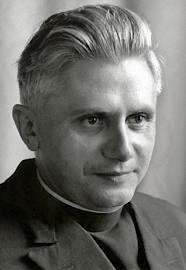
(Note that this danger was on show in the wake of Pope Benedict XVI’s abdication – while the pope’s resignation unleashed wide ignorance and some anti-Catholic bigotry in the secular media it also produced an ample supply of Catholic triumphalism with little genuine conversation between the two opposed tendencies.)
As an alternative to this narrow politics of identity, religious life is well placed to offer the ‘new evangelisation’ a model of outreach characterised by genuine service to the world without the reactionary and oppositional spirit to which other emerging groups may be vulnerable. In other words, religious life can model a mature evangelism, a truly contextualised faith which engages the surrounding culture while losing nothing of its distinctive Christian identity.
Religious Life and Lay Discipleship
 Finally, religious life continues to nourish the discipleship of lay men and women in a variety of ways. In addition to the ‘narratives of holiness’ which religious life offers to the whole Body of Christ, we have also seen the emergence of formal collaborations including the creation of new juridic persons among religious institutes in which laity have assumed governance responsibilities while allowing religious to re-engage more immediate and original expressions of service.
Of course, laity and religious collaborate in many other ways, including through ‘associations’ that give expression to a more inclusive imagination of holiness, and therefore a more inclusive notion of Christian community, recovered by the Second Vatican Council.
Beyond structured initiatives, however, religious life can foster lay discipleship through its work at the margins with those who may never feel comfortable within the structures of the Church. As noted by Australian theologian David Ranson, religious life has shown a profound ability to mediate between a given social context and the wider Catholic community – in the case of schools, hospitals or works of justice, between the lives of students, parents, and families who may not be connected to parish or regular practice and the normal life of the Church which is the bearer of the Word and sacramental encounter. This mediating role of religious life, its carriage of the meaning and experience of Christian faith to contemporary culture, is precisely that work of evangelisation to which the entire Church is called.
Conclusion
By a life that animates the local church but stretches beyond it, religious life bears witness to the essential universality of the Church’s identity and mission. In its proven ability to engage the culture with a mature and discerning spirit, in its continued work with and support of lay men and women through its apostolates and associations, and in its variety of charismatic life, religious life is positioned well to awaken and support the Church in its mission of evangelisation which cannot be exhausted by any single historical form.


 timeofthechurch