the state of the Australian church (part II)

australia-allThe Catholic Church now takes in a quarter of the Australian population (25.3%). It includes parishes, religious institutes, ecclesial movements, schools, tertiary institutions, hospitals, aged care facilities, social support services and various other expressions of Catholic identity and mission. For those engaged in the day-to-day activities of the Church, it is obvious that there is much to celebrate about the contribution and mission of the Church in Australian society. However, as will be recognised below, it is not all good news (if it ever was) and each of us is left to engage with the work yet to be done.

As intimated in my last review of the Australian scene, while statistics should never alone determine pastoral initiatives they do provide a helpful context in which good decisions can be made for the future. Ignorance of the sociological realities of the Church can lead to planning and decision-making ‘in the air’, a choice which can exacerbate problems or else leave potential unrecognised and unfulfilled.

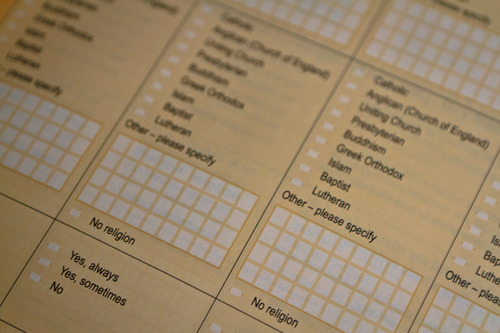
censusformIt won’t be a surprise that even the statistical realities of our Church can be contested. This is because there will be an element of selectivity in the data we choose to focus on and varying interpretations of that data depending even on our theological positions or presuppositions. These include the proper relation of the Church to the world, the meaning, purpose and expressions of Catholic mission, and the ultimate goal of Catholic education to name only a few.

For instance, we know from the most recent census that 52.8% of Catholic students attend Catholic schools. What does this say about ourselves, our schools and their role in the support of Catholic faith and families? What are the pastoral implications of the 10.8% of Catholics aged over 15 who are divorced or separated in our midst? Then, 35.3%, more than a third, of all Australian families have at least one Catholic within the family. Assessments about the potential or decline signalled by these statistics for our Church will be, in part, determined by our assumptions and priorities.

While some basic figures have already been outlined, below are further points of interest, some of which trace change within the Church over the past two decades or so (1991-2011). These might be of interest to priests and parishes, pastoral planners, adult educators, ministry groups and even students in their assessment of the scene here in Australia.

  • The Catholic population grew by 18.1% in the past 20 years. However, because the non-Catholic population grew even more in this period, Catholics fell from 27.3% of the general population in 1991 to 25.3% of the population in 2011.
  • Catholics are choosing to get married later. In 1991, 38% of all Catholics between 15-34 years of age were or had been married. In 2011, this had fallen to 22%.
  • In the past 20 years, the Philippines and India have risen to become major ‘source countries’ for the Catholic Church in Australia while migration from Italy and Malta has dried up almost completely. This must surely shape our activities and communication as a Church, now and in coming decades.
  • Now for the jaw-dropper of the 2011 census. Across all age groups it appears that more than 20,000 Australians every year are ceasing to identify themselves as Catholics. This growing ‘dis-identification’ in our midst is alarming and even takes into account that Catholics die, emigrate and travel overseas at about the same rate as Australians as a whole, that infants and newcomers are baptised and confirmed in the Church each year, and even compensates  for those young people at WYD Madrid at the time of the 2011 census. This dis-identification of 20,000 persons a year represents a net figure and a serious challenge for the Australian Church.
  • 61.2% of Australia’s Catholics live in NSW and Victoria (compared to 55.6% of the general population). This renders the pastoral life of dioceses and parishes within these states as vital to the future of the Church though inspiration may well come from elsewhere. (NB: for those looking for more census data and detailed analysis of the figures, see the April 2013 edition of the Australasian Catholic Record for a solid summary of the results).

SB004Effective planning in our Church can only begin with a plain recognition of the present reality and discussion about the implications of these statistics for our pastoral practice. While it is not uncommon to meet people with ‘the solution’ for all of the Church’s woes and the keys to its potential, the reality is far more complex than imagined. It follows from this that the appropriate responses will be anything but one-dimensional.

While an acknowledgement of the facts can be difficult to hear, as we know in this wintry season for the Church, they create a sense of urgency and open communities to accepting change. We cannot build a future and fulfil the mission God has given to us on the basis of illusions we hold about ourselves. As the English theologian Nicholas Lash would remark, “If you leave Calvary behind, you move, not into paradise, but fairyland.”

The contemporary statistics for the Australian Church are alarming but they are not a dead end. Instead, they invite the renewal and conversion that is the opportunity and challenge for disciples of every age.

on world youth day

wydrioWorld Youth Day has arrived. This time around it will take place in Rio de Janeiro, Brazil, between the 23-28th July, 2013, the 28th such event in the official count. It will see the first South American pontiff greet hundreds of thousands of young Catholics from around the world, bringing attention to the Church in the Americas and the surrounding social and political milieu to which Pope Francis will no doubt speak.

It is no revelation that opinions differ about the value of World Youth Day, both here in Australia and abroad. In my experience it tends to be fairly evenly split between those who uphold the event as a transforming experience for the young and the cities and nations which host them, while others dismiss World Youth Day as an expensive jamboree that proves of little lasting significance for the ordinary life of the Church.

I think it can be recognised that this triennial – or as it tends to be now, biennial – gathering does in fact shape young Catholic imaginations about the catholicity of the Church, understood as a reference not to the mere geographic reach of the Church but the inherent variety of expression or styles that it contains and embraces.

More fundamentally, it offers the young an experience of pilgrimage, a tradition reaching back to first centuries of the Church’s history (this practice has largely been rejected by Protestantism due to the devotions and relics often associated with such travel). What has been said of the life of the French theologian Yves Congar can be affirmed more generally, “a journey only becomes a pilgrimage through consciousness of the goal that gives meaning to the way”. Pilgrimage calls for interior work that brings together an outward practice with the person and message to which such an undertaking intends and World Youth Day provides just such an opportunity for such growth in faith.

A Mixed Picture

PIGLRIMS PRAY DURING EUCHARISTIC ADORATION AT WORLD YOUTH YOUTH DAY VIGIL IN MADRIDOf course, the real impact of World Youth Day – which epitomises on a grand scale the events-based approach to youth ministry which is becoming more popular in dioceses and even our parishes – depends largely on the receptivity of participants themselves.

As the American journalist John L. Allen noted some years ago, World Youth Day pilgrims can usually be divided up into three broad groups:

  • those attending with personal intent, commitment and fervour (described as a “gung-ho inner core”). These “evangelical Catholics” are devoted believers, often attend Mass more than once a week, accept Church teachings and have a strong sense of Catholic identity;
  • a more lukewarm cohort who are open, identify as Catholic but are not as zealous about the faith; are willing to agree with some Catholic teachings but don’t necessarily accept them all;
  • and then there are others who are just along for the ride, perhaps because friends are going or their parents were prepared to pay for World Youth Day but not a summer in the Bahamas. These are the kids you find playing handball or loitering outside during the catechetical sessions; they have a looser affiliation with the Church and low levels of religious practice.

As for the cities that host World Youth Days, the responses are now familiar. The initial announcement of the event is normally greeted with negativity (as it was in Sydney and has been the case for Rio which hosts two other world events in as many years), there are predictable fears of disorganisation and a cost blowout, but all this eventually gives way to a warmer reception as the prospect of a civic apocalypse recedes.

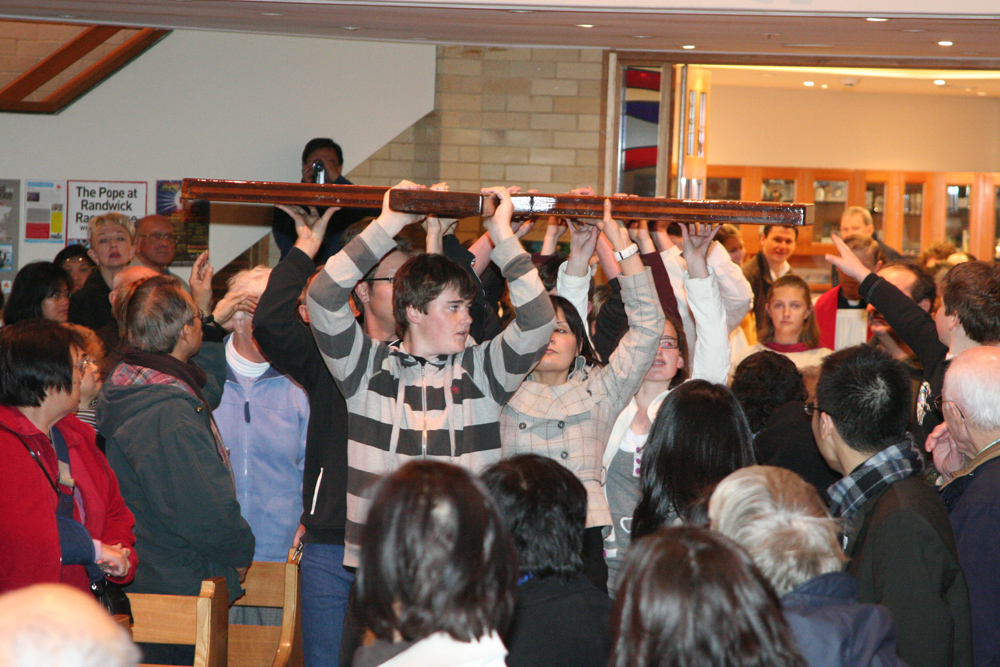
wydsydPope Benedict XVI himself recognised this gradual acceptance of World Youth Day in host cities, in remarks to a seminarian soon after the Sydney event (2008):

At first [Australians] looked at this World Youth Day with great scepticism because it would obviously cause a lot of bother and many inconveniences to daily life, such as traffic jams etc. However, in the end – as we also saw in the media whose prejudices crumbled, bit by bit – everyone felt involved in this atmosphere of joy and faith; they saw that young people come and do not create problems of security or of any other kind, but can be together joyfully. (L’Osservatore Romano, 13-20 August 2008).

Is It Worth It?

Catholics, too, can be tempted to take the line of scepticism or cynicism towards World Youth Day with the concerns being twofold: accessibility and impact.
SB050Given that for Australians World Youth Day involves a substantial airfare, insurances and accommodation, there can be concerns that the event is not only unsustainable for families, local churches (dioceses) and their parishes but that the expense involved restricts access to a privileged few unless participation is heavily subsidised. On average, the cost of attending World Youth Day from down here in the Antipodes ranges between $5,000-8,000 depending on destination and it is unlikely to get any cheaper in years to come. Hence the need for concerted fundraising to get people there.

The second concern is that World Youth Day has little impact or effect on the lives of young people let alone the dioceses and communities from which they come. The two polarised views we hear about the effect of World Youth Day – the conviction that absolutely each and every participant becomes a fully-fledged disciple of Jesus Christ following the event, and the opposite belief that no one is moved a jot – underscores the need for research in this area.

As a nod in that direction, study of World Youth Day Sydney has demonstrated that the impact of the event on a believer has much to do with their starting religious point. Those starting from a lower point of religiosity – there more for the social than the spiritual aspects of World Youth Day – tend to report some increase in confidence in their faith (“I’m not embarrassed now to let others see that I am a believer”, “I’m now more interesting in learning about my faith”). For those with a stronger religious starting point, World Youth Day often serves as a catalyst to make an even more decisive commitment to their faith (“To accept Jesus as Lord of my life”, “Now I want to live as a disciple of Jesus, a witness to Him”).

Notably, it is usually from among those in the second group that you’re likely to hear World Youth Day described as a “life-changing experience”. Perhaps it is because these young people are already devout that this large-scale, Spirit-filled event fires their energy and consolidates their identity in ways that just aren’t experienced by those of lesser conviction, hence the claims to its power of conversion.

You can read more about the impact of World Youth Days in this session of the Annual Meeting of the Society for the Scientific Study of Religion (2009), entitled “Shoring up the foundations:  the large-scale international youth festival as a strategy for the retention of Catholic youth”.

Most of us with involvement in youth ministry would view World Youth Day in positive terms while at the same time acknowledging it is no silver bullet for outreach to and engagement of youth.

Implications for youth ministry

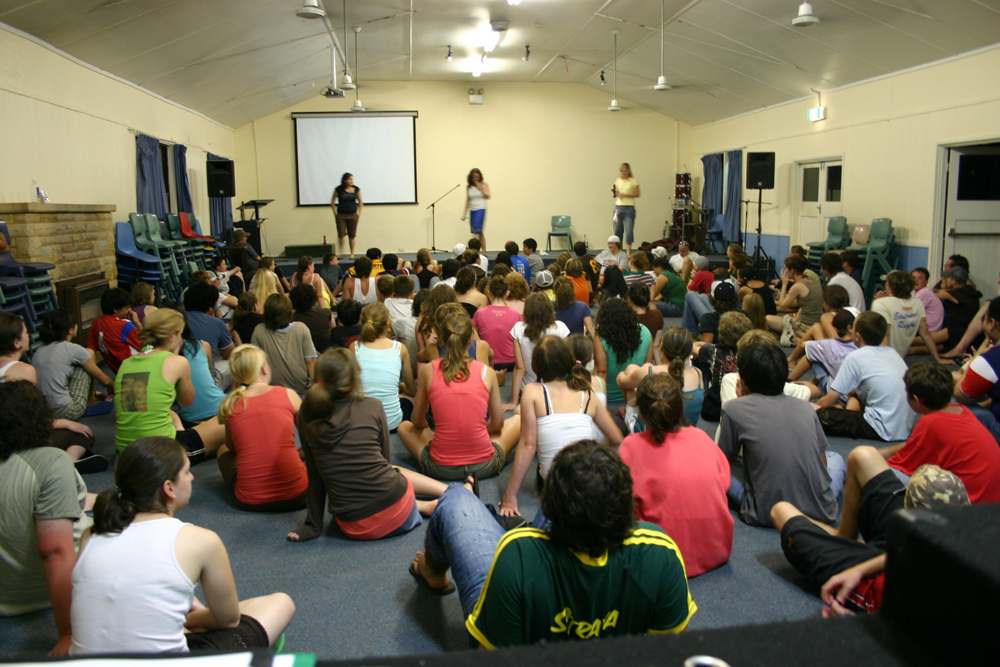
wydsyd2For those close to the ground in ministry with youth, is the events-based approach – epitomised by World Youth Day – the way to go? As intimated, it has certainly become a dominant model in dioceses and some parishes, and the advantages are apparent.

Youth ministry programs and groups often fail or succeed on their ability to attract a “critical mass” of attenders. No young person wants to go to an event with only a handful of participants. In the youth ministry game, for better or worse, numbers matter. So, rather than the week-to-week youth program of old, some parishes and dioceses are favouring the occasional, bigger budget, showcase event.

The downside of this approach is that it can lead to a rather lazy form of youth ministry where one-off events are thrown on the parish or diocesan calendar without any thought to the faith development of young people over the medium to long term. Unfortunately, this is all too common today and the lack of continuity and personalisation of youth ministry can lead to a loss of potential young disciples who were open, maybe even seeking but who never quite found a place to land.

While large youth events make everyone feel good and may serve the youth minister well in terms of visible accountability (‘proving’ the position is justified), the capacity of such gatherings to bring about actual growth in faith can never be assumed. People turning up doesn’t mean people ‘turning on’ or people ‘turning around’. Holding an increasing number of youth events may actual divert energy from more intimate forms of ministry which may better generate disciples and help identify future leaders than the event-driven model.

SB051Whatever the preference, consistency in youth ministry is key because each generation deserves to hear the Gospel in the context of a community. Curiously, some would suggest there is too much emphasis on youth in our Church. Others would counter with humour, “Look around – everything we do seems to be for the elderly!”

While parishes do not hesitate in organising and funding services and outreach to the aged, primary school aged children and other distinct segments of the community, they often need real encouragement in responding to adolescents and young adults. One would have thought evangelisation and pastoral care admit of no exceptions.

As I’ve suggested in a previous blog, our parishes so often want these young people for their energy, witness and the hope that they bring to a greying Church but young people will not be attracted to communities that show no life, enthusiasm or generosity in themselves. I maintain that the absence or presence of young people in the life of the Church is, in part, a function of the vitality of its adult members whom they will one day become.

Conclusion

christtheredeemerAll in all, as a recurring feature of the Church’s outreach to youth, World Youth Days should be commended and supported. Of course, cynicism within and beyond the Church about this international event will continue to abound. However, cynicism is often a buffer against personal commitment and the folly of hacks and commentators who often make little effort themselves in this area of the Church’s life. An alternative to cynicism is hope and World Youth Day brings tonnes of it.

As for the next World Youth Day? The safe money is on Krakow, Poland, given John Paul II’s impending canonisation and his status as the originator of the World Youth Day events. 2015 also marks the 10th anniversary of the pontiff’s death so we could see the next World Youth Day a little sooner than expected. World Youth Day has been held in Poland just once before, in 1991, hosted by the southern city of Częstochowa.

As a local plug, you can read about the experiences of pilgrims in Rio from my own Diocese of Parramatta at their blog. Don’t hesitate to share your own views on World Youth Day and comment on how it might be better supported and integrated here in Australia.

why parishes are not churches

pewsIt goes without saying that many Catholics, including even Mass attenders, experience the Church as a weight to be carried rather than a life to be lived. There are many reasons for this dim perspective and many of them have to do with the concrete realities of parish life.

When a research project was conducted in Australia in late 2005 to identify why Catholics had stopped going to Mass, many of the reasons offered by respondents related to parish community. These included problems with the parish priest, a lack of intellectual stimulation, people did not feel welcomed or a sense of belonging to the community, others felt that a previously-existing community spirit had eroded, there was the experience of unkind gossip, and the belief that the people at Mass lacked sincerity in their worship. People also dropped out because of ‘structural factors’ in the parish, including changes in Mass times, a negative experience of parish amalgamation and the like.

While it would not be fair to place all responsibility for disengagement at the feet of the Catholic parish (respondents also cited personal reasons for their absence, including family or household-related issues, the experience of a crisis of faith or the plain fact that going to Mass was simply not a priority for them; then there are wider cultural influences to consider), it is necessary to admit that our parishes are in need of reform. This means there is a need to develop those areas of pastoral life that are weakest, consider those structures and small ‘t’ traditions that no longer serve the parish’s mission, and build on those areas of strength that continue to serve well.

StonesWhen addressing parish renewal it has been my experience that parish councils, parish teams and parishioners can tend to jump, quite quickly, to the issue of buildings and infrastructure. It is true that many parishes need to undertake capital works due to the age of their facilities and changing needs (the demand for more carparking space, for example). However, these kinds of investment rarely build community in themselves or respond to those issues that disengaged Catholics, such as those surveyed above, have cited as motivating their withdrawal from community life.

I suspect that the reason that buildings tend to dominate conversations about parish renewal is that people like to see results and there is nothing more satisfying in this regard than a renovation. What is more, it is much easier to put up a building than grow a community.

widows-mite1In the U.S., when the formerly ‘unchurched’ were asked about their priorities before they became Christians, it is true that they named among the desirable qualities of a parish – adequate parking, clean and modern facilities, a variety of quality programs, relevant and quality music, clean bathrooms, friendly people, outgoing greeters, comfortable pews and chairs, and attention-holding preaching.

As commentators have recognised, however, while many of these expectations are quite reasonable and should be provided by the parish, the underlying mindset driving these desires can be “What can the parish or Church do for me?” rather than “What can I do to serve?” or, even more foundationally, “Whom I called to be here?” A consumerist mindset can dominate people’s  approach of the parish with consequences for the prospects of building a communion that is for mission. Even the most pristine, beautiful, well-organised and comfortable parishes can be spiritually dead if they do nothing but cater for our creaturely comforts and convenience.

If we are to refocus our communities on evangelisation, the maturing of disciples and the making of new ones, then the agenda must move from the simplicity of a facility focus to centre on the witness of discipleship itself, through good preaching and pastoral care, a genuine sociality supported by strengthening the bonds of faith, and a shared commitment to, and belief in, Christian mission in the wider community. We do need good spaces where people can gather, and beautiful churches in which to worship, but these are never sufficient. Those who have left the Church or found it wanting have told us so.

The Church and its parishes must seek to move even their present members from ‘consumers of services’ to ‘disciples on mission’. Only then can the new evangelisation be effective, issuing from a spiritual house of ‘living stones’ not communities of cosiness and contentment. It may well be that our parishes as a whole do not demand too much of our people but offer, in fact, too little challenge.

structural change

NPPN1301

Photo: Chris Ehler

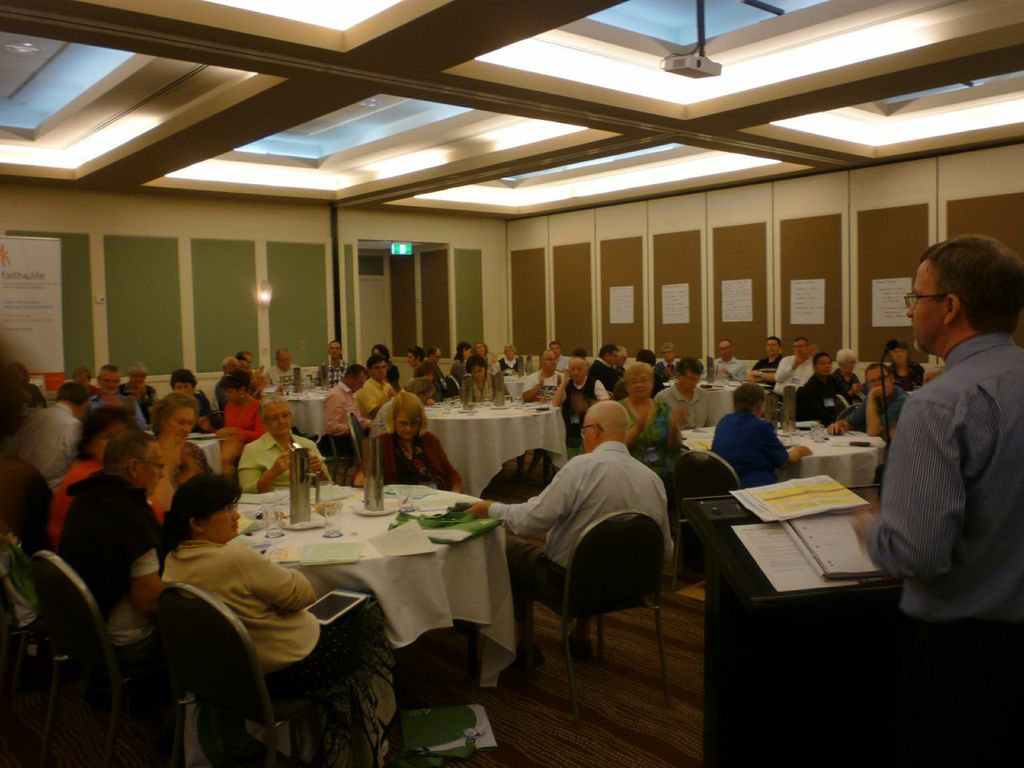
A conference is always richer than the sum of its parts and the biennial gathering of the National Pastoral Planners’ Network proved the rule. Held on the Gold Coast, Queensland, in late May 2013, the conference brought together those working in the area of church planning across Australia as well as in New Zealand.

Also part of the mix were representatives of the Pastoral Research Office, a Catholic agency which assists Australian dioceses to make sense of internal and Census data, and a number of bishops, vicars general, laypersons and priests seeking to exchange ideas on various levels. (You can find a blog about the conference keynote addresses on the Parramatta pastoral planning website here).

What struck me was the emphasis on structural change that was thread throughout the conversations, most notably the workshops I attended. In many dioceses in Australia there has been the need to twin or cluster parishes (communities share a priest while retaining their identity as separate parishes) or even amalgamate parishes on account of various factors. These reasons include, but are not limited to, the financial realities of church life, shifting populations, the need to redistribute parish priests to serve in greater areas of need, and then there is the desire to minimise duplication and to make the most of opportunities for increased collaboration.

NPPN1302

Photo: Chris Ehler

The whole business of parish reconfiguration, amendments to parish boundaries, even changes in models of parish leadership, and the re-allocation of resources is complex business, far more complex than popular accounts and external commentary on these changes convey. Structural change is always a controversial issue because people, quite rightly, have a deep attachment to their parish which is more than an administrative unit but, indeed, a spiritual home.

Nonetheless, the responsibilities of dioceses go well beyond a single parish and, as communities of communities, they are challenged to take into account distinct parish needs and circumstances right across their region all at once. The tensions between the parts and ‘the whole’, the particular and the universal, the needs of the parish and that of the greater diocese, manifest themselves for all those involved in this important work. (I’ve discussed some of the responsibilities of dioceses in a previous post).

In my experience, one of the reasons that the planning of a diocese can seem confounding or rather abstract for the average parishioner (if there is one) is that very few parishes themselves have had an experience of planning at a parish level. Without this commitment in a local context, the rationale of planning for an entire diocese can appear foreign, be viewed with scepticism or even considered unnecessary.

NPPN1303

Photo: Chris Ehler

When parishes do plan, it tends to be rather piecemeal, initiated for a particular event or else confined to planning for liturgy or the raising of parish funds. Meanwhile, the broader life of the community and the totality of its ministries are left to unfold year after year without a clear direction or a unifying vision. As just one example, a lack of succession planning for parish ministries often leads these groups in a bind when long-established leaders move on or retire while a more concerted effort to plan for ministries over the long term might help a parish community meet such changes with confidence.

(A helpful example of a parish pastoral plan was shown to us at the NPPN Conference, in the form of Surfers Paradise Parish whose pastoral plan is available here in PDF; 540KB).

So . . .  as a parish or a ministry group it may be well worth having a look at what dioceses and parishes are doing right across Australia and abroad in the area of planning as a potential inspiration for your own community. There are varying approaches – some may be paradigms of good process while others may be models of what not to do!

At this most recent conference I was delighted to join the Executive of the National Pastoral Planners’ Network. One of the commitments of the network is to share and communicate news of church planning across Australia and across the Tasman as well. So as a nod in that direction, here are some links to planning initiatives from the Church in Australia and NZ that I’ve been able to find and that might inspire action in your part of the world:

Parramatta Diocese

My own diocese launched its planning process in February 2012. This was followed by eight months of in-person consultation across 49 parish communities, an interim report (PDF; 1.2MB) that shared the responses from that process, and, more recently, a further call for feedback on draft parish goals (PDF; 1MB) which have been developed.

The final pastoral plan, entitled Faith in Our Future, is due to be released in February 2014. It will outline the future directions of Parramatta’s church agencies (CatholicCare Social Services, Catholic Youth Parramatta, and the like) as well as practical or grassroots recommendations for parishes to take up in their communities. Click here for the website which contains more information and regular updates.

Maitland-Newcastle Diocese

A leadership forum was held by the bishop of the diocese, Bp Bill Wright, in January 2013. From this flowed fourteen key areas of priority for the Diocese as well as the assignment of strategic actions for the immediate future. Click here for the website which provides an overview. The Pastoral Plan launched by the previous Ordinary of the diocese, Bishop Michael Malone, was to extend to 2014, and can be found here (PDF; 2.21MB).

Broken Bay Diocese

This diocese has some history of pastoral planning, with the previous plan entitled Pastoral Care for Evangelisation (2006-2010). In 2011, a diocesan synod was held. Interestingly, much of the synodal process was facilitated by external consultants who specialise in the area of leadership and management services. The diocese approached the synod primarily through a survey (I remember sighting them in the pews while on retreat at the Benedictine Abbey at Arcadia). A timeline is available here (PDF; 8KB) which could be used as the basis of a parish planning process, albeit on a smaller scale. The final statements and resources flowing from the Synod are available at this website.

Wollongong Diocese

This diocese launched its impressive pastoral plan, Bearers of Christ’s Love, in 2011 and it extends to 2015. A summary version can be downloaded here (PDF; 1.8MB). Wollongong is currently working towards achieving one of its key goals contained in its plan, which is to ensure its community structures respond to current and emerging needs. This link contains some excellent resources for a diocesan conversation about community change, resources that could well be applied to your own parish planning with some adjustment.

Sydney Archdiocese

The pastoral plan of the Sydney Archdiocese, Starting Afresh with Christ, was launched in late 2007 and extended from 2008 to 2011. The document can be accessed here (PDF; 2.8MB). The reason I make mention of this older plan is that the May 2013 edition of the Catholic Weekly alluded to an ‘iteration’ of the Pastoral Plan in one of its articles though the meaning of this is not yet clear.

Brisbane Archdiocese

A decade ago, the Archdiocese of Brisbane held a diocesan synod. Following the synod, nine priorities were formally promulgated by Bishop John Bathersby and the pastoral plan, Let Your Light Shine, soon followed which set out how the archdiocese would realise these priorities from 2004-2011. Click here for more website information.

Wellington Archdiocese

This diocese has developed a plan that appears to be focused on structural change, under Archbishop John Dew. Consultation was conducted through a number of focus groups, and the archdiocese is currently inviting responses to a series of proposals by the diocese. You can find the ‘proposal document’ here (PDF; 1.6MB). The final pages of the proposal document include templates for the response of individuals and parishes to potential changes. This seems a reasonable approach of inviting feedback for a diocese, given its scope. However, parishes may prefer to hold  in-person consultations when developing a pastoral plan, given their relatively smaller scale which tends to make the amount of feedback gathered more manageable.

Christchurch Diocese

Following the devastating earthquakes of 2011, the Diocese of Christchurch has, understandably, been focused on planning for the repair and rebuilding of not only churches but presbyteries, halls and parish centres as well. The latest diocesan documents on these plans are available here on their website. We wish them well in this complex but essential work.

dilemmas in planning

consultbhOne of the best aspects of my role as a diocesan pastoral planner is the opportunity to meet with others engaged in similar projects, in parishes, ministry groups and ministry networks across Australia and abroad. This week was no different and the experiences that were shared brought home to me the very complexity of planning for church communities.

While pastoral planning sounds terribly bureaucratic and less glamorous than other aspects of ecclesial life, it is important for the reasons I’ve outlined in a previous post – to cultivate a clearly owned vision of identity and mission, to draw on the sense of faith that is given to all members, to match church structures with mission, and to enable faith communities to respond effectively and proactively to change rather than being passively shaped by outside forces.

StonesAll communities need to make plans because wanting to grow is not enough. We need to plan to grow and be explicitly organised to grow the faith of our members as well as to evangelise. Indeed, a long line of Church research reveals that making no plans for growth results in little or no growth every time. So without a commitment to planning, church communities and ministries do not grow and, in fact, risk decline.

Though the rationale for planning is clear, the reality is never so simple. Anyone who has attempted to plan for a parish, for youth leaders, youth groups or adult ministry knows how difficult it can be to cultivate ownership, engagement and commitment to a vision with even the best intentions.

So, why is planning in our church communities so difficult? Below are a few reasons that came to mind. If we can name some of these challenges upfront as we prepare to plan for our group or network, we can consider responses and adjust our strategies and expectations along the way.

  • Negotiating diversity in the group: all parishes, groups and ministry networks are marked by diversity of one form or another, whether it is ethnic background, social or economic status, education, theological literacy, or ecclesiological viewpoints to name only a few. This plurality complicates the pursuit of unitary goals within the group even while it offers a diversity of perspectives on faith and community.
  • Defining the problem and priorities: it follows from the above that achieving a consensus on the core issue or issues at the heart of the community’s life or, alternatively, the key priorities for its growth can be difficult. Even when a consensus is achieved within a group as to a decision or course of action, it can represent the ‘lowest common denominator’ that is acceptable to all members i.e. it can signify the least we can agree on. For this reason any consultation process on problems and priorities must be paired with leadership for good leaders, whether they be ordained or lay, can challenge communities to look further than they might otherwise be willing to for the sake of a stronger mission.
  • Cultivating ownership of the vision: too often the only persons truly engaged and who understand the strategic or ministry plan are its authors, usually a small group or select committee, while the community it is intended to serve may be scarcely interested or committed to its vision or contents. Planners cannot afford to be naïve to this reality, that few others are likely to regard ‘your’ plan as important as you do! However, rather than sink into resignation, this gap between the planners and the community provides you with the strongest spur to constant communication, including consultation throughout the process, the provision of regular feedback on progress and proposals, and bringing people ‘into’ the project as early as possible ahead of implementation. The bottom line is that you can never communicate enough.
  • Recognising limits of planning in an ‘open’ system: solving a problem within parish life is not the same as a problem of mathematics, such as solving an equation, nor is it the same as playing a game of chess. In the latter instances, the ‘mission’ is clear and it also clear when the problem has been resolved – the equation is solved or checkmate is declared. In planning for a church or faith group, however, the ‘problems’ never end because there is always something more that could be done in the name of the community’s life and mission. More realistically, the church leader or planner will say, ‘that’s good enough’ or ‘this is the best we can do for now.’ Those responsible for planning for church communities will tend to disappoint to the extent that they can never ‘solve the problems of the Church’, as it were, that others, somewhat naively, expect them to. Community expectations can be unrealistic and this explains the cynicism that leaders can encounter at the beginning of their planning process. Parishes and ministries are ‘open’ and complex systems, organic networks of relationships, both spiritual communions and human organisations, that are never closed, static or as ‘resolvable’ as they appear.

Before embarking on a planning process, it is good to have in view the many challenges that will arise in cultivating a common vision within a diverse and multidimensional Church. It also underscores the importance of networking with others in the field and sharing approaches in what is an intensely rewarding process that brings ecclesiology together with pastoral practice for the good of Christian faith, discipleship and mission.

the state of the Australian Catholic Church

As a pastoral planner for a Catholic diocese, knowing the statistics on your local Church is vital in understanding the pastoral reality of parishes and trends in the wider community that impact on faith. Statistics and church profiles are also essential to recognise trends and areas of pastoral concern over time, to form sensible recommendations and develop new goals for the future.

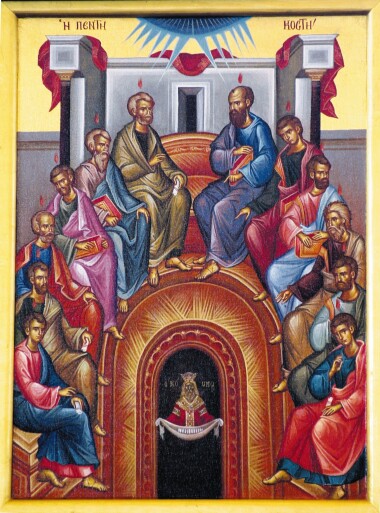
pentecostOf course, despite the hype, statistics are not the only measure of a Church’s vitality nor are they the only basis on which decisions about structural change are made. As Henri de Lubac reminds us, the Church was never more ‘catholic’ than in the Upper Room at Pentecost when all of its members could fit inside a small room. So ‘good church’ doesn’t mean ‘big church’.

However, you would expect that parishes and communities with a clear identity, a strong sense of belonging, and missionary in intent would attract new members through word-of-mouth and the witness of its members (the reality too is that smaller parishes, while enjoying an ‘intimacy’ of community that can be lost in larger congregations, can often struggle financially because of the relatively small number of contributors expected to cover often rising expenses e.g. building maintenance, insurances and the like).

So numbers aren’t everything but they are indeed something. Indeed, the Gospel commission to seek out new disciples is unambiguous and so parishes need to not only want to grow but plan to grow and so be organised to grow. The first step towards that growth is coming to a firm grasp with the present reality.

nclsIn that spirit, I recently crunched some numbers of the 2011 Census and National Church Life Survey for my own Diocese and took note of some national trends along the way that are publicly available and give us some sense of the state of the Church nationwide (these national trends are publicly available as they are based on Australian Census data which is owned by ‘the people’. Diocesan and parish specific data is another matter however and won’t be making an appearance on this blog!).

The national trends were, in fact, provided in 2012 and updated just days ago by the Pastoral Research Office, an office of the Australian Catholic Bishops Conference (ACBC) which works closely with NCLS Research, a research body sponsored in part by Australian Catholic University, the ACBC, and other denominations (to declare my hand, I am a member of the NCLS Research Sub-Committee).

These were the stats and trends that caught my attention:

  • National data reveals that my own Diocese of Parramatta has the second highest percentage of Catholics as a proportion of the general population in the country (31.6% or nearly one in three people living within the boundaries of the Diocese are Catholic). This is significantly higher than the national average of 25.8%. (If you want find out the percentage of Catholics within your own parish boundaries, wherever you are in Australia, click here. Why is this helpful to know? In the spirit of the ‘new evangelisation’ it indicates how many people in your part of the world are baptised Catholics and allows you to reflect on the level of engagement in the life of faith e.g. the parish’s worship and potential outreach to the local community).
  • Almost a quarter of all Australian Catholics were born overseas (23.8%), with the top three countries of birth for these being Italy, the United Kingdom (not including Northern Ireland) and the Philippines. Italian Catholics have held the top spot for the past 15 years, while the percentage of Maltese Catholics has declined over time and the number of Indian Catholics steadily increased.
  • 52% of Australian Catholics are female and 48% male, with a median age of 37.6 years (a rise from 30.7 years in 1991). Astonishingly, 21% of all Australian Catholics are children aged under 15 (which underscores the critical importance of the family and the Catholic school as part of the new evangelisation). Incidentally, there are slightly more Catholics in the ‘40-49’ age group than any other age group (these Catholics were born between 1962-1971 and so are roughly contemporaneous with the unfolding of the Second Vatican Council).
  • While 24% of all Australia Catholics were born overseas, they accounted for 40% of all Mass attenders.
  • Our Mass attenders are greying. In 1996, 17% of all Mass attenders were aged 70 and over. In 2011, 27% were of the same age.
  • Between 2006 and 2011 there was a slight decline in the proportion of Mass attenders who had attended a Catholic primary school. There was a similar decline in those who had attended a Catholic secondary school.
  • In 2011, 85% of Mass attenders said they attend Mass usually every week or more often. This is a slight decrease since 2006, when 87% said they attended weekly or more often.

As for the all-important and highly publicised ‘percentage of Catholics who go to Mass’ figure, you’ll have to wait a little longer but be assured it is on its way!  In 2006, it was a humbling 13.8% as reported here (compare this to the U.S. where they lament a Mass attendance figure of around 31%!).

While it demands planning, coordination and resources, including the right people, statistics can be gathered at a local level, in parishes (though most dioceses should be able assist here) and in ministry groups and initiatives of parish outreach. Good church research enables a more focused approach to pastoral care and evangelisation and for these reasons alone is well worth the effort.