when tradition becomes a trojan horse

Recently, I came across a video clip from a “March for Australia” rally that took place in Australian state and territory capitals on 31 August 2025, in which a senior academic at a Catholic institution made remarks that left me deeply unsettled.

In the video, the speaker – entrusted with the moral and intellectual formation of young Catholics – appears to suggest that Australia, from the time of European settlement, has always rightfully belonged to Anglo-Europeans. The clear implication was that national identity is something primarily, or even exclusively, tied to British heritage – a view that presents the country’s history through a narrow, ethnically defined lens.

What makes this rhetoric particularly concerning is that it draws on a well-worn tradition in Australia’s history, in which racialised understandings of national belonging tend to emerge not as a constant, fully systemic reality, but in waves – often in response to economic stress, political uncertainty, or social change. These waves typically target specific groups, who are scapegoated for broader structural problems.

Today, the targets may be Indian migrants; in previous decades, it was Asians, Italians, Lebanese, and Greeks, among others. These groups have been blamed for everything from housing shortages to wage stagnation – issues that are far more complex than the presence of migrants, but which get recast into a familiar politics of grievance.

In this context, advocating for a return to a homogenous or “original” Australian identity – or even a dominant Anglo-Saxon cultural “supermajority” as advocated by the Catholic academic – becomes not only historically reductive, but deeply exclusionary. It erases the contributions of generations of migrants who have played a vital role in shaping this nation’s social, cultural, and economic life. It also ignores the profound diversity of contemporary Australia, built not on a single ethnic foundation but on mutual respect and the contributions of many cultures engaging across generations.

Such notions are also based on a flawed premise: that there exists a coherent, singular “ethnogenesis” of an Australian ethnicity, which can be traced back to a defined cultural moment and preserved in amber. In reality, this is in fact a qualified social constructivist fantasy, resting on arbitrary start and end dates, or imagined histories that never fully existed. National identity, like culture, is dynamic and evolving. To claim otherwise is to deny the complexity and multiplicity of the Australian story.

Perhaps the only genuinely systemic racial issue in Australia – one which has never arrived in waves but been embedded in our national foundations – is our unresolved relationship with First Nations Australians. Political and cultural institutions have operated as though colonial history is the only real beginning, failing to fully acknowledge and reconcile with the fact that this land was inhabited by First Nations peoples for millennia before British arrival. The presumption that modern Australia starts and ends with colonisation is itself a form of historical revisionism, so often built into the very way we tell our national story.

But racism in Australia is not confined to history, nor is it always directed from majority to minority. It also exists within and between migrant communities, some of whom define themselves in opposition to wider Australian society or to other minority groups. This complexity demands an honest reckoning, recognising that racial prejudice can be internalised, redirected, or replicated across communities, especially when identity feels precarious or under threat.

Catholic institutions, in particular, must be vigilant in how they navigate these dynamics. There is a sobering historical reality here: racism has existed within the Church itself. While the Church has made important strides since then, its members must continually examine how their message and witness either confront or reinforce such ideologies.

Today, the vitality of the Catholic Church in Australia is closely tied to migrant communities. With declining religious participation among the broader population, the continued health of parishes, vocations, and Catholic schools increasingly depends on those who have arrived from the Philippines, India, Vietnam, Africa, and the Middle East. Ongoing racism, especially when implied by Catholic leaders, risks alienating the very people who sustain the Church’s mission and presence in this country.

This is why the remarks at the rally a fortnight ago are so troubling. If such a worldview were to influence the ethos of our Catholic institutions, it would raise serious concerns about how the Western tradition and the Church’s vision of human community are being taught – and to whom they are seen as belonging.

The Western tradition is a profound and meaningful inheritance, forged in the synthesis of Greek philosophy and the Judeo-Christian faith, but it is not the exclusive property of any one people. To conflate it with whiteness or Britishness is to distort both its content and its purpose. At its best, this tradition is capacious – a treasure open to all who seek truth, beauty, and goodness. It is meant to be shaped by, and shared with, people from every nation and background, animated by the universal vision of the Catholic faith.

As Pope Benedict XVI frequently affirmed, the heart of the Christian intellectual tradition lies in its openness to truth wherever it is found, and in its call to unity grounded not in ethnicity, but in the inherent dignity of every human person. When a speaker espouses ethnocentric nationalism and simultaneously teaches the Western tradition, it raises a serious concern: that this tradition is at risk of being misused or subtly misrepresented – not as a source of communion, but as a Trojan horse for racial and cultural exclusion.
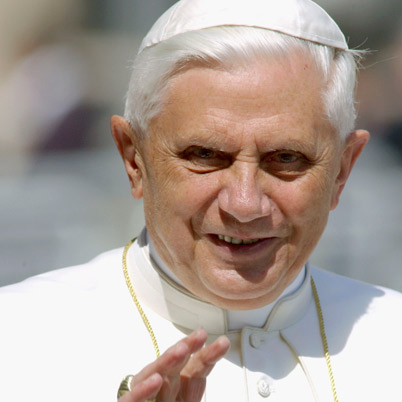
The speaker’s language – especially references to a unifying Anglo-European “crimson thread of blood,” which echoes Sir Henry Parkes but also carries troubling connotations of ethnic and racial purity – and the portrayal of Australia as fundamentally an Anglo-European project, dangerously approaches an ethnonationalism that the Church explicitly condemns. This is not the vision of nations embraced by Pope Benedict XVI, who warned against nationalism elevated above ethics and the rights of others, describing such tendencies as “a demonic force and the source of terrible disasters”.

When such ideas are voiced by figures in Catholic academic leadership and applauded by audiences that include far-right nationalists – met with triumphant shouts of “Amen” – they risk aligning Catholic witness with ideologies that are not only politically extreme but, as we have seen in countries like the United States, can escalate into acts of real-world violence when cloaked in religious or moral legitimacy.

As someone born in Western Sydney to migrant parents – whose family has worked diligently, contributed generously, and wholeheartedly embraced this country as their own – I find these implications deeply troubling. Regardless of the speaker’s intent, the message received is one that questions the belonging and legitimacy of many millions of Australians, simply because of their diverse origins. It strikes at the heart of a shared history, contribution, and identity.

Catholic institutions today face an urgent task: to form students not only with intellectual depth, but with a Gospel-rooted vision of the world – one that transcends race, class, and tribe. At a time when cultural forces seek to divide and categorise, our Catholic faith calls us to communion.

That’s why the implications of this video are so serious. This moment demands clarity – not silence or ambiguity. We must ensure that our faith and its traditions are never co-opted by narrow political or ethnic visions, which can lead people down deeply dangerous paths. The Church’s mission is universal. Her intellectual life is for all. And the future of Catholic education in this country depends on our ability to live and teach that truth with both conviction and humility. Our institutions have much to offer. But they must be courageous in defending the true scope of our tradition and the cultural wealth of our nation. 
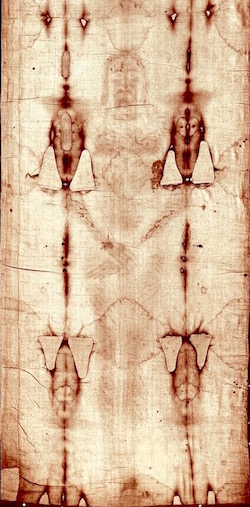
the man of the Shroud

On Friday 27 June 2025, the Feast of the Sacred Heart of Jesus, I was privileged to speak at the inaugural Holy Shroud Conference at Liverpool Catholic Club. In preparing for the introductory address, I was drawn more deeply into the mystery of Christ’s Passion – not merely as historical event but as a living reality, imprinted not only on linen cloth but on our human situation today. The Shroud invites us to contemplate the face of the suffering Christ, to consider what it means that God chose to reveal Himself not in splendour, but in the vulnerability of a broken body out of love for us. I’m grateful to the organisers for their vision and hospitality, and to all those who came – not simply to learn more about a cloth, but to seek the One it points to: Jesus Christ, crucified and risen. May devotion to His Sacred Heart draw us ever closer to the love that knows no bounds.

First, let me thank you for your warm welcome and for gathering for this significant conference. It is an honour to be here with you tonight, and I bring greetings on behalf of the Archdiocese of Sydney.

I warmly welcome our esteemed speakers Fr Andrew Dalton, David Rolfe, William West and Dr Paul Morrissey, and congratulate the organising committee for bringing this opportunity to gather around the mystery of the Shroud in this Jubilee Year of Hope.  

The topic before us, the Shroud of Turin, is one that has intrigued believers and non-believers alike for centuries. And in recent decades, it has become increasingly clear that the Shroud is not merely a religious curiosity. It is, in fact, one of the most extraordinary artefacts in human history. For many, it is a relic. For all of us, it is a mystery. And for those who seek truth, it can be a profound source of encounter with the Gospel.

We are living in an age that hungers for evidence, for the tangible, for something real, especially when it comes to faith. And it is here that the Shroud speaks powerfully.

Many now know that there is a great deal of scientific and historical evidence suggesting that the Shroud could not have been the work of a medieval forger, as claimed by the carbon dating results of 1988. In fact, the deeper we delve, the more difficult it becomes to dismiss the Shroud as merely a product of human hands.

What is often less well known is that many leaders within the Catholic Church have expressed not just interest, but belief in the authenticity of the Shroud. Among them are the past three popes – Pope John Paul II, Benedict XVI, and Pope Francis – each of whom made personal pilgrimages to venerate the Shroud.

Each of them stood before it not as sceptics, but as men of prayer and reverence, seeing in it a profound connection to the passion, death, and resurrection of Jesus Christ.

When Pope John Paul II visited the Shroud in 1980, he called it a “distinguished relic linked to the mystery of our redemption”. Eighteen years later, after the carbon dating controversy, he returned, this time thanking God for what he called “this unique gift”. That is no small statement. No pope would thank the Lord for a forgery.

More than that, John Paul II called us to gaze upon the Shroud with what he described as “the believer’s loving attention and complete willingness to follow the Lord”. In those words, he gently redirected us – not to get lost in the science or the debate – but to encounter the One whose image we believe is preserved on that cloth.

Pope Benedict XVI went further, stating that the Shroud had “wrapped the remains of a crucified man in full correspondence with what the Gospels tell us of Jesus”. Pope Benedict, who was always precise with his language, offered here a clear rebuttal to the carbon dating claims.

Even Dr Michael Tite, the man who oversaw that 1988 testing, later admitted in a 2016 BBC interview that he had come to believe a real human body had indeed been wrapped in the Shroud.

Pope Francis made pilgrimage to the Shroud in 2015. He not only prayed before it. He reached up and touched it. With great reverence, he said: “In the face of the Man of the Shroud, we see the faces of many sick brothers and sisters… victims of war and violence, slavery and persecution”.

For Pope Francis, the Shroud was not just about the past. It is about Christ’s presence among the suffering of today. And so the Shroud remains a powerful sign of hope as it witnesses to Christ’s solidarity with all those who suffer, who carry heavy burdens of illness, poverty, war, and injustice. It speaks to them not only of Christ’s passion, but of His enduring compassion – a reminder that they are not alone in their pain.

The late Pope concluded, saying: “By means of the Holy Shroud, the unique and supreme Word of God comes to us: Love made man… the merciful love of God who has taken upon himself all the evil of the world to free us from its power”. That is the evangelical heart of the Shroud. It is a silent sermon, a visual Gospel, a testimony in linen to the mystery of divine mercy.

In the context of this new pontificate, one cannot fail to recognise the providential continuity in Pope Leo XIV’s choice of name — Leo — which echoes that of his venerable predecessor, Pope Leo XIII, who in his own time zealously fostered devotion to the Holy Face of Jesus. This resonance serves as a quiet reminder that the Church’s memory is long, and that the Lord continues to speak to every age through signs both old and ever new.

Other Church leaders in our day have also drawn attention to the Shroud’s powerful witness. Just this past Easter, Bishop Robert Barron reflected in his Easter Sunday homily on the burial cloths mentioned in the Gospel of John. He called them “strange and wonderful cloths” and said they “opened the door to faith long ago”, and may well do the same today. Rather than referring to the Shroud as a mere “icon”, Bishop Barron described it as a relic, “one that is venerated as the cloth the disciples Peter and John saw on Easter Sunday morning”.

He is not alone. Popular priests such as Fr Mike Schmitz and Fr Andrew Dalton, who we are blessed to have as a speaker at this very conference, have powerfully and effectively evangelised through their engagement with the Shroud, especially among younger Catholics.

But perhaps most remarkable is the Shroud’s impact beyond the Church. Over the years, it has impressed and even converted many non-believers – atheists, agnostics, and sceptics who were drawn into a journey of faith by what they encountered in the scientific and spiritual mystery of the Shroud. It has spoken, too, to Protestants and Jewish seekers. Some have testified that their belief in God was rekindled through their encounter with the Shroud and the sense of the supernatural it evokes.

This brings me to what I believe is the Shroud’s most urgent and timely gift: its power to evangelise.

The Shroud is not just a matter of interest for scholars or theologians. It is something ordinary Catholics, young and old, can share in conversations with friends, colleagues, even strangers. It opens the door to a conversation not only about Christ’s suffering, but about His love, about His sacrifice, about the reality of the Resurrection.

And in a world that is increasingly sceptical of faith, increasingly disengaged from tradition, the Shroud is a bridge. It offers people a reason to pause, to question, to wonder.

It invites them to consider: Could this really be the burial cloth of Jesus? And if it is, what does that mean for my life?

After all, we live in an age in which so many do not believe in God, and yet so many still miss Him – a time when people chase progress without presence, and in which a Shroud, paradoxically, unveils something about life: a mystery that speaks to us, a silence that invites us to respond, a hiddenness that in Christ reveals us to ourselves, as sons and daughters of the crucified Son of God.

So, this evening, as we begin our conference, I encourage each of you not only to listen and learn, but to reflect on how you might carry this message forward. How the Shroud might be part of your own call to evangelise – to bear witness to a love that left its mark not only on human history, but on a simple linen cloth that continues to confound, inspire, and convert.

Thank you for your commitment to this mission. May the Man of the Shroud draw us ever closer to His heart.

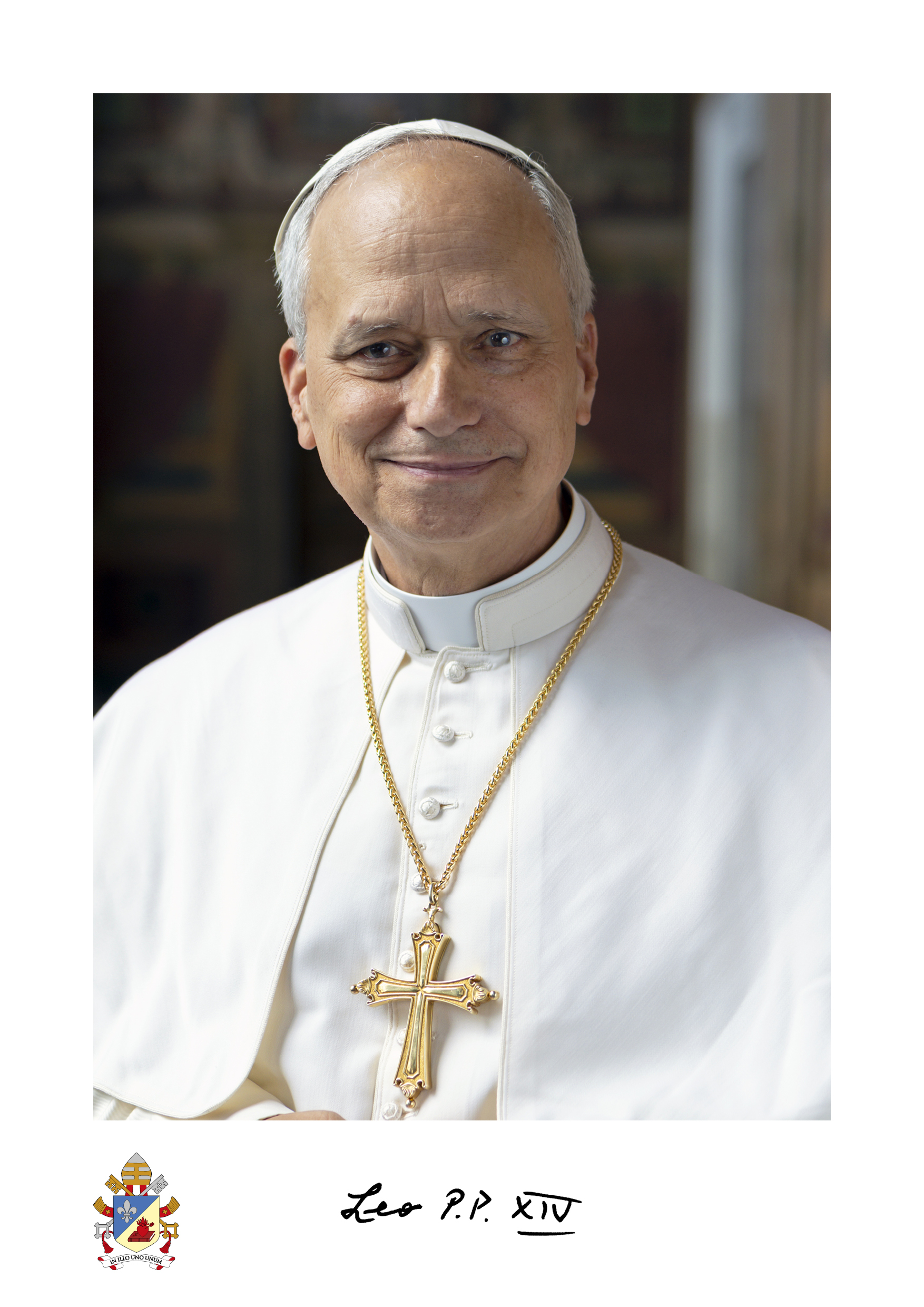
pope leo XIV: a gift of grace

It’s good to be back in this little corner of the internet. I’ve been meaning to revive this blog, and what better time than now, right after the election of Pope Leo XIV and his inauguration this weekend. Along with that momentous event, I’ve also been working on a podcast with Dr Matthew Tan, called Awkward Asian Theologians (you can find it here). Our talks have been a mix of deep dives and messy tangents, pushing me to think more critically about current events and how they mesh with theology. So, I’m hoping to be more active here, sharing some reflections as they come.

To kick things off, I’ve been mulling over the inauguration of Pope Leo XIV, and what it reveals about the fascinating intersection of biography, theology, and pastoral vision. A few thoughts below.


With the inauguration of Pope Leo XIV this weekend, a new chapter in the life of the Church begins. Every new papacy brings fresh insight and particular emphases, shaped by the unique biography of the man who assumes the Chair of Peter. It is both natural and proper that a pope’s reception of revelation, his pastoral vision and his theological orientation are deeply influenced by his life experiences. In essence, biography shapes theology.

We’ve seen this dynamic play out in recent history. The profound personal loss and political oppression endured by Karol Wojtyła in Nazi- and Communist-occupied Poland left a lasting mark on his papacy as John Paul II. His unwavering focus on the dignity of the human person and the relationship between faith and reason was, in part, a response to totalitarian systems that denied both. Similarly, the horrors of World War II shaped Joseph Ratzinger’s theological outlook. As Benedict XVI, he confronted the spiritual emptiness of post-war modernity, urging the Church to rediscover a personal encounter with Christ, the source of true meaning. Then there was Jorge Mario Bergoglio, formed by Argentina’s “Dirty War” and his leadership as a Jesuit provincial, who brought a pastoral vision to the papacy focused on mercy, humility, and a preferential option for the poor. Each of these popes read the signs of the times through the lens of their own lives, and their theological vision was shaped accordingly.

Pope Leo XIV arrives with a similarly rich and distinctive biography. Born into a working-class family in mid-twentieth-century Chicago, with French, Italian, and Spanish roots, he grew up amidst the challenges and diversity of a rapidly changing America. His early academic formation in mathematics and philosophy suggests a mind trained in both precision and wonder. His missionary work in Peru placed him at the heart of communities marked by hardship and faith – experiences that no doubt deepened his concern for the marginalised and sharpened his sense of the Church’s global responsibility. Later, as Prior General of the Augustinian Order, his leadership was informed by his doctoral studies at the Gregorian University, where he explored the Augustinian vision of authority not as control or domination, but as service offered in love.

This Augustinian inheritance profoundly shapes Leo XIV’s spiritual and theological identity. As a self-acknowledged “son of St Augustine”, Leo XIV’s papacy will undoubtedly reflect the deep theological currents drawn from the life and thought of Augustine of Hippo. As an Augustinian friar and scholar, Pope Leo XIV draws not only from Augustine’s doctrinal insights but from the deeper well of his lived experience – one marked by struggle, restlessness and eventual surrender to grace. Like recent popes, Augustine’s journey reminds us that theology is never abstract; it is always, in some way, a response to the life that we have lived.

St Augustine’s own life is one of the Church’s earliest and most powerful accounts of conversion. Born in what is now Algeria in 354, Augustine’s youth was marked by ambition, intellectual pride and moral wandering. He lived with a concubine and fathered a child out of wedlock; he joined the Manichaeans, drawn to their dualistic philosophy, before growing disillusioned. “I had become a great riddle to myself” he would later write in his Confessions, identifying the inner conflict that drove his restless search for truth.

This search ultimately led him to Milan, where the preaching of St. Ambrose and the influence of Neoplatonic philosophy helped him reimagine both God and self. It was in a garden – so often a site of new beginnings and blessing – that Augustine underwent his decisive transformation. Hearing a childlike voice urging him to “take up and read”, he opened the Sacred Scriptures and encountered the call of Christ in Romans 13: “Put on the Lord Jesus Christ, and make no provision for the flesh”. Augustine later described this moment as though “a light of relief from all anxiety flooded into my heart”. It was the end of one life and the beginning of another.

What followed was a life of deep pastoral care and doctrinal brilliance. Augustine became a bishop, a theologian, and a relentless defender of truth and grace. His Confessions, The City of God and treatises on the Trinity continue to shape Christian theology to this day. His combat against Donatism and Pelagianism reflect not merely intellectual disagreements but his conviction, rooted in his own life, that grace is the beginning and end of all conversion.

I would suggest that to anticipate the shape of Pope Leo XIV’s papacy, it will be helpful to reflect time and again on the arc of St Augustine’s own journey, which has profoundly influenced Christian tradition and, by extension, the new pope. Augustine’s path from selfish ambition to spiritual surrender, from pride to divine dependence, and from moral confusion to the clarity of God’s mercy and truth, offers us a lens through which to understand Leo XIV’s theological and pastoral vision.

We can anticipate that Leo XIV’s vision will emphasise that true pastoral care arises from the recognition of human restlessness and the unceasing pursuit of God. We can anticipate a papacy that prizes preaching not merely as instruction but as a proclamation intended to delight and persuade. We can anticipate a vision of the Church as a spiritual community, bound together by charity, whose mission transcends all earthly political structures and orders (civitas terrena) while remaining actively engaged with them. We can anticipate an emphasis on personal conversion as the foundation of evangelisation, echoing St Augustine’s insistence that “what we are must be taught and what we have must be given”.

If we wish to anticipate the direction of this new papacy, we would do well to look not only to Pope Leo’s policies and public addresses, but to the story of his life – shaped by deep intellectual and spiritual currents – and to the saint who formed him, whose own journey still teaches the Church how to receive and respond to grace.