the state of the Australian Catholic Church

As a pastoral planner for a Catholic diocese, knowing the statistics on your local Church is vital in understanding the pastoral reality of parishes and trends in the wider community that impact on faith. Statistics and church profiles are also essential to recognise trends and areas of pastoral concern over time, to form sensible recommendations and develop new goals for the future.
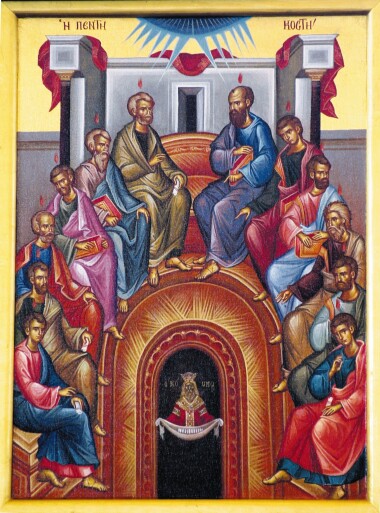
pentecostOf course, despite the hype, statistics are not the only measure of a Church’s vitality nor are they the only basis on which decisions about structural change are made. As Henri de Lubac reminds us, the Church was never more ‘catholic’ than in the Upper Room at Pentecost when all of its members could fit inside a small room. So ‘good church’ doesn’t mean ‘big church’.

However, you would expect that parishes and communities with a clear identity, a strong sense of belonging, and missionary in intent would attract new members through word-of-mouth and the witness of its members (the reality too is that smaller parishes, while enjoying an ‘intimacy’ of community that can be lost in larger congregations, can often struggle financially because of the relatively small number of contributors expected to cover often rising expenses e.g. building maintenance, insurances and the like).

So numbers aren’t everything but they are indeed something. Indeed, the Gospel commission to seek out new disciples is unambiguous and so parishes need to not only want to grow but plan to grow and so be organised to grow. The first step towards that growth is coming to a firm grasp with the present reality.
nclsIn that spirit, I recently crunched some numbers of the 2011 Census and National Church Life Survey for my own Diocese and took note of some national trends along the way that are publicly available and give us some sense of the state of the Church nationwide (these national trends are publicly available as they are based on Australian Census data which is owned by ‘the people’. Diocesan and parish specific data is another matter however and won’t be making an appearance on this blog!).

The national trends were, in fact, provided in 2012 and updated just days ago by the Pastoral Research Office, an office of the Australian Catholic Bishops Conference (ACBC) which works closely with NCLS Research, a research body sponsored in part by Australian Catholic University, the ACBC, and other denominations (to declare my hand, I am a member of the NCLS Research Sub-Committee).

These were the stats and trends that caught my attention:

  • National data reveals that my own Diocese of Parramatta has the second highest percentage of Catholics as a proportion of the general population in the country (31.6% or nearly one in three people living within the boundaries of the Diocese are Catholic). This is significantly higher than the national average of 25.8%. (If you want find out the percentage of Catholics within your own parish boundaries, wherever you are in Australia, click here. Why is this helpful to know? In the spirit of the ‘new evangelisation’ it indicates how many people in your part of the world are baptised Catholics and allows you to reflect on the level of engagement in the life of faith e.g. the parish’s worship and potential outreach to the local community).
  • Almost a quarter of all Australian Catholics were born overseas (23.8%), with the top three countries of birth for these being Italy, the United Kingdom (not including Northern Ireland) and the Philippines. Italian Catholics have held the top spot for the past 15 years, while the percentage of Maltese Catholics has declined over time and the number of Indian Catholics steadily increased.
  • 52% of Australian Catholics are female and 48% male, with a median age of 37.6 years (a rise from 30.7 years in 1991). Astonishingly, 21% of all Australian Catholics are children aged under 15 (which underscores the critical importance of the family and the Catholic school as part of the new evangelisation). Incidentally, there are slightly more Catholics in the ‘40-49’ age group than any other age group (these Catholics were born between 1962-1971 and so are roughly contemporaneous with the unfolding of the Second Vatican Council).
  • While 24% of all Australia Catholics were born overseas, they accounted for 40% of all Mass attenders.
  • Our Mass attenders are greying. In 1996, 17% of all Mass attenders were aged 70 and over. In 2011, 27% were of the same age.
  • Between 2006 and 2011 there was a slight decline in the proportion of Mass attenders who had attended a Catholic primary school. There was a similar decline in those who had attended a Catholic secondary school.
  • In 2011, 85% of Mass attenders said they attend Mass usually every week or more often. This is a slight decrease since 2006, when 87% said they attended weekly or more often.

As for the all-important and highly publicised ‘percentage of Catholics who go to Mass’ figure, you’ll have to wait a little longer but be assured it is on its way!  In 2006, it was a humbling 13.8% as reported here (compare this to the U.S. where they lament a Mass attendance figure of around 31%!).

While it demands planning, coordination and resources, including the right people, statistics can be gathered at a local level, in parishes (though most dioceses should be able assist here) and in ministry groups and initiatives of parish outreach. Good church research enables a more focused approach to pastoral care and evangelisation and for these reasons alone is well worth the effort.

we can all learn from Boston

That is not something we could have said in 2002. After all, it was in that Archdiocese that the scandal of the sexual abuse crisis, including serious maladministration, broke across the front pages of the Boston Globe, sending the American (and universal) Church into a crisis which continues to impact the life and morale of individuals, parishes, and religious communities today. At that time, Boston could not be said to have modelled anything for the Church.

disciplesinmissionMore than a decade later and the reform in Boston continues under the leadership of Cardinal Sean O’Malley, though now with a particular focus that lies in its future. This year has seen the commencement of the first phase of Boston’s pastoral plan, ‘Disciples in Mission’.

What’s the essence of the diocese’s plan and what is its relevance for the rest of us? Boston is focused on the positioning of parishes more solidly for ‘the New Evangelisation’, meaning renewed outreach to ‘our brothers and sisters and drawing them more fully to Jesus Christ’. This is pretty much the focus of the magisterium – a concentration on the baptised who have lost a living sense of faith, without denying the importance of the traditional mission ad gentes. 

(You can think of it this way: the mission ad gentes, ‘to the nations’, is for those who ‘Don’t Know, Don’t Care’,  the mission of the new evangelisation is for those who ‘Know, but Don’t Care’).

In the name of renewal, the Diocese is reorganising all of its 288 parishes into approximately 135 ‘collaboratives’. Most of these parishes will retain their own canonical identity and integrity, with their own name, assets, liabilities and financial obligations but will placed under the governance of a single priest (or ‘pastor’ as they prefer to say in the U.S.). This approach is described locally as ‘twinning’ or ‘clustering’ parishes.

So, why this radical restructure across the Diocese? Boston is reorganising its life in the pursuit of one goal: to enhance its mission of evangelisation.

By introducing ‘collaboratives’, Boston notes the following gains:

  • parishes can unite to work together in pastoral actions based on a common vision;
  • the resources of parishes can be shared for the mutual benefit of all;
  • a greater shared consciousness can be fostered of the need to bring people back to an active practice of the faith;
  • a renewed focus on outreach to others will be supported by resources and training in the theology and practice of evangelisation, training in parish leadership and sound management (for both priests and lay ministers who will now work in two-parish or multi-parish groups).

evangelizationIn my experience the greatest obstacle to this type of bold renewal of pastoral life is neither finance or facility but a failure to recognise the mission of evangelisation as the central purpose for which all of our communities exist.

In other words, a lack of focus on our Christian mission leads to complacency and the isolation of our ministries and communities, one from another. Communities that are settled in an ‘exclusive unity’ will not grow, spiritually or numerically. This is because they will have neglected the central Gospel imperative to ‘go and make disciples’, a mission that calls for the uniting of gifts and combined witness.

The urgent need to focus beyond what we have, beyond ourselves and beyond even our own preferences, could be put this way: ‘If your parish or community closed today, would anyone but its members notice?’

We must recognise our existence is not for ourselves and organise our life and our structures accordingly. We exist for mission, for the making of new disciples and promoting growth in all those who follow Jesus. We can all learn from Boston and be challenged by its bold renewal. If we do, we have the opportunity to offer stronger, combined witness in faith, better manifest our identity as a communion, and realise a more effective mission than that which could be achieved on our own.

youth ministry in an adult church

I once heard youth ministry colourfully described as a ‘bandaid on a bleeding artery’. While those committed to the evangelisation and support of youth might resist such a diagnosis it nevertheless points to the fact that outreach to young people cannot be thought of apart from the health of the adult Church.

wydIt strikes me that if the adult Church is haemorrhaging – because of poor preaching and liturgy, a thin sense of belonging or a lack of support for instance – then there is little prospect that young members will be sustained in their faith as they mature. Young people graduate from the parochial youth group or youth movement much faster than we think. This leads us to consider what we are offering young people in our communities over the long term, for the flourishing and growth of their faith. All you need do is look at your adult Church for a sense of what’s coming.

There are other good reasons why nurturing the faith of adult Catholics is critical, even essential, to meaningful youth ministry in our parishes.

Adult Catholics witness to younger Catholics what a mature faith looks like. If we want to raise the standard of discipleship in the Church then adults who are prayerful, steeped in Scripture, theologically literate, articulate and committed to justice must become the new norm. Only then will the faith of young people naturally aspire to more than intergenerational conformism.

Naturally, we want young people in our communities for their vibrancy and energy as well as the tangible hope they bring for a Church we hold precious. However, we need to acknowledge that young people will not be attracted to parishes or communities that show no energy or dynamism in themselves.

prayerGiven the above, there is an argument for a renewed emphasis on adult catechesis in the local community, in addition to the traditional role of children’s and youth ministry in parish life. In my experience there is too little focus on adult formation in our parishes (apart from what is assumed to be taking place when homilies are preached or in the sign value of the sacraments).

In a well researched book on faith formation, Jane Regan argues that the strongest rationale for a focus on adult catechesis, as a necessary complementary to a focus on youth, is the mission of evangelisation:

It is the link between evangelisation and catechesis that provides the clearest mandate and the most convincing rationale for focusing on adults. Adults need to be continually formed in their faith so that they are able to fulfil their responsibilities in the mission of the church (Regan, Toward an Adult Church, p.24)

Of course, the responsibilities of adults include the evangelisation of youth. Without their catechesis, the formation of adults in faith, they are not likely to connect what takes place in liturgy with mission, the connection between faith practices and their life remains obscure, and so the connection between discipleship and evangelisation will be lost. In short, adult disciples need catechesis to be evangelisers, which includes being effective witnesses to the young people in their parish community and everyday lives.

So if you are involved in youth ministry, adults need to become an integral part of the overall vision of your parish if your ministry is not to be merely a temporary ‘moment’ in a longer story of unrealised potential.

If we want youth ministry to make a lasting difference we cannot afford to take our eyes off the adult members of our community which they will one day become.

start planning to be a better church

“For the vision still has its time, presses on to fulfillment and will not disappoint” (Habakkuk 2:3)

At a recent gathering I was asked what I did for work. I shared something of my role as a pastoral planner for the Catholic Church to which they responded with detached interest, “Oh I guess they would have to plan wouldn’t they”.

loaves and fish mosaicI suspect that many Catholics would be just as surprised that pastoral planning goes in the Church. And yet it is nothing new to us. From the very beginning of our history as disciples planning has been a common part of our life. In the Acts of the Apostles, for example, we see the community organising itself – identifying, preparing for and responding to the pastoral needs of their fellow believers and those beyond the nascent community. This includes providing for the care of Greek widows (6:1-6) and addressing the need to catechise the great numbers in Antioch (11:19-26). Hence, from the outset, the community and its leaders discovered particular pastoral needs, discerned ways to address them, and then selected one of the possible options. These activities constitute the essence of ‘pastoral planning.’

Many dioceses are dedicating considerable resources to ‘planners’ among the people of God and some parishes have also begun to take a more strategic approach to their life though these are fewer in number than is called for. Much work remains to be done here.

startplanning2Pastoral planning, for instance, is the reason for which pastoral councils exist (see Canon 536 §1 and Ecclesiae Imago n.204) . However in my experience these still too often get bogged down in ‘maintenance mode’ or end up acting like corporate management and so fail to achieve their potential as a body of prayerful discernment and missionary initiative (and this phenomenon deserves a blog all of its own).

So why is church planning indispensable and why does it need to be a priority for your faith community or ministry group? There are many reasons that could be raised. Below I list only a few to spark your own thinking about a more planned approach to mission.

  • The need to develop, articulate and promote a clearly owned vision within and beyond your group (i.e. ‘what are we about?’). Without such a vision, resources can be misdirected and significant energy can be lost; people have no way of engaging with a future approach. What is your community’s vision for making disciples?
  • The need to identify spiritual and social needs as well as gifts within the group so that the mission of Christ and the Church can be fulfilled. Intentional planning provides an opportunity to get to know the members of the group or community more intimately and engage their abilities toward the common good;
  • The opportunity to consult community members and listen intently to their faith, viewpoints and experience of the past and present with a view to the future. No one has a comprehensive view or can experience all of the Church’s life; as a communion of faith we depend on each other for the best view of things. St Paulinus of Nola reminds us, ‘Let us listen to what all the faithful say, because in every one of them the Spirit of God breathes’;
  • The need to match our structures with our mission, particularly in light of limited resources and increasing need. All structures and persons are at the service of, and therefore accountable to, the mission given to us by the Gospel in our particular context. We need to match the faith that we live with the mission we seek to fulfil;
  • To enable your faith community or group to respond effectively and proactively to change and to not be passively shaped by external forces. Intentional planning actually enables adaptability, flexibility and resourcefulness in the midst of changing circumstance.

Without the discipline of planning for the future life of your community or faith group it is unlikely to realise its greatest potential. When exercised well pastoral planning can move communities beyond complacency, from merely existing to communities of genuine missionary intent. It can forge a more united and creative vision and raise a self-awareness within the community that it does not exist for itself but for the greater purpose of mission. On the other hand, a lack of planning does not simply leave communities where they are but actually risks their diminishment. So start planning to be a better Church; it’s never too late to begin.