
I’ve just returned from an inspiring visit to New Zealand, where I had the privilege of working with several dioceses who gathered in Palmerston North and with Fr Simon Story and the vibrant parish community of New Plymouth. This parish is courageously stepping into a new way of being Church – one that is not driven by busyness, maintenance, or self-preservation, but by a deep and intentional commitment to evangelisation.
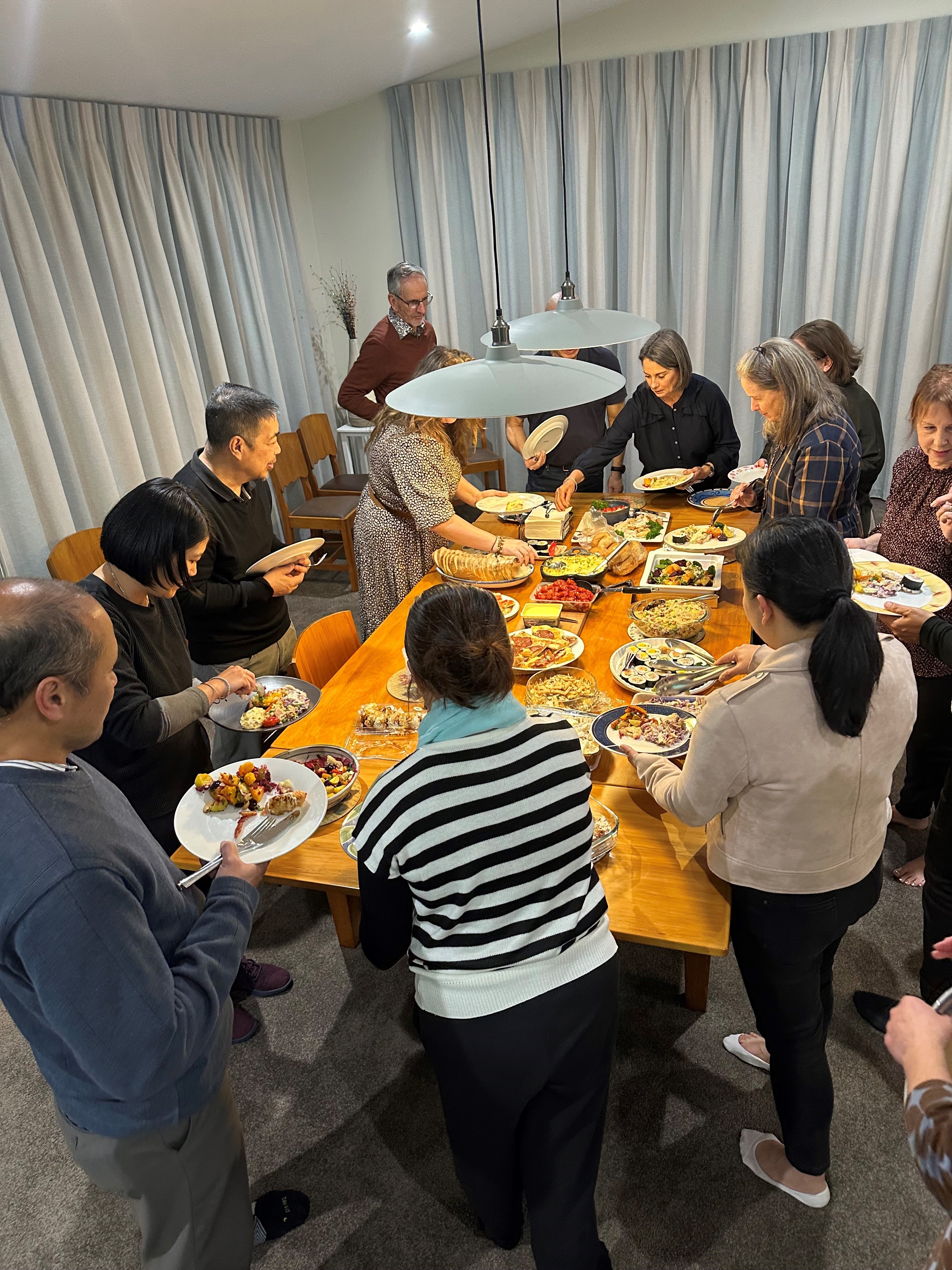
What follows are reflections shared during a breakfast meeting with the Parish Pastoral Council of New Plymouth. As a relatively new Council, we were exploring together their unique role within parish life, in collaboration with the Senior Leadership Team, parish staff, and the wider faith community. In my experience, the effectiveness of a parish’s mission is often shaped by how each body within it understands its identity and purpose – and the Parish Pastoral Council is a key example of this dynamic. I sought to engage the metaphor of a building site to draw out the different but interrelated roles of parish bodies as they seek to build God’s Church.
The Parish as a Movement, Not a Monument
Many parish communities today are asking hard but necessary questions: How do we grow again? How do we bring people back or reach those who’ve never come? How do we move beyond simply maintaining what we have, and step into the bold mission we’ve been given by Christ in his Great Commission?
These questions do not signal failure; they mark a turning point. What is needed is a new way of seeing the parish itself – not as a finished product, a heritage site, or merely a place we visit once a week, but as a living construction site.
This metaphor captures the parish not as a static monument, but as a dynamic, Spirit-filled mission still very much in progress. It is a place where every person is called to participate, where the work is ongoing, and where God’s house is being built – not just for us, but for the whole world.
At the heart of it all is God in Christ – the ‘Master Builder’ or divine architect of communion and mission, the One who calls, gathers, equips, and sends. God does not dwell in buildings made by human hands alone, but in the people who gather, grow, and go out in His name. It is God’s mission that builds the Church, and our parishes only have life and meaning if they align with His eternal design: that all might know His love and come home to Him.
Many in our communities remain spiritually homeless. Some have never stepped inside a church while others sit quietly in the pews, uncertain whether they are truly part of the mission or simply occasional users of the space. Many say they do not believe in God but still miss His presence in their life and feel this absence at turning points in their life. A missionary parish must always ask, “Who are we building for?” The answer is everyone, especially those without a spiritual home.
Building God’s house, then, means more than creating a welcoming space. It calls us to go out, extend invitations, and form a community of disciples who actively join in the work of building alongside us.
The Priest and Senior Leadership Team: Architects of the Vision

Every construction site begins with a vision. Experience has shown that the parish priests of the most fruitful and growing parishes, both locally and abroad, have established senior leadership teams. While models may vary, the priest and this team can well serve as the architects of the parish vision. Their role is to pray, discern, and shape the mission of the parish, to draft the blueprint for a vibrant community where Christ is the cornerstone and ensure that the parish remains on track.
They must ensure that what is being created is not just beautiful or functional, but mission-shaped: open to the world, inviting to the lost, and empowering to the faithful.
The priest’s leadership here is not simply to maintain, but to nurture and expand the living body of Christ. As recent popes have reminded us, the Church is not called to self-preservation but to bold evangelisation. True pastoral leadership moves the parish beyond comfort and routine – literally out of the pews and into the streets – answering the call of the Master Builder who sends His Church to the margins, where the Gospel must be lived, proclaimed, and embodied.
Parish Pastoral Council: Engineers of Strategy and Alignment
The Parish Pastoral Council can take the blueprint provided by the parish priest and senior leadership team and help figure out how to build the parish according to its vision. As the engineers of the parish, a key role this body can play is to translate vision into action, to discern priorities, assess needs, and develop strategies that are practical and fruitful. They ensure that what’s being built is sound – not only structurally, but pastorally. They listen deeply, respond thoughtfully, and help ensure that every part of the community is included in the building process.
Some critics caution that talk of “strategy” reduces the Church’s mission to mere management or secular frameworks. This concern is valid and serves as an important reminder that any planning must remain deeply rooted in prayer, discernment, and fidelity to the Gospel. The members of the Parish Pastoral Council are not managers of a project but co-responsible stewards of a living mission. They are spiritual vision keepers, as all parishioners must be, providing ongoing feedback to the priest on overarching priorities and helping to develop plans that serve the parish’s evangelising mission.
In the New Testament, Jesus selected and trained twelve apostles, sent them out in pairs, and gave clear instructions for their mission. The early Church, guided by the apostles, organised communities, appointed leaders and made practical decisions to sustain and grow the mission under the guidance of the Holy Spirit. The members of the Parish Pastoral Council can assist the parish priest to do the same, acting as a trusted body of advisors.
Above all, council members understand that their work is not inward-facing. The Church exists to evangelise, so their strategies ask not only “What do we need inside?” but also “How do we reach those outside?” This mission-driven planning ensures that practical steps serve the spiritual calling, not the other way around.
Parish Staff: Coordinators and Witnesses on the Site

On any construction site, it is the site coordinators who keep the project moving. In the parish, this is the role of the parish staff and teams.
These team members – responsible for administration, sacramental preparation, youth ministry, communications, coordinating catechists, and other daily responsibilities – bring both professional excellence and spiritual intentionality to the site of the parish. They are not just doers or organisers but co-builders of the mission, ensuring the vision from the priest, leadership team and Council becomes real, visible and effective.
Their role goes beyond logistics. Parish staff are witnesses to the vision, as are all the baptised who bring God’s promises alive. Many people in and around our parishes are still undecided: “Will I help build this? Am I a co-builder or contributor in this or just a guest passing through?” The manner in which parish staff exercise their roles becomes a living invitation to others. These frontline staff model what it looks like to move from maintenance to mission, from attendance to discipleship. They show what it looks like to be a builder of God’s house, not mere bystanders.
Parishioners: Living Stones and Craftspeople of the Kingdom
Finally, the real and necessary building takes place through the hands of the people – the parishioners – who are the ‘bricklayers’ or craftspeople of the Church. Far from being a minor or functional role, theirs is the essential work of making the vision tangible, one act of faith, service, and love at a time. Without them, no foundation is laid, no walls rise, and no mission takes shape. They are the craftspeople of the kingdom, bringing the Church to life in the world.
Every act of love, every prayer offered, every conversation of faith, every invitation made, and ministry served – these are bricks laid in love and hope. Parishioners are not consumers of a finished church, but co-creators of a living, breathing community of disciples.
They are the Church’s frontline: parents teaching the faith at home, volunteers welcoming at the door, youth leaders planting seeds of hope, welcomers providing hospitality. They are building God’s house with their lives, trusting the Master Builder to shape their efforts into something beautiful and enduring.
Conclusion
Truth be told, our parishes – as expressions and embodiments of the Lord’s house – will never be complete. They are always being built up, always expanding, especially toward those who do not yet know they have a place within. A missionary parish is not a fortress for the few but a spiritual home under construction for the many. There must always be spiritual scaffolding in place – space for more workers, room for growth, and open doors for those still unsure if they belong.
We are not building a parish only for those who already believe. We are creating a place that feeds the hungry, shelters the lost, nurtures the seeker, and sends forth the disciple. This is the kind of house God is building in the world, and we are called to build it with Him.
Our priests and their senior teams are entrusted with shaping the vision and calling others into the dream of the Master Builder. Our Parish Pastoral Councils continue designing structures and strategies that welcome and reach out to make the vision a reality. Our parish staff and ministry teams remain steadfast in coordinating and witnessing to what is possible. Above all, with faith, love, and boldness, our parishioners take up the tools and build alongside them, inviting all people to find their home in Christ.
As Psalm 127:1 reminds us, “Unless the Lord builds the house, the builders labour in vain”. Let us build not a Church for ourselves, but for the world. Let us join the Master Builder and never stop building our parishes as God invites us to.

 timeofthechurch