
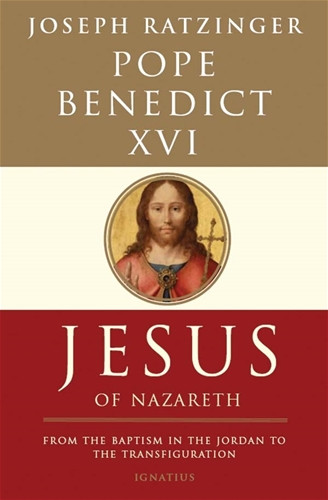
Each Lent I try to undertake reading that might draw me more deeply into the life of Christ. Last year it was The Lord by Romano Guardini. This year it has been Jesus of Nazareth by Joseph Ratzinger, first published in 2007. By the time this classic work appeared, Ratzinger had already been elected Pope Benedict XVI. Yet he makes clear in the foreword that this is not an act of papal magisterium but a work offered in his personal capacity as a theologian – a fellow pilgrim seeking the face of Christ.
Though not a manual on ecclesiology, Jesus of Nazareth is a searching meditation on the person of Jesus that carries profound implications for how we live and serve within the Church today, particularly in our parishes and local communities of faith. Ratzinger states plainly that his concern is “primarily with the Lord himself”. Yet as I have moved through its pages this Lent, it has become increasingly clear that one cannot contemplate Christ without also rediscovering the nature and mission of His Church.
For those entrusted with leadership, clergy and lay alike, this is no small insight. How we see Jesus inevitably shapes how we form our communities, how we preach, how we pray, and how we understand the Church’s purpose in the world.
A central thread in Ratzinger’s work is the inseparability of Jesus’ person and mission. Jesus does not simply proclaim a message; he is the message. His identity as Son is grounded in an unbroken communion with the Father, what Ratzinger describes as a “permanent interior dialogue”. Jesus’ entire existence is lived “from” the Father and “for” the Father. This self-giving communion does not remain closed in on itself but generates a people. In short, the Church is born from Christ’s complete self-giving love.
This insight is especially important for parish leadership. The Church is not first a project we manage or a structure we maintain. She is a reality we receive, the fruit of Christ’s self-giving love. Our task is not to construct the Church according to our preferences but to allow our communities to be shaped by the life of Christ himself, a Christ who acts and moves in our time.
Ratzinger’s approach to Scripture reinforces this ecclesial sensibility. He cautions against reading the Gospels in a way that buries Jesus under endless theories. Scripture, he argues, did not emerge in isolation. As he writes, “The Scripture emerged from within the heart of a living subject – the pilgrim People of God – and lives within this same subject”. This does not dismiss or downplay the role of serious biblical scholarship but restores the proper context of God’s Word. The Word is entrusted to the Church, and the Church is continually formed by the Word.
It reminds us that a renewed encounter with Christ in the Scriptures – proclaimed and received within the liturgy and the living faith of the Church – and in the Eucharist, where the Incarnate Word gives himself to us sacramentally, is essential to Catholic life. From this encounter flows all authentic ministry. Ministry is not an individual right or personal platform, but an ecclesial gift – entrusted, discerned and sustained within the Body of Christ. God’s Word and the Eucharist remain the true starting point and measure of every service we undertake in the parish and diocese, ensuring that what we do arises not from private ambition but from communion with Christ and his Church.
It is precisely this return to the centre that Pope Leo XIV highlights in his 2026 Lenten message. He frames Lent as a season in which the Church, “guided by a sense of maternal care”, calls us to place “the mystery of God back in the centre of our lives”. He even proposes a concrete and easily overlooked form of fasting: abstaining from words that wound, refraining from harsh speech and rash judgement.
This is not a minor moral refinement but a deeply ecclesial concern that can shape our parish life. If ministry flows from communion, then the way we speak – in meetings, in correspondence, in casual conversation – either strengthens or weakens that communion. Many communities fracture not first through doctrinal disagreements but through patterns of suspicion, sarcasm and careless speech. If Lent is a time for listening and fasting, then we are called to model a manner of speech that is truthful, charitable and peace-making, speech that reflects a life grounded in God’s Word and Eucharist as communion.
Later in Jesus of Nazareth, Ratzinger offers a meditation on the temptations of Christ that brings us back firmly to first principles. The temptation to turn stones into bread echoes today in the assumption that the Church must prove her relevance by addressing material needs before she dares to speak of God. The Church must indeed be deeply committed to works of charity; fidelity to Christ demands nothing less. Our Lenten almsgiving is a concrete expression of that fidelity, a real sharing in the Lord’s compassion for the poor.
Yet Ratzinger reminds us that humanity’s deepest poverty is not economic but spiritual – the absence of God. As he observes, “history cannot be detached from God and then run smoothly on purely material lines”. Even our almsgiving must flow from worship and conversion, from hearts shaped by prayer and nourished by the Eucharist. God first, and from that centre, love of neighbour.
If history is detached from God, no purely material solution will ultimately suffice. For instance, political agreements and humanitarian efforts are necessary and urgent, but they cannot by themselves heal the wounds of the human heart from which violence and injustice arise. The crises of our age – war in Iran, Gaza, Ukraine and Sudan, grinding poverty across parts of Asia, and so many other forms of suffering – are not simply problems to be managed. They are also moments within a larger moral and spiritual drama, places where human freedom, sin, grace and the call to conversion are at work.
Seen in this light, the Church’s proclamation of God – and the parish’s steady proclamation of the Word each week – is not a retreat from reality but a deeper engagement with it. When a parish gathers to hear the Scriptures, to intercede for the suffering and to celebrate the Eucharist, it is not turning away from history’s turmoil. It is placing that turmoil before the living God. Only when history remains open to God can it move toward a peace that is more than fragile equilibrium or temporary ceasefire. The peace Christ offers is rooted in reconciliation, truth and the transformation of the human heart.
At a more parochial level, our Catholic communities cannot be reduced to social service or the cultivation of community life, important and necessary though both are. At the heart of our responsibility is something deeper: to lead people into an encounter with the living God – the Father revealed in Christ and made present by the Holy Spirit. When that centre holds, every work of charity, initiative and gathering finds its proper meaning.
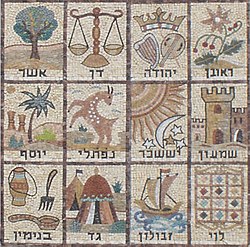
This Christ-centred mission is not an abstract ideal but the very pattern established by Jesus himself. In calling the Twelve Apostles, he both symbolically and concretely forms a renewed Israel – a new People of God grounded not in lineage but in hearing and following. The Church’s identity rests on fidelity to His person: “The ‘I’ of Jesus himself… becomes the criterion of righteousness and salvation”. In our parishes, then, we are invited not merely to sustain participation, but to form true disciples of Jesus, men and women whose lives are steadily shaped by Christ and who in turn help others to follow him with confidence and joy.
Finally, Ratzinger’s deeply Eucharistic vision of the Church deserves renewed attention this Lent and as we prepare for an International Eucharistic Congress in Sydney. As he shares in Jesus of Nazareth, the Church is not simply an assembly that celebrates the Eucharist; she is formed by it. From Christ’s pierced side flow blood and water – signs of Baptism and Eucharist – the sacraments that generate and sustain the Church. Every Eucharistic gathering is more than an obligation fulfilled; it is the place where Christ continues to give himself and draw a scattered people into unity.
For those entrusted with leadership and service in parish life, Ratzinger’s reflections in Jesus of Nazareth call us back to what is essential. The Church does not create herself; she is born from Christ’s communion with the Father, sustained by the Spirit, and continually gathered around the gift of his Body and Blood. Our responsibility is not to reinvent her, but to ensure that the life of our parishes reflects that divine origin. Lent, then, becomes both purification and recalibration – a time to strip away what is secondary and to recover confidence in the dramatic newness that comes from Christ himself.
As we journey toward Easter, may our leadership be marked less by anxiety about outcomes and more by fidelity to him. For only by remaining close to Christ will our parishes truly become what they are called to be: living signs of God drawing near.
 timeofthechurch