money money money

dolan

This week I read an interesting article by Cardinal Timothy Dolan of the Archdiocese of New York. You can read the full version here.

Dolan is a prominent figure in the American Church and a rising star in the universal Church, having made a big impression at the recent conclave (a journalist pointed out that if the cardinal-electors had elected Dolan as pope the other 5,000 bishops of the world might as well have taken the next 15 years off, because they’d never be seen or heard from again. In short, Dolan is incredibly articulate and he also doesn’t have an “off” switch).

Dolan’s article stood out because it provides a helpful insight into the complex issues involved in administering a diocese. Among other things, he underscores the need for parishes to support themselves financially (i.e. pay the bills) and to plan responsibly for their future life.

It makes for good reading. Whether you’re an ordained or lay minister, pastoral life coordinator, finance committee or pastoral council it provides a ‘bigger’ picture of Church than is often kept in view. While all dioceses and parishes differ in their financial resources and arrangements, there are a few points worth noting in Dolan’s article for all Catholic communities.

1. As a general rule, dioceses cannot be expected to carry parishes that cannot carry themselves.

coinIt’s simply unsustainable. Think of your typical (if there is one) American, European or even Australian diocese. There are probably more churches than needed (perhaps stemming from an earlier ‘one village, one parish’ approach) and attendance is likely declining which diminishes financial contributions as well (unless those who remain pick up the slack). Meanwhile the costs of church maintenance continue to increase as historic buildings and facilities degrade. Obviously dioceses do not enjoy an endless supply of funds and risk the patrimony and viability of other ministries if it were to prop up every parish in need. Most dioceses expect their parishes to be largely self-sufficient for these reasons; religious orders usually expect their regional communities to do the same.

It was interesting to read in Dolan’s piece that the Archdiocese of New York has established Inter-Parish Financing (IPF) which enables stronger parishes to aid those in need. This seems like a good idea in principle, a form of distributive justice, just as the Vatican itself redistributes finance from established churches to developing ones. However, it appears from Dolan’s remarks that the IPF has not proven sustainable over the long term and needs reform in their context. Keep in mind that the NY Archdiocese also carries the costs of the upkeep of a great number of schools which is not the scenario for all dioceses. The upshot for Dolan’s archdiocese has been an operating deficit which he intends to address through the measures he outlines in the article (NB: the operating budget of the NY Archdiocese  is $87 million which is far beyond the reality of most Australian dioceses!).

2. Dioceses balance significant demands which are not always recognised.
parishWhat do dioceses do with the financial contributions of parishes and its investment income? Dolan’s archdiocese is typical in providing pastoral services and resources that parishes cannot provide for themselves, at considerable cost.

There are the expenses of training seminarians and deacons for pastoral ministry, the employment of chancery staff, the financing of social support services not only for Catholics but for the wider community as well (think of our own CatholicCare closer to home), the need to support adult faith education, family and liturgical support, human resources and legal advice for parishes, the support of schools and the need to provide adequate housing for retired priests as well as healthcare, marriage tribunals, evangelisation initiatives, and loan facilities for the establishment of new parishes and the maintenance and upgrade of existing ones. The list goes on. Again, this makes it all the more important for parishes to fund their own activities to the extent that they can so that all can benefit from the greater resources that a diocese holds in trust.

3. Church revenue is a function of the quality of community life
dioceseWhile not addressed in Dolan’s article, it is a well-established fact that dynamic and missionary parishes attract larger and more consistent financial contributions than staid or listless ones. People contribute their time and money to communities that are life-giving, intentional in their mission and that value their belonging in explicit and tangible ways. People also contribute to communities that have transparent, credible and accountable leaders. It is no surprise that the crisis of legitimation experienced by the Church in the wake of the sexual abuse crisis in particular and poor pastoral practice in general has resulted in a weakened sense of belonging and, with that, a decline in the financial resources available to the Church to exercise its Gospel mission. Want to increase your parish revenue? Become a community that people value.

I’ll be keeping an eye on developments in Dolan’s archdiocese as it is a communicative and dynamic one and will share further news as it comes to light. Dolan’s article underlines sound financial governance as a must for every community of faith.
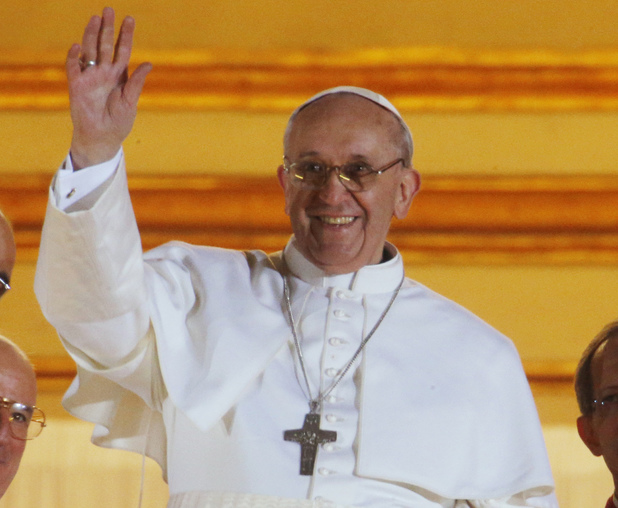
the great hope of Pope Francis

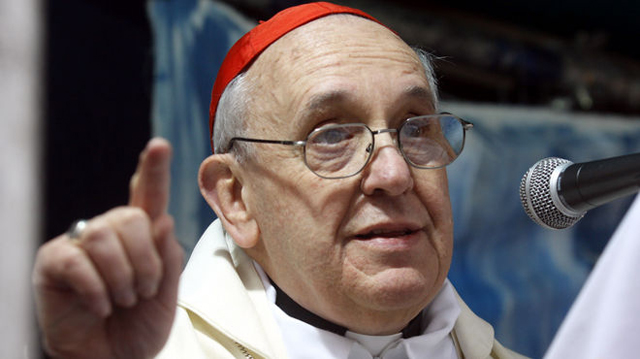
popefrancisSome eight hundred years ago a young soldier reposed in prayer at a wayside chapel on the outskirts of Assisi. It was there that the young man, named Francis, heard and heeded the divine will of God, ‘Go, repair my house which as you see is falling into ruin.’ This moment of great faith and also of intense tribulation for the Church of Christ provides a fitting backdrop to the announcement of Jorge Mario Bergoglio’s election as the 266th Bishop of Rome, with the appellation of Pope Francis.

Bergoglio, until this morning the Jesuit Archbishop of Buenos Aires, presents as an ideal candidate to renew the Church in the present, beset as it is by the ongoing scandal of the sexual abuse crisis and an accompanying collapse of credibility in the public square, widespread persecution in Africa, Asia and the Middle East, the challenge of rapid and aggressive secularisation in the West, and significant issues of church governance that, it must be admitted, have hindered the ability of the Church to respond effectively to these concerns as well as the broader needs of human culture and society.

archbergoglioOf course, it is naïve to assume that any one figure can bring about the conversion that remains the responsibility of the whole body of the Catholic faithful and it can be too easy to either acclaim or criticise those called to a service of leadership from afar while one sits comfortably on their hide. Naïve it would be, too, to assume a simply address of Church structures will provide the necessary medicine for the afflictions suffered by the Church on account of its members who, like the first disciples, know their poverty of spirit all too well.

Nevertheless, it is true that ‘leadership matters’ and it arrives with the responsibility to take up these great challenges with courage and the conviction that the current woes of the Catholic Church are not a fulfilment of its nature but a contradiction to its mission as the ‘universal sacrament of salvation’ (Lumen Gentium 48). In other words, leadership brings with it the demands and gift of hope, a hope that brings the future into the present and affirms that this moment of history, filled as it may be with trial and tribulation, does not exhaust all possibilities.

Doubtless much ink will be spilt about Pope Francis and his capacity to realise these possibilities in the years ahead. Already there has been a positive assessment for his acute concern for the poor, a virtue that is indeed evident throughout his episcopal career in Latin America, and for his prayerful acceptance of the responsibilities of the Petrine Office. The inspiration of Bergoglio’s papal name in the mendicant saint of Assisi augurs well for a pontificate marked by a focus on a renewed mission of evangelisation which responds to the poor, to poverty in its social and spiritual dimensions.

Who are these ‘poor’? There are those poor in spirit who have yet to hear the Good News of the Risen Jesus, sent from the Father and encountered in the Spirit; there are the poor in discipleship who have heard but not received this living Word within the depths of their life; there are the poor in circumstance who cry out for the bare necessities of life and who make a claim on the Church’s faith, and there is the poverty of the Church itself which remains ever incomplete in its human dimension, in need of conversion to the source of its life.

BergoglioThe credentials of Pope Francis to take on this missionary enterprise are certainly in evidence. In an interview with Vatican Insider, a media service run by the daily newspaper La Stampa, Bergoglio called the Church to return to its foundational ‘memory’, the memory of Christ and the urgency of his Gospel message. Reflecting on the current Year of Faith, the then-Archbishop reminded his audience that faith is not given to us for our own consolation or comfort but as a gift for others:

Benedict XVI has insisted on the renewal of faith being a priority and presents faith as a gift that must be passed on, a gift to be offered to others and to be shared as a gratuitous act. It is not a possession, but a mission. This priority indicated by the Pope has a commemorative purpose: through the Year of Faith we remember the gift we have received. And there are three pillars to this: the memory of having been chosen, the memory of the promise that was made to us and the alliance that God has forged with us. We are called to renew this alliance, our belonging to the community of God’s faithful.

It is memory of our election, the promises of God and our communion with Him that reminds us who we as Church. Like those who suffer amnesia, the Church, without this fundamental threefold memory, loses its sense of self, its very identity, and so its purpose. The Archbishop went on to remark,

We need to avoid the spiritual sickness of a Church that is wrapped up in its own world: when a Church becomes like this, it grows sick. It is true that going out onto the street implies the risk of accidents happening, as they would to any ordinary man or woman. But if the Church stays wrapped up in itself, it will age. And if I had to choose between a wounded Church that goes out onto the streets and a sick withdrawn Church, I would definitely choose the first . . .

Bergoglio identifies the need of the Church to resist insularity, to move from ecclesiolatry to a new evangelisation, from fear of the world’s unknown dimensions to an embrace of Gospel life within its very domain. This is the path of conversion that will bring renewed vitality and hope to the Church catholic. It is ‘on the street’ and in the public square that the Church will regain its innocence and vigour; it is in world-engaging mission that the Church grows young.

conclave2013Finally, the election of a Latin American to the papacy, the first non-European pope for twelve centuries, recalls for the Church its essential universality, a ‘Pentecostal’ breadth and diversity that implies a universality of mission, a mission not only to the West but ad gentes, to the East and global south. While differing in specific contexts, there is a continuity of global need that must enliven the Church’s faith: pressing issues of social and economic injustice, including gross exploitation of women and children, the endangered rights of the unborn and the voiceless, the victims of war and poverty, the spiritual imprisonment of those without hope.

As shepherd and teacher, leader and servant of the Church’s faith, we pray that Pope Francis will be given the courage and succour of the Holy Spirit to fulfil his great responsibilities. As Easter approaches may he, like the first Peter, grow firmly in his role as witness and messenger of Easter faith and proclaim Christ as Risen in humble service of the Church and to the world.

praying in faith

”Pray without ceasing’ (1 Thessalonians 5:17)

The season of Lent brings renewed focus to the significance of prayer for growth, a practice supported by fasting and that leads us to almsgiving.

It is not novel to suggest that prayer belongs to the essence of Christian life and is essential to the integrity of Christian leaders. Curiously, however, we find few opportunities in our parishes, schools and beyond where prayer is taught and can be learned.

prayerAlthough a life of prayer grows principally through its practice, that is by praying, it is also nourished by an understanding of what prayer involves and awakens us to as we do it. When we understand what we are doing when we are doing it, a new intentionality and fresh desire is brought to our prayer, not only in the setting of the Church’s liturgy but throughout the breadth of our Christian life.

Indeed, in the Gospels we find the disciples eager to learn the way of prayer after being drawn into its circle by Jesus’ example. ‘Lord, teach us to pray’ they ask (Lk 11:1). In the Catechism we find recognition as well of prayer as a practice that is learned, with a call for formation and education in ongoing ‘schools of prayer’ (CCC#2689). While always a gift of the Spirit, prayer presupposes effort by the disciple (CCC#2725) for ‘we do not know how to prayer as we ought’ (Rom. 8:26).

While it can be approached in so many ways, I have come to experience prayer most powerfully as an expression of our radical dependence on God as the source of our life. What is more, it is because of this dependence on God, and not despite of it, that prayer is at the same time the overwhelming (even confronting) experience of our own humanity at its depth, in its fundamental orientation towards God.

mosaicWe learn this much from ‘the master of prayer’, Jesus of Nazareth who is, as St Paul describes, ‘the revelation of the children of God’ (Rom. 8:19). It is Jesus who unveils in his own filial piety our destiny in God, revealing communion with ‘our Father’ not simply as a ‘religious’ venture, an extrinsic performance detached from ourselves, but a calling in accord with the imperatives of our own nature. In short, prayer is not only entry into the divine life but also the discovery of our authentic humanity by that encounter.

As Christians it is essential to note as well that we do much more than merely ‘follow’ or imitate Jesus in prayer. In the act of prayer we, in fact, enter into Jesus’ own prayer to the Father as the Gospel makes powerfully clear: ‘God has sent into our hearts the Spirit of his Son who cries ‘Abba, Father’ (Gal. 4:6, Rom. 8:15). It is the Spirit of Christ who prays within the heart of each disciple.

Hence, in the person of Jesus we come to see not only the extent to which prayer shapes the heart we bring before God but discover our prayer as an entry into His communion with the Father. Prayer is, as the Eucharistic doxology proclaims, ‘through Him, with Him and in Him’. To pray is to allow ourselves to be ‘caught up’ in the prayer of Jesus who is alive in us through the Spirit to the Father.

In coming to an appreciation of prayer’s meaning and possibility, the reflections below might further shape your own imagination and practice of prayer. They are generously provided by a friend, a monk, who has dedicated his life to this ceaseless communion with God.

gospel1.  Prayer rises in our hearts when we listen to the words of the Gospel, meditate upon them, and strive to live as faithful disciples of Christ. In the ‘Life of Antony’, we catch a glimpse of the way the early Christians prayed. Every day, they would go to their local church in order to listen to the Scriptures and pray together. On Sundays, they would celebrate the Eucharist. Then they would go back to their homes, carrying in their minds the words of Scripture they had heard read in the church.

Throughout the day, whether they were walking along the road, working in the fields, preparing a meal, or conducting business, they would recall the texts and meditate on them. This was for them a ‘school of prayer’: the continuation of the liturgy in their daily lives.

2.  When we attend to God’s Word in the context of our daily lives it has the power to speak to our hearts and lead us in the way of discipleship. It also has the power to keep the fire of prayer and love burning in our hearts. Abba Joseph, one of the early Egyptian Desert Fathers, used to say: ‘If you will you can become all flame’.

It is important that we see prayer as very much part of our daily living. We need to structure into our lives some time when we can be free for listening to God’s Word, prayerful reading of the Scriptures, and quiet contemplative prayer. However, perhaps the most vital element of our prayer life is the way that prayer overflows and becomes a part of the rest of our lives. Prayer will tend to become stilted and artificial if it is confined only to set times and places.

sb3. Our relations with other people are an intrinsic part of our prayer life. The gentle stirring of love that we feel in our hearts during times of prayer tends to dry up if it is not given scope to reach out concretely to others in our normal, daily contact with the people who share our lives. Love needs to be exercised if it is to grow strong. John in his letter says: ‘How can we love God, who we cannot see, if we do not love our brothers and sisters, who we do see?’ (1 Jn 4:20). We need to trust the love that God places in our hearts and learn to reach out from there to others.

4. Prayer gives us the opportunity to recognise our own limitations: weakness, failure, brokenness, temptation, and even sin. It demands real faith to stand before God and believe in his love. We need the courage to say the prayer of the Eastern monastic tradition which is ‘Lord Jesus Christ, have mercy on me a sinner.’  When we allow God to enter the messiness of our lives, then grace is able to act and, finally, growth can take place.

This is sage advice not simply for a life of ‘prayers’ but a more encompassing life of prayerfulness. In listening to the Word, allowing that Word to enter and shape our daily living and intentions, as suggested here, we begin to understand and experience the depth of communion that prayer enables.

As a final note, over the past few years it has struck me that ordained and lay leaders of communities can desire that their people change while they themselves remain the same. The primacy of prayer in the journey towards God and one another applies to all and admits of no exception.

Without prayerfulness there cannot be growth and without growth there cannot ultimately be fullness of life in Him. Our communities will thrive in the Gospel and its mission to the extent that we pray.