the Spirit of the conclave

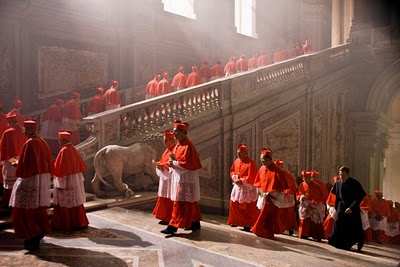
With the collegeofcardinalsconclave set to begin tomorrow (12 March), it is worth reflecting on one of the underlying themes of these past weeks, or one of the ‘issues under the issues’ as the historian John W. O’Malley would put it.

The  issue is the role of the Holy Spirit in the life and renewal of the Church. Of course, following Pope Benedict XVI’s abdication, it is the Spirit’s guidance of the Church in the election of a new pontiff that is at the heart of our prayer at present and for good reason.

As a religious and political institution, the papacy has shaped and re-shaped human history in innumerable ways both positive and notorious (compare the papacy of Gregory the Great in the sixth century and his historic mission to the people of Anglo-Saxon England, worshipping as they were ‘stocks and stones at the edge of the world’ to that of Benedict IX in the eleventh century whose election, the result of systematic bribery on the part of his father, brought only violence, debauchery and shame to the See of Peter).

This uneven history of the papacy and its influence on both the Church and world underlines the importance of the upcoming conclave and the Spirit-led discernment that calls to be exercised by the cardinalate.

The new pontiff will not only need to meet the challenge of the sexual abuse crisis, a scandal that continues to raze the credibility and mission of the Church globally, but also the plight of persecuted Christians in Asia, Africa, and the Middle East, the yet-incomplete articulation and direction of ‘the new evangelisation’ aimed principally at the West, and the abiding issues of internal reform, including that of the Roman Curia, that call for address.

While it would be comforting and reassuring to assume that the Spirit’s direction will, and has been, a full triumph in the Church, history has told us otherwise. Indeed, on the subject of papal elections, the then-Cardinal Joseph Ratzinger made the following, now widely-publicised, remarks on the influence of the Spirit on such an occasion:

I would say that the Spirit does not exactly take control of the affair, but rather like a good educator, as it were, leaves us much space, much freedom, without entirely abandoning us. Thus the Spirit’s role should be understood in a much more elastic sense, not that he dictates the candidate for whom one must vote. Probably the only assurance he offers is that the thing cannot be totally ruined . . .

The Cardinal went on to conclude with stark realism,

There are too many contrary instances of popes the Holy Spirit obviously would not have picked!

Erroneous decisions on the part of the Church, certainly not restricted to the realm of candidates for the Petrine Office, raise the question of the precise nature of the Spirit’s role in ecclesial discernment and decision-making for while Scripture affirms that the Spirit will indeed ‘guide us into all the truth’ (Jn 16:13) it ostensibly does not offer the community of disciples immunity from mediocrity or even calamity.
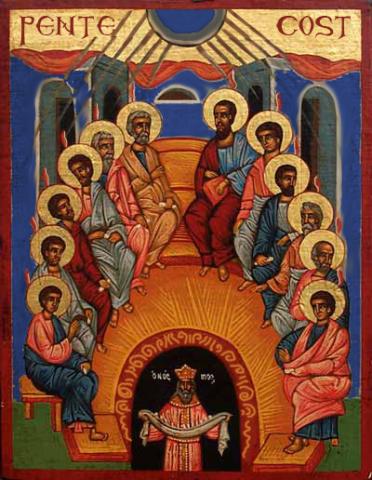
NTChurchCertainly, in the Acts of the Apostles the Spirit does appear to intervene at chosen moments in an immediate and decisive manner, leading the nascent Church towards what it should be and what it should do. For instance, we witness the power of the Spirit at Pentecost to bring about a reconciled diversity among Jesus’ disciples and later it is the Spirit who guides the Church into an embrace of the Gentiles, a decision which the apostles and elders attest as having ‘seemed good to the Holy Spirit and to us’ (Acts 15:28). For Luke, the author of Acts, the power of the Spirit is at work, guiding and directing the early Church to its destination.

However, other New Testament texts, the dramatic history of the Church and our own personal experience suggest that the voice of the Spirit is not always so clear. The diverse manifestations of the Spirit as expressed in the New Testament communities (1 Cor. 12:28-31, Eph. 4:11-13, Rom. 12:6-8), while a profound gift to the Church, indubitably shape the later Johannine emphasis on the need of discernment to ensure that what has been received, experienced or testified is indeed truly of God. The First Letter of John, clearly acquainted with the experience of community discord, warns, ‘Beloved, do not believe every spirit but test the spirits . . . from this we know the spirit of truth and the spirit of error’ (1 John 4:1,6).

rubleviconIndeed, it is ironic that the subject of the Spirit, which ecumenical theology affirms as the principal of unity within the Church, has been at the root of some of the most significant divisions in the history of Christianity – the split of the East and West over the Spirit’s procession from the Father and/or the Son, and the Spirit’s relation to Scripture, tradition, and the sacraments including hierarchical ministry so bitterly contested at the Reformation.

What we can draw from this mixed history and the necessity of the Spirit’s discernment is that the gift of the Spirit – in all of its ‘elasticity’ as Cardinal Ratzinger puts it – does not so overwhelm the Christian that it alleviates or excuses them of the responsibility to evaluate, reflect and decide in faith but rather invites and even necessitates their active participation in that process of decision. This much is clear from the story of the primitive Church as described above (to open the Gospel of Christ to the Gentiles or to restrict proclamation of the Messiah to the House of Israel?)

In other words, the gift of the Spirit needs to be actively and constantly received by the community of the Church as it pilgrims through history, a ‘reception’ that involves the activities of listening, understanding, applying, and so truly ‘making one’s own’ the Spirit of faith and grace so that the community can be faithful to the person and message of Jesus.

The necessity of active human involvement in the Spirit-led decisions of the Church explains not only the emphasis of our tradition on being ‘docile’ to the Spirit (a spiritual tenet emphasised by Benedict XVI himself in his farewell address to the College of Cardinals) but also opens the real possibility for the non-reception of the Spirit by the Church community. This failure to heed the Spirit is evidenced not only in the grand crises and scandals of the past and recent history of the Church but also in the more ‘ordinary’, everyday failing of Christians to live the full meaning of their God-given discipleship.

The Australian theologian Ormond Rush concludes of the Church and the Spirit, ‘the human receivers of revelation are to be portrayed as active participants in discerning the way forward, co-deciders with God’s Spirit’ (cf. Rush, Still Interpreting Vatican II, 87). This ‘co-decision’ with God’s Spirit is a capacity and responsibility not simply of those who exercise authority in the Church but for the whole ecclesial body which shares the task of receiving the one Spirit, the ‘Spirit of Christ’ himself (Rom. 8:9), into its life, structures and decision-making.
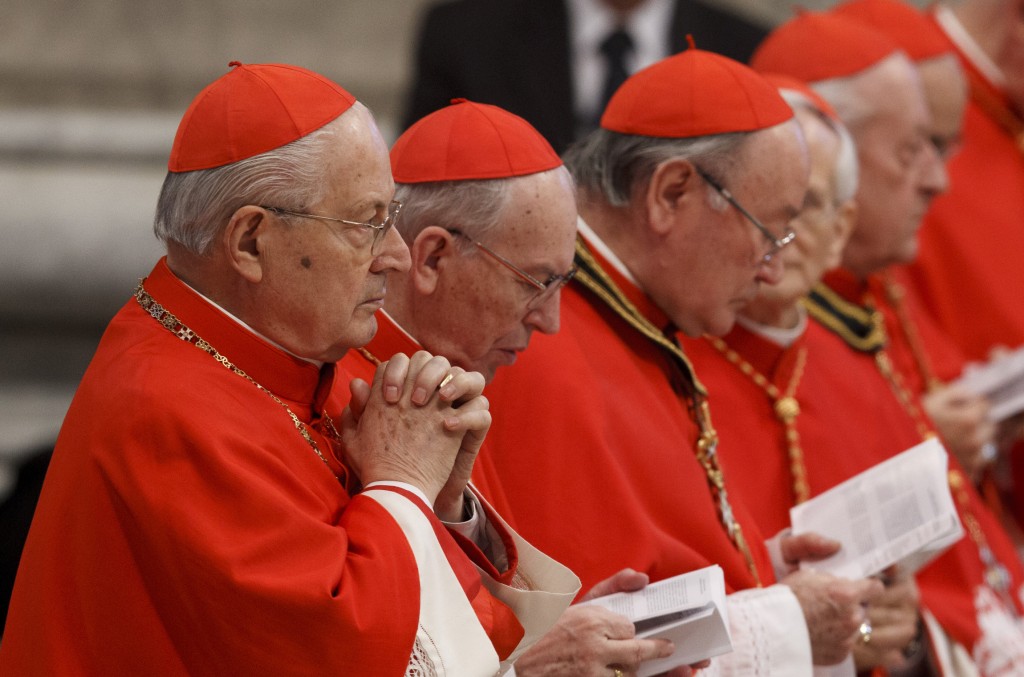
CardinalsReturning to the impending conclave, though the abiding presence of the Spirit in the Church is that which ensures the Church a future as the ‘pillar and bulwark of the truth’ (1 Tim. 3:15), it remains the task of the cardinal-electors, as individuals and as a college, to be open and receptive of the Spirit’s promptings in selecting ‘the first among the successors of the apostles’ to guide the Church into this future.

As for each and every Christian, what is essential to the cardinal’s reception of the Spirit is their own conversion for it is only in holiness that one can recognise the Spirit who is holy. There can be, then, no naïve self-complacency about those Spirit-led decisions which shape our life of faith, whether they are made in the splendour of the Sistine Chapel or the more familiar surrounds of our own dioceses and parishes with their own intimate concerns and hopes for the future. It is only our conversion that enables authentic discernment, a faithful recognition, of the Spirit of Truth as it calls us to respond. As the 14th century theologian Gregory of Sinai concludes, ‘the understanding of truth is given to those who have become participants in the truth – who have tasted it through living.’ We pray that the cardinal-electors will choose well and in good faith.


religious life as narratives of holiness

waterOn the 6th March, 2013, around 150 leaders of Religious Institutes gathered at the Novotel, Parramatta, for the Conference of Leaders of Religious Institutes (NSW) Conference 2013.

The theme of the conference was ‘religious life in the post-modern world’ and I was privileged to address leaders and leadership teams on the purpose and contribution of religious life today.

The conference took in a variety of themes centred on religious life: the Church as sacrament of God’s mission, the multidimensions of evangelisation and the living symbol that religious life remains today in a culture that, while often very secularised, remains sensitive to signs.

Prominent documents to consult on the varieties and purpose of religious life include the 1965 conciliar decree, Perfectae Caritatis, and John Paul II’s 1996 Apostolic Exhortation, Vita Consecrata.

These were my remarks at the gathering:

‘Narratives of Holiness’ for the Church and world

candleIn the first instance, religious communities, both apostolic and contemplative, tell a particular story about the way in which God’s Spirit has been manifest in history. Secondly, religious life tells as well a story about the human response to such divine irruption. The many varieties of religious life reveal that Christian discipleship is possible even in this way and recalls for the Church that diversity can be an expression of God’s life too.

By the narratives of holiness it provides, religious life nourishes not only the vocation of those called to live radically the evangelical counsels but nourishes the hope and imagination of the wider Church as to how holiness might be exercised. As bearers of charism and grounded in the original spirit of their founder(s), religious congregations show forth the accessibility and concrete shape of a life centred in God’s gifts; in turn, they invite all members of the Church to envisage what God is asking to be realised and hence what they might live for.

I consider religious life essential to the Church also in the way in which such life stretches beyond but is nevertheless active within the local church, that is, the diocese. Of course, my role as a pastoral planner for a local church has brought into focus the centrality of parishes as the ordinary experience of communion for the vast majority of Catholic people.

However, religious life complements this particular experience of communion with witness to the universal dimension of the church’s life. Religious life, as we know, as a response to the Spirit, cannot be completely merged or contained within traditional diocesan structures. Marked by an intense desire to live the Gospel fully and radically in genuine service to the world, religious life possesses the ability to keep individuals and communities open to the essential universality of the Church and its truly global concerns.

The presence of religious within a diocese, for one, can assist to ensure that local communities do not become inward or self-absorbed, focused on their parish facilities rather than their engagement in God’s mission. In their universal character and tensive ecclesial location in the midst of the local church, religious institutes work against the absolutisation of the parochial and so support the genuine ‘catholicity’ of the Church’s identity and mission.

Religious Life and the New Evangelisation

marymackillopI would further suggest that the apostolic character of many religious congregations will play an important role in maintaining the integrity of the ‘new evangelisation’ which continues to unfold on both a magisterial and local level.

I approach the contemporary situation in this way: since the Second Vatican Council, we are well aware how close to the surface questions of Catholic identity lie. The danger of course is that ‘the new evangelisation’ and its more apologetic tendencies foster a narrow focus on Catholic identity couched primarily in terms of opposition to the world.

This way of being Church – permeated as it is by a certain apocalyptic, dualistic sensibility – can result, unhelpfully, in self-affirming Catholic subcultures which are unable to engage or dialogue with the surrounding culture.

(Note that this danger was on show in the wake of Pope Benedict XVI’s abdication – while the pope’s resignation unleashed wide ignorance and some anti-Catholic bigotry in the secular media it also produced an ample supply of Catholic triumphalism with little genuine conversation between the two opposed tendencies.)

As an alternative to this narrow politics of identity, religious life is well placed to offer the ‘new evangelisation’ a model of outreach characterised by genuine service to the world without the reactionary and oppositional spirit to which other emerging groups may be vulnerable. In other words, religious life can model a mature evangelism, a truly contextualised faith which engages the surrounding culture while losing nothing of its distinctive Christian identity.

Religious Life and Lay Discipleship

SB054Finally, religious life continues to nourish the discipleship of lay men and women in a variety of ways. In addition to the ‘narratives of holiness’ which religious life offers to the whole Body of Christ, we have also seen the emergence of formal collaborations including the creation of new juridic persons among religious institutes in which laity have assumed governance responsibilities while allowing religious to re-engage more immediate and original expressions of service.

Of course, laity and religious collaborate in many other ways, including through ‘associations’ that give expression to a more inclusive imagination of holiness, and therefore a more inclusive notion of Christian community, recovered by the Second Vatican Council.

Beyond structured initiatives, however, religious life can foster lay discipleship through its work at the margins with those who may never feel comfortable within the structures of the Church. As noted by Australian theologian David Ranson, religious life has shown a profound ability to mediate between a given social context and the wider Catholic community – in the case of schools, hospitals or works of justice, between the lives of students, parents, and families who may not be connected to parish or regular practice and the normal life of the Church which is the bearer of the Word and sacramental encounter. This mediating role of religious life, its carriage of the meaning and experience of Christian faith to contemporary culture, is precisely that work of evangelisation to which the entire Church is called.

Conclusion

By a life that animates the local church but stretches beyond it, religious life bears witness to the essential universality of the Church’s identity and mission. In its proven ability to engage the culture with a mature and discerning spirit, in its continued work with and support of lay men and women through its apostolates and associations, and in its variety of charismatic life, religious life is positioned well to awaken and support the Church in its mission of evangelisation which cannot be exhausted by any single historical form.

we can all learn from Boston

That is not something we could have said in 2002. After all, it was in that Archdiocese that the scandal of the sexual abuse crisis, including serious maladministration, broke across the front pages of the Boston Globe, sending the American (and universal) Church into a crisis which continues to impact the life and morale of individuals, parishes, and religious communities today. At that time, Boston could not be said to have modelled anything for the Church.

disciplesinmissionMore than a decade later and the reform in Boston continues under the leadership of Cardinal Sean O’Malley, though now with a particular focus that lies in its future. This year has seen the commencement of the first phase of Boston’s pastoral plan, ‘Disciples in Mission’.

What’s the essence of the diocese’s plan and what is its relevance for the rest of us? Boston is focused on the positioning of parishes more solidly for ‘the New Evangelisation’, meaning renewed outreach to ‘our brothers and sisters and drawing them more fully to Jesus Christ’. This is pretty much the focus of the magisterium – a concentration on the baptised who have lost a living sense of faith, without denying the importance of the traditional mission ad gentes. 

(You can think of it this way: the mission ad gentes, ‘to the nations’, is for those who ‘Don’t Know, Don’t Care’,  the mission of the new evangelisation is for those who ‘Know, but Don’t Care’).

In the name of renewal, the Diocese is reorganising all of its 288 parishes into approximately 135 ‘collaboratives’. Most of these parishes will retain their own canonical identity and integrity, with their own name, assets, liabilities and financial obligations but will placed under the governance of a single priest (or ‘pastor’ as they prefer to say in the U.S.). This approach is described locally as ‘twinning’ or ‘clustering’ parishes.

So, why this radical restructure across the Diocese? Boston is reorganising its life in the pursuit of one goal: to enhance its mission of evangelisation.

By introducing ‘collaboratives’, Boston notes the following gains:

  • parishes can unite to work together in pastoral actions based on a common vision;
  • the resources of parishes can be shared for the mutual benefit of all;
  • a greater shared consciousness can be fostered of the need to bring people back to an active practice of the faith;
  • a renewed focus on outreach to others will be supported by resources and training in the theology and practice of evangelisation, training in parish leadership and sound management (for both priests and lay ministers who will now work in two-parish or multi-parish groups).

evangelizationIn my experience the greatest obstacle to this type of bold renewal of pastoral life is neither finance or facility but a failure to recognise the mission of evangelisation as the central purpose for which all of our communities exist.

In other words, a lack of focus on our Christian mission leads to complacency and the isolation of our ministries and communities, one from another. Communities that are settled in an ‘exclusive unity’ will not grow, spiritually or numerically. This is because they will have neglected the central Gospel imperative to ‘go and make disciples’, a mission that calls for the uniting of gifts and combined witness.

The urgent need to focus beyond what we have, beyond ourselves and beyond even our own preferences, could be put this way: ‘If your parish or community closed today, would anyone but its members notice?’

We must recognise our existence is not for ourselves and organise our life and our structures accordingly. We exist for mission, for the making of new disciples and promoting growth in all those who follow Jesus. We can all learn from Boston and be challenged by its bold renewal. If we do, we have the opportunity to offer stronger, combined witness in faith, better manifest our identity as a communion, and realise a more effective mission than that which could be achieved on our own.

youth ministry in an adult church

I once heard youth ministry colourfully described as a ‘bandaid on a bleeding artery’. While those committed to the evangelisation and support of youth might resist such a diagnosis it nevertheless points to the fact that outreach to young people cannot be thought of apart from the health of the adult Church.

wydIt strikes me that if the adult Church is haemorrhaging – because of poor preaching and liturgy, a thin sense of belonging or a lack of support for instance – then there is little prospect that young members will be sustained in their faith as they mature. Young people graduate from the parochial youth group or youth movement much faster than we think. This leads us to consider what we are offering young people in our communities over the long term, for the flourishing and growth of their faith. All you need do is look at your adult Church for a sense of what’s coming.

There are other good reasons why nurturing the faith of adult Catholics is critical, even essential, to meaningful youth ministry in our parishes.

Adult Catholics witness to younger Catholics what a mature faith looks like. If we want to raise the standard of discipleship in the Church then adults who are prayerful, steeped in Scripture, theologically literate, articulate and committed to justice must become the new norm. Only then will the faith of young people naturally aspire to more than intergenerational conformism.

Naturally, we want young people in our communities for their vibrancy and energy as well as the tangible hope they bring for a Church we hold precious. However, we need to acknowledge that young people will not be attracted to parishes or communities that show no energy or dynamism in themselves.

prayerGiven the above, there is an argument for a renewed emphasis on adult catechesis in the local community, in addition to the traditional role of children’s and youth ministry in parish life. In my experience there is too little focus on adult formation in our parishes (apart from what is assumed to be taking place when homilies are preached or in the sign value of the sacraments).

In a well researched book on faith formation, Jane Regan argues that the strongest rationale for a focus on adult catechesis, as a necessary complementary to a focus on youth, is the mission of evangelisation:

It is the link between evangelisation and catechesis that provides the clearest mandate and the most convincing rationale for focusing on adults. Adults need to be continually formed in their faith so that they are able to fulfil their responsibilities in the mission of the church (Regan, Toward an Adult Church, p.24)

Of course, the responsibilities of adults include the evangelisation of youth. Without their catechesis, the formation of adults in faith, they are not likely to connect what takes place in liturgy with mission, the connection between faith practices and their life remains obscure, and so the connection between discipleship and evangelisation will be lost. In short, adult disciples need catechesis to be evangelisers, which includes being effective witnesses to the young people in their parish community and everyday lives.

So if you are involved in youth ministry, adults need to become an integral part of the overall vision of your parish if your ministry is not to be merely a temporary ‘moment’ in a longer story of unrealised potential.

If we want youth ministry to make a lasting difference we cannot afford to take our eyes off the adult members of our community which they will one day become.