
Time became something I could hold, quite literally, when I received my first watch at the age of eight, a humble Casio F91W.
Clad in a simple black resin case, with its crisp digital display and softly glowing “light” button, it offered not just functionality but a kind of wonder. That subtle green backlight, switched on with a press, felt like a secret known only to my wrist. The built-in alarm rang bright and clear, and best of all, it was mine to set. It made me feel as if I had received a piece of grown-up responsibility, one beep at a time.
In the years since, I’ve been fortunate to develop a deeper appreciation for watches – especially the mechanical kind. The intricate choreography of gears, springs, and levers inside a movement continues to fascinate me. There’s something magical about how a mainspring’s stored energy animates a balance wheel into steady oscillation and timekeeping, all within the confines of a 39mm case. Whole worlds of engineering, history, and design are tucked beneath a sapphire crystal.
While a quartz watch, powered by battery, achieves remarkable efficiency and near-perfect precision, it is, in a sense, outside of the need for human touch and is largely indifferent to the presence of its wearer. In contrast, a mechanical timepiece lives through motion or else requires winding by hand. It must be worn, carried, and kept close – in other words, it is sustained by connection.
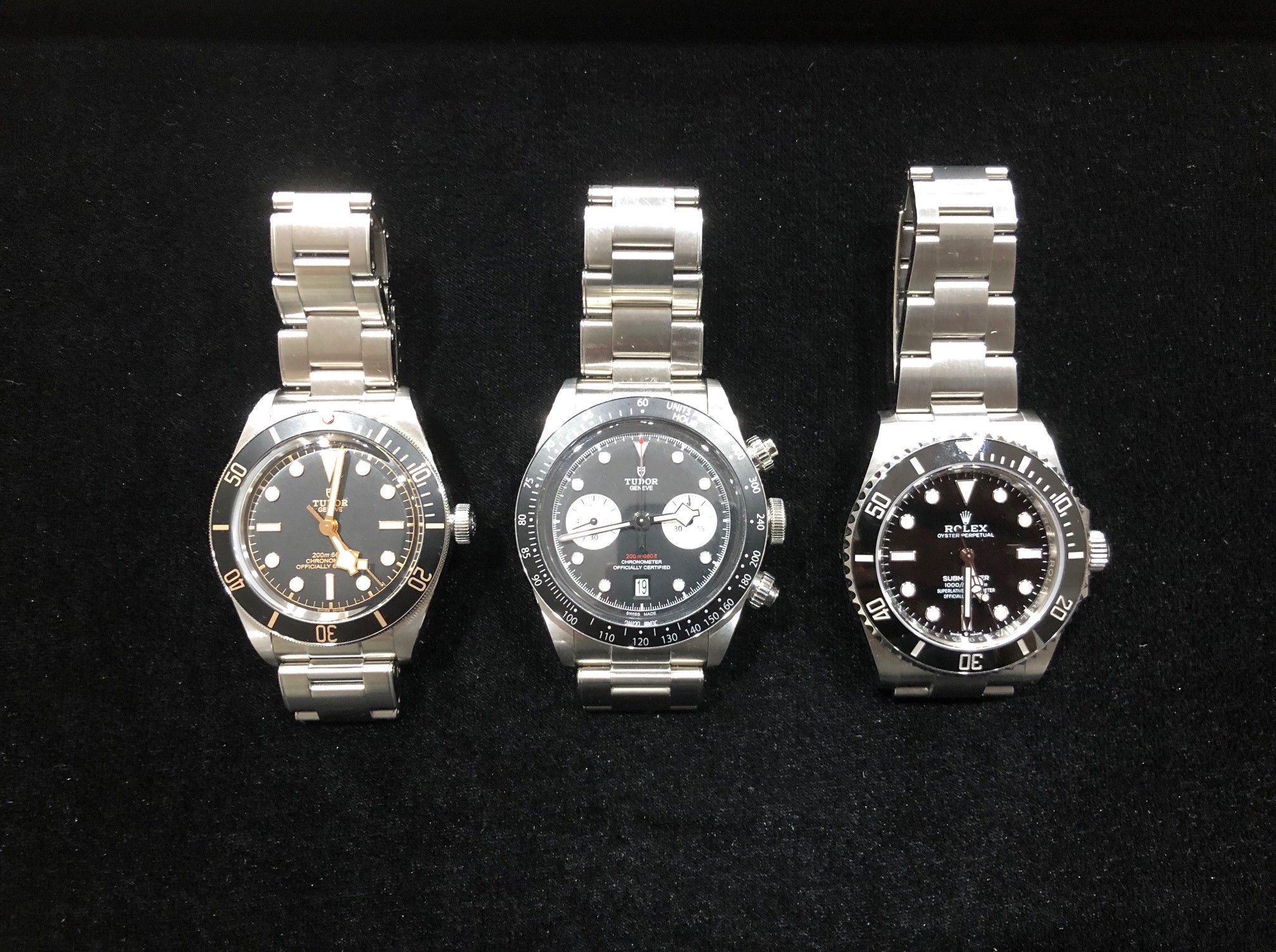
Though an amateur collector, I’ve gradually assembled a modest yet meaningful assortment of mechanical watches, from classic Swiss chronometers to vintage, hand-wound pieces that evoke the craftsmanship and character of another era. Each watch is more than a mere object – each holds its own story and unique provenance.
Looking back on that first little Casio, and the pieces that followed over the years, I value these intricate instruments not merely for telling time, but for teaching me how to treasure it.
We can have a complicated, even fraught, relationship with time. We try to save it, make more of it, and race against it. But the fact is, time moves with or without our attention and passes with or without our consent.
Not only are we unable to master time, but we are often absent to it altogether. As the French philosopher Blaise Pascal observed in his Pensées, “We never keep to the present… We anticipate the future as too slow in coming… or we recall the past to stop it from escaping.” His words speak to a perennial human ache that St Augustine named centuries prior: our hearts are restless in the present. We are drawn forward by anxiety, pulled backward by nostalgia – anywhere but here, where life actually unfolds.

How, then, are we as Christians called to inhabit time? When I entered the Church I came to appreciate its understanding of time not as something to be resisted, outrun, or escaped but as something to be received, reverently and attentively. As the Psalmist prays, “Teach us to number our days, that we may gain a heart of wisdom” (Psalm 90). In the eyes of faith, time is not a burden to be controlled but a gift to be entered into.
Rooted in Scripture and nourished by centuries of tradition, the Church’s meditation on time understands it as sacramental – intimately bound to the mystery of the Incarnation and the unfolding drama of salvation. In Christ, eternity entered time, not to abolish it but to transfigure it, so that each moment might become a meeting place between heaven and earth.
Time, in the Church’s tradition, is not empty or even neutral, but shaped by grace and filled with invitation. As Pope Benedict XVI so beautifully reflects, “Time is not just a succession of days and years, but it is a time of salvation… each moment is penetrated by the presence of God, by His call and His grace”.
As Pascal also wrote of our human condition, “The eternal silence of these infinite spaces terrifies me.” The vastness of existence at times threatens to overwhelm us, perhaps even more so today, when that vastness floods our phones and feeds from every seeming direction. We can be left drifting and unmoored, unsure of where to rest our attention.
Yet it is precisely through Jesus Christ – the Word made flesh – that time is transfigured and drawn into purpose by the potential for encounter. In Him, who we meet in time, the scattered moments of our lives are gathered and redeemed, for “He himself is before all things, and in him all things hold together” (Colossians 1:17).
No longer merely a chronological sequence, time in Christ becomes the arena where eternity is unveiled and the very medium through which we actively participate in God’s plan. Just as the eternal Word of God took flesh in Christ and entered human history, so we are invited to step into time not with fear or futility, but with hope, trusting that each moment holds the potential for grace, communion, and transformation. This profound truth calls us to embrace time not as a limitation, but as a sacred opportunity to encounter God and offer ourselves to the Lord who holds all time. As Thomas Merton puts it, “The whole idea of eternity is that it means that we have enough time to love God.”
Through the art of horology we can be reminded that time is not a force to flee, but a gift to be sanctified. In Christ, time no longer separates us from God, from one another, or even from those we have lost. It unites us.
Seen in this light, a humble watch on the wrist becomes more than an accessory, a mere gesture of style or utility. It becomes a quiet act of faith – a daily reminder that the present is not empty, that each passing second is touched by grace, and that even the smallest moment holds within it the weight of the eternal.
 timeofthechurch