getting started in ministry

planningLast week I met with a diocesan youth minister who was seeking advice on planning for parish communities and better coordinating their activities toward a unified mission. For me it was an opportunity to learn more about the organisation of other dioceses and their parishes which differ quite considerably across the country.

One of the recommendations that I made was that whether you are working within the context of a parish ministry, a religious order, or for a diocese it is essential to put aside some specific time for planning rather than jumping headfirst into frenetic activity.

Gregory of Nyssa, the fourth century Cappadocian Father, warned that the mere appearance of Christian activity and practice does not mean any genuine progress is being made. He likened directionless activity to

. . . those who toil endlessly as they climb uphill in sand. Even though they take long steps, their footing in the sand always slips downhill, so that, although there is much motion, no progress results from it. (The Life of Moses)

Genuine progress demands beginning on firm ground, including the effort to plan, otherwise we risk expending a lot of energy in ministries that make little progress or have little impact. As it has been put, without proper planning, direction and goals, we can be ‘paying people to be nice’.

Here are a few pointers which may be helpful for those just beginning in ministry as well as those further along in experience. These can assist both lay and ordained ministers to make the most of their opportunities and reduce the amount of energy lost to initiatives that are uncoordinated or ill-conceived from the start:

  • windowUnderstand the ecclesial context, history and organisational structure. One of the first things I did, and found helpful, was to request an organisational map of the diocese before all else. One of the advantages of working within the Catholic Church is that there will be a relatively firm structure, that is for sure! A map of these structures and relevant organisations within your diocese, parish, or religious network will help you identify who the stakeholders are, to identify those who link with your work and help you to avoid stepping on anyone’s toes! It is also important to quickly become familiar with the history of the context you are working in. This helps you understand people’s attitudes, opinions and actions in the present. All of this takes time, though after a year or so you should be picking up the ‘lay of the land’. If you don’t have a clear picture of the ecclesial landscape and dynamics you are working in it can be difficult to make genuine progress. After all, you can’t do it alone and need to collaborate with others.

  • Ensure ownership of your ministry by those you report to, as well as the provision of adequate resources to fulfil your ministry. This includes the need for your own ongoing formation. Accountability and governance are not only important dimensions of the Church as a human organisation but a part of the Church’s self-understanding as a theological reality. The Church is structured in such a way as to not only safeguard but to strengthen an apostolic proclamation from generation to generation. This means that those you report to, often an ordained minister, a vicar, a head of a religious institute or perhaps even a bishop, need to exercise oversight and take ownership of the work you have undertaken. Sometimes a helpful distinction is made between ‘responsibility’ and ‘accountability’ – you may be responsible for a particular work but someone ‘higher up the chain’ will be ultimately accountable for it. So regular meetings with your superior are a must. Your overseer also has responsibilities and they should support you not only in rhetoric but also in practical resources. All church organisations should be resourcing their people to succeed, not to fail, so it is important to ask for a budget that allows you to get the job done. If they could have done it for less or without expense, they would not have employed you in the first place! Finally, securing resources for your ministry also means ensuring you are not working in isolation and that you have opportunities to network with others and receive formation and/or supervision of some kind. Working in the Church means working with people and there is nothing more rewarding and challenging than that. Good supervision, networking with others and ongoing formation are essential for your longevity as a leader.
  • Establish a coherent framework for your ministry. Take youth ministry in a diocese for example. Is your ministry going to be parish-based, diocesan events-based, or a combination of these and in what proportion? No one can ‘do it all’ so what will your approach be, your principle message for young people, and what are the three goals you seek to achieve in the first year? Clarifying these basic goals and approaches to your ministry are important. It strikes me that in speaking of a ‘framework’ for your ministry those who take up an existing role often feel an expectation to simply duplicate what was before. However, again, if what had gone before was so successful or sustainable, it is doubtful that your predecessor would have moved on or that the organisation would have employed you to take it up. Once you familiarise yourself with the context and history, have the courage to begin to shape the goals that you discern as critical to the life of your community. You, also, need to own the work if you are to carry it out not only with competence but personal passion.
  • Build a reliable team throughout the planning process yet still assert leadership. As I’ve mentioned before, often Church organisations have strategic plans that no one really cares about other than its authors. No one else feels invested in the plan and so few are likely to respond to its initiatives. When you start out in your ministry, start collecting names and remembering profiles of good people with a proven record for getting things done. Remember, these may not be the people recommended to you by predecessors or the people currently in place! Ask the skilled and capable people you have identified for their views as you plan for your ministry. Not only are you getting wise advice from a gifted cohort but they may also form a future team that can help you turn the vision of your ministry into a reality. By having their say, people become genuine owners of a plan and you are on your way to building and nurturing a reliable team. Keep in mind this does not mean handing everything over to committee – it remains important to lead from the front and it is indeed an old saying that ‘if you want to kill something off send it to committee’. Work towards a style of leadership that is genuinely consultative but is unafraid to make decisions and exercise leadership when called for.

There are many other dimensions of good planning in ministry and while few of us, including myself, manage to apply or appropriate them all, it is helpful to have them before us as a resource for future thinking.

greatgrace2013For those interested in further reflection on ministry, especially since the Second Vatican Council, the Sydney Archdiocese is hosting the “Great Grace” conference next month. It is well worth attending if you can. I’ll be there speaking on the subject of “co-responsibility” and you can read my abstract and those of others here.

As the landscape of ministry develops across our Church, I will be suggesting that it is indeed possible to affirm the integrity of ministry by the non-ordained and uphold the unique charism of the ordained without compromise or a diminishment of either. As so often happens in the Church, the practice of co-responsibility is outpacing the theology and Church policy in this area. Yet this does not necessarily mean a distortion is taking place. In fact, it can herald development that is authentic to our tradition, including our self-understanding as a ‘communion’.

I hope to share more reports on the Conference and reflections on ministry in posts to come.

money money money

dolan

This week I read an interesting article by Cardinal Timothy Dolan of the Archdiocese of New York. You can read the full version here.

Dolan is a prominent figure in the American Church and a rising star in the universal Church, having made a big impression at the recent conclave (a journalist pointed out that if the cardinal-electors had elected Dolan as pope the other 5,000 bishops of the world might as well have taken the next 15 years off, because they’d never be seen or heard from again. In short, Dolan is incredibly articulate and he also doesn’t have an “off” switch).

Dolan’s article stood out because it provides a helpful insight into the complex issues involved in administering a diocese. Among other things, he underscores the need for parishes to support themselves financially (i.e. pay the bills) and to plan responsibly for their future life.

It makes for good reading. Whether you’re an ordained or lay minister, pastoral life coordinator, finance committee or pastoral council it provides a ‘bigger’ picture of Church than is often kept in view. While all dioceses and parishes differ in their financial resources and arrangements, there are a few points worth noting in Dolan’s article for all Catholic communities.

1. As a general rule, dioceses cannot be expected to carry parishes that cannot carry themselves.

coinIt’s simply unsustainable. Think of your typical (if there is one) American, European or even Australian diocese. There are probably more churches than needed (perhaps stemming from an earlier ‘one village, one parish’ approach) and attendance is likely declining which diminishes financial contributions as well (unless those who remain pick up the slack). Meanwhile the costs of church maintenance continue to increase as historic buildings and facilities degrade. Obviously dioceses do not enjoy an endless supply of funds and risk the patrimony and viability of other ministries if it were to prop up every parish in need. Most dioceses expect their parishes to be largely self-sufficient for these reasons; religious orders usually expect their regional communities to do the same.

It was interesting to read in Dolan’s piece that the Archdiocese of New York has established Inter-Parish Financing (IPF) which enables stronger parishes to aid those in need. This seems like a good idea in principle, a form of distributive justice, just as the Vatican itself redistributes finance from established churches to developing ones. However, it appears from Dolan’s remarks that the IPF has not proven sustainable over the long term and needs reform in their context. Keep in mind that the NY Archdiocese also carries the costs of the upkeep of a great number of schools which is not the scenario for all dioceses. The upshot for Dolan’s archdiocese has been an operating deficit which he intends to address through the measures he outlines in the article (NB: the operating budget of the NY Archdiocese  is $87 million which is far beyond the reality of most Australian dioceses!).

2. Dioceses balance significant demands which are not always recognised.

parishWhat do dioceses do with the financial contributions of parishes and its investment income? Dolan’s archdiocese is typical in providing pastoral services and resources that parishes cannot provide for themselves, at considerable cost.

There are the expenses of training seminarians and deacons for pastoral ministry, the employment of chancery staff, the financing of social support services not only for Catholics but for the wider community as well (think of our own CatholicCare closer to home), the need to support adult faith education, family and liturgical support, human resources and legal advice for parishes, the support of schools and the need to provide adequate housing for retired priests as well as healthcare, marriage tribunals, evangelisation initiatives, and loan facilities for the establishment of new parishes and the maintenance and upgrade of existing ones. The list goes on. Again, this makes it all the more important for parishes to fund their own activities to the extent that they can so that all can benefit from the greater resources that a diocese holds in trust.

3. Church revenue is a function of the quality of community life

dioceseWhile not addressed in Dolan’s article, it is a well-established fact that dynamic and missionary parishes attract larger and more consistent financial contributions than staid or listless ones. People contribute their time and money to communities that are life-giving, intentional in their mission and that value their belonging in explicit and tangible ways. People also contribute to communities that have transparent, credible and accountable leaders. It is no surprise that the crisis of legitimation experienced by the Church in the wake of the sexual abuse crisis in particular and poor pastoral practice in general has resulted in a weakened sense of belonging and, with that, a decline in the financial resources available to the Church to exercise its Gospel mission. Want to increase your parish revenue? Become a community that people value.

I’ll be keeping an eye on developments in Dolan’s archdiocese as it is a communicative and dynamic one and will share further news as it comes to light. Dolan’s article underlines sound financial governance as a must for every community of faith.

religious life as narratives of holiness

waterOn the 6th March, 2013, around 150 leaders of Religious Institutes gathered at the Novotel, Parramatta, for the Conference of Leaders of Religious Institutes (NSW) Conference 2013.

The theme of the conference was ‘religious life in the post-modern world’ and I was privileged to address leaders and leadership teams on the purpose and contribution of religious life today.

The conference took in a variety of themes centred on religious life: the Church as sacrament of God’s mission, the multidimensions of evangelisation and the living symbol that religious life remains today in a culture that, while often very secularised, remains sensitive to signs.

Prominent documents to consult on the varieties and purpose of religious life include the 1965 conciliar decree, Perfectae Caritatis, and John Paul II’s 1996 Apostolic Exhortation, Vita Consecrata.

These were my remarks at the gathering:

‘Narratives of Holiness’ for the Church and world

candleIn the first instance, religious communities, both apostolic and contemplative, tell a particular story about the way in which God’s Spirit has been manifest in history. Secondly, religious life tells as well a story about the human response to such divine irruption. The many varieties of religious life reveal that Christian discipleship is possible even in this way and recalls for the Church that diversity can be an expression of God’s life too.

By the narratives of holiness it provides, religious life nourishes not only the vocation of those called to live radically the evangelical counsels but nourishes the hope and imagination of the wider Church as to how holiness might be exercised. As bearers of charism and grounded in the original spirit of their founder(s), religious congregations show forth the accessibility and concrete shape of a life centred in God’s gifts; in turn, they invite all members of the Church to envisage what God is asking to be realised and hence what they might live for.

I consider religious life essential to the Church also in the way in which such life stretches beyond but is nevertheless active within the local church, that is, the diocese. Of course, my role as a pastoral planner for a local church has brought into focus the centrality of parishes as the ordinary experience of communion for the vast majority of Catholic people.

However, religious life complements this particular experience of communion with witness to the universal dimension of the church’s life. Religious life, as we know, as a response to the Spirit, cannot be completely merged or contained within traditional diocesan structures. Marked by an intense desire to live the Gospel fully and radically in genuine service to the world, religious life possesses the ability to keep individuals and communities open to the essential universality of the Church and its truly global concerns.

The presence of religious within a diocese, for one, can assist to ensure that local communities do not become inward or self-absorbed, focused on their parish facilities rather than their engagement in God’s mission. In their universal character and tensive ecclesial location in the midst of the local church, religious institutes work against the absolutisation of the parochial and so support the genuine ‘catholicity’ of the Church’s identity and mission.

Religious Life and the New Evangelisation

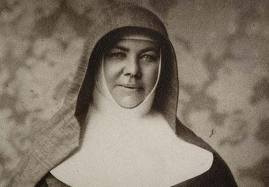
marymackillopI would further suggest that the apostolic character of many religious congregations will play an important role in maintaining the integrity of the ‘new evangelisation’ which continues to unfold on both a magisterial and local level.

I approach the contemporary situation in this way: since the Second Vatican Council, we are well aware how close to the surface questions of Catholic identity lie. The danger of course is that ‘the new evangelisation’ and its more apologetic tendencies foster a narrow focus on Catholic identity couched primarily in terms of opposition to the world.

This way of being Church – permeated as it is by a certain apocalyptic, dualistic sensibility – can result, unhelpfully, in self-affirming Catholic subcultures which are unable to engage or dialogue with the surrounding culture.

(Note that this danger was on show in the wake of Pope Benedict XVI’s abdication – while the pope’s resignation unleashed wide ignorance and some anti-Catholic bigotry in the secular media it also produced an ample supply of Catholic triumphalism with little genuine conversation between the two opposed tendencies.)

As an alternative to this narrow politics of identity, religious life is well placed to offer the ‘new evangelisation’ a model of outreach characterised by genuine service to the world without the reactionary and oppositional spirit to which other emerging groups may be vulnerable. In other words, religious life can model a mature evangelism, a truly contextualised faith which engages the surrounding culture while losing nothing of its distinctive Christian identity.

Religious Life and Lay Discipleship

SB054Finally, religious life continues to nourish the discipleship of lay men and women in a variety of ways. In addition to the ‘narratives of holiness’ which religious life offers to the whole Body of Christ, we have also seen the emergence of formal collaborations including the creation of new juridic persons among religious institutes in which laity have assumed governance responsibilities while allowing religious to re-engage more immediate and original expressions of service.

Of course, laity and religious collaborate in many other ways, including through ‘associations’ that give expression to a more inclusive imagination of holiness, and therefore a more inclusive notion of Christian community, recovered by the Second Vatican Council.

Beyond structured initiatives, however, religious life can foster lay discipleship through its work at the margins with those who may never feel comfortable within the structures of the Church. As noted by Australian theologian David Ranson, religious life has shown a profound ability to mediate between a given social context and the wider Catholic community – in the case of schools, hospitals or works of justice, between the lives of students, parents, and families who may not be connected to parish or regular practice and the normal life of the Church which is the bearer of the Word and sacramental encounter. This mediating role of religious life, its carriage of the meaning and experience of Christian faith to contemporary culture, is precisely that work of evangelisation to which the entire Church is called.

Conclusion

By a life that animates the local church but stretches beyond it, religious life bears witness to the essential universality of the Church’s identity and mission. In its proven ability to engage the culture with a mature and discerning spirit, in its continued work with and support of lay men and women through its apostolates and associations, and in its variety of charismatic life, religious life is positioned well to awaken and support the Church in its mission of evangelisation which cannot be exhausted by any single historical form.

the state of the Australian Catholic Church

As a pastoral planner for a Catholic diocese, knowing the statistics on your local Church is vital in understanding the pastoral reality of parishes and trends in the wider community that impact on faith. Statistics and church profiles are also essential to recognise trends and areas of pastoral concern over time, to form sensible recommendations and develop new goals for the future.

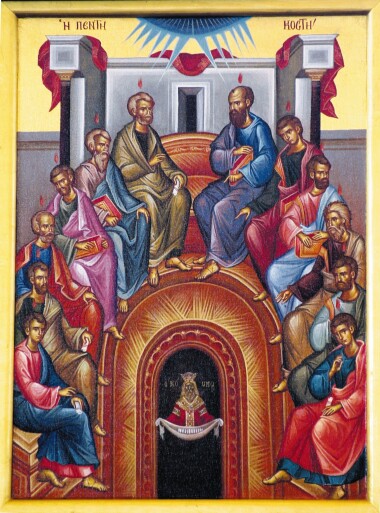
pentecostOf course, despite the hype, statistics are not the only measure of a Church’s vitality nor are they the only basis on which decisions about structural change are made. As Henri de Lubac reminds us, the Church was never more ‘catholic’ than in the Upper Room at Pentecost when all of its members could fit inside a small room. So ‘good church’ doesn’t mean ‘big church’.

However, you would expect that parishes and communities with a clear identity, a strong sense of belonging, and missionary in intent would attract new members through word-of-mouth and the witness of its members (the reality too is that smaller parishes, while enjoying an ‘intimacy’ of community that can be lost in larger congregations, can often struggle financially because of the relatively small number of contributors expected to cover often rising expenses e.g. building maintenance, insurances and the like).

So numbers aren’t everything but they are indeed something. Indeed, the Gospel commission to seek out new disciples is unambiguous and so parishes need to not only want to grow but plan to grow and so be organised to grow. The first step towards that growth is coming to a firm grasp with the present reality.

nclsIn that spirit, I recently crunched some numbers of the 2011 Census and National Church Life Survey for my own Diocese and took note of some national trends along the way that are publicly available and give us some sense of the state of the Church nationwide (these national trends are publicly available as they are based on Australian Census data which is owned by ‘the people’. Diocesan and parish specific data is another matter however and won’t be making an appearance on this blog!).

The national trends were, in fact, provided in 2012 and updated just days ago by the Pastoral Research Office, an office of the Australian Catholic Bishops Conference (ACBC) which works closely with NCLS Research, a research body sponsored in part by Australian Catholic University, the ACBC, and other denominations (to declare my hand, I am a member of the NCLS Research Sub-Committee).

These were the stats and trends that caught my attention:

  • National data reveals that my own Diocese of Parramatta has the second highest percentage of Catholics as a proportion of the general population in the country (31.6% or nearly one in three people living within the boundaries of the Diocese are Catholic). This is significantly higher than the national average of 25.8%. (If you want find out the percentage of Catholics within your own parish boundaries, wherever you are in Australia, click here. Why is this helpful to know? In the spirit of the ‘new evangelisation’ it indicates how many people in your part of the world are baptised Catholics and allows you to reflect on the level of engagement in the life of faith e.g. the parish’s worship and potential outreach to the local community).
  • Almost a quarter of all Australian Catholics were born overseas (23.8%), with the top three countries of birth for these being Italy, the United Kingdom (not including Northern Ireland) and the Philippines. Italian Catholics have held the top spot for the past 15 years, while the percentage of Maltese Catholics has declined over time and the number of Indian Catholics steadily increased.
  • 52% of Australian Catholics are female and 48% male, with a median age of 37.6 years (a rise from 30.7 years in 1991). Astonishingly, 21% of all Australian Catholics are children aged under 15 (which underscores the critical importance of the family and the Catholic school as part of the new evangelisation). Incidentally, there are slightly more Catholics in the ‘40-49’ age group than any other age group (these Catholics were born between 1962-1971 and so are roughly contemporaneous with the unfolding of the Second Vatican Council).
  • While 24% of all Australia Catholics were born overseas, they accounted for 40% of all Mass attenders.
  • Our Mass attenders are greying. In 1996, 17% of all Mass attenders were aged 70 and over. In 2011, 27% were of the same age.
  • Between 2006 and 2011 there was a slight decline in the proportion of Mass attenders who had attended a Catholic primary school. There was a similar decline in those who had attended a Catholic secondary school.
  • In 2011, 85% of Mass attenders said they attend Mass usually every week or more often. This is a slight decrease since 2006, when 87% said they attended weekly or more often.

As for the all-important and highly publicised ‘percentage of Catholics who go to Mass’ figure, you’ll have to wait a little longer but be assured it is on its way!  In 2006, it was a humbling 13.8% as reported here (compare this to the U.S. where they lament a Mass attendance figure of around 31%!).

While it demands planning, coordination and resources, including the right people, statistics can be gathered at a local level, in parishes (though most dioceses should be able assist here) and in ministry groups and initiatives of parish outreach. Good church research enables a more focused approach to pastoral care and evangelisation and for these reasons alone is well worth the effort.

we can all learn from Boston

That is not something we could have said in 2002. After all, it was in that Archdiocese that the scandal of the sexual abuse crisis, including serious maladministration, broke across the front pages of the Boston Globe, sending the American (and universal) Church into a crisis which continues to impact the life and morale of individuals, parishes, and religious communities today. At that time, Boston could not be said to have modelled anything for the Church.

disciplesinmissionMore than a decade later and the reform in Boston continues under the leadership of Cardinal Sean O’Malley, though now with a particular focus that lies in its future. This year has seen the commencement of the first phase of Boston’s pastoral plan, ‘Disciples in Mission’.

What’s the essence of the diocese’s plan and what is its relevance for the rest of us? Boston is focused on the positioning of parishes more solidly for ‘the New Evangelisation’, meaning renewed outreach to ‘our brothers and sisters and drawing them more fully to Jesus Christ’. This is pretty much the focus of the magisterium – a concentration on the baptised who have lost a living sense of faith, without denying the importance of the traditional mission ad gentes. 

(You can think of it this way: the mission ad gentes, ‘to the nations’, is for those who ‘Don’t Know, Don’t Care’,  the mission of the new evangelisation is for those who ‘Know, but Don’t Care’).

In the name of renewal, the Diocese is reorganising all of its 288 parishes into approximately 135 ‘collaboratives’. Most of these parishes will retain their own canonical identity and integrity, with their own name, assets, liabilities and financial obligations but will placed under the governance of a single priest (or ‘pastor’ as they prefer to say in the U.S.). This approach is described locally as ‘twinning’ or ‘clustering’ parishes.

So, why this radical restructure across the Diocese? Boston is reorganising its life in the pursuit of one goal: to enhance its mission of evangelisation.

By introducing ‘collaboratives’, Boston notes the following gains:

  • parishes can unite to work together in pastoral actions based on a common vision;
  • the resources of parishes can be shared for the mutual benefit of all;
  • a greater shared consciousness can be fostered of the need to bring people back to an active practice of the faith;
  • a renewed focus on outreach to others will be supported by resources and training in the theology and practice of evangelisation, training in parish leadership and sound management (for both priests and lay ministers who will now work in two-parish or multi-parish groups).

evangelizationIn my experience the greatest obstacle to this type of bold renewal of pastoral life is neither finance or facility but a failure to recognise the mission of evangelisation as the central purpose for which all of our communities exist.

In other words, a lack of focus on our Christian mission leads to complacency and the isolation of our ministries and communities, one from another. Communities that are settled in an ‘exclusive unity’ will not grow, spiritually or numerically. This is because they will have neglected the central Gospel imperative to ‘go and make disciples’, a mission that calls for the uniting of gifts and combined witness.

The urgent need to focus beyond what we have, beyond ourselves and beyond even our own preferences, could be put this way: ‘If your parish or community closed today, would anyone but its members notice?’

We must recognise our existence is not for ourselves and organise our life and our structures accordingly. We exist for mission, for the making of new disciples and promoting growth in all those who follow Jesus. We can all learn from Boston and be challenged by its bold renewal. If we do, we have the opportunity to offer stronger, combined witness in faith, better manifest our identity as a communion, and realise a more effective mission than that which could be achieved on our own.