when tradition becomes a trojan horse

Recently, I came across a video clip from a “March for Australia” rally that took place in Australian state and territory capitals on 31 August 2025, in which a senior academic at a Catholic institution made remarks that left me deeply unsettled.

In the video, the speaker – entrusted with the moral and intellectual formation of young Catholics – appears to suggest that Australia, from the time of European settlement, has always rightfully belonged to Anglo-Europeans. The clear implication was that national identity is something primarily, or even exclusively, tied to British heritage – a view that presents the country’s history through a narrow, ethnically defined lens.

What makes this rhetoric particularly concerning is that it draws on a well-worn tradition in Australia’s history, in which racialised understandings of national belonging tend to emerge not as a constant, fully systemic reality, but in waves – often in response to economic stress, political uncertainty, or social change. These waves typically target specific groups, who are scapegoated for broader structural problems.

Today, the targets may be Indian migrants; in previous decades, it was Asians, Italians, Lebanese, and Greeks, among others. These groups have been blamed for everything from housing shortages to wage stagnation – issues that are far more complex than the presence of migrants, but which get recast into a familiar politics of grievance.

In this context, advocating for a return to a homogenous or “original” Australian identity – or even a dominant Anglo-Saxon cultural “supermajority” as advocated by the Catholic academic – becomes not only historically reductive, but deeply exclusionary. It erases the contributions of generations of migrants who have played a vital role in shaping this nation’s social, cultural, and economic life. It also ignores the profound diversity of contemporary Australia, built not on a single ethnic foundation but on mutual respect and the contributions of many cultures engaging across generations.

Such notions are also based on a flawed premise: that there exists a coherent, singular “ethnogenesis” of an Australian ethnicity, which can be traced back to a defined cultural moment and preserved in amber. In reality, this is in fact a qualified social constructivist fantasy, resting on arbitrary start and end dates, or imagined histories that never fully existed. National identity, like culture, is dynamic and evolving. To claim otherwise is to deny the complexity and multiplicity of the Australian story.

Perhaps the only genuinely systemic racial issue in Australia – one which has never arrived in waves but been embedded in our national foundations – is our unresolved relationship with First Nations Australians. Political and cultural institutions have operated as though colonial history is the only real beginning, failing to fully acknowledge and reconcile with the fact that this land was inhabited by First Nations peoples for millennia before British arrival. The presumption that modern Australia starts and ends with colonisation is itself a form of historical revisionism, so often built into the very way we tell our national story.

But racism in Australia is not confined to history, nor is it always directed from majority to minority. It also exists within and between migrant communities, some of whom define themselves in opposition to wider Australian society or to other minority groups. This complexity demands an honest reckoning, recognising that racial prejudice can be internalised, redirected, or replicated across communities, especially when identity feels precarious or under threat.

Catholic institutions, in particular, must be vigilant in how they navigate these dynamics. There is a sobering historical reality here: racism has existed within the Church itself. While the Church has made important strides since then, its members must continually examine how their message and witness either confront or reinforce such ideologies.

Today, the vitality of the Catholic Church in Australia is closely tied to migrant communities. With declining religious participation among the broader population, the continued health of parishes, vocations, and Catholic schools increasingly depends on those who have arrived from the Philippines, India, Vietnam, Africa, and the Middle East. Ongoing racism, especially when implied by Catholic leaders, risks alienating the very people who sustain the Church’s mission and presence in this country.

This is why the remarks at the rally a fortnight ago are so troubling. If such a worldview were to influence the ethos of our Catholic institutions, it would raise serious concerns about how the Western tradition and the Church’s vision of human community are being taught – and to whom they are seen as belonging.

The Western tradition is a profound and meaningful inheritance, forged in the synthesis of Greek philosophy and the Judeo-Christian faith, but it is not the exclusive property of any one people. To conflate it with whiteness or Britishness is to distort both its content and its purpose. At its best, this tradition is capacious – a treasure open to all who seek truth, beauty, and goodness. It is meant to be shaped by, and shared with, people from every nation and background, animated by the universal vision of the Catholic faith.

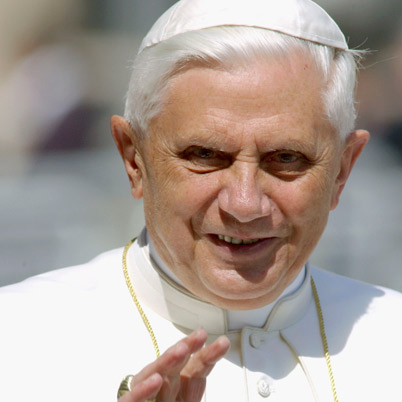
As Pope Benedict XVI frequently affirmed, the heart of the Christian intellectual tradition lies in its openness to truth wherever it is found, and in its call to unity grounded not in ethnicity, but in the inherent dignity of every human person. When a speaker espouses ethnocentric nationalism and simultaneously teaches the Western tradition, it raises a serious concern: that this tradition is at risk of being misused or subtly misrepresented – not as a source of communion, but as a Trojan horse for racial and cultural exclusion.

The speaker’s language – especially references to a unifying Anglo-European “crimson thread of blood,” which echoes Sir Henry Parkes but also carries troubling connotations of ethnic and racial purity – and the portrayal of Australia as fundamentally an Anglo-European project, dangerously approaches an ethnonationalism that the Church explicitly condemns. This is not the vision of nations embraced by Pope Benedict XVI, who warned against nationalism elevated above ethics and the rights of others, describing such tendencies as “a demonic force and the source of terrible disasters”.

When such ideas are voiced by figures in Catholic academic leadership and applauded by audiences that include far-right nationalists – met with triumphant shouts of “Amen” – they risk aligning Catholic witness with ideologies that are not only politically extreme but, as we have seen in countries like the United States, can escalate into acts of real-world violence when cloaked in religious or moral legitimacy.

As someone born in Western Sydney to migrant parents – whose family has worked diligently, contributed generously, and wholeheartedly embraced this country as their own – I find these implications deeply troubling. Regardless of the speaker’s intent, the message received is one that questions the belonging and legitimacy of many millions of Australians, simply because of their diverse origins. It strikes at the heart of a shared history, contribution, and identity.

Catholic institutions today face an urgent task: to form students not only with intellectual depth, but with a Gospel-rooted vision of the world – one that transcends race, class, and tribe. At a time when cultural forces seek to divide and categorise, our Catholic faith calls us to communion.

That’s why the implications of this video are so serious. This moment demands clarity – not silence or ambiguity. We must ensure that our faith and its traditions are never co-opted by narrow political or ethnic visions, which can lead people down deeply dangerous paths. The Church’s mission is universal. Her intellectual life is for all. And the future of Catholic education in this country depends on our ability to live and teach that truth with both conviction and humility. Our institutions have much to offer. But they must be courageous in defending the true scope of our tradition and the cultural wealth of our nation. 

the Church’s digital horizon

I was grateful to share some reflections on the growing opportunities for the Church in the digital space with colleagues in the Archdiocese of Sydney. As technology continues to reshape how we live, communicate, and form community, the Church finds itself at a remarkable crossroads — uniquely equipped to step into these platforms, not to replace in-person connection, but to expand its reach and deepen its mission.

Digital platforms offer more than just convenience; they open doors to connection, discipleship, and outreach in ways we have never seen before and cannot even predict. What is certain, however, is we can bring the unchanging message of Jesus to people in new ways. I believe it is a hopeful and energising time to reimagine how the Church can remain anchored in its calling while adapting to a rapidly evolving world. For those discerning next steps in mission, resource allocation, or leadership strategy, here are a few thoughts I shared that may help spark conversation, vision, and innovation in your own backyard.

Becoming Future Ready

Across the Church we are blessed with a rich tapestry of agencies and ministries – from pastoral care and parish support to catechesis, evangelisation, and works of mercy and justice. This vibrant ecosystem is already bearing great fruit. Many dioceses, apostolate and groups have strong foundations, and the Catholic Church now has a unique, unprecedented opportunity to build on this legacy. By embracing digital technology with purpose and imagination, we can extend the Church’s reach, deepen its witness, and strengthen its impact for generations to come.

In my own Archdiocese in Sydney a powerful renewal is underway, a “second spring” as it’s been described. At its heart is a profound call to personal conversion – a deeper, more engaged Christian life rooted in a genuine, lived encounter with Christ. When this encounter transforms individuals, it naturally overflows into acts of service, generosity, authentic community, and courageous proclamation. This ripple effect breathes life into the whole Church.

Looking ahead, the International Eucharistic Congress to take place in Sydney in three years promises to fill our sails with fresh wind – increasing engagement across parish life, evangelisation, fundraising, advocacy, and service to those in need. Its success will be measured not just by attendance but by how many are drawn into the Church’s mission from within.

A Strategic Moment for Digital Transformation

We face a strategic opportunity to expand engagement in every corner of the Church’s mission. Digital platforms and innovative tools offer scalable, powerful ways to amplify parish involvement, evangelisation efforts, fundraising, advocacy, and service delivery.

Yet, to realise this promise, I think we must invest deliberately in three critical areas: technology infrastructure, digital literacy, and content development. Embracing this change now – even amid uncertainty – is the least risky path forward. We can think of it like planting an orchard before knowing precisely how the climate will shift. We don’t yet know which fruits will thrive or how seasons will change, but we do know two things: the world is changing, and if we wait for perfect clarity, it will be too late to grow anything of lasting value. The real risk lies in standing still while the landscape transforms around us.

So, digital technology is not a threat to tradition – it is a new soil where the Gospel can take root and flourish.

Context: The Technological Transformation

We are living through a cultural shift as significant as the arrival of electricity. That earlier transformation didn’t just power existing systems – it created new ways of living, working, and connecting. Today, artificial intelligence and automation are driving a similar revolution.

AI promises to reshape economies and workforces,  speeding up production, automating routine tasks, and changing how we find meaning and income. While productivity may rise, there is a risk of social fragmentation, unstable incomes, and diminished personal dignity.

Already, we see disruption in roles across administration, manufacturing, retail, finance, law, and health. The IMF estimates nearly 40% of global jobs could be impacted by AI.

Ownership of capital is shifting too. Whereas land and factories once dominated, today technology – data, algorithms, platforms – is the new capital. Yet this infrastructure is often controlled by a few powerful organisations, raising questions about access and equity. Many people may soon access rather than own essential capital – renting software, vehicles, even homes. In the future, people will own less and what they have will be by subscription.

In response, thinkers are calling for an “empathy-based economy,” one that balances innovation with care, human flourishing, and dignity. As AI takes on cognitive tasks, uniquely human gifts – empathy, emotional intelligence, spiritual discernment – will become more essential. This is where the Church’s prophetic role shines brightest. Not resisting change, but leading it with a vision rooted in the sacredness of the person, the gift of Jesus Christ, the dignity of labour, and the primacy of love and ethics in economic life.

Reaching Beyond: The Mission Field

In the city and suburbs of Sydney we enjoy one of the highest Mass attendance rates in Australia though the sum remains humbling at 10.4%, or 61,000 attenders. This means there are still over half a million Catholics who do not regularly engage with parish life. Beyond them, 2 million people within our Archdiocesan boundaries may never have encountered a living witness to the Gospel. In short, there are far more people to reach than have been reached.

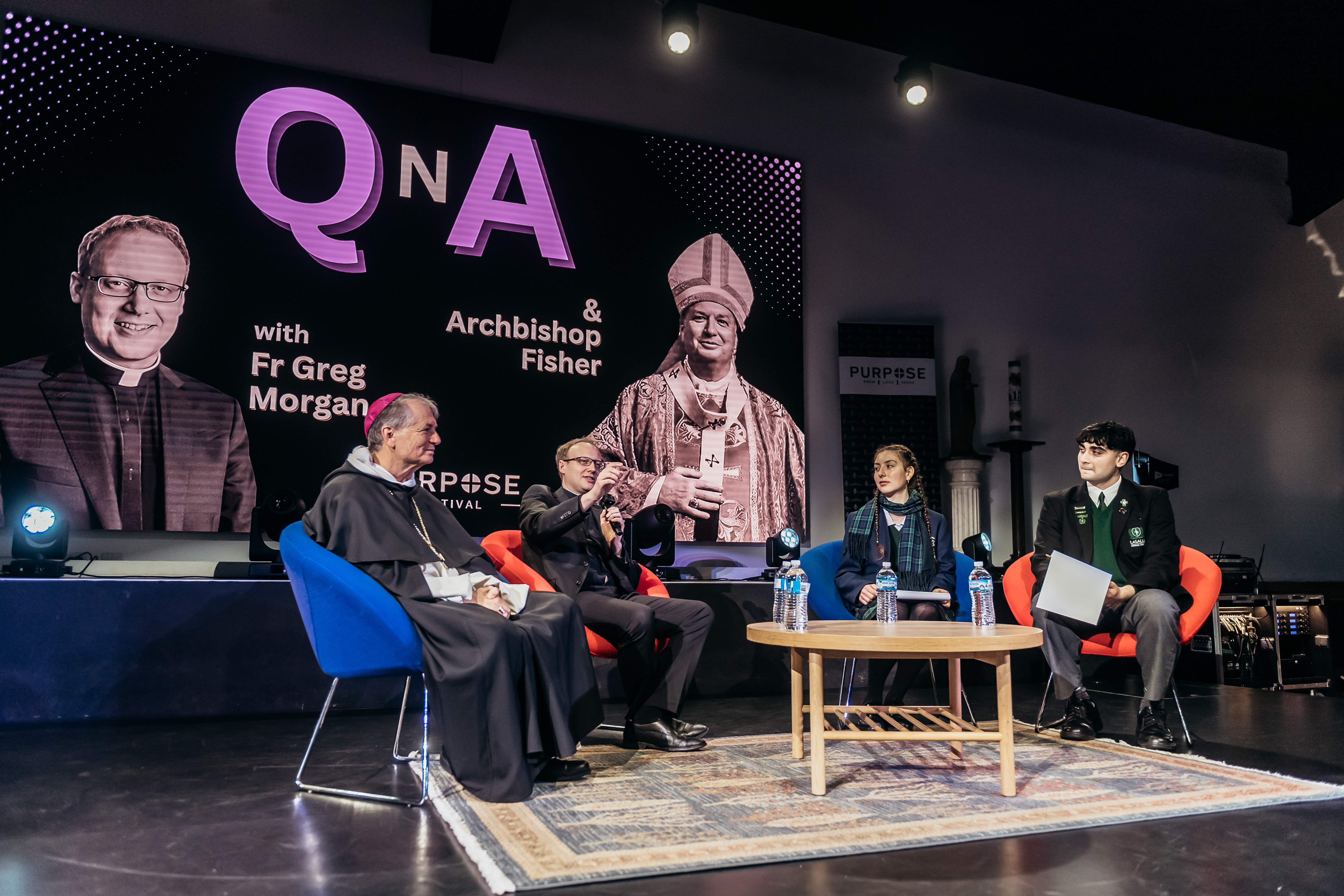
PURPOSE FESTIVAL 2025 – Images by Giovanni Portelli Photography © 2025

Digital transformation offers bold and beautiful ways to extend the invitation. Through video, podcasts, social media reels, digital testimonies, and online series, the Church can meet people where they are – often far from a parish doorway. Many will never step foot in a church but they will watch a video; they will search for answers; they will pause while scrolling past a social media reel. They will listen to a podcast that articulates the faith with clarity and charity. They will encounter a digital testimony that bears witness to Christ’s transformative grace. They may engage with an online series that presents the truths of the faith in compelling and credible ways. They will read a well-crafted reflection that integrates the Gospel with the complexities of modern life. They may be drawn to sacred art or liturgical music shared through headphones, which stirs their heart toward transcendence. They will explore the lives of the saints with others. Digital technologies can create the ‘pause’ in people’s lives that allows the Gospel to speak.

There are great opportunities to experiment with AI, virtual reality, and emerging platforms to distribute knowledge, improve services, and bring the Gospel closer to people’s lives. However, this requires space to think, try, fail, and innovate – partnering with digital creatives, Gen Z entrepreneurs, artists, and developers who already shape culture online. Inviting them into the Church’s digital mission could infuse it with energy, authenticity, and excellence.

Technology can be a “force multiplier,” extending the reach of ministries and deepening Gospel engagement. But without the human heart – creativity, pastoral wisdom, prayer – technology remains potential without impact.

We could imagine AI-powered tools answering everyday queries, freeing up clergy and staff for mission. Or a central platform where clergy and parish teams can access all communications in one place – including memos, updates, forms, events, and support resources. With secure login, it would offer smart notifications based on role, vocation or responsibility (e.g. a priest might receive instant push notifications about liturgical directives, while a parish secretary receives reminders about compliance deadlines), a shared calendar that syncs with personal devices, a searchable archive of past messages (with statements and updates stored, searchable and timestamped), and a simple way to ask questions or give feedback.

No doubt there would be details to work out and it means habituating clergy and parishes into using such technology which takes effort but, as we already know, digital systems and archiving can save an enormous amount of later effort through efficiency, free up time for more mission-oriented work and reduce time spent on administrative catch up. Most new initiatives will gain more traction when framed as pastoral opportunities, rather than a mere tech upgrade.

Data-driven systems can track faith journeys, strengthen formation, and personalise outreach – building a more missionary, welcoming Church. This enables the Church to understand who is coming to faith as adults, their motivations, and how they engage over time. Such insights are critically important for building a more responsive Church. Where the Church once shaped the message and the medium, today it is the audience, guided by algorithms and personal habit, who decides what is seen, heard, and believed.

AI can accelerate multilingual engagement and customise content to meet diverse communities with cultural sensitivity. making formation more contextualised so that everyone feels seen, heard, and invited. We can create and schedule social media posts in multiple languages, reaching different language groups with culturally sensitive messaging and invitations to parish life or special events.

Digital platforms also open new horizons for fundraising and advocacy – connecting local causes with global communities, turning parish projects into worldwide movements. If a local animal shelter in Ohio can raise funds through short reels on TikTok, raising 15,000 new followers as a donor base, and surpassing their goal by 300% in 10 days, so the Church could do the same. Church communities have done so, supporting clean water projects in Uganda and other mission related causes, breaking geographic boundaries and turning community projects into global efforts.   

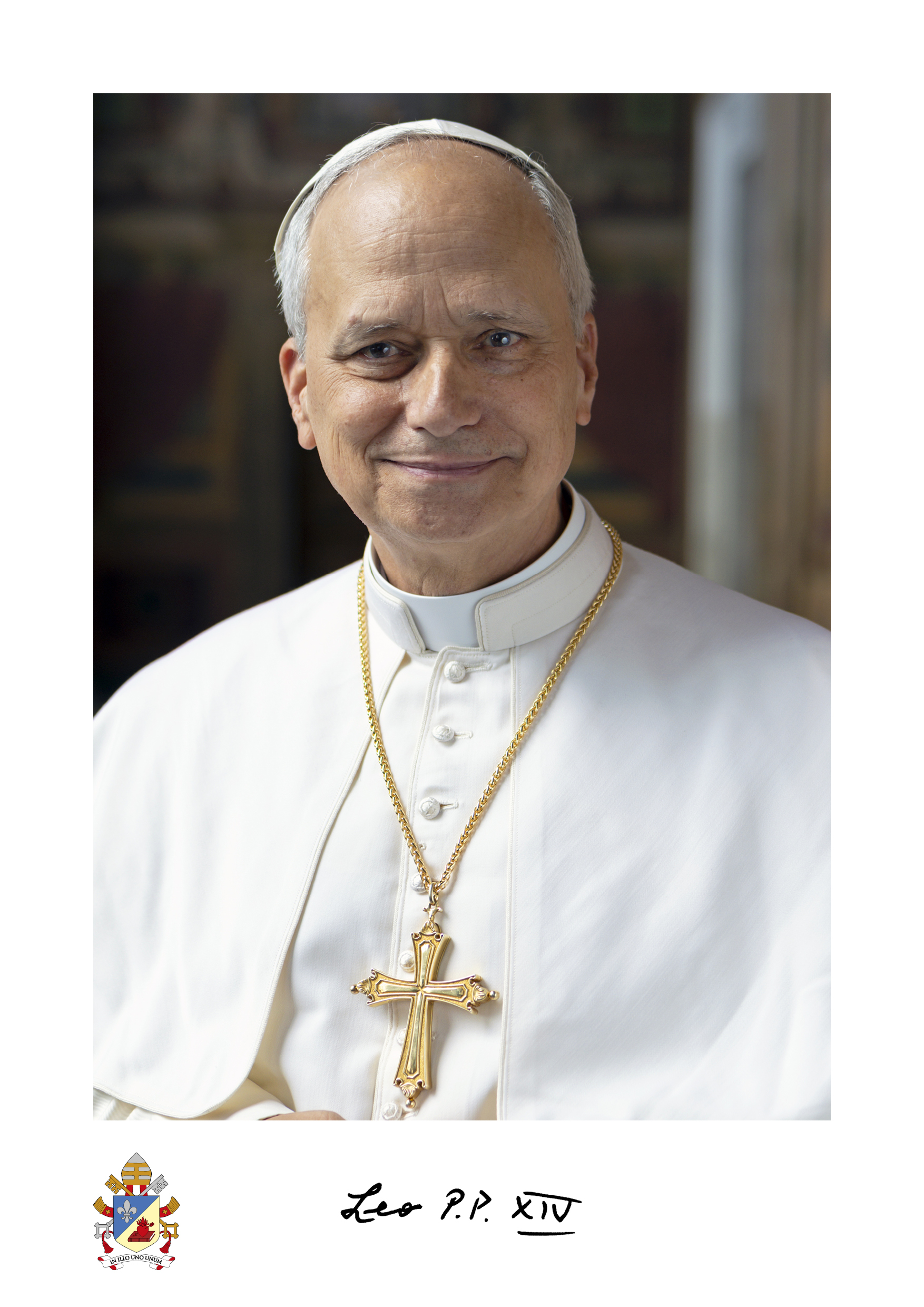
Technology is shaping culture profoundly. As Pope Leo XIV reminded us recently, this technological age will transform how people seek truth, belonging, and encounter God. The opportunity before us as a Church is not just to adopt new tools but to reimagine the Church’s mission through them – to go wide and deep, reach the margins, and enrich the centre. We have a firm foundation of faith, the vision given to us by Jesus’ Great Commission to make disciples of all nations, and the momentum built by generations of faithful witnesses in our Church.

Now is the time to plant the orchard and trust the Spirit to bring the harvest.

grace in the gears: a theology of timekeeping

Time became something I could hold, quite literally, when I received my first watch at the age of eight, a humble Casio F91W. 

Clad in a simple black resin case, with its crisp digital display and softly glowing “light” button, it offered not just functionality but a kind of wonder. That subtle green backlight, switched on with a press, felt like a secret known only to my wrist. The built-in alarm rang bright and clear, and best of all, it was mine to set. It made me feel as if I had received a piece of grown-up responsibility, one beep at a time.

In the years since, I’ve been fortunate to develop a deeper appreciation for watches – especially the mechanical kind. The intricate choreography of gears, springs, and levers inside a movement continues to fascinate me. There’s something magical about how a mainspring’s stored energy animates a balance wheel into steady oscillation and timekeeping, all within the confines of a 39mm case. Whole worlds of engineering, history, and design are tucked beneath a sapphire crystal. 

While a quartz watch, powered by battery, achieves remarkable efficiency and near-perfect precision, it is, in a sense, outside of the need for human touch and is largely indifferent to the presence of its wearer. In contrast, a mechanical timepiece lives through motion or else requires winding by hand. It must be worn, carried, and kept close – in other words, it is sustained by connection.

Though an amateur collector, I’ve gradually assembled a modest yet meaningful assortment of mechanical watches, from classic Swiss chronometers to vintage, hand-wound pieces that evoke the craftsmanship and character of another era. Each watch is more than a mere object – each holds its own story and unique provenance.

Looking back on that first little Casio, and the pieces that followed over the years, I value these intricate instruments not merely for telling time, but for teaching me how to treasure it.

We can have a complicated, even fraught, relationship with time. We try to save it, make more of it, and race against it. But the fact is, time moves with or without our attention and passes with or without our consent.

Not only are we unable to master time, but we are often absent to it altogether. As the French philosopher Blaise Pascal observed in his Pensées, “We never keep to the present… We anticipate the future as too slow in coming… or we recall the past to stop it from escaping.” His words speak to a perennial human ache that St Augustine named centuries prior: our hearts are restless in the present. We are drawn forward by anxiety, pulled backward by nostalgia – anywhere but here, where life actually unfolds.

How, then, are we as Christians called to inhabit time? When I entered the Church I came to appreciate its understanding of time not as something to be resisted, outrun, or escaped but as something to be received, reverently and attentively. As the Psalmist prays, “Teach us to number our days, that we may gain a heart of wisdom” (Psalm 90). In the eyes of faith, time is not a burden to be controlled but a gift to be entered into.

Rooted in Scripture and nourished by centuries of tradition, the Church’s meditation on time understands it as sacramental – intimately bound to the mystery of the Incarnation and the unfolding drama of salvation. In Christ, eternity entered time, not to abolish it but to transfigure it, so that each moment might become a meeting place between heaven and earth.

Time, in the Church’s tradition, is not empty or even neutral, but shaped by grace and filled with invitation. As Pope Benedict XVI so beautifully reflects, “Time is not just a succession of days and years, but it is a time of salvation… each moment is penetrated by the presence of God, by His call and His grace”. 

As Pascal also wrote of our human condition, “The eternal silence of these infinite spaces terrifies me.” The vastness of existence at times threatens to overwhelm us, perhaps even more so today, when that vastness floods our phones and feeds from every seeming direction. We can be left drifting and unmoored, unsure of where to rest our attention.

Yet it is precisely through Jesus Christ – the Word made flesh – that time is transfigured and drawn into purpose by the potential for encounter. In Him, who we meet in time, the scattered moments of our lives are gathered and redeemed, for “He himself is before all things, and in him all things hold together” (Colossians 1:17). 

No longer merely a chronological sequence, time in Christ becomes the arena where eternity is unveiled and the very medium through which we actively participate in God’s plan. Just as the eternal Word of God took flesh in Christ and entered human history, so we are invited to step into time not with fear or futility, but with hope, trusting that each moment holds the potential for grace, communion, and transformation. This profound truth calls us to embrace time not as a limitation, but as a sacred opportunity to encounter God and offer ourselves to the Lord who holds all time. As Thomas Merton puts it, “The whole idea of eternity is that it means that we have enough time to love God.”

Through the art of horology we can be reminded that time is not a force to flee, but a gift to be sanctified. In Christ, time no longer separates us from God, from one another, or even from those we have lost. It unites us. 

Seen in this light, a humble watch on the wrist becomes more than an accessory, a mere gesture of style or utility. It becomes a quiet act of faith – a daily reminder that the present is not empty, that each passing second is touched by grace, and that even the smallest moment holds within it the weight of the eternal.

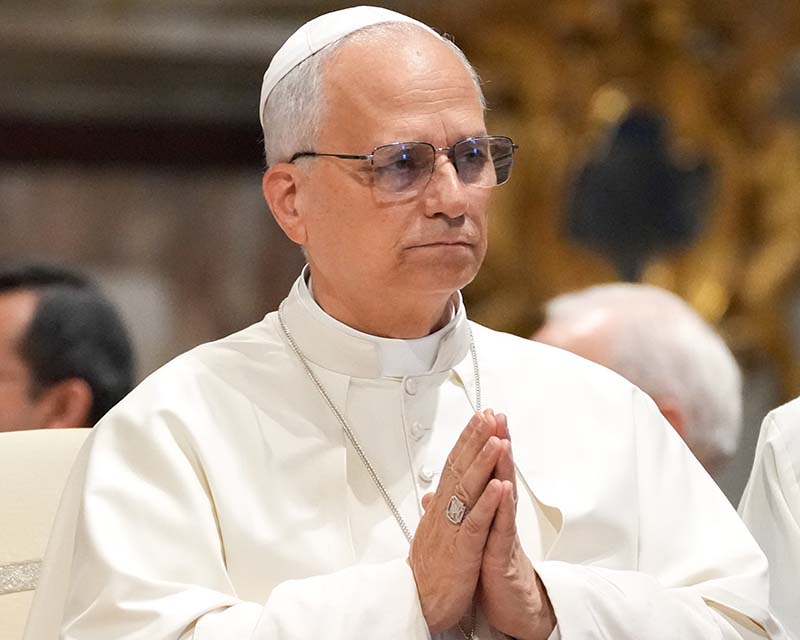
pope leo XIV: a gift of grace

It’s good to be back in this little corner of the internet. I’ve been meaning to revive this blog, and what better time than now, right after the election of Pope Leo XIV and his inauguration this weekend. Along with that momentous event, I’ve also been working on a podcast with Dr Matthew Tan, called Awkward Asian Theologians (you can find it here). Our talks have been a mix of deep dives and messy tangents, pushing me to think more critically about current events and how they mesh with theology. So, I’m hoping to be more active here, sharing some reflections as they come.

To kick things off, I’ve been mulling over the inauguration of Pope Leo XIV, and what it reveals about the fascinating intersection of biography, theology, and pastoral vision. A few thoughts below.


With the inauguration of Pope Leo XIV this weekend, a new chapter in the life of the Church begins. Every new papacy brings fresh insight and particular emphases, shaped by the unique biography of the man who assumes the Chair of Peter. It is both natural and proper that a pope’s reception of revelation, his pastoral vision and his theological orientation are deeply influenced by his life experiences. In essence, biography shapes theology.

We’ve seen this dynamic play out in recent history. The profound personal loss and political oppression endured by Karol Wojtyła in Nazi- and Communist-occupied Poland left a lasting mark on his papacy as John Paul II. His unwavering focus on the dignity of the human person and the relationship between faith and reason was, in part, a response to totalitarian systems that denied both. Similarly, the horrors of World War II shaped Joseph Ratzinger’s theological outlook. As Benedict XVI, he confronted the spiritual emptiness of post-war modernity, urging the Church to rediscover a personal encounter with Christ, the source of true meaning. Then there was Jorge Mario Bergoglio, formed by Argentina’s “Dirty War” and his leadership as a Jesuit provincial, who brought a pastoral vision to the papacy focused on mercy, humility, and a preferential option for the poor. Each of these popes read the signs of the times through the lens of their own lives, and their theological vision was shaped accordingly.

Pope Leo XIV arrives with a similarly rich and distinctive biography. Born into a working-class family in mid-twentieth-century Chicago, with French, Italian, and Spanish roots, he grew up amidst the challenges and diversity of a rapidly changing America. His early academic formation in mathematics and philosophy suggests a mind trained in both precision and wonder. His missionary work in Peru placed him at the heart of communities marked by hardship and faith – experiences that no doubt deepened his concern for the marginalised and sharpened his sense of the Church’s global responsibility. Later, as Prior General of the Augustinian Order, his leadership was informed by his doctoral studies at the Gregorian University, where he explored the Augustinian vision of authority not as control or domination, but as service offered in love.

This Augustinian inheritance profoundly shapes Leo XIV’s spiritual and theological identity. As a self-acknowledged “son of St Augustine”, Leo XIV’s papacy will undoubtedly reflect the deep theological currents drawn from the life and thought of Augustine of Hippo. As an Augustinian friar and scholar, Pope Leo XIV draws not only from Augustine’s doctrinal insights but from the deeper well of his lived experience – one marked by struggle, restlessness and eventual surrender to grace. Like recent popes, Augustine’s journey reminds us that theology is never abstract; it is always, in some way, a response to the life that we have lived.

St Augustine’s own life is one of the Church’s earliest and most powerful accounts of conversion. Born in what is now Algeria in 354, Augustine’s youth was marked by ambition, intellectual pride and moral wandering. He lived with a concubine and fathered a child out of wedlock; he joined the Manichaeans, drawn to their dualistic philosophy, before growing disillusioned. “I had become a great riddle to myself” he would later write in his Confessions, identifying the inner conflict that drove his restless search for truth.

This search ultimately led him to Milan, where the preaching of St. Ambrose and the influence of Neoplatonic philosophy helped him reimagine both God and self. It was in a garden – so often a site of new beginnings and blessing – that Augustine underwent his decisive transformation. Hearing a childlike voice urging him to “take up and read”, he opened the Sacred Scriptures and encountered the call of Christ in Romans 13: “Put on the Lord Jesus Christ, and make no provision for the flesh”. Augustine later described this moment as though “a light of relief from all anxiety flooded into my heart”. It was the end of one life and the beginning of another.

What followed was a life of deep pastoral care and doctrinal brilliance. Augustine became a bishop, a theologian, and a relentless defender of truth and grace. His Confessions, The City of God and treatises on the Trinity continue to shape Christian theology to this day. His combat against Donatism and Pelagianism reflect not merely intellectual disagreements but his conviction, rooted in his own life, that grace is the beginning and end of all conversion.

I would suggest that to anticipate the shape of Pope Leo XIV’s papacy, it will be helpful to reflect time and again on the arc of St Augustine’s own journey, which has profoundly influenced Christian tradition and, by extension, the new pope. Augustine’s path from selfish ambition to spiritual surrender, from pride to divine dependence, and from moral confusion to the clarity of God’s mercy and truth, offers us a lens through which to understand Leo XIV’s theological and pastoral vision.

We can anticipate that Leo XIV’s vision will emphasise that true pastoral care arises from the recognition of human restlessness and the unceasing pursuit of God. We can anticipate a papacy that prizes preaching not merely as instruction but as a proclamation intended to delight and persuade. We can anticipate a vision of the Church as a spiritual community, bound together by charity, whose mission transcends all earthly political structures and orders (civitas terrena) while remaining actively engaged with them. We can anticipate an emphasis on personal conversion as the foundation of evangelisation, echoing St Augustine’s insistence that “what we are must be taught and what we have must be given”.

If we wish to anticipate the direction of this new papacy, we would do well to look not only to Pope Leo’s policies and public addresses, but to the story of his life – shaped by deep intellectual and spiritual currents – and to the saint who formed him, whose own journey still teaches the Church how to receive and respond to grace.