the man of the Shroud

On Friday 27 June 2025, the Feast of the Sacred Heart of Jesus, I was privileged to speak at the inaugural Holy Shroud Conference at Liverpool Catholic Club. In preparing for the introductory address, I was drawn more deeply into the mystery of Christ’s Passion – not merely as historical event but as a living reality, imprinted not only on linen cloth but on our human situation today. The Shroud invites us to contemplate the face of the suffering Christ, to consider what it means that God chose to reveal Himself not in splendour, but in the vulnerability of a broken body out of love for us. I’m grateful to the organisers for their vision and hospitality, and to all those who came – not simply to learn more about a cloth, but to seek the One it points to: Jesus Christ, crucified and risen. May devotion to His Sacred Heart draw us ever closer to the love that knows no bounds.
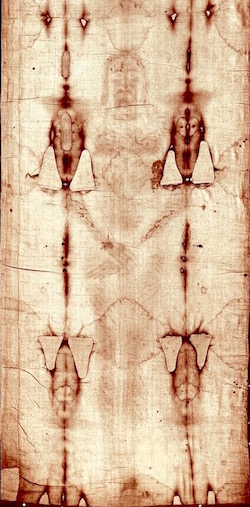
First, let me thank you for your warm welcome and for gathering for this significant conference. It is an honour to be here with you tonight, and I bring greetings on behalf of the Archdiocese of Sydney.

I warmly welcome our esteemed speakers Fr Andrew Dalton, David Rolfe, William West and Dr Paul Morrissey, and congratulate the organising committee for bringing this opportunity to gather around the mystery of the Shroud in this Jubilee Year of Hope.  

The topic before us, the Shroud of Turin, is one that has intrigued believers and non-believers alike for centuries. And in recent decades, it has become increasingly clear that the Shroud is not merely a religious curiosity. It is, in fact, one of the most extraordinary artefacts in human history. For many, it is a relic. For all of us, it is a mystery. And for those who seek truth, it can be a profound source of encounter with the Gospel.

We are living in an age that hungers for evidence, for the tangible, for something real, especially when it comes to faith. And it is here that the Shroud speaks powerfully.

Many now know that there is a great deal of scientific and historical evidence suggesting that the Shroud could not have been the work of a medieval forger, as claimed by the carbon dating results of 1988. In fact, the deeper we delve, the more difficult it becomes to dismiss the Shroud as merely a product of human hands.

What is often less well known is that many leaders within the Catholic Church have expressed not just interest, but belief in the authenticity of the Shroud. Among them are the past three popes – Pope John Paul II, Benedict XVI, and Pope Francis – each of whom made personal pilgrimages to venerate the Shroud.

Each of them stood before it not as sceptics, but as men of prayer and reverence, seeing in it a profound connection to the passion, death, and resurrection of Jesus Christ.

When Pope John Paul II visited the Shroud in 1980, he called it a “distinguished relic linked to the mystery of our redemption”. Eighteen years later, after the carbon dating controversy, he returned, this time thanking God for what he called “this unique gift”. That is no small statement. No pope would thank the Lord for a forgery.

More than that, John Paul II called us to gaze upon the Shroud with what he described as “the believer’s loving attention and complete willingness to follow the Lord”. In those words, he gently redirected us – not to get lost in the science or the debate – but to encounter the One whose image we believe is preserved on that cloth.

Pope Benedict XVI went further, stating that the Shroud had “wrapped the remains of a crucified man in full correspondence with what the Gospels tell us of Jesus”. Pope Benedict, who was always precise with his language, offered here a clear rebuttal to the carbon dating claims.

Even Dr Michael Tite, the man who oversaw that 1988 testing, later admitted in a 2016 BBC interview that he had come to believe a real human body had indeed been wrapped in the Shroud.

Pope Francis made pilgrimage to the Shroud in 2015. He not only prayed before it. He reached up and touched it. With great reverence, he said: “In the face of the Man of the Shroud, we see the faces of many sick brothers and sisters… victims of war and violence, slavery and persecution”.

For Pope Francis, the Shroud was not just about the past. It is about Christ’s presence among the suffering of today. And so the Shroud remains a powerful sign of hope as it witnesses to Christ’s solidarity with all those who suffer, who carry heavy burdens of illness, poverty, war, and injustice. It speaks to them not only of Christ’s passion, but of His enduring compassion – a reminder that they are not alone in their pain.

The late Pope concluded, saying: “By means of the Holy Shroud, the unique and supreme Word of God comes to us: Love made man… the merciful love of God who has taken upon himself all the evil of the world to free us from its power”. That is the evangelical heart of the Shroud. It is a silent sermon, a visual Gospel, a testimony in linen to the mystery of divine mercy.

In the context of this new pontificate, one cannot fail to recognise the providential continuity in Pope Leo XIV’s choice of name — Leo — which echoes that of his venerable predecessor, Pope Leo XIII, who in his own time zealously fostered devotion to the Holy Face of Jesus. This resonance serves as a quiet reminder that the Church’s memory is long, and that the Lord continues to speak to every age through signs both old and ever new.

Other Church leaders in our day have also drawn attention to the Shroud’s powerful witness. Just this past Easter, Bishop Robert Barron reflected in his Easter Sunday homily on the burial cloths mentioned in the Gospel of John. He called them “strange and wonderful cloths” and said they “opened the door to faith long ago”, and may well do the same today. Rather than referring to the Shroud as a mere “icon”, Bishop Barron described it as a relic, “one that is venerated as the cloth the disciples Peter and John saw on Easter Sunday morning”.

He is not alone. Popular priests such as Fr Mike Schmitz and Fr Andrew Dalton, who we are blessed to have as a speaker at this very conference, have powerfully and effectively evangelised through their engagement with the Shroud, especially among younger Catholics.

But perhaps most remarkable is the Shroud’s impact beyond the Church. Over the years, it has impressed and even converted many non-believers – atheists, agnostics, and sceptics who were drawn into a journey of faith by what they encountered in the scientific and spiritual mystery of the Shroud. It has spoken, too, to Protestants and Jewish seekers. Some have testified that their belief in God was rekindled through their encounter with the Shroud and the sense of the supernatural it evokes.

This brings me to what I believe is the Shroud’s most urgent and timely gift: its power to evangelise.

The Shroud is not just a matter of interest for scholars or theologians. It is something ordinary Catholics, young and old, can share in conversations with friends, colleagues, even strangers. It opens the door to a conversation not only about Christ’s suffering, but about His love, about His sacrifice, about the reality of the Resurrection.

And in a world that is increasingly sceptical of faith, increasingly disengaged from tradition, the Shroud is a bridge. It offers people a reason to pause, to question, to wonder.

It invites them to consider: Could this really be the burial cloth of Jesus? And if it is, what does that mean for my life?

After all, we live in an age in which so many do not believe in God, and yet so many still miss Him – a time when people chase progress without presence, and in which a Shroud, paradoxically, unveils something about life: a mystery that speaks to us, a silence that invites us to respond, a hiddenness that in Christ reveals us to ourselves, as sons and daughters of the crucified Son of God.

So, this evening, as we begin our conference, I encourage each of you not only to listen and learn, but to reflect on how you might carry this message forward. How the Shroud might be part of your own call to evangelise – to bear witness to a love that left its mark not only on human history, but on a simple linen cloth that continues to confound, inspire, and convert.

Thank you for your commitment to this mission. May the Man of the Shroud draw us ever closer to His heart.
building God’s house together

I’ve just returned from an inspiring visit to New Zealand, where I had the privilege of working with several dioceses who gathered in Palmerston North and with Fr Simon Story and the vibrant parish community of New Plymouth. This parish is courageously stepping into a new way of being Church – one that is not driven by busyness, maintenance, or self-preservation, but by a deep and intentional commitment to evangelisation.

What follows are reflections shared during a breakfast meeting with the Parish Pastoral Council of New Plymouth. As a relatively new Council, we were exploring together their unique role within parish life, in collaboration with the Senior Leadership Team, parish staff, and the wider faith community. In my experience, the effectiveness of a parish’s mission is often shaped by how each body within it understands its identity and purpose – and the Parish Pastoral Council is a key example of this dynamic. I sought to engage the metaphor of a building site to draw out the different but interrelated roles of parish bodies as they seek to build God’s Church.

The Parish as a Movement, Not a Monument

Many parish communities today are asking hard but necessary questions: How do we grow again? How do we bring people back or reach those who’ve never come? How do we move beyond simply maintaining what we have, and step into the bold mission we’ve been given by Christ in his Great Commission?

These questions do not signal failure; they mark a turning point. What is needed is a new way of seeing the parish itself – not as a finished product, a heritage site, or merely a place we visit once a week, but as a living construction site.

This metaphor captures the parish not as a static monument, but as a dynamic, Spirit-filled mission still very much in progress. It is a place where every person is called to participate, where the work is ongoing, and where God’s house is being built – not just for us, but for the whole world.

At the heart of it all is God in Christ – the ‘Master Builder’ or divine architect of communion and mission, the One who calls, gathers, equips, and sends. God does not dwell in buildings made by human hands alone, but in the people who gather, grow, and go out in His name. It is God’s mission that builds the Church, and our parishes only have life and meaning if they align with His eternal design: that all might know His love and come home to Him.

Many in our communities remain spiritually homeless. Some have never stepped inside a church while others sit quietly in the pews, uncertain whether they are truly part of the mission or simply occasional users of the space. Many say they do not believe in God but still miss His presence in their life and feel this absence at turning points in their life. A missionary parish must always ask, “Who are we building for?” The answer is everyone, especially those without a spiritual home.

Building God’s house, then, means more than creating a welcoming space. It calls us to go out, extend invitations, and form a community of disciples who actively join in the work of building alongside us.

The Priest and Senior Leadership Team: Architects of the Vision

Every construction site begins with a vision. Experience has shown that the parish priests of the most fruitful and growing parishes, both locally and abroad, have established senior leadership teams. While models may vary, the priest and this team can well serve as the architects of the parish vision. Their role is to pray, discern, and shape the mission of the parish, to draft the blueprint for a vibrant community where Christ is the cornerstone and ensure that the parish remains on track.

They must ensure that what is being created is not just beautiful or functional, but mission-shaped: open to the world, inviting to the lost, and empowering to the faithful.

The priest’s leadership here is not simply to maintain, but to nurture and expand the living body of Christ. As recent popes have reminded us, the Church is not called to self-preservation but to bold evangelisation. True pastoral leadership moves the parish beyond comfort and routine – literally out of the pews and into the streets – answering the call of the Master Builder who sends His Church to the margins, where the Gospel must be lived, proclaimed, and embodied.

Parish Pastoral Council: Engineers of Strategy and Alignment

The Parish Pastoral Council can take the blueprint provided by the parish priest and senior leadership team and help figure out how to build the parish according to its vision. As the engineers of the parish, a key role this body can play is to translate vision into action, to discern priorities, assess needs, and develop strategies that are practical and fruitful. They ensure that what’s being built is sound – not only structurally, but pastorally. They listen deeply, respond thoughtfully, and help ensure that every part of the community is included in the building process.

Some critics caution that talk of “strategy” reduces the Church’s mission to mere management or secular frameworks. This concern is valid and serves as an important reminder that any planning must remain deeply rooted in prayer, discernment, and fidelity to the Gospel. The members of the Parish Pastoral Council are not managers of a project but co-responsible stewards of a living mission. They are spiritual vision keepers, as all parishioners must be, providing ongoing feedback to the priest on overarching priorities and helping to develop plans that serve the parish’s evangelising mission.

In the New Testament, Jesus selected and trained twelve apostles, sent them out in pairs, and gave clear instructions for their mission. The early Church, guided by the apostles, organised communities, appointed leaders and made practical decisions to sustain and grow the mission under the guidance of the Holy Spirit. The members of the Parish Pastoral Council can assist the parish priest to do the same, acting as a trusted body of advisors.

Above all, council members understand that their work is not inward-facing. The Church exists to evangelise, so their strategies ask not only “What do we need inside?” but also “How do we reach those outside?” This mission-driven planning ensures that practical steps serve the spiritual calling, not the other way around.

Parish Staff: Coordinators and Witnesses on the Site

On any construction site, it is the site coordinators who keep the project moving. In the parish, this is the role of the parish staff and teams.

These team members – responsible for administration, sacramental preparation, youth ministry, communications, coordinating catechists, and other daily responsibilities – bring both professional excellence and spiritual intentionality to the site of the parish. They are not just doers or organisers but co-builders of the mission, ensuring the vision from the priest, leadership team and Council becomes real, visible and effective.

Their role goes beyond logistics. Parish staff are witnesses to the vision, as are all the baptised who bring God’s promises alive. Many people in and around our parishes are still undecided: “Will I help build this? Am I a co-builder or contributor in this or just a guest passing through?” The manner in which parish staff exercise their roles becomes a living invitation to others. These frontline staff model what it looks like to move from maintenance to mission, from attendance to discipleship. They show what it looks like to be a builder of God’s house, not mere bystanders.

Parishioners: Living Stones and Craftspeople of the Kingdom

Finally, the real and necessary building takes place through the hands of the people – the parishioners – who are the ‘bricklayers’ or craftspeople of the Church. Far from being a minor or functional role, theirs is the essential work of making the vision tangible, one act of faith, service, and love at a time. Without them, no foundation is laid, no walls rise, and no mission takes shape. They are the craftspeople of the kingdom, bringing the Church to life in the world.

Every act of love, every prayer offered, every conversation of faith, every invitation made, and ministry served – these are bricks laid in love and hope. Parishioners are not consumers of a finished church, but co-creators of a living, breathing community of disciples.

They are the Church’s frontline: parents teaching the faith at home, volunteers welcoming at the door, youth leaders planting seeds of hope, welcomers providing hospitality. They are building God’s house with their lives, trusting the Master Builder to shape their efforts into something beautiful and enduring.

Conclusion

Truth be told, our parishes – as expressions and embodiments of the Lord’s house – will never be complete. They are always being built up, always expanding, especially toward those who do not yet know they have a place within. A missionary parish is not a fortress for the few but a spiritual home under construction for the many. There must always be spiritual scaffolding in place – space for more workers, room for growth, and open doors for those still unsure if they belong.

We are not building a parish only for those who already believe. We are creating a place that feeds the hungry, shelters the lost, nurtures the seeker, and sends forth the disciple. This is the kind of house God is building in the world, and we are called to build it with Him.

Our priests and their senior teams are entrusted with shaping the vision and calling others into the dream of the Master Builder. Our Parish Pastoral Councils continue designing structures and strategies that welcome and reach out to make the vision a reality. Our parish staff and ministry teams remain steadfast in coordinating and witnessing to what is possible. Above all, with faith, love, and boldness, our parishioners take up the tools and build alongside them, inviting all people to find their home in Christ.

As Psalm 127:1 reminds us, “Unless the Lord builds the house, the builders labour in vain”. Let us build not a Church for ourselves, but for the world. Let us join the Master Builder and never stop building our parishes as God invites us to.

grace in the gears: a theology of timekeeping

Time became something I could hold, quite literally, when I received my first watch at the age of eight, a humble Casio F91W. 

Clad in a simple black resin case, with its crisp digital display and softly glowing “light” button, it offered not just functionality but a kind of wonder. That subtle green backlight, switched on with a press, felt like a secret known only to my wrist. The built-in alarm rang bright and clear, and best of all, it was mine to set. It made me feel as if I had received a piece of grown-up responsibility, one beep at a time.

In the years since, I’ve been fortunate to develop a deeper appreciation for watches – especially the mechanical kind. The intricate choreography of gears, springs, and levers inside a movement continues to fascinate me. There’s something magical about how a mainspring’s stored energy animates a balance wheel into steady oscillation and timekeeping, all within the confines of a 39mm case. Whole worlds of engineering, history, and design are tucked beneath a sapphire crystal. 

While a quartz watch, powered by battery, achieves remarkable efficiency and near-perfect precision, it is, in a sense, outside of the need for human touch and is largely indifferent to the presence of its wearer. In contrast, a mechanical timepiece lives through motion or else requires winding by hand. It must be worn, carried, and kept close – in other words, it is sustained by connection.

Though an amateur collector, I’ve gradually assembled a modest yet meaningful assortment of mechanical watches, from classic Swiss chronometers to vintage, hand-wound pieces that evoke the craftsmanship and character of another era. Each watch is more than a mere object – each holds its own story and unique provenance.

Looking back on that first little Casio, and the pieces that followed over the years, I value these intricate instruments not merely for telling time, but for teaching me how to treasure it.

We can have a complicated, even fraught, relationship with time. We try to save it, make more of it, and race against it. But the fact is, time moves with or without our attention and passes with or without our consent.

Not only are we unable to master time, but we are often absent to it altogether. As the French philosopher Blaise Pascal observed in his Pensées, “We never keep to the present… We anticipate the future as too slow in coming… or we recall the past to stop it from escaping.” His words speak to a perennial human ache that St Augustine named centuries prior: our hearts are restless in the present. We are drawn forward by anxiety, pulled backward by nostalgia – anywhere but here, where life actually unfolds.

How, then, are we as Christians called to inhabit time? When I entered the Church I came to appreciate its understanding of time not as something to be resisted, outrun, or escaped but as something to be received, reverently and attentively. As the Psalmist prays, “Teach us to number our days, that we may gain a heart of wisdom” (Psalm 90). In the eyes of faith, time is not a burden to be controlled but a gift to be entered into.

Rooted in Scripture and nourished by centuries of tradition, the Church’s meditation on time understands it as sacramental – intimately bound to the mystery of the Incarnation and the unfolding drama of salvation. In Christ, eternity entered time, not to abolish it but to transfigure it, so that each moment might become a meeting place between heaven and earth.

Time, in the Church’s tradition, is not empty or even neutral, but shaped by grace and filled with invitation. As Pope Benedict XVI so beautifully reflects, “Time is not just a succession of days and years, but it is a time of salvation… each moment is penetrated by the presence of God, by His call and His grace”. 

As Pascal also wrote of our human condition, “The eternal silence of these infinite spaces terrifies me.” The vastness of existence at times threatens to overwhelm us, perhaps even more so today, when that vastness floods our phones and feeds from every seeming direction. We can be left drifting and unmoored, unsure of where to rest our attention.

Yet it is precisely through Jesus Christ – the Word made flesh – that time is transfigured and drawn into purpose by the potential for encounter. In Him, who we meet in time, the scattered moments of our lives are gathered and redeemed, for “He himself is before all things, and in him all things hold together” (Colossians 1:17). 

No longer merely a chronological sequence, time in Christ becomes the arena where eternity is unveiled and the very medium through which we actively participate in God’s plan. Just as the eternal Word of God took flesh in Christ and entered human history, so we are invited to step into time not with fear or futility, but with hope, trusting that each moment holds the potential for grace, communion, and transformation. This profound truth calls us to embrace time not as a limitation, but as a sacred opportunity to encounter God and offer ourselves to the Lord who holds all time. As Thomas Merton puts it, “The whole idea of eternity is that it means that we have enough time to love God.”

Through the art of horology we can be reminded that time is not a force to flee, but a gift to be sanctified. In Christ, time no longer separates us from God, from one another, or even from those we have lost. It unites us. 

Seen in this light, a humble watch on the wrist becomes more than an accessory, a mere gesture of style or utility. It becomes a quiet act of faith – a daily reminder that the present is not empty, that each passing second is touched by grace, and that even the smallest moment holds within it the weight of the eternal.