
It’s good to be back in this little corner of the internet. I’ve been meaning to revive this blog, and what better time than now, right after the election of Pope Leo XIV and his inauguration this weekend. Along with that momentous event, I’ve also been working on a podcast with Dr Matthew Tan, called Awkward Asian Theologians (you can find it here). Our talks have been a mix of deep dives and messy tangents, pushing me to think more critically about current events and how they mesh with theology. So, I’m hoping to be more active here, sharing some reflections as they come.
To kick things off, I’ve been mulling over the inauguration of Pope Leo XIV, and what it reveals about the fascinating intersection of biography, theology, and pastoral vision. A few thoughts below.
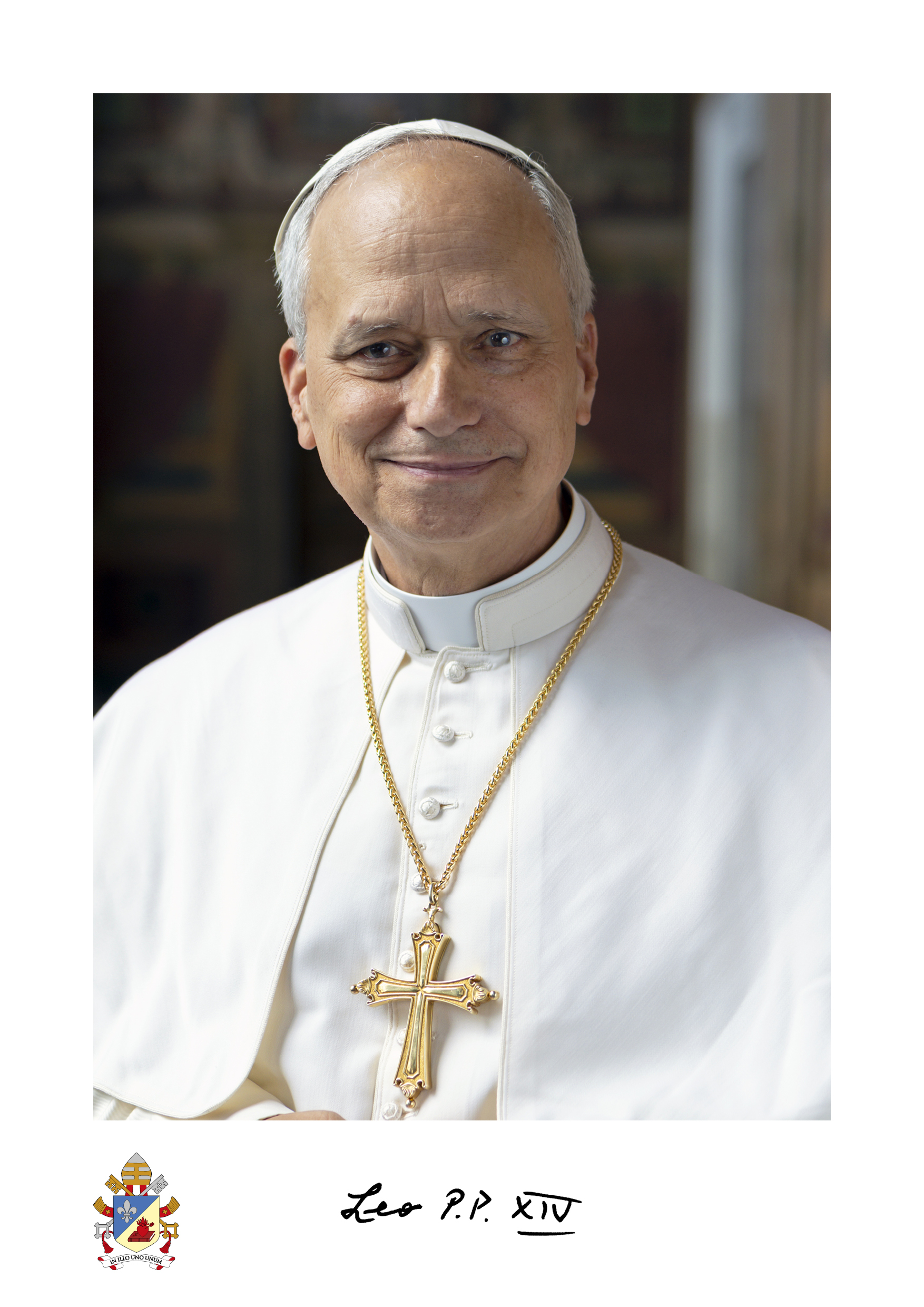
With the inauguration of Pope Leo XIV this weekend, a new chapter in the life of the Church begins. Every new papacy brings fresh insight and particular emphases, shaped by the unique biography of the man who assumes the Chair of Peter. It is both natural and proper that a pope’s reception of revelation, his pastoral vision and his theological orientation are deeply influenced by his life experiences. In essence, biography shapes theology.
We’ve seen this dynamic play out in recent history. The profound personal loss and political oppression endured by Karol Wojtyła in Nazi- and Communist-occupied Poland left a lasting mark on his papacy as John Paul II. His unwavering focus on the dignity of the human person and the relationship between faith and reason was, in part, a response to totalitarian systems that denied both. Similarly, the horrors of World War II shaped Joseph Ratzinger’s theological outlook. As Benedict XVI, he confronted the spiritual emptiness of post-war modernity, urging the Church to rediscover a personal encounter with Christ, the source of true meaning. Then there was Jorge Mario Bergoglio, formed by Argentina’s “Dirty War” and his leadership as a Jesuit provincial, who brought a pastoral vision to the papacy focused on mercy, humility, and a preferential option for the poor. Each of these popes read the signs of the times through the lens of their own lives, and their theological vision was shaped accordingly.
Pope Leo XIV arrives with a similarly rich and distinctive biography. Born into a working-class family in mid-twentieth-century Chicago, with French, Italian, and Spanish roots, he grew up amidst the challenges and diversity of a rapidly changing America. His early academic formation in mathematics and philosophy suggests a mind trained in both precision and wonder. His missionary work in Peru placed him at the heart of communities marked by hardship and faith – experiences that no doubt deepened his concern for the marginalised and sharpened his sense of the Church’s global responsibility. Later, as Prior General of the Augustinian Order, his leadership was informed by his doctoral studies at the Gregorian University, where he explored the Augustinian vision of authority not as control or domination, but as service offered in love.
This Augustinian inheritance profoundly shapes Leo XIV’s spiritual and theological identity. As a self-acknowledged “son of St Augustine”, Leo XIV’s papacy will undoubtedly reflect the deep theological currents drawn from the life and thought of Augustine of Hippo. As an Augustinian friar and scholar, Pope Leo XIV draws not only from Augustine’s doctrinal insights but from the deeper well of his lived experience – one marked by struggle, restlessness and eventual surrender to grace. Like recent popes, Augustine’s journey reminds us that theology is never abstract; it is always, in some way, a response to the life that we have lived.
St Augustine’s own life is one of the Church’s earliest and most powerful accounts of conversion. Born in what is now Algeria in 354, Augustine’s youth was marked by ambition, intellectual pride and moral wandering. He lived with a concubine and fathered a child out of wedlock; he joined the Manichaeans, drawn to their dualistic philosophy, before growing disillusioned. “I had become a great riddle to myself” he would later write in his Confessions, identifying the inner conflict that drove his restless search for truth.

This search ultimately led him to Milan, where the preaching of St. Ambrose and the influence of Neoplatonic philosophy helped him reimagine both God and self. It was in a garden – so often a site of new beginnings and blessing – that Augustine underwent his decisive transformation. Hearing a childlike voice urging him to “take up and read”, he opened the Sacred Scriptures and encountered the call of Christ in Romans 13: “Put on the Lord Jesus Christ, and make no provision for the flesh”. Augustine later described this moment as though “a light of relief from all anxiety flooded into my heart”. It was the end of one life and the beginning of another.
What followed was a life of deep pastoral care and doctrinal brilliance. Augustine became a bishop, a theologian, and a relentless defender of truth and grace. His Confessions, The City of God and treatises on the Trinity continue to shape Christian theology to this day. His combat against Donatism and Pelagianism reflect not merely intellectual disagreements but his conviction, rooted in his own life, that grace is the beginning and end of all conversion.
I would suggest that to anticipate the shape of Pope Leo XIV’s papacy, it will be helpful to reflect time and again on the arc of St Augustine’s own journey, which has profoundly influenced Christian tradition and, by extension, the new pope. Augustine’s path from selfish ambition to spiritual surrender, from pride to divine dependence, and from moral confusion to the clarity of God’s mercy and truth, offers us a lens through which to understand Leo XIV’s theological and pastoral vision.
We can anticipate that Leo XIV’s vision will emphasise that true pastoral care arises from the recognition of human restlessness and the unceasing pursuit of God. We can anticipate a papacy that prizes preaching not merely as instruction but as a proclamation intended to delight and persuade. We can anticipate a vision of the Church as a spiritual community, bound together by charity, whose mission transcends all earthly political structures and orders (civitas terrena) while remaining actively engaged with them. We can anticipate an emphasis on personal conversion as the foundation of evangelisation, echoing St Augustine’s insistence that “what we are must be taught and what we have must be given”.
If we wish to anticipate the direction of this new papacy, we would do well to look not only to Pope Leo’s policies and public addresses, but to the story of his life – shaped by deep intellectual and spiritual currents – and to the saint who formed him, whose own journey still teaches the Church how to receive and respond to grace.
 timeofthechurch